
Record rain shows Fort Worth flood plans need work. Here are some simple stormwater fixes
Since Sunday, more than 9 inches of rain has fallen over Dallas-Fort Worth, the most precipitation we’ve gotten in 90 years in a 24 hour period. Given two months without rain that included a 36-day streak of 100 degree temps, much of it was welcome and necessary.
However, such heavy rain in a short amount of time caused serious flash floods across the region, endangering people and property.
The city of Fort Worth is not unaware of the area’s tendency towards flooding, largely due to clay soil and the way streets are engineered. In fact, Fort Worth’s stormwater management department had already proposed to spend $136 million over the next five fiscal years — an $8 million increase from last year’s plan — to improve the way the city handles flooding. With $1 billion in stormwater needs, this will need to be spent strategically.
The Transportation and Public Works Department Stormwater Management Program’s plan is a solid one with a robust budget. But based on Monday’s events, it might need some tweaking and fast-tracking.
For example, most of the money goes to projects and plans that will keep floodwaters off roads by improving the city’s drainage system and regulating development of the FEMA floodplain. This is important but perhaps not enough: A $6 million drain in Arlington Heights was overwhelmed by the record rain and was clogged and backing up. While the nearby streets and homes likely would have experienced worse flooding without it, that’s an expensive drain to function poorly when it’s needed most.
City officials must be vigilant about where drains are placed and just how they’re operating before flood season begins to prevent such issues, especially in neighborhoods with more minorities that tend to get the worst flooding.
Fort Worth’s High Water Warning System relies on water level measurements made at 52 low-water crossings throughout the city, where roadside flashers are installed to warn drivers of a flood hazard. According to the city’s web site, text and email alerts to first responders are issued when the water level sensors of each flasher system are triggered from rising flood water. The city may consider increasing these.
For a city covering about 350 square miles, 52 does not seem like enough. They are not nearly the price of a $6 million drain, either.
Warning and informing the public about where floods are occurring in real time and potential flood risks is also part of the city’s plan, but on Monday, communication seemed spotty at best. Notices from the city, various police and fire departments — especially early on — were scarce. A website provides real-time alerts, but that only works if residents remember to log on and check it.
For the most part, residents were on their own to discover how bad the flooding was and which streets were not driveable.
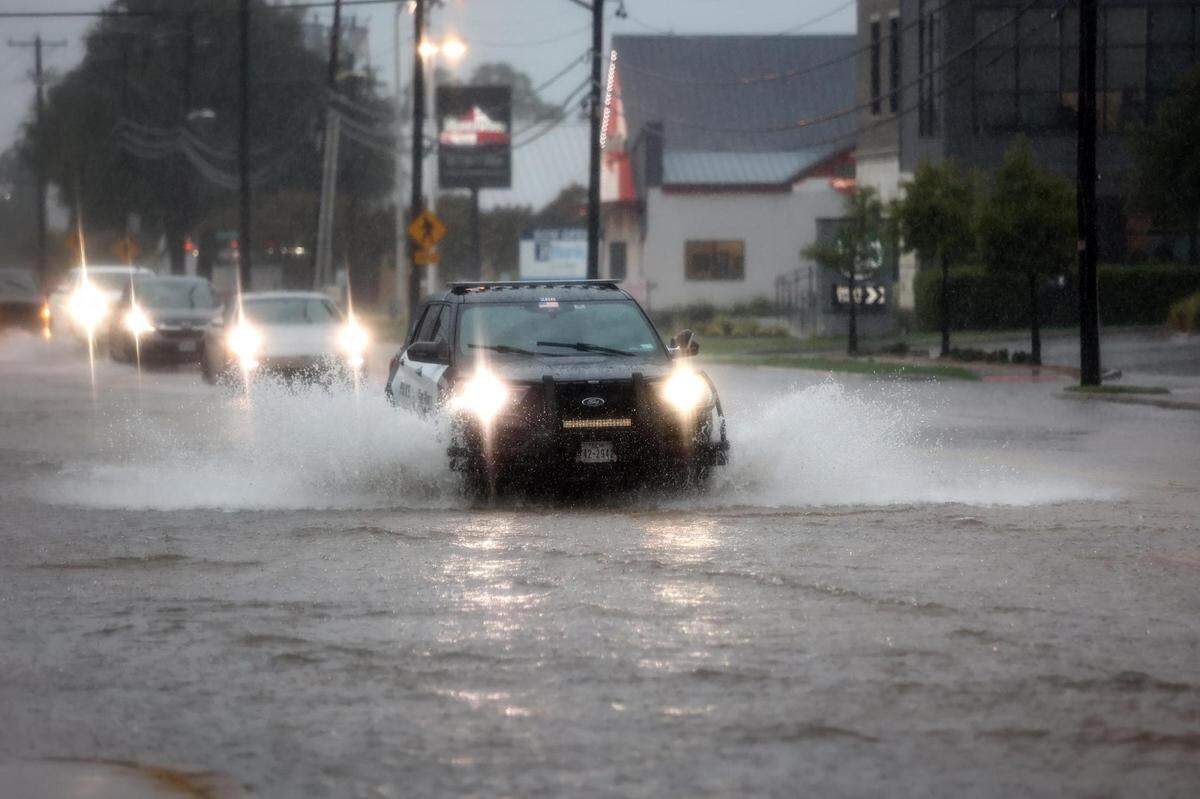
In fact, flooded vehicles and injury risk could be prevented with a clear warning system that not only suggests people remain home unless travel is necessary, but could communicate just which parts of the city to avoid.
The city has budgeted nearly $90 million over the next two fiscal years for the stormwater plan. A solid, functional drone that could withstand tough weather is around $2,000. A fleet might be a wise investment, as drone and camera footage could provide better real-time warning signals for rushing water, the most dangerous flooding and improved flood maps for the public — another bullet point in the future plan.
While big picture plans for massive drainage systems are undoubtedly helpful and necessary, some parts of Fort Worth may benefit from smaller, less expensive fixes. We need more flood gauge signs in low areas and underpasses; they are simple, cheap tools to help people making quick decisions about which roads to travel.
Ditto low water-crossing arms in sections of areas that tend to flood. They are triggered when waters are high with a float switch, warning drivers not to cross. However, these don’t always work if the rain is heavy and fast.
And as the Tarrant Regional Water District noted, this event is a reminder that the risk of catastrophic flooding remains. It’s the primary reason behind the project known as Panther Island — its formal name, after all, is the Central City Flood Project. The clock is ticking toward the next major flood, so it’s good that the project has won its federal funding and is moving along.
Due to Fort Worth’s soil and location and tendency toward cycles of drought and deluge, flash flooding is inevitable. It’s good that city officials have set aside plans and funds to handle it. This week showed some adjustments needed before the next hard rain hits.
BEHIND THE STORY
MOREHey, who writes these editorials?
Editorials are the positions of the Editorial Board, which serves as the Fort Worth Star-Telegram’s institutional voice. The members of the board are: Cynthia M. Allen, columnist; Steve Coffman, editor and president; Bud Kennedy, columnist; Ryan J. Rusak, opinion editor; and Nicole Russell, editorial writer and columnist. Most editorials are written by Rusak or Russell. Editorials are unsigned because they represent the board’s consensus positions, not the views of individual writers.
Read more by clicking the arrow in the upper right.
How are topics and positions chosen?
The Editorial Board meets regularly to discuss issues in the news and what points should be made in editorials. We strive to build a consensus to produce the strongest editorials possible, but when we differ, we put matters to a vote.
The board aims to be consistent with stances it has taken in the past but usually engages in a fresh discussion based on new developments and different perspectives.
We focus on local and state news, though we will also weigh in on national issues with an eye toward their impact on Texas or the Dallas-Fort Worth area.
How are these different from news articles or signed columns?
News reporters strive to keep their opinions out of what they write. They have no input on the Editorial Board’s stances. The board consults their reporting and expertise but does its own research for editorials.
Signed columns by writers such as Allen, Kennedy and Rusak contain the writer’s personal opinions.
How can I respond to an editorial, suggest a topic or ask a question?
We invite readers to write letters to be considered for publication. The preferred method is an email to letters@star-telegram.com. To suggest a topic or ask a question, please email Rusak directly at rrusak@star-telegram.com.
This story was originally published August 24, 2022 at 2:34 PM.