
What changed to finally get Panther Island project funded? Here’s who deserves credit
A front is bringing in gusty wind, but if you already feel the breeze, it might be a collective sigh of relief from Fort Worth elected officials and other leaders.
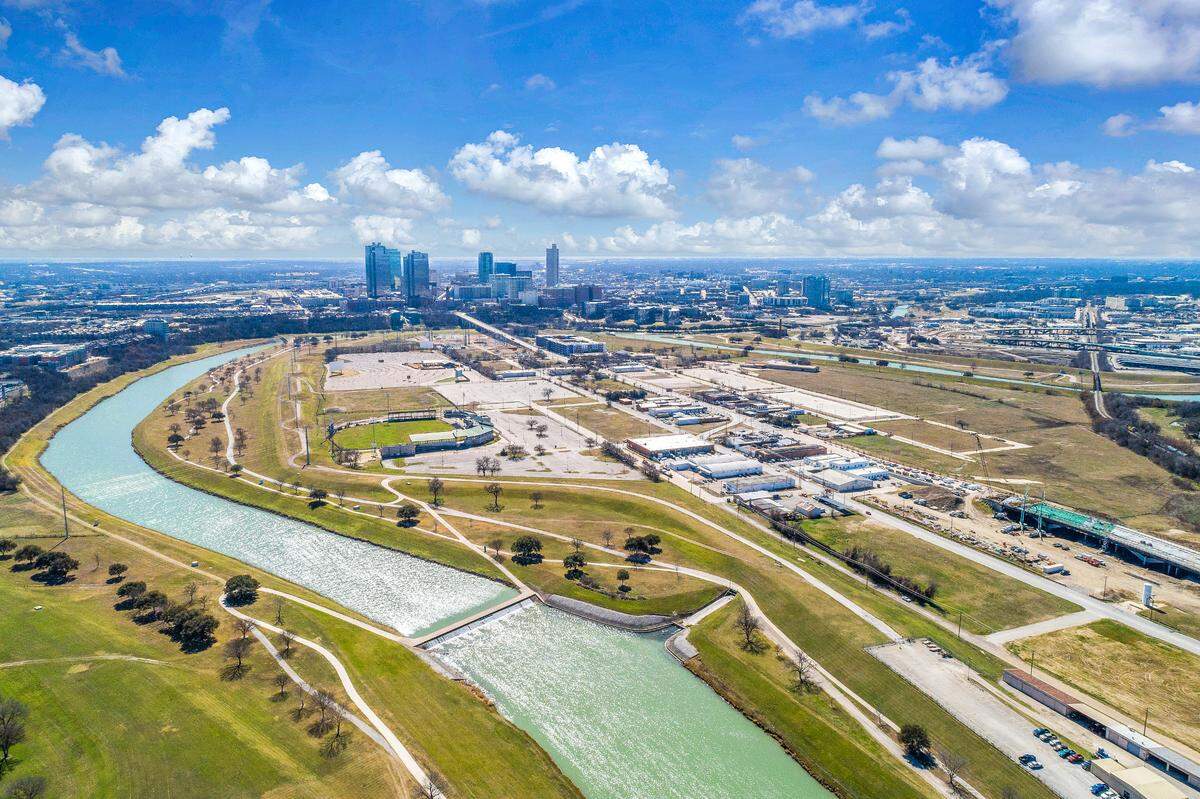
U.S. Rep. Kay Granger made the announcement Wednesday that she and others have been eager to make for years: The U.S. Army Corps of Engineers will spend $403 million on the Trinity River bypass channel necessary to create Panther Island.
Granger, Rep. Marc Veasey, the new leadership at the Tarrant Regional Water District and former Mayor Betsy Price were key to reversing the fortunes of a project that was languishing. They deserve credit.
Amid the agony of bridges over dry land and disputes over how to proceed, it was easy to lose sight of the project’s importance to Tarrant County and the city. It will provide improved protection against a catastrophic flood, the kind that Fort Worth saw decades ago. That’s why, in spite of the turmoil and uncertainty, we’ve remained supportive of the project. The need has grown only more acute as huge rainstorms arrive more frequently.
That flood risk has made the valuable land north of downtown difficult to develop. Doing so now will be a boon for the city. And not just in terms of increased property tax rolls — done right, Panther Island can be one of our city’s top attractions.
Let’s also hail a moment of rare bipartisan achievement. Granger told us in 2020 that opposition in the Trump White House, in the person of Chief of Staff Mick Mulvaney, was the impediment to funding. With the change to a Democratic administration, Veasey’s participation was likely important, and Granger pointedly thanked him in her statement. With a key portion of Panther Island being quietly shifted to his district in this round of map-drawing, Veasey will remain a vital advocate for the project.
A few years ago, the project was mired in confusion about priorities, questions about leadership and quarreling among the local-government partners. Price, still mayor at the time, was instrumental in pushing for a reboot. She publicly called for a comprehensive review and started talk of alternatives to getting the project done.
New water-district leadership has worked to improve oversight and practices at the agency, not all of them related to Panther Island. There’s more work to do, but a better spirit of transparency has taken hold under board President Leah King and Dan Buhman, the district’s general manager.
Going forward, these partners must continue to cooperate to make the vision of a booming area combining recreational, residential and retail space a reality. And they need to make sure the benefits of the development spread to all, including minority contractors and the long-suffering businesses in the area, who’ve fought through construction disruptions with the new bridges.
This is a rare opportunity to remake a key portion of the city’s interior. Fort Worth must get it right.
BEHIND THE STORY
MOREHey, who writes these editorials?
Editorials are the positions of the Editorial Board, which serves as the Fort Worth Star-Telegram’s institutional voice. The members of the board are: Cynthia M. Allen, columnist; Steve Coffman, editor and president; Bud Kennedy, columnist; Ryan J. Rusak, opinion editor; and Nicole Russell, editorial writer and columnist. Most editorials are written by Rusak or Russell. Editorials are unsigned because they represent the board’s consensus positions, not the views of individual writers.
Read more by clicking the arrow in the upper right.
How are topics and positions chosen?
The Editorial Board meets regularly to discuss issues in the news and what points should be made in editorials. We strive to build a consensus to produce the strongest editorials possible, but when we differ, we put matters to a vote.
The board aims to be consistent with stances it has taken in the past but usually engages in a fresh discussion based on new developments and different perspectives.
We focus on local and state news, though we will also weigh in on national issues with an eye toward their impact on Texas or the Dallas-Fort Worth area.
How are these different from news articles or signed columns?
News reporters strive to keep their opinions out of what they write. They have no input on the Editorial Board’s stances. The board consults their reporting and expertise but does its own research for editorials.
Signed columns by writers such as Allen, Kennedy and Rusak contain the writer’s personal opinions.
How can I respond to an editorial, suggest a topic or ask a question?
We invite readers to write letters to be considered for publication. The preferred method is an email to letters@star-telegram.com. To suggest a topic or ask a question, please email Rusak directly at rrusak@star-telegram.com.