
Too many Fort Worthians live in substandard houses. Here’s how we can help with repairs
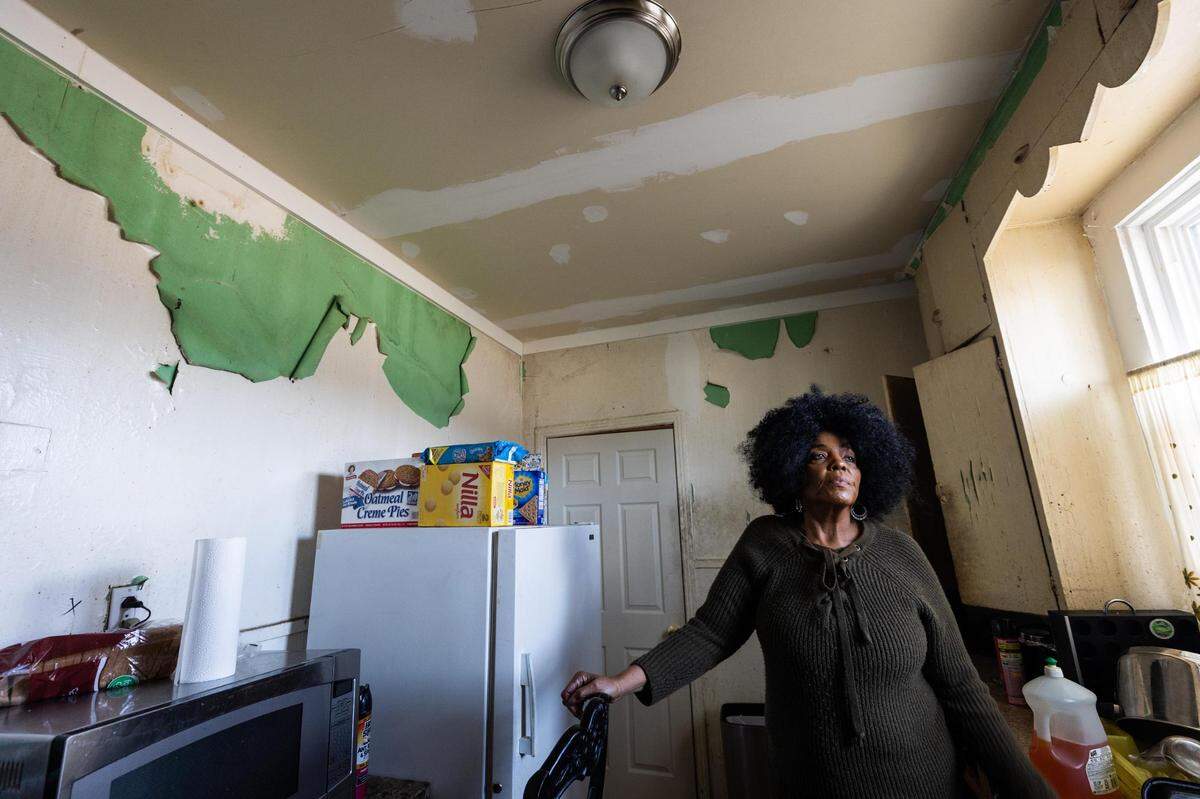
How’d you like to wake up to water coming through your roof on a rainy day or a hole in your floor so deep it shows the ground beneath it?
According to the U.S. Census Bureau statistics, there are about 940 substandard single-family homes in Fort Worth, houses that are dilapidated to the point that they’re unsafe — the plumbing isn’t functioning, for example, or the electrical system, foundation or roof is seriously defective.
Thankfully, the number is manageable and the problems are tangible, a good thing in a city that boasts a homeless population twice that number. Still, the housing issues identified in a recent Star-Telegram report this recent look unsafe and inhumane. Governments at all levels, philanthropy and business need to work together to fix this before it becomes an epidemic.
In situations like this, people living in substandard housing are often on fixed incomes or living solely on Social Security. When home repairs cost upwards of $5,000, at the end of the day, there isn’t enough to go around. As such, substandard housing is a multi-faceted, complex one problem and there is no one-size-fits-all solution. Some are more owner-oriented; others require changes in local regulations.
In the story, Freddie Jones’ home has been in her family for generations. Although the house’s maintenance needs are overwhelming — it has structural issues, a domed wooden floor and a misaligned foundation, to start — Jones has “held onto the property tightly despite getting calls, texts and letters from developers looking to buy it.”
One option for frustrated homeowners is to leverage their ownership and attention from the market to their advantage. Roger Valdez, a policy expert at the Foundation for Research on Equal Opportunity, a nonprofit think tank focused on expanding economic opportunity to those who least have it.
“The home has value that has attracted interest in the market. That means there is equity that can be brought to bear to address the repair issues,” Valdez said.
He suggested utilizing the help of private organizations like Habitat for Humanity, which “can take advantage of the asset to support low-interest loans so they can make the repairs. But those repairs have to be made using affordable or volunteer labor.”
The onus is on the homeowner to take these steps, but agencies with oversight must ensure that the owner is not displaced and can still receive the repairs the home desperately needs. The city and charities can do more to ensure homeowners are aware of these kinds of opportunities.
Unfortunately, not all substandard homes attract market attention. For these, we must examine whether programs already in place need tweaks so they can cover much-needed costs.
For example, the city’s Priority Repair Program is supposed to cover immediate and small repairs and will pay up to $5,000 each. But if lead paint is found, it must be dealt with, and that often puts the cost of the repair beyond the program’s limit.
A better way would be to have a lead-paint exception, adding funds to deal with paint removal or involving another program dedicated to the issue. Otherwise, neither the paint nor the underlying repair needs are resolved.
Substandard housing is a problem but thankfully, it has remained small so far. There is a public interest in improving these kinds of housing situations; no human being deserves to live in a home that’s unsafe.
Many of the affected homeowners are Black, prompting questions about the role systemic racism has played, including historic practices such as redlining. While it’s important to acknowledge the impact of such policies, the focus must be on helping more people now. In particular, programs that can help them control their fate and that of their homes are best. These are neighbors who need help, not victims.
The city and charities can do more to spread information about financing help and volunteer repair programs. If we re-evaluate existing programs to fit the need, Fort Worth can tackle this problem directly in a way that helps homeowners, neighborhoods and the city overall.
BEHIND THE STORY
MOREHey, who writes these editorials?
Editorials are the positions of the Editorial Board, which serves as the Fort Worth Star-Telegram’s institutional voice. The members of the board are: Cynthia M. Allen, columnist; Steve Coffman, editor and president; Bud Kennedy, columnist; Ryan J. Rusak, opinion editor; and Nicole Russell, editorial writer and columnist. Most editorials are written by Rusak or Russell. Editorials are unsigned because they represent the board’s consensus positions, not the views of individual writers.
Read more by clicking the arrow in the upper right.
How are topics and positions chosen?
The Editorial Board meets regularly to discuss issues in the news and what points should be made in editorials. We strive to build a consensus to produce the strongest editorials possible, but when we differ, we put matters to a vote.
The board aims to be consistent with stances it has taken in the past but usually engages in a fresh discussion based on new developments and different perspectives.
We focus on local and state news, though we will also weigh in on national issues with an eye toward their impact on Texas or the Dallas-Fort Worth area.
How are these different from news articles or signed columns?
News reporters strive to keep their opinions out of what they write. They have no input on the Editorial Board’s stances. The board consults their reporting and expertise but does its own research for editorials.
Signed columns by writers such as Allen, Kennedy and Rusak contain the writer’s personal opinions.
How can I respond to an editorial, suggest a topic or ask a question?
We invite readers to write letters to be considered for publication. The preferred method is an email to letters@star-telegram.com. To suggest a topic or ask a question, please email Rusak directly at rrusak@star-telegram.com.
This story was originally published March 16, 2022 at 12:02 PM.