Many Fort Worth houses are crumbling. Racial inequity, lack of money play a part
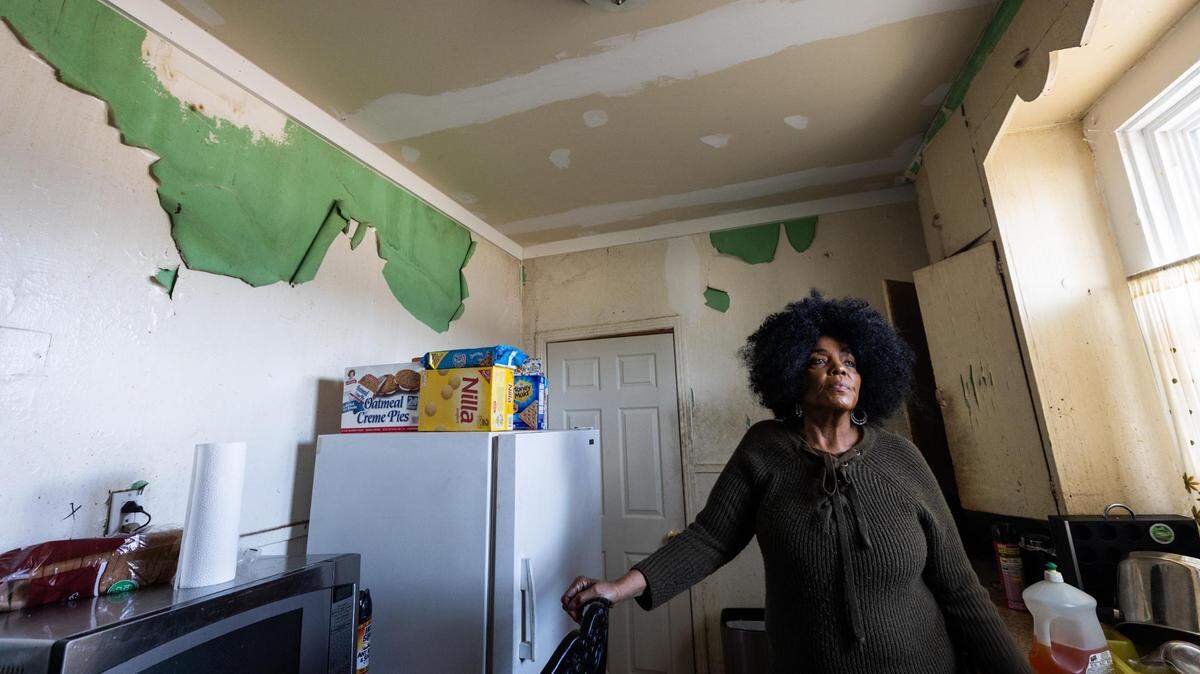
LaToshia Brooks remembers the generosity her grandmother showed with family dinners as Brooks grew up. Every night, Brooks’ grandmother would host any neighborhood children who needed food at the dining table in their three-bedroom home.
“When I was a little girl, she always said, ‘Don’t turn down nobody,’” Brooks said.
Now, at 60 years old, Brooks uses the cooking skills she learned from her grandmother to feed those experiencing homelessness out the back window of her home in the Morningside neighborhood in South Fort Worth.
“I try to keep her legacy,” Brooks said. “My grandmother always showed love to everybody that come through that door.”
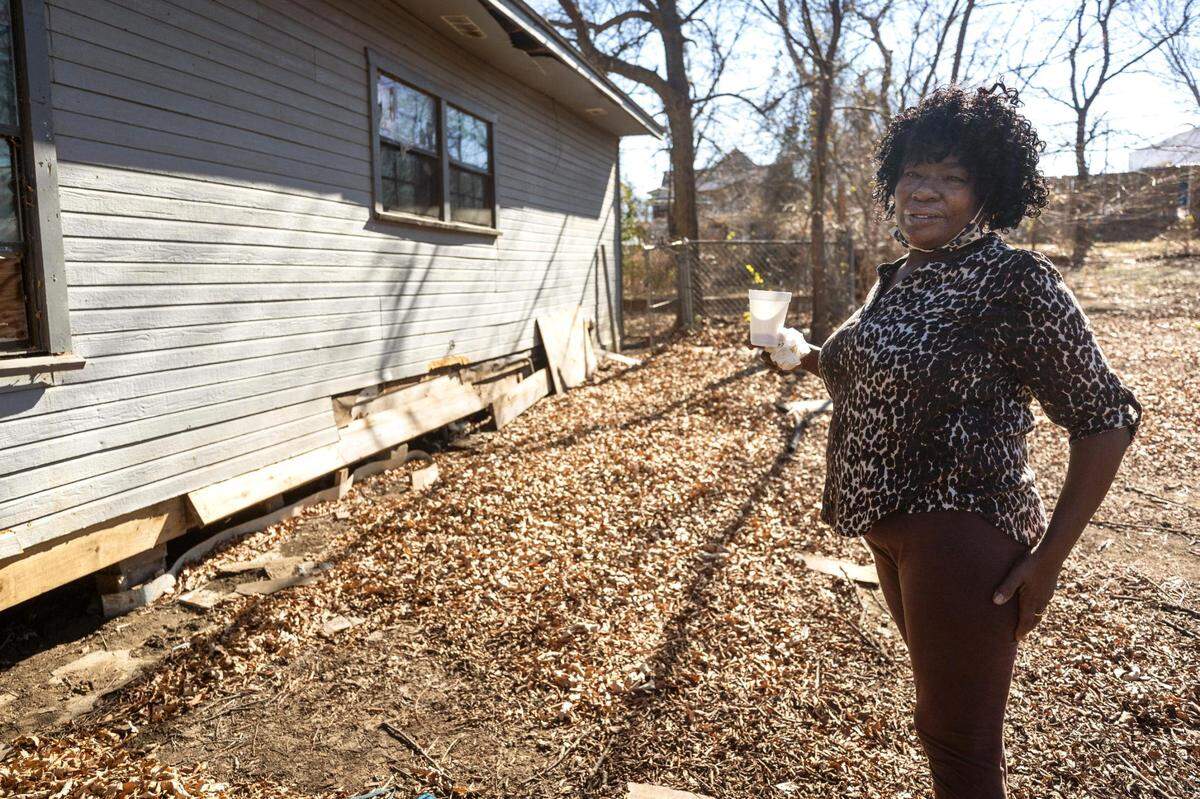
Brooks inherited the family’s home from her grandmother. While Brooks has continued her grandmother’s generosity, she has struggled to maintain the home, which her grandmother bought in the 1950s.
After the winter storm last year, the ceiling collapsed in her kitchen and bathroom.
“When it rained on the outside it rained on the inside,” Brooks said.
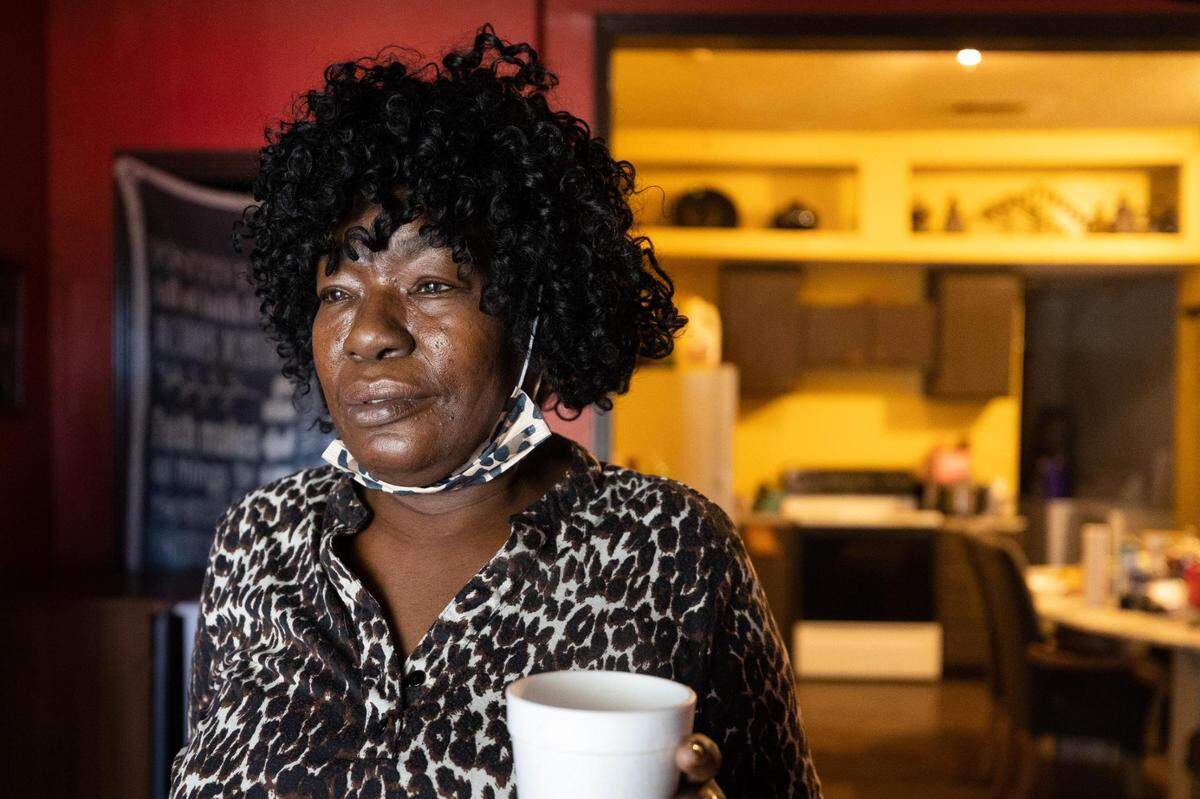
Brooks also worries about the home’s foundation. The house is held up by cracked and shifting concrete with a crawl space underneath the floor. Broken tiles in bathrooms and the kitchen are evidence that the floor isn’t level, and Brooks pointed out some spots on the floor that crater downward.
Brooks and her brother, who lives with her, make a total of $1,957 each month from Social Security. Neither of them have any savings, and Brooks uses whatever is left over to make repairs on the home. When she got a stimulus check last year, she paid for new vinyl flooring for her living room.
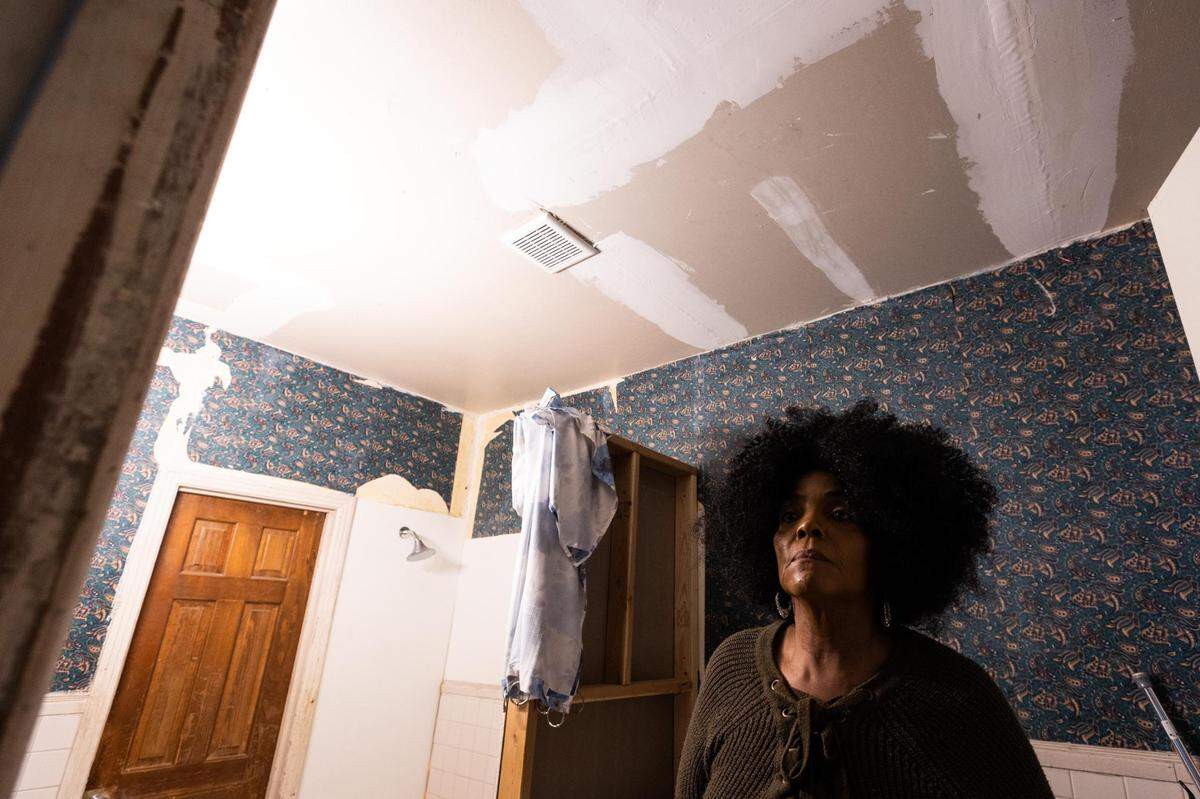
Brooks has received some help from a city government home repair program and her church, but the magnitude of the problems are overwhelming.
The city’s program provides enough to “patch up” her home, she said. But, “they don’t do the maximum work that needs to be done.”
An analysis by the Fort Worth Star-Telegram shows that Brooks is among hundreds of residents in Fort Worth who struggle with life in substandard single-family homes — homes that can pose a threat to their health and safety. The problem is rooted in poverty and institutional racism that has affected home ownership and generational wealth, studies and experts say. Government and community programs designed to help lack funding to address the scale of the repairs needed on many homes.
The newspaper’s analysis shows a disparity among those affected by substandard housing, with the problems more concentrated in predominantly Black and Hispanic neighborhoods. The elderly are also more likely to be affected, based on applications for help from community programs.
Crumbling foundation
Brooks was addicted to drugs for much of her adult life, but she said she never went to rehab. It was her strong faith that helped her get sober. She said she had plenty of opportunities to sell the house, but she’s grateful she didn’t.
Everyone in her immediate family was raised in the house. When Brooks was young, her parents divorced, and she went with her mother to live in her grandmother’s house. Brooks said her grandmother was the primary caregiver for Brooks and her brother, who has special needs. And because of Brooks’ addiction, her grandmother raised Brooks’ only daughter for many years there.
Brooks’ grandmother died in 1998, and Brooks inherited the house soon after. Now, her three grandchildren, who live in Crowley, come to visit often.
Brooks worked as a nurse before undergoing several head surgeries after doctors found tumors in her brain. She now lives on disability income through Social Security.
Among the people Brooks helps is her neighbor, Dortha Smith-White, 85, who lives behind Brooks’ home and faces extensive problems with the upkeep of her home.
Smith-White has stayed with Brooks since December to get through the winter months.
“I ain’t going back where it’s cold,” Smith-White told Brooks.
Smith-White’s home has no central heating system, poor insulation and serious structural issues. But attention to the home’s maintenance has dwindled along with Smith-White’s health and energy.
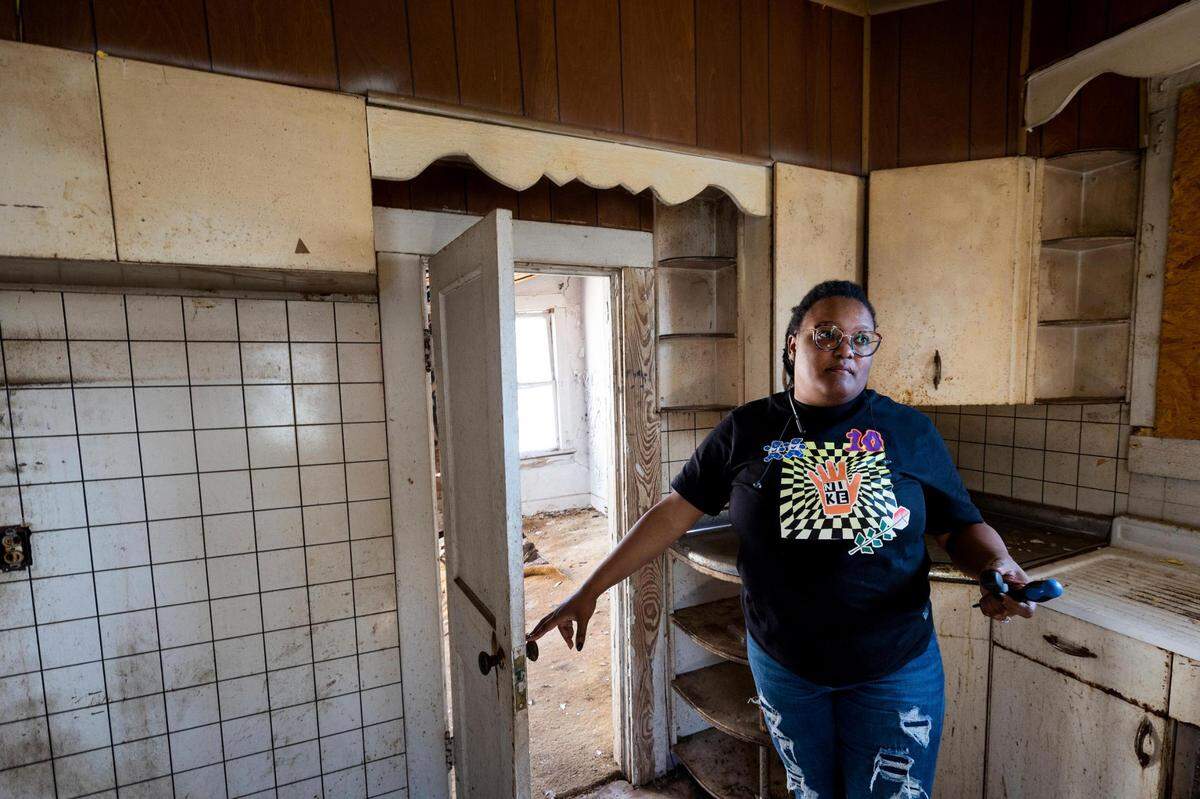
The crumbling foundation of Smith-White’s home has left dangerous holes in hallway and bedroom floors. Brooks said she worries Smith-White might fall.
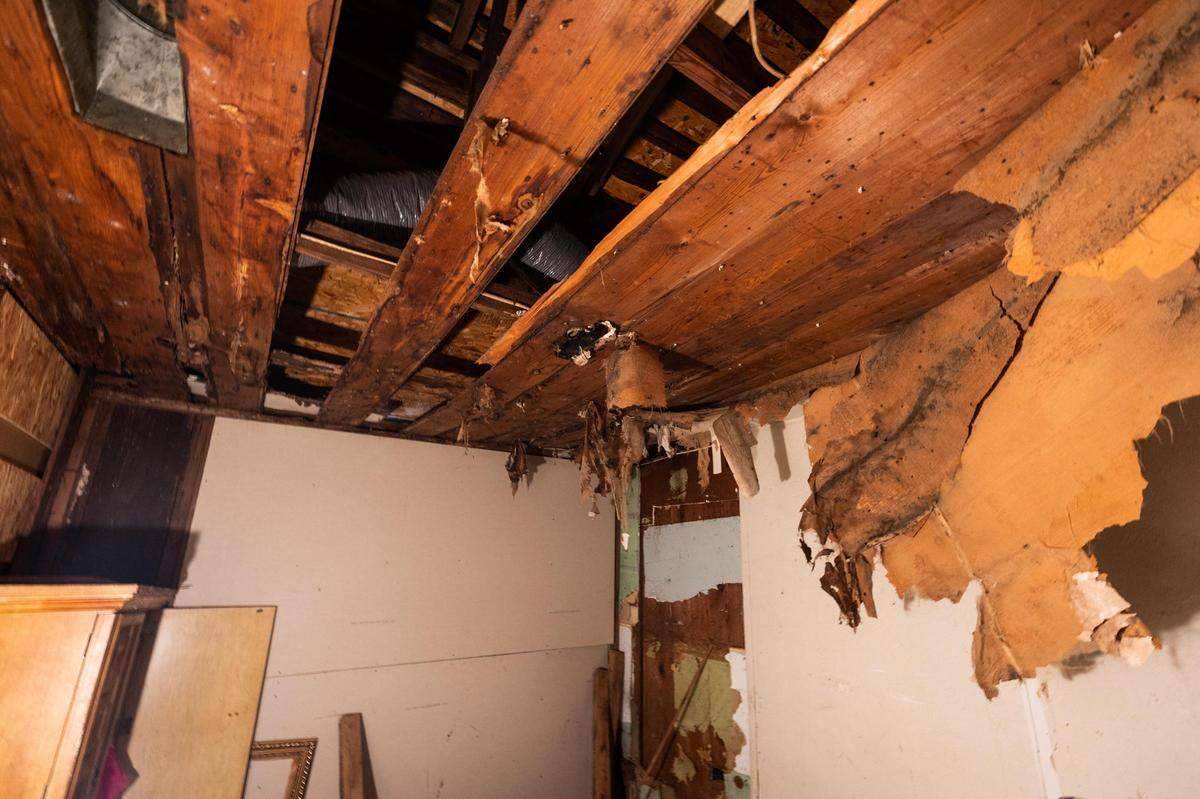
Cracked drywall exposes wood all over the home, and one abandoned bedroom has a 10-square-foot hole exposing the ground.
Because of their low incomes, both Smith-White and Brooks have qualified for help through the city’s Priority Repair Program.
The outside of Smith-White’s home was repainted and most of her windows were replaced. Brooks got a new heater in her living room and pipes that broke after last year’s winter storm were repaired.
Brooks said she’s grateful for the help, but it can be frustrating that the program doesn’t cover all that is needed. And most aid programs don’t cover problems with foundations.
In addition to help from the city, Brooks sometimes gets help from her community. A donation from her church helped pay to replace her collapsed roof, and her neighbor helped to install it.
But Brooks said she doesn’t make enough to pay for all of the repairs the home needs.
What is substandard housing?
U.S. Census Bureau estimates from the 2019 American Community Survey said that there are about 940 substandard single-family homes in Fort Worth, meaning the homes have features that pose a risk to residents, such as inadequate internal plumbing or electrical systems or serious structural defects: problems with the roof or the foundation. Although Census data points to single-family homes, experts say substandard conditions also exist in apartments and multi-family units, where renters have little control over how fundamental housing problems are addressed.
According to the National Center for Healthy Housing’s survey of the largest 51 American cities, the Dallas-Fort Worth metroplex ranks 33rd in an analysis of the amount of substandard homes. Austin ranked 19 and San Antonio was ranked the worst at 51.
The problem is likely greater than the number represented by the Census Bureau, which is based on a sample survey of Americans and a specific definition of substandard housing used by the Department of Housing and Urban Development. Other organizations define unsafe housing more broadly.
City code enforcement also tracks substandard structures in Fort Worth. Its definition is more broad and includes things like an improperly paved driveway, broken windows, peeling paint or painted brick in a historic neighborhood. City code enforcement data on substandard residential structures from September indicates there are 885 addresses with cases still open. A code enforcement representative said this number is typical of the number of substandard structures the department manages at one time.
The number of substandard homes identified by the Census Bureau represents less than 1% of Fort Worth’s 220,000 single-family homes. But the problems tend to be concentrated, with up to 6 percent of homes in some Census tracts determined to be substandard.
A 2021 city report said that higher rates of substandard homes coincide with other measures such as older housing stock and lower household incomes. But that report also reveals that substandard conditions disproportionately affect Fort Worth’s Black and Hispanic communities.
In the Census tract where Brooks lives, which includes the Morningside and Hillside neighborhoods, 5.97% of homes are substandard, according to the Census Bureau’s survey. The population is 34% Black and 63% Hispanic. Another tract with a rate of 4.51% substandard homes is near the southwest side of the intersection of East Lancaster Avenue and 820, where 49% of the population is Black and 46% is Hispanic, according to Census data.
The vast majority of addresses reported by code enforcement are also in either a predominantly Black or Hispanic Census tracts.
Home repair programs too limited
The city’s Priority Repair Program provides $1.2 million every year to repair homes for low-income homeowners. It specializes in internal system repairs such as installing heaters, repairing plumbing, fixing broken gas lines or doing small structural repairs such patching leaky roofs.
Trinity Habitat for Humanity also operates programs that help repair homes. Its Cowtown Brush Up is a partnership with the city and does minor repairs up to $5,000, such as priming and painting the exterior of a home. The Preserve a Home program provides up to $12,000 per repair and is for homes that need more involved maintenance such as roof repairs. And the Healthy Homes program was established after the pandemic when Habitat recognized a need to help members of the elderly population stay in their homes. It spends up to $25,000 per home repairing major systems.
Trinity Habitat does 51% percent of its repairs in City Council District 8, where the population is 47% Hispanic and 32% Black. Another 31% percent of its repairs are in District 5, where the population is 39% Black and 29% Hispanic. These districts are in parts of the 76104, 76105, and 76106 ZIP codes, which generate some of the highest number of applications for the city’s Priority Repair Program.
“A lot of those [homes] fell into disrepair simply because the people didn’t have the finances to support the maintenance that was needed,” said Michelle Kennedy, Trinity Habitat’s senior director of operations.
The city and Habitat programs have restrictions that limit their effectiveness.
The city’s Priority Repair Program is designed to cover immediate and small repairs and will pay up to $5,000 each.
It’s funded by Community Development Block Grant funds, through the federal government’s Department of Housing and Urban Development. The federal government requires any repair that costs more $5,000 to also include a screening and potential elimination of any lead found. This can cost up to double the initial repair, which makes it too costly for the program to complete, Amy Connolly, assistant director for the city’s Neighborhood Services Department, said.
The $5,000 limit set by the federal government hasn’t changed in decades despite continual increases in the cost of repairing homes, Connolly said.
Habitat for Humanity has more involved programs, but none cover foundation repairs.
Kennedy said foundation repairs are simply too expensive, sometimes costing $10,000 or more on homes with serious issues.
But Brooks and Smith-White, the Morningside neighbors, said their foundations are what worry them most. And experts say problems with foundations cause a domino effect of other problems. Damaged foundations can lead to mold, broken pipes and cracked, leaky roofs.
Maintenance needs overwhelming
Freddie Jones and her husband T.J. live across the street from Brooks and Smith-White. The home has been in Freddie Jones’ family since 1928, she said proudly.
Her grandparents raised her there, and it’s been a constant in her life. Although she moved out when she got married, she said it was always there for her to come back to after her previous marriages didn’t work out.
“My mom and grandmama worked hard, you know, for me to have something,” Jones said.
Jones has held onto the property tightly despite getting calls, texts and letters from developers looking to buy it. In recent years, several new homes were built on her street, replacing the older ones.
“I don’t have nothing up saying that I want to [sell] it, and sometimes it’s irritating,” Jones said.
But the maintenance the house needs can be overwhelming, Jones said.
Structural problems are apparent from the outside. The porch’s columns tilt 20 degrees to the side, leaving the roof with little support. The wooden floor domes upward in the middle of the living room, where Jones said she suspects there’s a tree root growing underneath.
Jones said the house never had a proper foundation. It was knocked out of alignment when her mother had pipe repairs done, she said.
The home’s problems have included a gas leak that went undetected, a leaky and collapsing roof and uneven temperatures throughout its rooms due to bad insulation.
Jones puts whatever is left over from her fixed income into minor repairs. She put up peel and stick tile on the walls of her bathroom where there are cracks and exposed wood.
“That’s me just trying to make it look some better,” she said. “I was doing the best I could do.”
But Jones said she has faith the house will be OK. When she’s had issues before they’ve been resolved, she said.
“God gon’ hold it up. That’s the way I look at it,” Jones said.
Effects of inequity and discrimination
Most substandard houses are in majority minority communities in Fort Worth, a trend that exists nationally. A 2002 American Journal of Public Health study found that Black people are 1.7 times more likely than the general population to live in homes with severe physical problems.
Experts have linked this to decades of racist housing policies that have impacted the overall wealth of minority groups and consequently the quality of housing available to them and the resources available to maintain that housing.
“It’s really impossible to talk about all of that without also acknowledging the historic and ongoing racism in housing policy,” Amanda Reddy, executive director of the National Center for Healthy Housing, said when explaining the factors involved in substandard housing.
Black people in particular have been primary targets of the now-illegal practice of redlining, where banks were allowed to determine the financial risk of geographic areas typically labeling Black and Hispanic neighborhoods in red as high risk.
As a result, they are more likely to face discriminatory lending, foreclosure and eviction than any other group, according to a 2020 American Public Health Association report. The report continues that these negative effects have given Black people less access to the tax benefits and generational wealth associated with home ownership, which has effectively stunted their long-term savings and financial growth.
Forty-six percent of Black Americans own homes while 75 percent of white Americans own homes, according to Census data. And the average white American family had more than double the wealth of the average non-white family in 2019, according to the federal government’s survey of consumer finances.
Nora Taplin-Kaguru, professor at Earlham College in Indiana and researcher of racial disparities in housing, said that less accumulated wealth in these communities means less resources to handle home-repair emergencies, leaving people more likely to live in homes in disrepair.
“If housing costs are high and other living costs are high, that leaves less cushion for homeowners to have the savings to make those repairs,” Taplin-Kaguru said.
Lack of wealth, income
A lack of accumulated wealth and income has kept Carol Brown, 64, from making the necessary repairs to her three-bedroom house on Maddox Avenue in South Fort Worth.
She moved into the home with her parents when she was 7 years old. After they passed it down to her, the house burned down and needed to be rebuilt. She put faith in the wrong contractor, who supplied a cheap quote and whose workers cut corners, she said.
“They did a poor job,” Brown said. “They didn’t do the foundation.”
The foundation wasn’t leveled as it was replaced, so the floors all over the house are uneven. Light shines through door frames, and cracked tiles are scattered throughout the home.
“I guess if you don’t have a whole bunch of money [you] just can’t get nothing done,” Brown said.
Brown is retired. She lives on disability income and works some babysitting jobs to make ends meet.
She said she can’t afford the $7,000 quote she’s been given to repair the foundation.
Hazardous environment
Reddy, of the National Center for Healthy Homes, said cases like what Smith-White, the Morningside resident, faces with her home are common.
As residents get older and their health becomes frailer it’s harder to maintain a home.
“Deferred maintenance causes bigger problems that have bigger health impacts and also bigger price tags associated with them,” Reddy said.
Kennedy, of Habitat for Humanity, said elderly clients make up 94% of the population her organization serves.
“Often you have longtime homeowners who have maintained their homes and maintained their homes beautifully. But as they age, their resources dwindle as does their energy,” Kennedy said.
The elderly tend to spend most of their time at home, leaving them more vulnerable to health and safety problems associated with substandard homes. And with forced isolation during the COVID-19 pandemic, vulnerable populations were recommended to spend even more time at home.
“The unfortunate reality is that it’s not always safer for everybody at home,” Reddy said. “We were asking people in some communities to shelter in place where they may have been increasing exposure to lead hazards or asthma triggers or fall hazards.”
Besides the financial pressure related to substandard homes, studies show strong links between substandard homes and physical and mental health problems. Health issues such as lead poisoning, asthma from mold exposure and fractures or injuries to people from their collapsing environment are common among residents in substandard conditions, according to a 2017 report by the Urban Institute. Data from the report also suggests people of color are more likely to suffer from unsafe-housing related health issues, such as asthma from mold exposure, headaches and fever from cold and damp environments or higher rates of stress and anxiety.
Children living in substandard homes were also more likely to have lower test scores and exhibit behavioral issues in the classroom, according to a 2013 study co-published by a Boston College professor on the links of housing quality and health in children and young adults in Boston, San Antonio and Chicago.
And during extreme cold, unsafe homes can lead to hypothermia or frostbite.
“We know how to solve it”
The programs that exist to repair homes are effective, said Reddy, of the National Center for Healthy Homes. But the problem is “they’re nowhere near at the scale in the communities where they’re at, and a lot of families don’t have access to them,” she said.
Some people may have trouble accessing programs due to a language barrier or a lack of internet access. Others may not be aware of the help that’s available or may fall just above income eligibility thresholds, Reddy said.
The solution could simply involve incorporating more money into existing programs that repair thousands of homes a year so they can repair more homes more fully, Reddy said.
“This isn’t a case where we have this big problem, and we don’t know how to solve it. We have this big problem, but we know how to solve it,” she said.
Connolly, of the city’s Neighborhood Services Department, said the city is considering a new program that would repair fewer homes than the Priority Repair Program but would do more involved repairs.
Although no timeline has been set for its implementation, Connolly said the city is investigating how residents could qualify and how it could be funded.
Connolly said this expanded program would run alongside the Priority Repair Program.
“I think we will always need a Priority Repair Program because I do think that some houses just need a little bit of work,” she said. “But I do think there is likely a need to expend more money on certain housing units that are in greater need of repair to facilitate the preservation of housing in the city.”
Connolly said a city should be responsible for maintaining its housing.
“It’s really important that any city really work to stabilize its housing … because that is an asset of the city and it reflects back in the city’s tax base. It reflects back on the look and appeal of neighborhoods, and it makes it a better place for everyone to live,” she said.
City Council member Gyna Bivens said she views the disparities in substandard housing as an effect of redlining. She said something more needs to be done.
“We must do better by our citizens, especially those who have been disenfranchised,” she said. “If the Priority Repair Program cannot be increased from $5,000, that should not be the end of this discussion. We have to do better.”
Kennedy, of Habitat for Humanity, said she wishes more people in Fort Worth understood the extent of the problem. She said those who are living in substandard housing have helped their communities by responsibly paying their taxes and are now in need of help.
“It’s easy when we go through our day to day [and think] ... ‘Undoubtedly that reality is not that severe here in Fort Worth.’ But the reality is it is,” Kennedy said.