
How a fall surge of bird flu will affect your Thanksgiving dinner prices
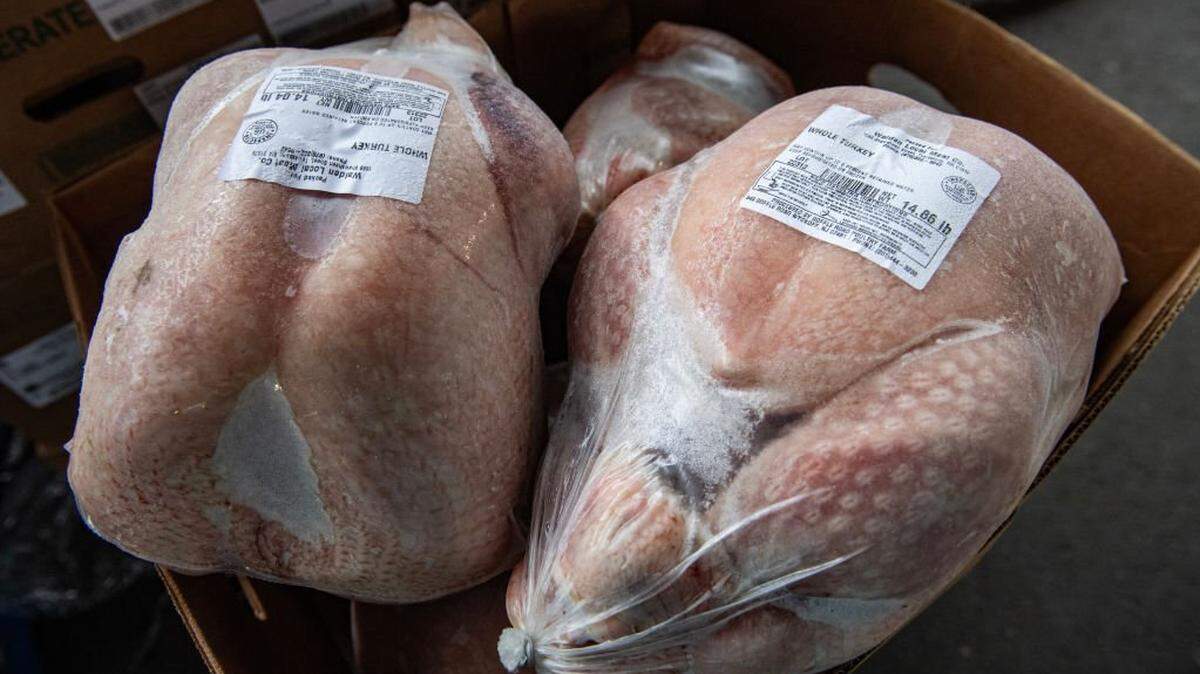
Bird flu is posing a price increase for your Thanksgiving turkey this year, numbers show.
Highly Pathogenic Avian Influenza (HPAI) has been detected in turkey flocks in the upper Midwest, and has affected 2.2 million turkeys so far in 2025, according to the American Farm Bureau Federation. Additionally, the Avian Metapneumovirus (AMPV) infected 60-80 percent of turkey flocks in 2024 and continues to be an issue, according to the AFBF.
Because of this highly contagious disease, there has been a decline in the number of turkeys raised. In 2024, farmers raised around 200 million turkeys, which was the lowest number since 1985. This year, AFBF predictsan even lower number — approximately 195 million birds.
Due to these supply challenges of the Thanksgiving birds, AFBF predicts turkey prices will be up 40 percent from 2024. Last year a turkey was 98 cents per pound. This year it will be approximately $1.32 per pound.
Since turkey accounts for approximately 44 percent of the price of a 10-person Thanksgiving feast, here’s what to know about Texas turkey.
Does Texas import Thanksgiving turkeys?
The top states for turkey production are Minnesota, North Carolina, Arkansas, Indiana, Missouri, Virginia, Iowa and Pennsylvania.
Texas does not widely raise and distribute turkeys, according to U.S. Department of Agriculture data.
Texas A&M confirms that “odds are good that the turkey you find in Texas supermarkets has come from out of state. Texas does not have large-scale commercial turkey farms.”
H-E-B, the grocer with the most stores in Texas, confirmed to Axios that its turkey supply is strong this year, and the grocer doesn’t anticipate prices to waver from last year.
The National Turkey Federation also confirmed to Axios that there will be enough turkey supply for Thanksgiving, though supply could become tight in the coming weeks.
Can humans get sick from eating a bird flu-infected turkey?
The good news is that those who buy Thanksgiving turkeys this year do not have to worry about getting sick from eating an infected bird.
Farms with infected turkeys are directed by the USDA to depopulate, or kill, the infected animals because of how highly contagious the disease is. This is why the turkey supply is declining.
“All it takes is one infected bird, and the disease can spread from flock to flock within a matter of days,” according to USDA. “As with any highly contagious animal disease, a quick and early response is our best chance to limit the size and scope of the outbreak.”
According to the Centers for Disease Control, there is no evidence that anyone in the U.S. has gotten sick from eating properly handled and cooked birds.
“Cooking poultry and eggs to an internal temperature of 165˚F kills bacteria and viruses, including avian influenza A viruses,” according to the CDC.
For extra precaution, always keep cooked food separate from raw food.