
What’s the difference between state law enforcement and the National Guard?
President Donald Trump federalized 2,000 California National Guard soldiers last weekend following federal immigration sweeps that caused protests in Los Angeles.
But what does a state’s National Guard do that local or state law enforcement can’t?
The National Guard is almost always called upon by a state’s governor. Their job is broad, essentially used to perform any mission a governor requests, according to the Brennan Center for Justice. Trump’s decision to federalize National Guard troops was a “highly unusual” move that could be considered legal under some readings of the law and questioned under others, experts said Monday.
So what is the difference between state law enforcement – police, game wardens, Texas Rangers – and the National Guard?
Texas state law enforcement
According to Texapedia, an Austin-based research and education website, Texas has one of the nation’s largest and most complex law enforcement systems, with more than 2,800 local and state law enforcement agencies.
“The different levels of law enforcement in Texas are not a hierarchy per se,” according to Texapedia. “Rather, different levels of the system have different assignments, specializations and jurisdictions.”
The different type of Texas law enforcement include:
Highway Patrol (also known as state troopers or state police):
Employed by the state
Primary responsibilities include general traffic supervision and criminal law enforcement on the rural highways of Texas
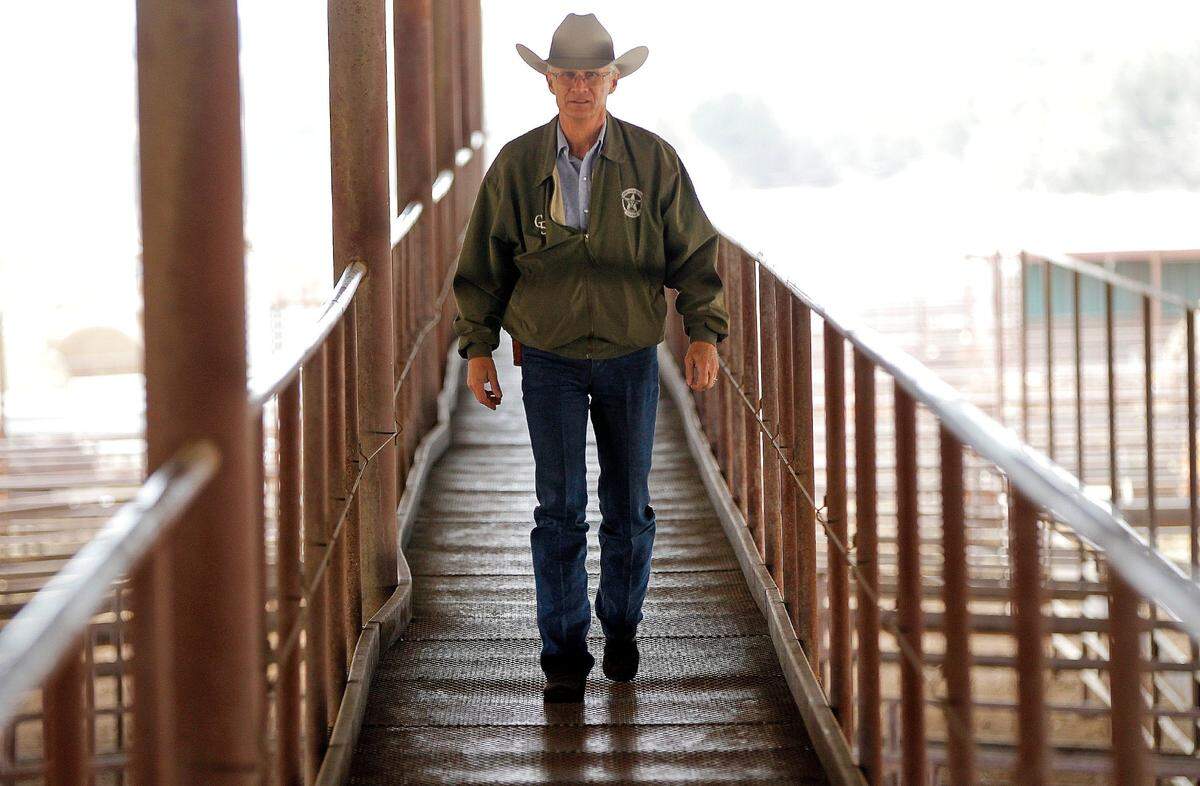
Employed by the state
The primary criminal investigative branch of Department of Public Safety
Responsible for tasks not normally handled by law enforcement, like:
Serial murders, cold case murders, mass shootings, major thefts or heists
Murder, robbery, sexual assault, burglary, theft and fraud
Bank fraud
Theft by credit card and computer-generated counterfeit checks
Misuse of criminal history information
Misconduct and corruption of public officials
Threats against the governor and other state and federal officials
Missing persons, parental abductions, questionable deaths and unidentified bodies
Their uniform consists of a Western-style hat (typically a white or light-colored Stetson), a dress shirt, a tie, appropriate pants and boots.
Employed by the state, under the Texas Parks and Wildlife Department.
Responsibilities are to manage/conserve Texas’ natural resources, primarily monitoring hunting, fishing and outdoor recreation
They do not need search warrants to enter properties with fish or wild game
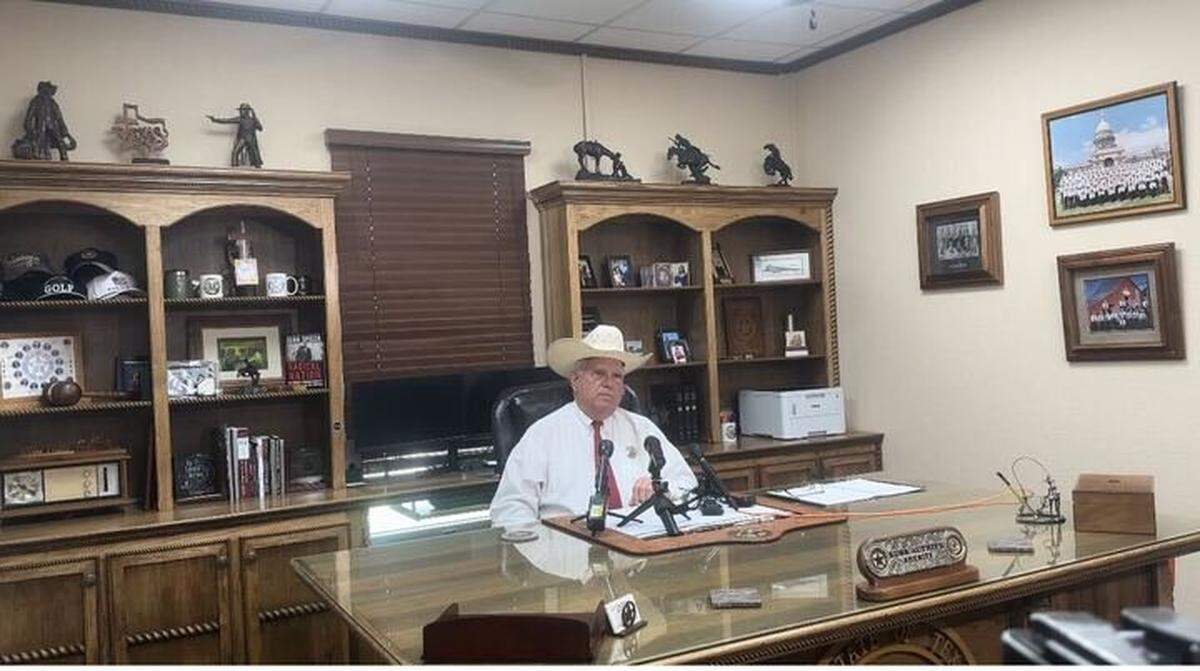
Employed by a local county, elected into office for four-year terms
Provide general public safety in rural areas and unincorporated parts
Run local jails (misdemeanor convicts and pre-trial defendants)
Employed by a local county, elected into office for four-year terms.
Hold the same powers as police officers with the addition of civil law responsibilities, like serving court papers and acting as peace officers in court
Can make arrests, serve warrants, issue tickets and monitor animal cruelty situations
Police officers:
Employed by a local municipality
Generally provide public safety in cities.
Enforce city, state and federal laws
According to the City of Fort Worth, a police officer’s duty is to “perform law enforcement and crime prevention duties that ensure citizen safety, protection of life and property, and compliance with City, State and Federal laws.”
Federal law agencies in Texas
Federal law offices stationed in Texas also work in tandem with state law enforcement. These offices include:
Bureau of Alcohol, Tobacco, Firearms and Explosives (ATF): monitors crimes involving firearms, explosives and arson, and regulates alcohol and tobacco products
Customs and Border Protection: secures U.S. borders to Canada and Mexico and monitors international travel and trade
Drug Enforcement Administration (DEA): enforces U.S. laws on controlled substances
Federal Bureau of Investigation (FBI): investigates federal crimes and provides law enforcement to other U.S. agencies. Also protects and investigates national security matters
Immigration and Customs Enforcement (ICE): protects national security through enforcing federal laws related to border control, travel customs, trade and immigration.
Secret Service: protects the U.S. financial infrastructure, key locations and national leaders.
U.S. Marshals: primary law enforcement for the federal government, enforcing federal law and the federal judicial system
What does the National Guard do?
With the many branches of state law enforcement, why would the National Guard need to be called?
What the National Guard provides, that state law enforcement does not, is a military presence.
Employed by the U.S. military and operates under both federal and state law
Has an army and an air branch.
Members of the National Guard are “civilian soldiers” who possess a civilian role and serve in the military part-time
They respond to “domestic emergencies, overseas combat missions, counter-drug efforts, reconstruction missions and more.”
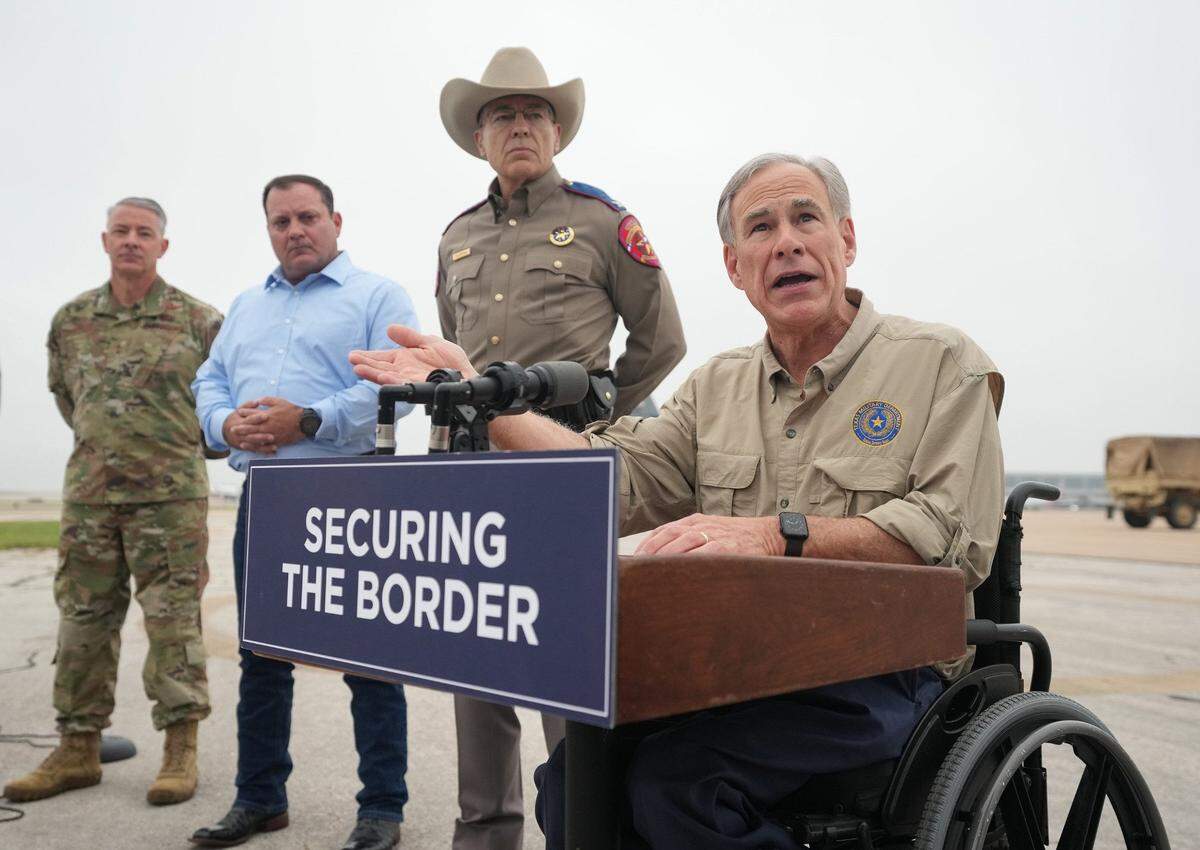
Governors call on their state’s National Guard if they need extra assistance with law enforcement, natural disasters, elections or even pandemics. For example, Texas Gov. Greg Abbott deployed National Guard troops to the Mexico border to “stop illegal immigration,” and former Gov. Rick Perry called on the National Guard to assist with responding to the West Texas explosion in 2013.
It is rare (but not impossible) for a president to call on the National Guard without the governor’s request, according to the Brennan Center for Justice. The Washington, D.C. National Guard is always under federal jurisdiction.
Has the Texas National Guard been deployed?
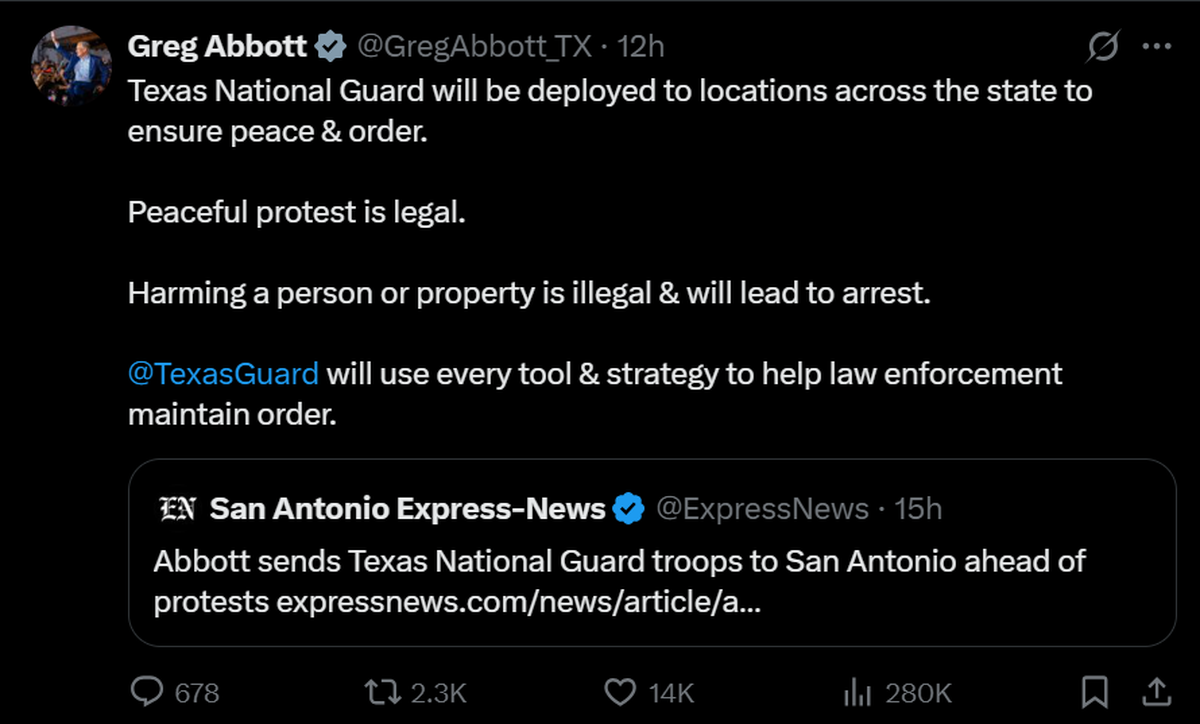
The Texas National Guard has been deployed to protests before. Here’s when:
According to Texapedia, the National Guard was informally deployed in the late 1980s in response to drug interdiction and immigration monitoring efforts.
In 2014 under Gov. Rick Perry, the National Guard boosted Operation Strong Safety in efforts to secure surveillance and enforcement along the Rio Grande River.
Abbott continued Perry’s efforts through Operation Secure Texas and Operation Lone Star.
The most recent (besides Operation Lone Star) was when Abbott deployed 5,000 Texas National Guard troops statewide to help with crowd control surrounding police brutality protests following the death of George Floyd in May 2020.