‘Blood moon’ will be visible in Texas soon. Here’s what to know about the lunar eclipse
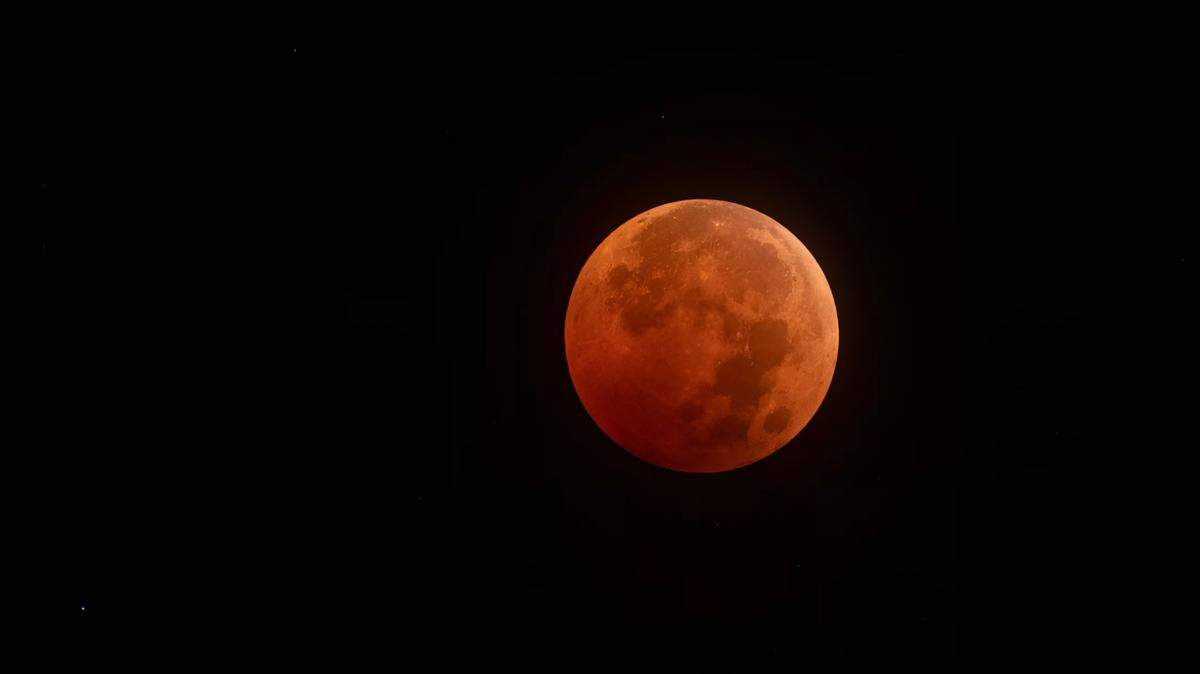
Texans will need to stay up late Thursday evening to witness the “blood moon.”
A total lunar eclipse will be visible across the Lone Star state from late Thursday into early Friday, according to NASA. While this won’t be as rare as last year’s total solar eclipse, the lunar eclipse will still be a sight to see as the moon turns a reddish-orange color. All of North America will have visibility Thursday night.
Here’s what Texans need to know about the total lunar eclipse:
What is a lunar eclipse?
A lunar eclipse happens when the sun, Earth and moon align, where the moon passes into Earth’s shadow, according to NASA.
During a total lunar eclipse, the moon falls within the darkest part of Earth’s shadow, also called the “umbra.” While the moon is within umbra, it appears red-orange and thus is sometimes called a “blood moon.”
The red hue happens because any sunlight not blocked by Earth is filtered though the planet’s atmosphere on its way to the moon’s lunar surface. NASA explains it as if “all the world’s sunrises and sunsets are projected onto the moon.”
Total lunar eclipses occur a few times a year, with the next one slated for Sept. 7, according to NASA.
What time will the lunar eclipse be visible in Texas?
It will be a late night for any Texan staying up to see the eclipse. Here’s a time breakdown:
- 10:57 p.m.- Penumbra eclipse begins: Moon begins to dim.
- 12:09 a.m.- Partial eclipse begins: Moon looks like it has a bite taken out of it.
- 1:26 a.m.- Totality begins: Moon will appear to have a reddish-orange color.
- 2:31 a.m.- Totality ends: Moon’s red color begins to fade.
- 3:47 a.m.- Partial eclipse ends: Moon will appear dim.
- 5 a.m.- Penumbra eclipse ends: The lunar eclipse is over.
Do you need special glasses to view the lunar eclipse?
Nope. Unlike the solar eclipse where protective glasses are needed, the naked eye is just fine for a lunar eclipse.
For those hoping to get a good look, NASA recommends looking though binoculars or a telescope. A dark environment away from bright lights will also make the best viewing conditions.