Texas House approves school voucher bill. Here’s what that means and what’s next.
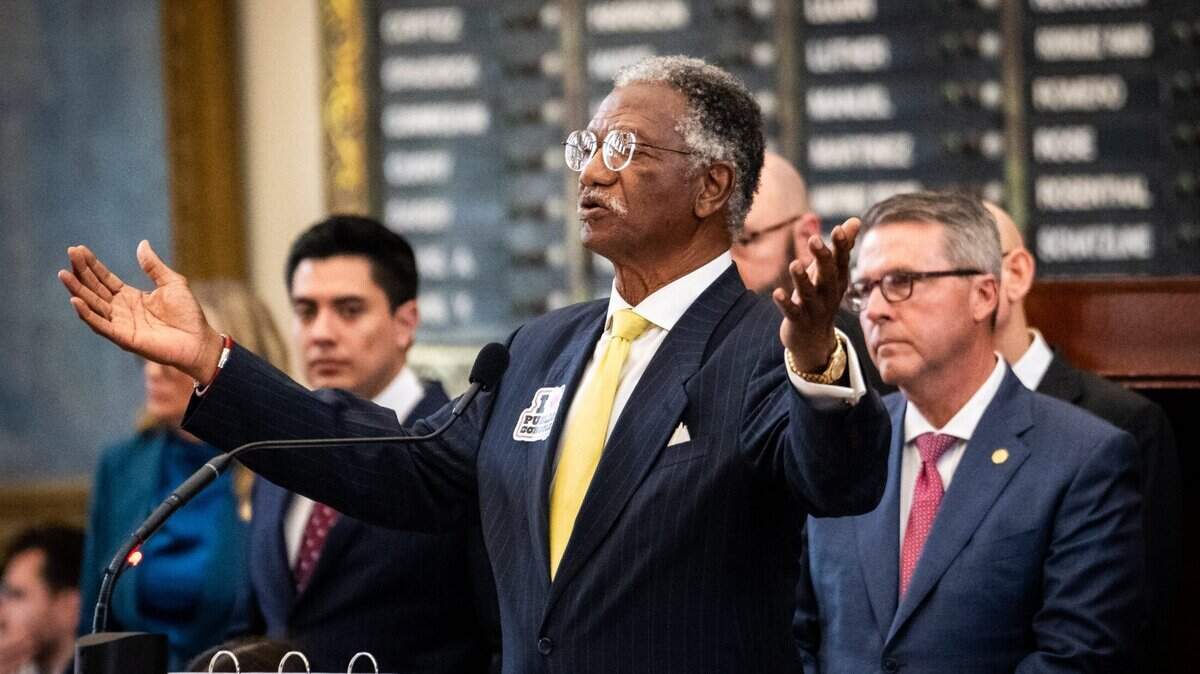
Texas House lawmakers approved a voucher bill on Thursday, following a debate that started late in the afternoon on Wednesday and stretched past 1 a.m.
Democratic House members presented amendment after amendment after amendment, but each failed as they tried to craft a version of the proposal they found more agreeable. Ultimately the bill, Senate Bill 2, was given final approval on an 86-61 vote.
There are still steps before the bill arrives at Gov. Greg Abbott’s desk, but the vote April 17 marks a key hurdle in a chamber that has in the past resisted vouchers.
The proposal next heads back to the Texas Senate.
The bill creates a voucher-like program called education savings account, allowing parents to use $10,000 in state dollars to pay for their child’s private school education or home schooling. The money could go toward tuition and other costs, such as school supplies and tutoring.
The votes of Fort Worth-area lawmakers fell along party lines, with Republicans supporting the bill and Democrats opposing it.
What supporters and opponents say about vouchers
Supporters say education savings accounts are needed to give parents more say in their child’s education, while opponents say the money would be better used on public schools. Some Republicans have also opposed the bill because they see it as a government subsidy.
“Yes, we’re delivering positive improvements in the lives, in the education of our school children, but we have to understand that the enactment of school choice in the year 2025 by this legislature means that Texas is vital and strong and free in the year 2050,” said Rep. Helen Kerwin, a freshman Republican from Glen Rose, speaking in support of the bill as lawmakers prepared to vote.
Rep. Gene Wu, a Houston Democrat, offered a different perspective. Passing this law endangers schools and lawmaker support is politically motivated, he said.
“To the people of this state, nothing will change until you do something,” Wu said.
The voucher-like program in Texas has been years in the making.
Abbott made “school choice” a priority in 2023 but similar proposals have previously stalled in the House, facing opposition from Democrats and some Republicans. Several of the Republicans who have previously voted against school vouchers lost reelection bids — with the help of Abbott — leaving the House better positioned to approve the governor’s marquee issue.
Early in the day, the bill got support from the White House when President Donald Trump called into a House GOP caucus meeting.
The bill already passed out of the Senate but the House has changed it, which means details may be worked out in a conference committee — a group of Senate and House lawmakers who work together to come up with a compromise proposal that’s agreeable to both chambers. The Senate could also vote to accept the proposal as passed in the House.
Abbott in a statement said he would “swiftly sign this bill into law” when it reaches his desk.
“For the first time in Texas history, our state has passed a universal school choice bill out of both chambers in the Texas Legislature,” Abbott said. “This is an extraordinary victory for the thousands of parents who have advocated for more choices when it comes to the education of their children.”
What does the House’s school voucher plan do?
Students participating in the program would get a little over $10,000 for their schooling expenses— 85% of the average state and local funding per student.
Students with disabilities would get that amount plus the amount the school district would otherwise get to pay for the student’s education, up to $30,000.
Home schooled students could receive up to $2,000.
The bill prioritizes students in the following order through a lottery system when there are more applicants than funds available for education savings accounts:
▪ Students with disabilities whose families earn up to 500% of the federal poverty guidelines — $160,750 for a family of four in 2025.
▪ Students who are part of a household that makes at or below 200% of the federal poverty guidelines — less than $64,300 for a family of four in 2025.
▪ Students whose household makes more than 200% but less than 500% of the federal poverty guidelines — between $64,299 and $160,749 for a family of four in 2025.
▪ Students whose household makes 500% or more of the federal poverty guidelines — $160,750 for a family of four in 2025.
Students who have siblings using education savings accounts are prioritized over those who do not, and students who haven’t previously used and then left the education savings account program are prioritized over those who have.
Students who are not U.S. citizens or nationals or lawfully admitted into the U.S. could not use the funds.
State spending for the program is capped at $1 billion for state’s 2026-2027 fiscal biennium.
House lawmakers on Wednesday also spent hours taking up a roughly $7.7 billion public school finance bill, House Bill 2. After an initial vote on Tuesday, legislation passed 142-5 on Thursday, and next heads to the Senate for consideration in committee.
According to summary provided by the House speaker’s office, the bill includes financial support for special education, bilingual education and pre-kindergarten and a $395 increase in the base amount schools get per student, known as the basic allotment. The allotment would go from $6,160 to $6,555. It also includes paths for teacher pay raises, such as a requirement that 40% of the basic allotment go toward pay raises for teachers and staff. Teachers with more than 10 years, then five years of experience are prioritized.
“There are people who claim it’s not enough. There’s also several who claim it’s too much,” House Speaker Dustin Burrows said at a news conference, where he was joined by 10 superintendents from across the state. “But I’ll tell you what, I believe we have struck the right balance for this session to make landmark, historic investments in public education.”
Texas House Democrats’ amendments fail
Laying out the bill at the top of the debate, Rep. Brad Buckley, a Salado Republican and the bill’s House sponsor, said the legislation empowers parents to choose the educational path that best fits their child’s need.
“I believe Senate Bill 2 provides this choice, while prioritizing Texas’ most high needs and vulnerable students,” Buckley said.
Rep. Ramon Romero Jr., a Fort Worth Democrat, raised the point that the education savings account program could be accessed by millionaires while questioning Buckley. Buckley said bill prioritizes funds based on income and that he expects middle class Texas families will use the savings accounts the most.
Later in the day, Rep. Chris Turner, a Grand Prairie Democrat, offered an amendment to strike the bill’s enacting clause, rendering the proposal moot. He argued that education savings accounts would harm the state.
“Are we really willing to trade an efficient system of public free schools that serve all children for an inefficient system of private, expensive schools that will only serve a privileged few?” Turner said. “That is the question that we have to answer.”
The amendment was postponed by an 85-60 vote.
Public schools are already underfunded, though the school finance bill passed earlier in the day was a step forward, Turner said.
“But if this bill passes, Senate Bill 2 passes, and siphons $1 billion from our neighborhood public schools, it will be much more than two steps back,” Turner said.
Turner’s amendment was one of a series of more than 40 amendments by Democratic lawmakers, all of which were tabled by lawmakers.
Other failed amendments included proposals to align public and private schools, a proposal making those whose household earns more than 500% of the federal income level ineligible for the program and an amendment extending the $1 billion cap on education savings account spending to future years.
Lawmakers also proposed barring state lawmakers and statewide elected officials from using the funds for their children and a requirement that certain districts give parents notice in Spanish of the education savings account program.
Rep. Collier, a Fort Worth Democrat, filed an amendment proposing that all scholarships, grants and other financial aid options be exhausted before a student receives education savings account dollars.
“Let’s not have excess in these accounts,” Collier said. “Let’s only use what is necessary, that way it can be spread out, and that money can go further, and it could be used by more people and more students.”
It too was postponed.
Should vouchers be decided by voters?
Ahead of the Wednesday debate, there were reports of a push to take the school voucher fight to voters as a ballot measure.
Rep. James Talarico, an Austin Democrat who has been a vocal opponent of vouchers, offered the amendment on the floor late in the afternoon. It was tabled 86-62, with one lawmaker present but not voting. Former House Speaker Dade Phelan of Beaumont was the only Republican to join Democrats in supporting the proposal.
The voters of the Texas should have the final word, Talarico said.
“It’s the only thing that will put this issue to bed,” Talarico said.
Dozens of House Democrats support killing all constitutional amendments brought to the House for consideration unless the vouchers issue is added to a November ballot, the Texas Tribune reported on April 15. The Quorum Report reported on April 14 that some Republicans also support taking the issue to voters and that Abbott was fighting to keep that from happening.
Some of Abbott’s key priorities — bail reform and property tax cuts — could come in the form of constitutional amendments, which must be approved by voters.
“Lets be clear about what’s happening here: Texas Democrats are preparing to block property tax relief and to allow violent murderers back on the streets with low bail, all to serve their teachers union overlords who think they know better than Texas parents what their children need,” Abbott spokesperson Andrew Mahaleris said in a sstatement. “School choice was on the ballot last November, and Texans elected a school choice majority in the Texas Legislature. When it comes to education, parents matter, and families deserve the ability to choose the best education opportunities for their children.”
Talarico said some members had received threats from the governor of their bills being vetoed and “blood bath” primary challenges if they supported the amendment. Mahaleris said that’s not true.
“Governor Abbott has been speaking with members encouraging them to vote for school choice,” he said in a emailed statement.
This story was originally published April 17, 2025 at 2:21 AM.
CORRECTION: Students must be a U.S. citizen or national or lawfully admitted into the United States to be eligible for education savings accounts. A previous version of this article incorrectly stated the eligibility requirements.