
This new Texas law aims to protect kids from e-cigarettes
AI-generated summary reviewed by our newsroom.
- Gov. Greg Abbott signed SB 1316, banning e-cigarette ads near schools, churches.
- The law targets youth exposure to nicotine marketing, not product sales themselves.
- SB 1313, still pending, would restrict logos and images on e-cigarette packaging.
Everyone is talking about Senate Bill 3, which would ban THC products including gummies, vapes and drinks across the state if Gov. Greg Abbott signs the bill into law.
But did you know the Texas Legislature also passed another bill related to the sale of drugs in Texas?
Abbott signed Senate Bill 1316 into law on May 21. SB 1316 amends the Texas Health and Safety Code to ban the advertising of tobacco and e-cigarettes within 1,000 yards of schools and churches. So, no more billboards or posters for e-cigs near those locations. The law was amended to include e-cigarettes and goes into effect Sept. 1, 2025.
Here’s why this is important.
Why is SB 1316 necessary?

According to the Centers for Disease Control, e-cigarettes were the most commonly used tobacco product among middle and high school students in the U.S. during 2024. The CDC associated e-cigarette advertising with its use by minors, citing a statistic that 7 in 10 U.S. middle and high school students reported exposure to e-cigarette marketing in 2021.
Another proposed Senate Bill, SB 1313, intends to regulate the cartoons, logos and images displayed on e-cigarette advertisements. This bill was sent to Abbott on June 1 but has not yet been signed.
According to research conducted by the Campaign for Tobacco-Free Kids in 2008, children are three times more susceptible to tobacco advertisements than adults, and marketing influences them to smoke more than their peers do.
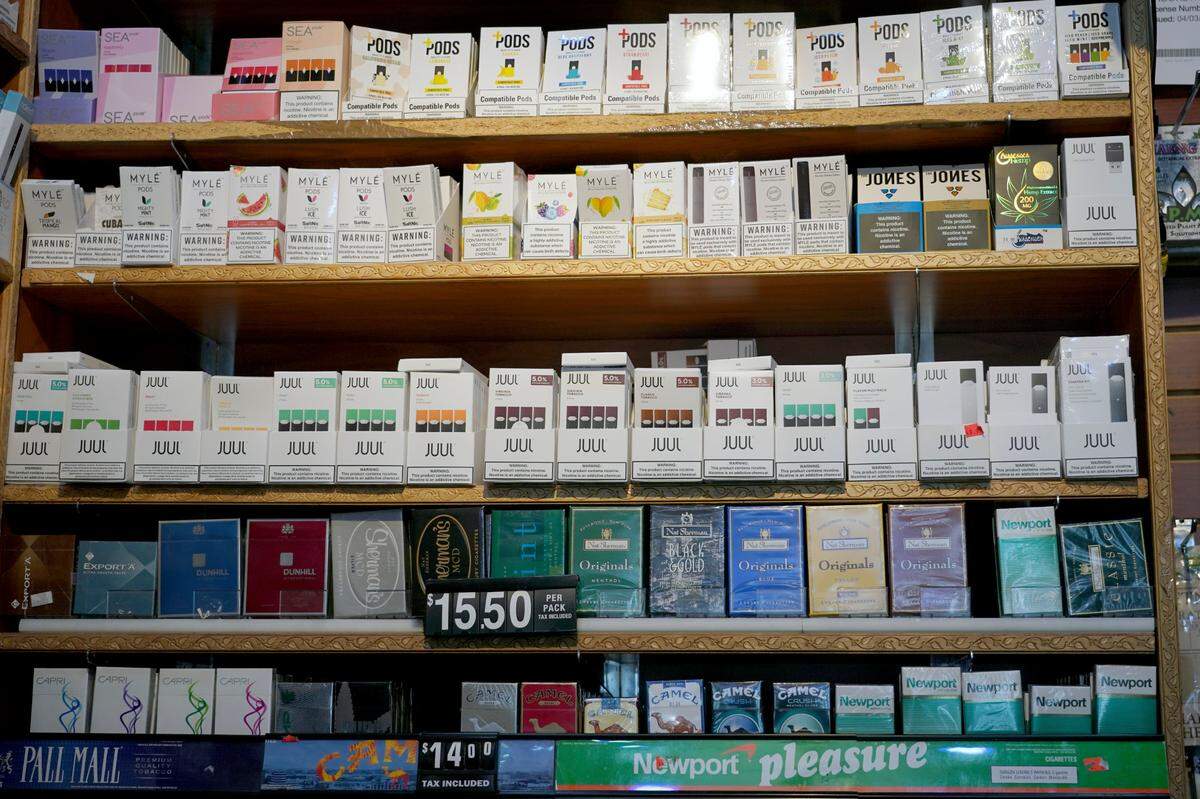
Studies say tobacco industry targets youth
Wrappers for e-cigarettes and vapes coat gas station shelves with neon colors and artificial, candy-like flavors.
Packaging and advertising play an integral role in sales for the tobacco industry. In fact, studies have shown that tobacco companies specifically target minors for their sales.
One 2021 study by the Institute for Global Tobacco Control and the Johns Hopkins Bloomberg School of Public Health showed that worldwide, the tobacco industry targeted children in four different ways:
Displaying cigarettes near snacks, sweets and sugary drinks
Placing cigarette advertisements near the eye-level of children
The advertisement and display of flavored cigarettes
Selling single sticks of cigarettes (also known as “loosies,” which are prohibited by federal law in America)
Under federal law, you must be at least 21 years old to purchase a tobacco product. However, the CDC reported that 1.21 million high school students and 410,000 middle-school students used e-cigarettes in 2024.
This story was originally published June 4, 2025 at 12:12 PM.