Tarrant DA asks AG if custody investigation law applies only to deaths within jail walls
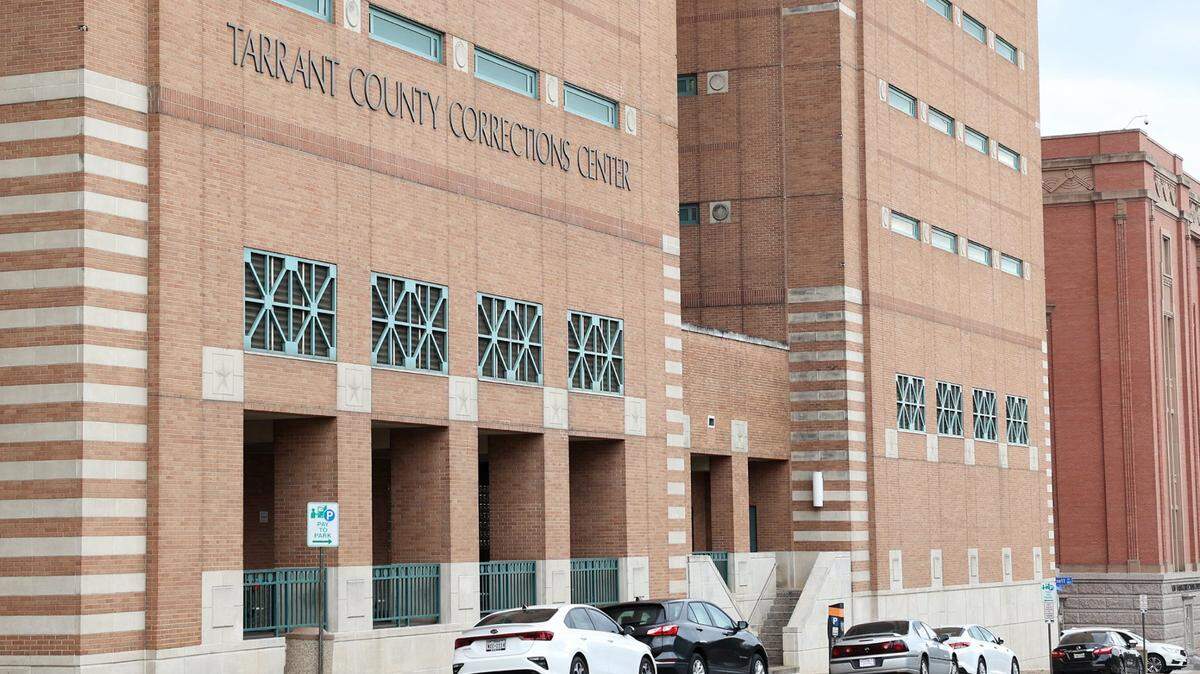
The Tarrant County District Attorney’s Office has asked the Texas Attorney General’s Office to weigh in on a statute created by the 2017 Sandra Bland Act that mandates independent investigations of deaths in county jails.
Dated March 21, the letter, known as a Request for Opinion, asks the AG if the phrase “the death of a prisoner in a county jail” applies only to those inmates who die within the premises of a county jail but not to those inmates who die in a sheriff’s custody outside the premises of a county jail.
At least 56 of the 70 deaths of people in Tarrant County Sheriff’s Office custody since Sheriff Bill Waybourn took office in 2017 have been recorded as taking place in John Peter Smith Hospital, not on the jail premises.
The section of the Texas Government Code in question states, “On the death of a prisoner in a county jail, the (Texas Commission on Jail Standards) shall appoint a law enforcement agency, other than the local law enforcement agency that operates the county jail, to investigate the death as soon as possible.”
That statute, which was created by the Sandra Bland Act, “imposes an unnecessary and unfair burden on county sheriffs and outside law enforcement agencies to investigate routine or noncontroversial deaths that do not occur within county jails but happen to befall inmates when they are merely in a sheriff’s custody,” the DA’s letter states.
The Sandra Bland Act, named after a Black woman who died in jail near Houston after being arrested over a traffic violation, sought to enshrine additional layers of accountability for how inmates are treated in jail, particularly those with mental health or intellectual disabilities.
The statute creates “debilitating staffing challenges” for sheriffs and other outside law enforcement agencies that are appointed to investigate in-custody deaths, the letter continues. “As a result, scarce law enforcement resources are being diverted needlessly to the investigation of non-controversial custodial deaths that occur outside of county jails.”
The DA’s Office said in a written statement that it is not advocating for either side of this issue by asking the AG for his opinion.
“The Texas Commission on Jail Standards interprets this to mean any person in the custody of a sheriff, including a person who dies of natural causes in a hospital under a doctor’s care. The legislature has said it was not their intent to include deaths of natural causes occurring under a doctor’s care,” a spokesperson said. “The District Attorney wants to know which is the correct interpretation.”
The AG’s Office did not immediately respond to a request for comment.
An interpretation that the law only applies to deaths that occur within jail walls provides sheriff’s offices with a scapegoat to evade responsibility, according to Krishnaveni Gundu, executive director of Texas Jail Project, an advocacy group.
“If the AG rules that deaths that occur in hospitals after transfer from jails don’t need independent investigations, then I guess everyone going forward will be listed as dying in the hospital,” she said in an emailed statement.
The request for opinion is the Sheriff’s Office’s attempt “to undermine the intent and spirit of the Sandra Bland Act,” she added. “At what point will they stop and take accountability and make a good faith effort to mitigate some of these harms and deaths?”
The Sheriff’s Office did not immediately respond to a request for comment.
Dean Malone, a lawyer on the subject from Dallas, said Tarrant County is “once again trying to shirk its responsibility” to protect incarcerated people and asking the AG “to help it split hairs about its duty under the Sandra Bland Act to investigate deaths of those who die in Tarrant County custody.”
The “perverse result” of the DA’s interpretation of the law “would be for jailers to quickly drop a near-death detainee into an ambulance, or even a patrol vehicle, and quickly drive off of jail property to avoid accountability,” he said in a written statement. “We should expect better from our governmental officials.”
The DA’s letter mentions a bill filed in the Texas House of Representatives in 2021 by former state Rep. John Cyrier, a Republican from Lockhart. That bill, which passed and went into effect in September of that year, added a provision allowing for the jail commission to appoint a new outside law enforcement agency in the event that an appointed one is able to provide evidence of “a conflict of interest that cannot be mitigated.”
The bill did not change the law’s language regarding where a detainee dies, but the DA’s letter says that Cyrier “has stated that it was never the Legislature’s intent for outside law enforcement agencies to be required to investigate prisoner deaths that occur outside of the jail, such as in a hospital.”
Cyrier did not return a voicemail seeking comment.
The DA’s letter also mentions a 2023 bill filed in the Texas Senate by Brian Birdwell, a Republican from Granbury whose district takes a thin slice out of southeast Tarrant County.
Birdwell’s bill ultimately failed, but the DA’s letter notes how its purpose was to amend the statute to exclude “lawful or natural deaths.”
Birdwell’s office did not immediately respond to a request for comment.
Michele Deitch, director of the Prison and Jail Innovation Lab at UT Austin, served as an expert consultant to one of the key authors of the bill. She highlighted the importance of independently investigating deaths that are attributed to natural causes, because they can be “entirely preventable.”
“There’s an assumption here that just because a death is ‘natural,’ that it means there is nothing to be concerned about. But that’s not the case,” she said in a written statement.
A detainee could be ignored for too long in their cell after a heart attack, she said as an example. There is also the possibility of an incarcerated person dying as a result of negligent medical care or a failure to follow protocols meant to stop the spread of an infectious disease, she said.
“Without an independent investigation, the public and policymakers would never know that the so-called ‘natural death’ was attributable to something jail staff did or didn’t do, and there would be no guidance as to how such deaths could be prevented in the future,” Deitch said.
Confusion appears to have surrounded this statute since its inception. A Star-Telegram investigation published in February found that the jail commission had not been making the appointments for the last seven years.
On Monday, the commission posted its first-ever appointments of outside agencies for nine in-custody deaths that have occurred since March 1.