Texas jail commission hasn’t complied with custody death investigation law for 7 years
The Texas agency responsible for regulating county jails has failed for years to ensure that all inmate deaths are investigated by independent third-party law enforcement agencies, a key provision of the state’s 2017 Sandra Bland Act.
Instead, the state’s sheriff’s offices that operate the jails have been able to choose which law enforcement agencies they want appointed to investigate deaths of inmates in their custody.
That erodes public trust in transparent, thorough examinations of how and why people die in Texas jails, say legal experts and watchdog groups. At worst, it creates opportunities to conceal failures or wrongdoing by jailers, medical staff or arresting officers, as well as broader systemic issues with conditions in corrections facilities.
Last fall, state regulators acknowledged that they had only recently discovered that more than two dozen Tarrant County jail deaths since 2021 hadn’t been independently investigated by an outside entity. They blamed, in part, a backlog of cases since the pandemic. Since then, the Star-Telegram has learned that sheriff’s offices were able to choose which agency they want to investigate their jail deaths.
The Tarrant County Sheriff’s Office says that jail deaths are “reviewed and investigated” by multiple entities.
The Sandra Bland Act, named after a Black woman who died in jail near Houston after being arrested over a traffic violation, sought to enshrine additional layers of accountability for how inmates are treated in jail, particularly those with mental health or intellectual disabilities. The law requires the state’s regulatory agency, the Texas Commission on Jail Standards, to “appoint” third-party law enforcement to investigate deaths “as soon as possible.”
A few months after the law was signed, the commission’s executive director, Brandon Wood, sent a memo to Texas sheriffs and jail administrators requiring they send the commission a list of agencies they approved to investigate in-custody deaths, which he called a custodial death notification roster. A Star-Telegram reporter recently found the Dec. 21, 2017, memo posted online after learning of the existence of the rosters.
This means that the Texas Commission on Jail Standards has not complied with the law for nearly the entire time it has been on the books, said Michele Deitch, director of the Prison and Jail Innovation Lab at UT Austin. Deitch, who served as an expert consultant to one of the key authors of the bill, said she was unaware that the commission was interpreting the law this way until the Star-Telegram brought it to her attention.
“It violates both the letter and the spirit of that statute,” she said in an interview. “The whole intent of the provision in the Sandra Bland Act was to ensure that it was an independent, unbiased, objective investigation, something that the public could trust, that policymakers could trust, that it isn’t self-interested the way it would be if it’s an agency investigating itself.”
In Tarrant County, 26 deaths of people in the custody of the Tarrant County Sheriff’s Office between October 2021 and July 2024 were not investigated by independent agencies as a result of the commission’s failure to comply with the law. The Fort Worth Police Department was listed on the custodial death reports sent to the Attorney General’s Office as the investigating agency for the deaths, but it was only reviewing the Sheriff’s Office’s investigations of those deaths, according to a police spokesperson.
“It’s allowing agencies to figure out who’s going to investigate them,” Deitch said. “That defeats the entire point of independence. The whole idea is that you don’t want it to be tainted by any appearance of impropriety, any appearance that there’s a conflict of interest.”
Wood, the jail commission’s executive director, did not respond to interview requests for this story, but acknowledged that the commission merely approves investigating agencies chosen by sheriffs.
Others agree: Texas jail commission not following the law
Multiple lawyers and advocates for families of people who have died in jails agree with Deitch that the commission has been in violation of the law for over seven years.
The provision on investigations into deaths in county jails is “pretty clear,” according to Dean Malone, a lawyer on the subject from Dallas.
“It says on the death of a prisoner in a county jail, the commission shall appoint a law enforcement agency other than the local law enforcement agency that operates the county jail, to investigate the death as soon as possible,” he said. “That’s not happening to my knowledge.”
Malone represented the family of Georgia Baldwin, a mentally ill woman who died in the Tarrant County jail in September 2021. The county agreed to pay her family a $750,000 judgment in September 2024.
The commission’s failure to appoint third-party agencies has led to what Malone calls a “rubber stamp” review of sheriff’s office accounts of what happened.
“They don’t come in and interview witnesses, they don’t try to subpoena their own records to conduct an investigation,” he said.
A spokesperson for the Tarrant County Sheriff’s Office, Laurie Passman, said it is not an “accurate characterization to suggest” that deaths in the jail weren’t investigated by outside agencies.
In an emailed statement, she said that “all in-custody deaths are reviewed and investigated by Tarrant County Sheriff’s Office jail staff, the TCSO Criminal Investigations Division, an outside law enforcement agency, JPS Medical Staff, The Texas Commission on Jail Standards, the Tarrant County Medical Examiner’s Office and the Texas Attorney General’s Office.”
The Texas Commission on Jail Standards does not investigate deaths, its director told the Star-Telegram. JPS Hospital and the county medical examiner are not law enforcement agencies, and jail staff and Criminal Investigations Division deputies are part of the Sheriff’s Office.
The Texas Attorney General’s Office maintains a database of custodial deaths but does not investigate them. A staff member in the office’s Criminal Prosecutions Division, which receives notifications of in-custody deaths, confirmed that the agency does not conduct its own investigations into those deaths.
The rosters from the sheriff’s offices are ostensibly meant to help expedite investigations of deaths that occur during off hours like nights and weekends, according to Krishnaveni Gundu, executive director of Texas Jail Project, an advocacy organization for incarcerated Texans and their families.
“But in reality, this has allowed the Tarrant County jail to thwart the law and pull the wool over the eyes of the public and the Commission for nearly three years,” she said in an emailed statement.
“To add insult to injury, families who have lost loved ones in the custody of Sheriff (Bill) Waybourn have been traumatized repeatedly by the lack of any remedial measures from the only regulatory agency with any power to do so,” Gundu said, referring to the jail commission. “What’s more disturbing now, is that the intent and the letter of the law continue to be violated, and (the jail commission) continues to refuse the implementation of any substantive changes in the process.”
The commission’s oversight has broader implications for systemic issues in county jails, as well, experts say.
In early February, a federal judge dismissed Tarrant County from a wrongful death lawsuit brought by the family of Anthony Johnson Jr., a Marine veteran who died during an altercation with guards in April 2024. Johnson’s death was ruled a homicide, and two jailers face murder charges.
The judge ruled that the lawsuit failed to prove that Johnson’s death was a result of broader “conditions of confinement,” attributing his death to the isolated acts of the individuals involved.
Proper third-party investigations serve to document such systemic issues, said Deitch, the UT professor.
“You want to get into some of the deeper questions,” she said. “Is the jail understaffed? Is there a lot of contraband coming into the jail? If someone’s dying of drugs, is there a problem with drugs in the jail?”
Who is responsible for the Tarrant County jail deaths that were not investigated?
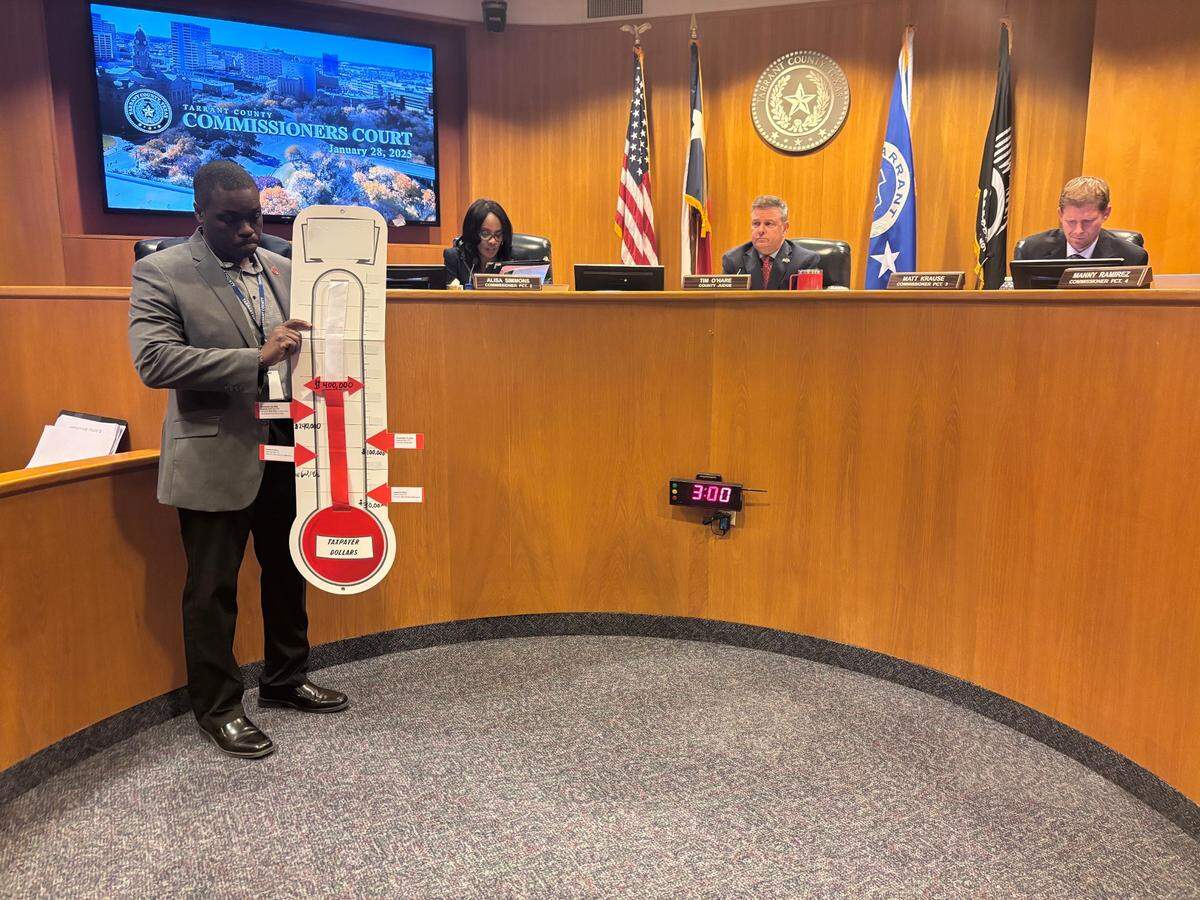
Wood, the jail commission’s executive director, has changed where he lays the blame for the 26 Tarrant County deaths not investigated per the Sandra Bland Act in the months since they were uncovered.
In October, he told KERA that the commission didn’t realize that they weren’t being investigated by an outside agency. He said the Tarrant County Sheriff’s Office was the agency in violation of the law.
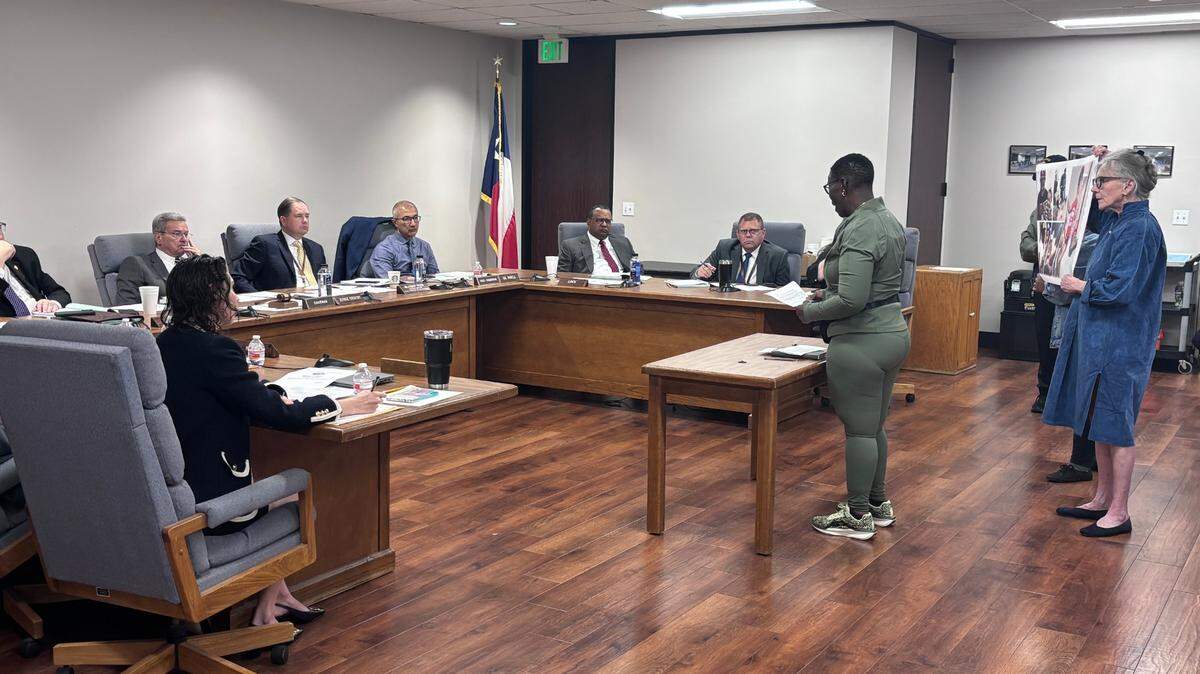
Such finger-pointing was common practice at the commission’s quarterly meeting in early February, where families, friends and supporters of people who have died in custody of the Tarrant County Sheriff’s Office asked the commission to deem the jail out of compliance with minimum standards. The commission declined.
After the meeting, Wood, contradicting what he said to KERA, told the Star-Telegram that the agency at fault was the Fort Worth Police Department. The commission contacts investigating agencies once a quarter to request finalized death investigations, he said. The commission did not receive them from Tarrant County “for quite some time,” he said.
A police department spokesperson called Wood’s assertion a “misrepresentation,” saying such investigations do not fall within its purview.
Shannon Herklotz was hired as Tarrant County’s new jail administrator in January. His experience includes over two decades at the jail commission, including as deputy director. When asked about the deaths that did not receive outside investigations after the jail commission’s February meeting, he blamed the Texas Rangers, the state agency that has conducted those investigations in the past.
“Not sure what to do when the Texas Rangers tells you they’re not going to show,” he said.
In response to those deaths not being independently investigated, Gundu of the Texas Jail Project said she is working with state Rep. Nicole Collier of Fort Worth on a bill “to address the lack of transparency and accountability in custody deaths and the manner in which they are investigated.”
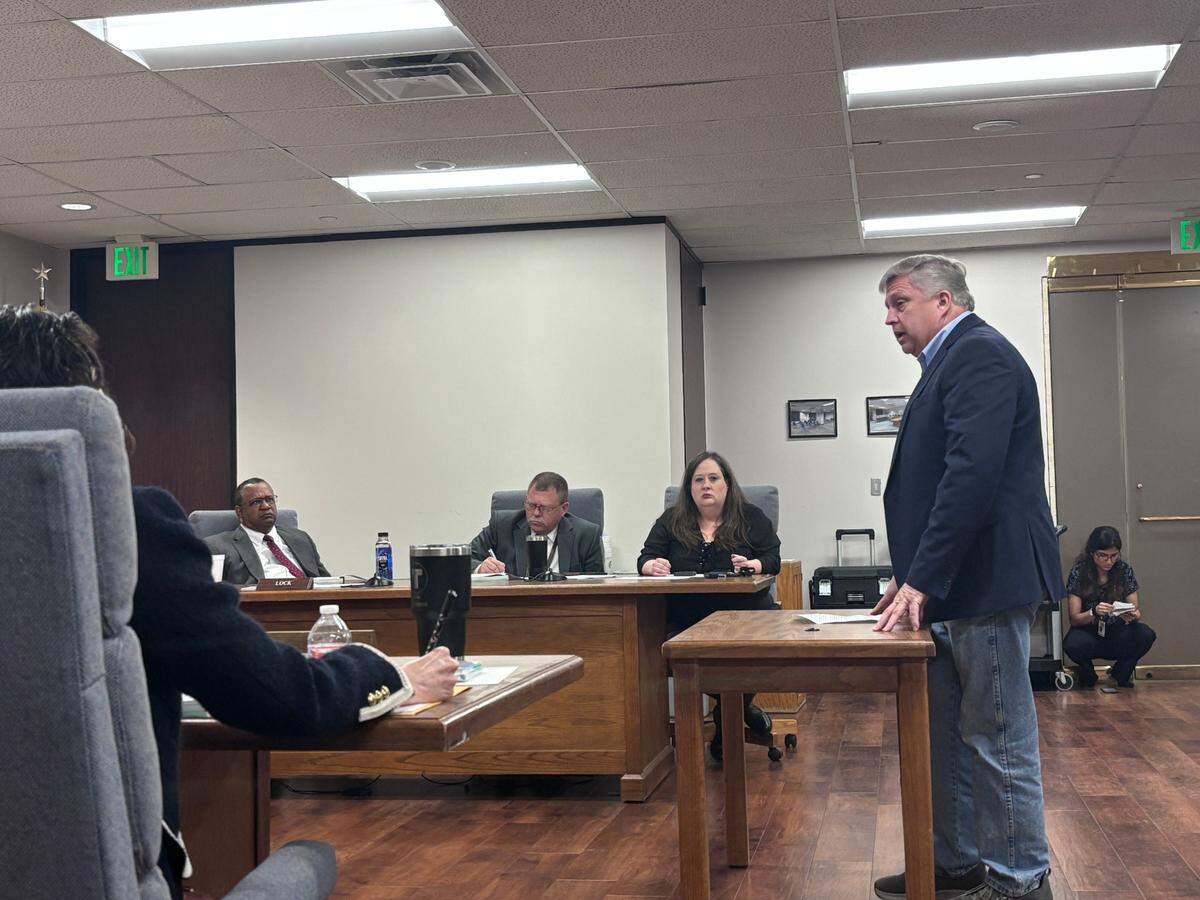
Wood told KERA in October that the Tarrant County Sheriff’s Office was at risk of being declared out of compliance with minimum jail standards if it failed to submit third-party agencies for independent investigations of future jail deaths.
Until mid-February, the custody death reports for Vernon Ramsey and Mason Yancy, both of whom died in custody of the Tarrant County Sheriff’s Office in December, listed Fort Worth police and the county medical examiner as investigating agencies. Days after the Star-Telegram sent questions to Wood about this, the Collin County Sheriff’s Office was enlisted to investigate the deaths.
The Tarrant County Sheriff’s Office confirmed that the Texas Rangers are investigating the death of Charles Johnson after a suicide attempt on Feb. 8, and that the Denton County Sheriff’s Office is investigating the death of Kimberly Phillips, who died in Tarrant County custody on Feb. 18.
A representative of the Collin County Sheriff’s Office confirmed that the agency is investigating the deaths of Ramsey and Yancy. The Texas Rangers and Denton County Sheriff’s Office did not immediately respond to requests for this information.
This story was originally published February 27, 2025 at 10:03 AM.