Texas jail commission begins appointing outside agencies to investigate custody deaths
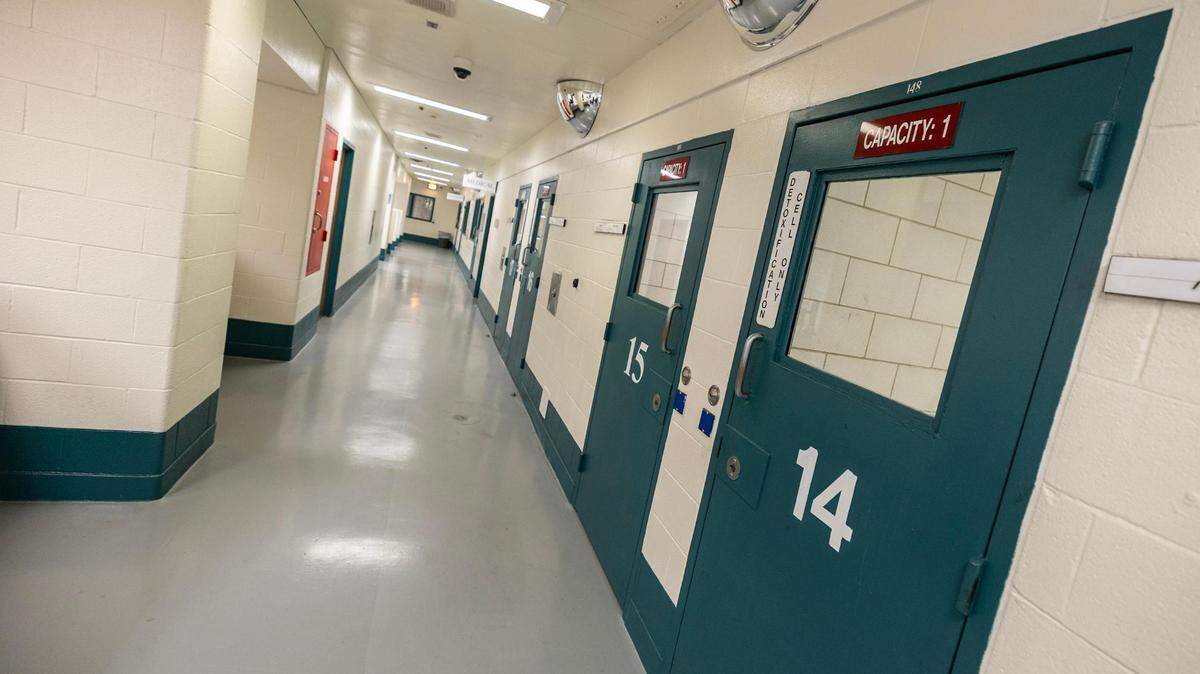
The Texas Commission on Jail Standards posted on March 24 its first list of third-party law enforcement agencies to investigate deaths of people in county jails.
The list’s publication comes after a Star-Telegram investigation found that the commission had not been following state law requiring it to make the appointments for the last seven years.
Posted to the Reports page of the commission’s website, the list includes appointments for nine deaths in county jails in Texas since March 1.
In accordance with the section of the Texas Government Code that governs the commission, “the following Law Enforcement Agencies have been appointed by the Texas Commission on Jail Standards to conduct an investigation of a death that occurred in a county jail,” reads the heading text included with the list.
The Star-Telegram reached out to Brandon Wood, the commission’s executive director, but did not receive a response.
The publication of the list is “a step in the right direction toward transparency in an inherently opaque system that’s designed to protect sheriffs and jails,” according to Krishnaveni Gundu, executive director of Texas Jail Project, an advocacy group.
“We look forward to seeing a more comprehensive list of all deaths that are currently under investigation by an independent law enforcement agency,” she said.
Dean Malone, a lawyer on the subject from Dallas who notified the Star-Telegram of the list’s publication, called it “a good start,” but said some of the appointments on it are “problematic.”
“For example, why would a Bexar County constable be appointed to investigate a Bexar County jail death?” he said in an email exchange. “Families of those who die in Texas jails deserve transparency. They also deserve investigations by agencies which do not appear to be connected to the county at issue.”
Gundu noted that the list does not provide answers to the families of more than two dozen people whose deaths in the Tarrant County jail were not investigated by independent third-party agencies from 2021 to 2023.
In October, KERA confirmed that the deaths of 26 people in Tarrant County Sheriff’s Office custody from that time period were not investigated by outside law enforcement agencies, per the 2017 Sandra Bland Act. Rather, the Fort Worth Police Department performed reviews of the Sheriff’s Office’s internal investigations into the deaths.
In February, the Star-Telegram found that Wood sent a memo to Texas sheriffs and jail administrators in December 2017, less than three months after the Sandra Bland Act went into force, requiring them to send the commission Custody Death Notification Rosters. These were effectively lists of pre-approved agencies to be assigned to investigate in-custody deaths.
The rosters violate “both the letter and the spirit” of the Sandra Bland Act, Michele Deitch, a UT Austin law professor who served as an expert consultant to one of the key authors of the bill, told the Star-Telegram.
The jail commission did not respond to an email asking if the Custody Death Notification Rosters are still valid.
The Sheriff’s Office has submitted two rosters since Wood sent the memo. The Star-Telegram received them through open records requests to the jail commission.
The commission received the first on Dec. 22, 2017, the day after Wood’s memo was sent. It listed two Texas Rangers as the primary and secondary death investigators.
The second roster, which took over for the first, was sent to the commission on Oct. 20, 2021, 10 days before the first death that was not independently investigated. It listed two new Texas Rangers as primary investigator and supervisor, and two Fort Worth police officers as secondary investigator and supervisor.
The secondary investigators were chosen in the event that the primary declined to investigate for whatever reason.
The Fort Worth Police officer listed as the secondary investigator’s supervisor was not aware that his name was on the roster, nor did he know how it ended up there, a spokesperson for the department told the Star-Telegram earlier this month.
For Deitch, the commission’s move to appointing independent agencies is more than simply complying with the law she helped write, “it also means that families who lost loved ones can have more confidence in the objectivity of the investigations. I also hope these independent law enforcement agencies can try to look at underlying factors that contributed to the death, with an eye towards preventing such deaths in the future.
This story was originally published March 25, 2025 at 3:12 PM.