
How many Electoral College voters does Texas have? Learn who represents the state
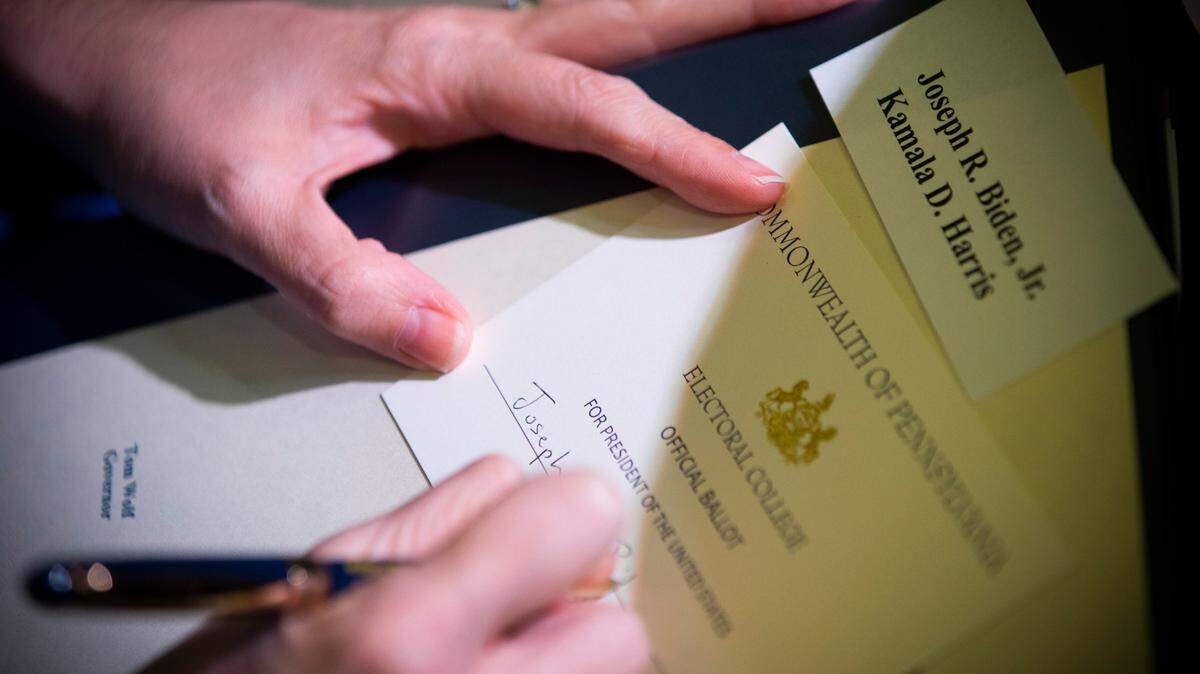
The general election has concluded, but the Electoral College still needs to cast its official votes to finalize the presidential results.
This likely will not change the results of the popular vote. However, there are no Constitutional laws that say an elector has to vote consistently with their state’s majority.
Texas has voted in favor of a Republican candidate in every presidential election since 1980. The last time the Electoral College backed up a Democratic nominee was for Jimmy Carter in 1976.
The slate of electors will gather at the “State Capitol at 2 p.m. on the first Monday after the second Wednesday in December,” according to the Texas Election Code. Electors are not allowed to hold a position in office. Rather, the slate is made up of leaders and pupils with faithful affiliation to the corresponding party.
So who are the Texas electors? And how do you become one?
Who exactly are Texas electors?
The Texas Secretary of State chooses a slate of electors (the same goes for all 50 states). Currently, Jane Nelson serves as the Secretary of State, which also makes her Chief Election Officer.
Electors are appointed by Nelson and the candidates’ political parties. Before the general election, each party chooses a slate of electors. Then, after the general election, the voters cast their ballots, electing the slate with the majority.
According to the National Archives, “The parties either nominate slates of potential electors at their State party conventions or they choose them by a vote of the party’s central committee.”
Electors may be people closely affiliated with the party or presidential candidate or even state party leaders. Each political party in each state has its own set of guidelines to become an elector.
How to become a Texas elector
In Texas, you can become an elector for the Republican, Democrat, or Independent parties. Texas Election Code outlines a few basic qualifications:
Be a qualified voter of Texas
Not hold the office of U.S. senator, U.S. representative, or any other federal office of profit or trust.
To be eligible to serve as a presidential elector for a political party, a person must be affiliated with that party.
Each party in Texas proposes a slate of electors at a State Convention. Delegates from each Congressional district choose potential electors. Each nominee must sign an affidavit that says they will not choose a nominee other than their corresponding party’s presidential and vice presidential nominee. Only those with filed affidavits to the Chairman of the National Nominations Committee will be considered.
It is important to note that to actually become an elector, it would take your devout dedication to your political party. Those commonly chosen are those who attend conventions often.
What are the electors’ responsibilities?
After the general election plays out, the party with the most votes will send their slate of electors to vote in December. In 2024, since President-elect Donald Trump won, the Republican slate will cast 40 electoral votes in his favor.
“Electors do not vote twice for President. When they vote in the November general election, they aren’t electors yet; they are voting for themselves to be electors,” according to the National Archives.
Nelson will hand out ballots to the electors with vacancies for the president and vice president nominees. Once filled out, electors will turn their ballots back to Nelson, and she will read the vote publicly.
“The secretary of state shall accept as cast all ballots of electors whose votes are consistent with their oaths executed,” according to the Texas Election Code, “Except as otherwise provided by law, the secretary of state may not accept and may not count either an elector’s presidential or vice-presidential ballot if the elector has not marked both ballots or has marked a ballot in violation of the elector’s oath.”