‘I thought there was a moratorium?’ How Texas forgot renters during the pandemic
READ MORE
How Texas forgot renters
Tenants paid the price across Texas when leaders failed to enact a long-lasting eviction moratorium and other protections during the coronavirs pandemic. Read the Star-Telegram’s investigation:
Expand All

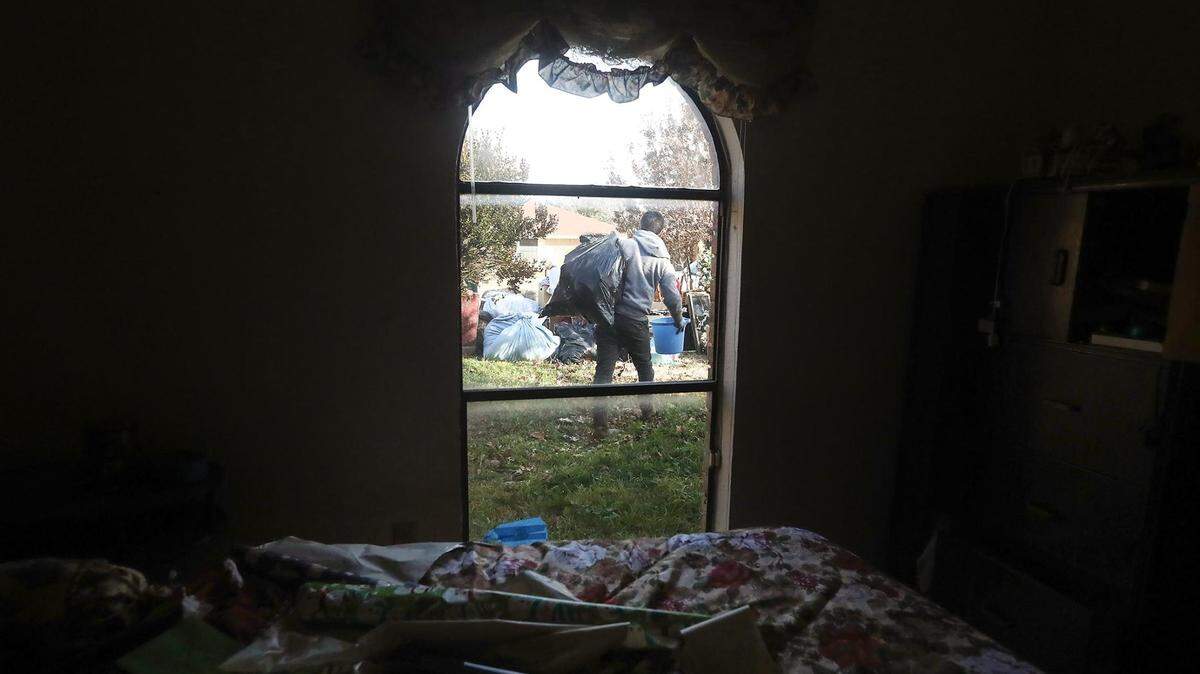
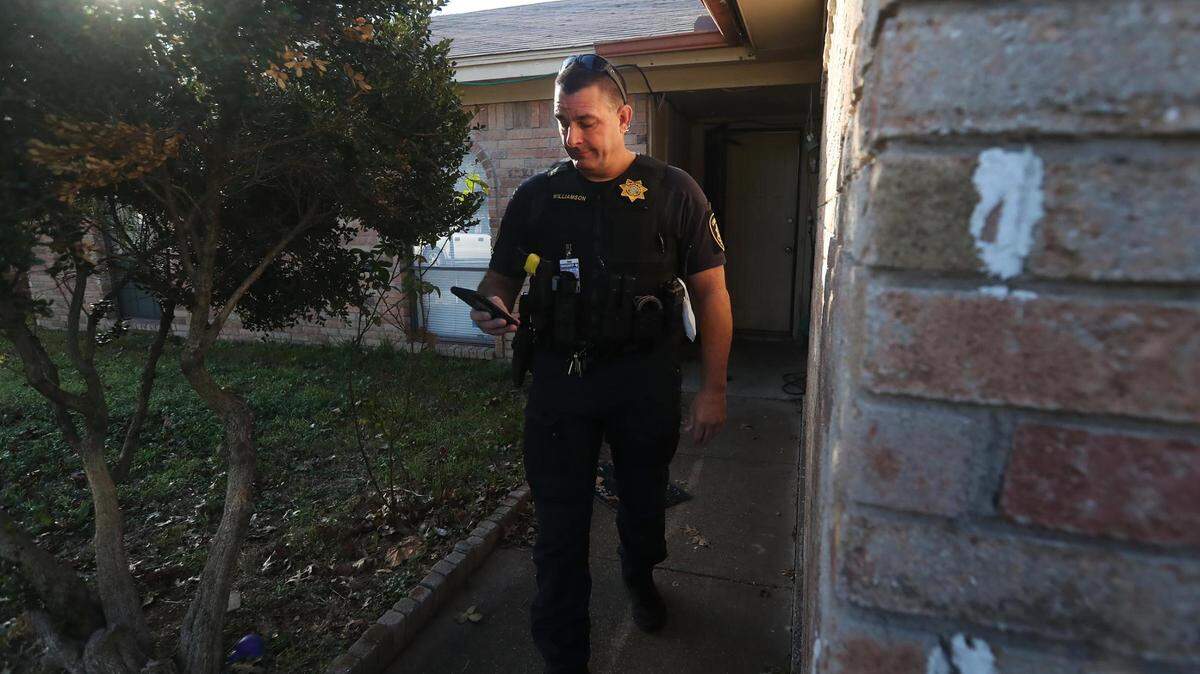
It was a few minutes before 9 a.m., and Gary Dykes felt like smoking a cigarette. “I’m a little nervous,” he said. He sat in a metal folding chair backed against the wall, the lone piece of furniture in his living room. In the kitchen, an iron pot sat on the stove, and a container of cooking oil was on the counter. A few dishes were in the sink.
In late 2019 and early 2020, Dykes had rebuilt his life after moving out of the Presbyterian Night Shelter near Lancaster Avenue. He lived in south Fort Worth and took the TRE most mornings to Irving, working as a flagger on construction projects. After the coronavirus hit, Dykes was one of about 50 people laid off from his company. “They were like, ‘We’re sending people home. We’ll let you know when you can come back,’” he said.
They never did. He lost his job. Then his roommate moved out in late summer. Dykes, 40, fell behind on rent at his $1,040 a month apartment.
His story has been common throughout the country. The Aspen Institute noted last year the U.S. “may be facing the most severe housing crisis in its history.” To save homes in an economy wrecked by COVID, experts called for eviction moratoriums and rent assistance, recommending moratoriums as a temporary safeguard until funding filtered down to renters and landlords, protecting both from disaster. But meaningful federal aid largely did not arrive until early 2021, leaving states and cities to string together limited funding and set their own protective measures for most of the pandemic. So the outcome for people who lost jobs and struggled to afford rent varied greatly, depending on the state and even on the city where they lived.
States like Washington and Connecticut, have kept moratoriums on the books well into 2021. Minnesota asked financial institutions to halt foreclosures for the duration of the pandemic.
Texas, however, crafted one of the weakest responses.
The Star-Telegram spent five months tracking evictions and found the state offered Texans few protections and consistently made them difficult to access. Officials, for instance, rolled back an eviction moratorium after two months and did not enact grace periods for paying back rent, which many states already had. An eviction diversion program, announced by elected officials in the fall, was delayed and considered a failure by many housing rights groups.
The best federal option for contesting an eviction, something called the CDC declaration, was weakened by a lack of awareness and inconsistent messaging from Texas judges and eventually by a recommendation from a state advisory body for judges to stop enforcing it entirely. (One federal judge, in Tyler, also ruled the CDC declaration unconstitutional, briefly casting nationwide doubt over its legality.) And despite officials emphasizing assistance for renters, Texans have struggled to tap into limited federal funding made available through cities, counties and eventually the state, and that was if they knew where to look.
The result has been thousands of evictions filed against Texans who would have been protected in other states — all at a time when their elected officials described them as a top priority. Public health has faltered, too, with a UCLA study projecting nearly 4,500 excess deaths and 150,000 excess coronavirus cases in Texas because evicted people were forced to move in with friends and family or into homeless shelters. When the Princeton Eviction Lab researched COVID-19 housing policies across the country, Texas was one of only nine states to earn a zero rating.
“There’s been what I would describe as a safety net in place,” said Christina Rosales, deputy director of the housing rights nonprofit Texas Housers, “but it is very frayed and people are slipping through it.”
Exactly how many is hard to calculate. Texas does not track evictions at a statewide level, and many counties, including Dallas County, do not have electronic filing systems. Tarrant County, according to research firm January Advisors, saw around 11,500 eviction filings from mid-March 2020 to mid-March 2021. That’s around one-third of its traditional annual total but far more than other places that enacted protections. The entire state of Minnesota, for instance, had around 1,300 eviction filings in the last year, according to data from the Princeton Eviction Lab. Travis County had about 900 eviction filings.
Some of the worst days for Tarrant County renters were near the end of 2020. The stimulus payment was a distant memory, the economy was teetering, and Fort Worth did not offer a moratorium, like Austin, or a 60-day grace period for catching up on rent, like Dallas. As eviction filings picked up — to more than double the summer rate — the Star-Telegram followed their trail and found people facing the most dire circumstances, unaware of or unable to use the protections they were supposed to have.
In late December, Dykes received a final notice of eviction printed on a bright red piece of paper, saying he had to be out by 9 a.m. on Dec. 28. In all-caps, the notice blared, “Warning: Your Time Has Expired.”
BEHIND THE STORY
MOREHow we did this story
To report this story, the Star-Telegram followed eviction filings in late 2020 and visited several apartment complexes where multiple evictions had been filed. We continued to speak with some of the people facing evictions throughout their eviction process to glean details about the obstacles they faced along the way.
We also interviewed several experts, including attorneys and activists for landlords and tenants, and compared available evictions data across Texas cities and in Texas compared to other states in the U.S.
The slide from middle class to eviction court
Three weeks before Christmas, Myesheia Westmoreland had plenty to worry about. She didn’t have a tree, much less presents for her boyfriend’s three boys. And then there was the biggest concern of all: Would they have a place to live by the time the holiday rolled around?
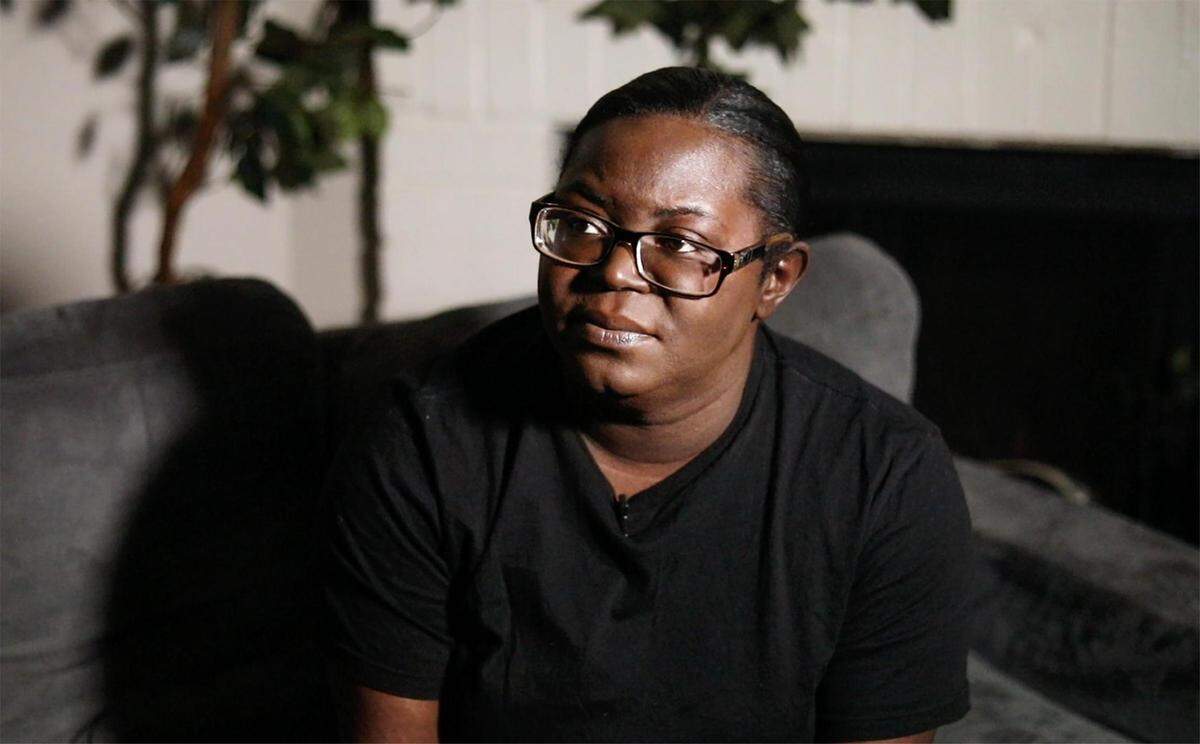
In early December, she received an eviction filing on the same day as eight neighbors at Lofton Place in east Fort Worth. The complex has a steel gate for security, two swimming pools, a tennis court and a bark park for pets. It’s not the first place you would expect to see eviction filings, and Westmoreland, 36, did not expect she would face an eviction. A year ago, she had a job doing transcriptions for the hearing impaired. She felt secure enough to take in her boyfriend’s three young boys, albeit in the tight quarters of a one-bedroom apartment.
Then, in February 2020, her employer lost a major client, and Westmoreland was one of many workers laid off. Around the same time, her Chrysler Pacifica broke down. She wasn’t overly concerned, figuring she could find another job given her years of experience. “And then, boom, the pandemic,” she said. Nobody was hiring, and her boyfriend lost his job. The bills piled up.
They found temporary relief — unemployment for her boyfriend, a part-time job at Lowe’s, the federal government’s $1,200 stimulus checks — and clawed together $4,000 in back rent. But in July, the increased unemployment benefits ceased. Westmoreland looked for jobs and mostly found work-from-home scams. They went to food banks. Their back rent crept up again.
This quick slide from stability to eviction is not uncommon in Texas. About 45% of renters are cost-burdened, meaning they spend more than 30% of their income on rent. (About half of the cost-burdened renters spend more than 50%.) A lost job, car accident or health emergency can place them on the brink of losing their home, and coronavirus was an unforeseen crisis to all Texans, plunging the 1.4 million who lost jobs in March and April 2020 into financial precarity. An economic surge in the summer and fall brought many of them back to work. Yet by the end of 2020, according to Texas Workforce Commission data, Texas had about 550,000 fewer jobs than the year before and a worse unemployment rate than the U.S. as a whole.
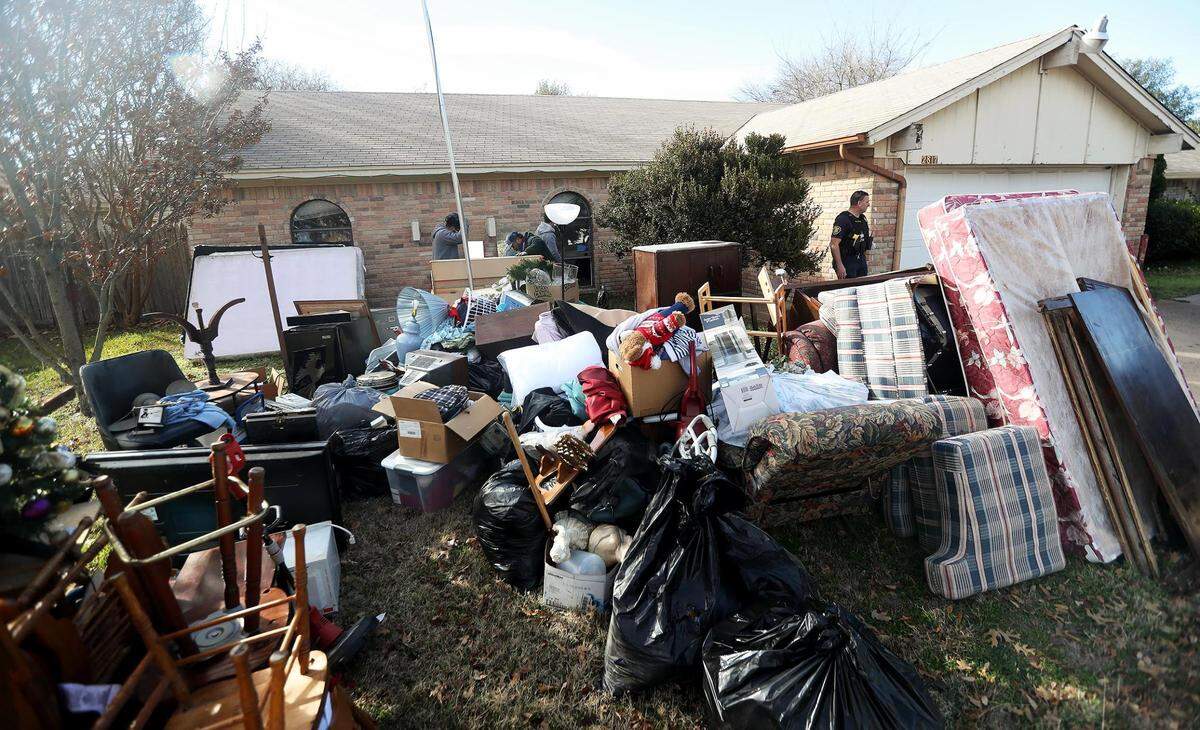
People who had just enough during the good times felt the heat. Nearly half of Texas households believed they would face eviction or foreclosure in early January, according to Census data. At apartment complexes where evictions had been filed, the Star-Telegram saw mattresses and couches left by dumpsters. We saw eviction filings posted on apartment doors where nobody appeared to be living. At Westmoreland’s complex, resident Anita Gardner watched plenty of neighbors pack their bags last fall, uprooting their lives overnight. “It’s really bad,” she said.
The pinch was apparent to the organizations that help renters in DFW. Legal Aid Northwest Texas used to have a three-hour weekly staff meeting to discuss cases. Last fall, those meetings took hours longer, sometimes stretching into the next morning, and the organization hired new attorneys to deal with the increased volume. The Dallas-based Texas Tenants’ Union, led by Sandy Rollins and Yasmin Thomas, had never experienced such high demand for their assistance than in the last year.
“I can talk to 40 people in a day,” Thomas said, “and still have 20 calls to make after that because of the volume of people who are just desperate, not knowing what their rights are, not knowing who to go to.”

Thomas tries to inform callers of their options, as many Texans have no idea how to obtain rental assistance. All Dykes knew was to ask various churches. One provided $400. “Everybody else was like, ‘we don’t have the funds,’” he said.
The main funding streams came through the federal government, but last year they were largely limited to a relief package passed through the CARES Act in March 2020. As of April 2021, the city of Fort Worth had given around $7 million of federal funding for direct housing payments since the pandemic began, providing assistance for rent, mortgage and utilities to around 3,000 households, according to neighborhood services director Victor Turner. It gave another $5.8 million of federal funding to nonprofits in 2020, about $400,000 of which was reserved for housing services, according to a budget analysis from the city.
Many renters found the applications rife with federally-mandated red tape, particularly a requirement for landlord approval. As of March 2021, Tarrant County had awarded $7.7 million to 2,400-plus households. But some 600 more renters were approved for assistance and never received funding because landlords refused to participate, according to Kristen Camareno, who oversees assistance programs for Tarrant County.
Arlington resident Norma Sparks realized her landlord did not fill out their required portion when she received an eviction notice. “I thought they had took care of it,” she said. “And since they didn’t, I feel like they should’ve come to me.” (Her property management did not respond to an interview request).
Property owners had similar problems. Between a cascade of executive orders and Texas Supreme Court rulings they didn’t always know how to best help their renters — and help themselves. In many Texas cities and counties, including Tarrant and Fort Worth, the landlords could not directly apply for the federal assistance most of last year, placing them in a tough spot if renters weren’t proactive in seeking the funding or struggled to compile needed documentation. “Some of the grantee agencies wouldn’t even talk to a landlord to provide status,” said John Gillespie, who leases out 14 properties in Dallas-Fort Worth. He said the communication improved over the course of the pandemic, although he and his tenants still waited around 90 days from when they turned in an application to when they received funding.
For one nonprofit program, Westmoreland said she had to get a signature from a previous employer who was no longer working from the office, and the company would not give her the new phone number for her manager. “There’s tons of roadblocks with even getting assistance or getting help,” Westmoreland said.
In November, she finally found a decent paying job through a temp service. Her family was still behind on rent, however, and she said her apartment’s property management declined to work through a payment plan. (Management did not respond to an interview request.)
One potential solution was stapled in the back of the eviction filing she received. Westmoreland didn’t know to look for it, or how to use it. Few renters in Texas did.
Texas’ flawed defense for tenants in the pandemic
When Collin County attorney Jack Fan spoke on a Zoom panel this year with attorneys from Illinois and New York, he was shocked to learn their strategies for defending renters. The states had created multiple layers of defense for the pandemic. Texas, on the other hand, had not initiated any significant statewide protection since withdrawing an eviction moratorium on May 19, 2020. (Out of the 43 states with moratoriums, only five ended theirs earlier than Texas, and 17 states kept moratoriums through at least February 2021.)
Fan, who represented clients through a pro bono network called Dallas Evictions 2020, relied on something the out-of-state lawyers rarely touched: the CDC declaration. “That was our first line of defense,” Fan said.
The CDC declaration was enacted Sept. 4 as part of an executive order titled “Temporary Halt in Residential Evictions to Halt the Spread of COVID-19.” It postponed late rent evictions, originally until Dec. 31, 2020, and eventually all the way to June 30, 2021, for anyone who made less than $99,000 ($198,000 for joint tax return households), faced financial issues from the pandemic, had sought rental assistance and tried negotiating with their landlord. Upon signing the executive order to create the declaration, President Donald Trump said, “I want to make it unmistakably clear that I’m protecting people from evictions.”
But as the pandemic wore on in 2020, confusion over the declaration was obvious. One person facing eviction in December said to a Tarrant County justice of the peace, “I thought there was a moratorium? Isn’t there a moratorium on evictions until Dec. 31? Isn’t that true?” It wasn’t. As Fan notes, the CDC declaration is not a moratorium. It does not block landlords from filing evictions. For the declaration to work, renters must know it exists and know to turn it into their landlord and the court.
Mark Melton, who founded Dallas Evictions 2020, was direct in his assessment. “The CDC order,” he said, “is kind of worthless for most people.”
Melton believes 80% of the thousands of renters helped by his organization didn’t know about the CDC declaration. In Tarrant County, the research firm January Advisors estimated the CDC declaration had been used in about 25% of 8,000 eviction filings from September to March, a share far below who likely qualified. “I would bet that 99% of folks being evicted for nonpayment of rent are eligible for this,” said Stuart Campbell, an attorney for Legal Aid of Northwest Texas.
The Texas Supreme Court ordered a copy of the declaration be included with eviction filing paperwork. But tenants, Melton said, “have no idea it’s there because they see boilerplate legal language on the first page and never flip to the second one.” Arnetta Porter, another Legal Aid of Northwest Texas attorney, said the eviction courts could have done more to make the declaration visible, like printing it on colorful paper or placing it at the front of the filing.

The Star-Telegram attended several eviction hearings in December and January. From what we witnessed, the justices of the peace all enforced the CDC declaration, but they went to varying lengths to explain it. (The JPs are not supposed to offer legal advice, so it can be a difficult line to walk.) Justice of the Peace Jason Charbonnet, for instance, asked landlords if they had received the CDC declaration, but he did not ask tenants if they had presented one. Ralph Swearingin, another justice of the peace, told renters who had been unaware of the declaration they could still turn it in after he made a judgment against them, up until the stage of the eviction process where they are forced out of their apartments.
Legal representation, which the vast majority of tenants lack, made a difference. Last fall, Legal Aid Northwest Texas asked five of Tarrant County’s eight JPs if they could send a pair of attorneys to address tenants before the start of eviction hearings. Two JPs, Lisa Woodard and Christopher Gregory, allowed them to visit their courtrooms until they switched to remote hearings.
On Dec. 17 in Woodard’s south Fort Worth courtroom, Legal Aid attorneys Porter and Scott Conyers helped 11 tenants use the CDC declaration. One of them was Westmoreland, who otherwise knew little about the defense. “I thank God that there was actually a judge who seemed like she had sympathy,” Westmoreland said. “It seemed like she actually cared what the CDC waiver meant to us, what it meant to the people who were being put out.”
A month later, Westmoreland had saved enough from her new job to afford a deposit on a new apartment. It was a bigger place, and it accepted her despite the eviction filing on her record. She looked forward to better birthdays for the boys, new clothes and trips to the zoo. During her devastating year, Westmoreland felt like she was about to drown.
“I feel like this is a new beginning,” she said. “I feel like now I can at least see the shore.”
When the COVID protections fail tenants
On Dec. 7, Dykes woke up and got ready for a 9 a.m. eviction hearing. He planned to ask the judge about the CDC declaration, hoping to gain more time to plan the next stage of his life. Using his phone, he tried logging in to the virtual courtroom, but couldn’t gain access. “I don’t know if it was my phone or their system,” Dykes said. When he called the courthouse at Justice of the Peace 6, about 20 minutes later, he found a default judgment had been made against him. It was the beginning of even more complications.
After speaking with a Legal Aid attorney, Dykes says he tried to provide a CDC declaration to a property manager, to no avail. “She didn’t want to receive it. She’s like, ‘What you trying to give me that for?’” (The management did not respond to an interview request). The Texas Justice Court Training Center, which provides guidance to Justice of the Peace Courts, had advised that CDC declarations were valid until the point an apartment is repossessed, and legal experts say landlords are required to accept them. Eventually, Dykes says, he dropped off a declaration in the apartment complex’s office but did not provide a copy to the courthouse. It was closed the day he visited.
His problems were not unusual, eviction experts say. Even when somebody was informed of the CDC declaration, any number of barriers could get in the way: a landlord refusing to accept the declaration, no lawyer, no printer for making an extra copy for the court, a lack of internet access. (Texas has more than 2 million households without broadband). According to January Advisors, court records indicate the success rate of Tarrant County residents who used the declaration was roughly 65% as of mid-March.
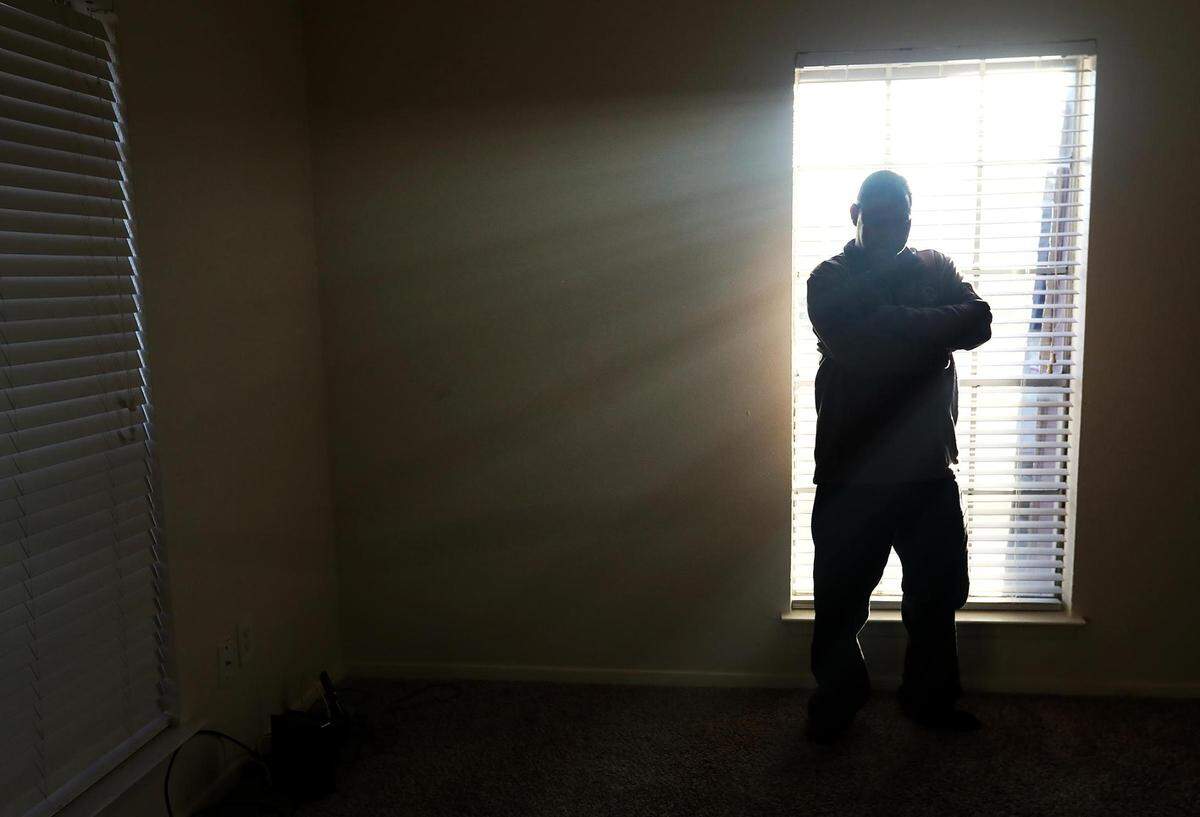
Dykes received the bright red piece of paper scheduling the writ of possession for his apartment at 9 a.m. on Dec. 28. It was the final stage of eviction. In September through December, some 750 Tarrant County renters had writs issued against them. That number does not encompass many renters who may have left before the evictions process played out.
The night before he was scheduled to leave, Dykes packed belongings and got his TV ready for the move. He figured he would take smaller items to the dumpster. As he smoked a cigarette that morning of the 28th, the stress of the last few months and the fear of what he would face next were on his mind. “At this point, it is so much going on in my head right now,” Dykes said. He did have hope, especially as the minutes ticked past 9. Perhaps the CDC declaration had worked.
But the constable ended up coming. He was a day late, serving the writ of possession on Dec. 29. As Dykes moved away, he saw the property manager he says turned away his declaration. Dykes says he didn’t know how to feel in the moment or whether he had any last ditch chance to protest his eviction.
So he just left. He called a cab and checked into a hotel.
Why Texas will keep ‘playing catch up’
After 11 months of the pandemic, Texas made a major announcement in February. With $1.3 billion from a December federal aid package, it created the first statewide rental relief system. (Fort Worth and Tarrant County also received around $20 million each for assistance and announced programs in late March.) Both landlords and tenants can apply for funds covering up to 15 months of rent. For many advocates representing both tenants and homeowners, the centralized rental assistance plan was the best thing Texas had done for housing policy since March 2020. David Mintz, vice president of government affairs for the Texas Apartment Association, described it as “a big step in the right direction.”
Yet optimism dampened quickly. On March 31, the Texas Supreme Court let an emergency order regarding the CDC declaration lapse. The state-sanctioned organization advising Justices of the Peace, the Texas Justice Court Training Center, responded by telling JPs to not enforce the declaration and to restart cases that had been previously abated.
Meanwhile, echoing the problems with rental assistance from last year, software issues and red tape delayed the statewide rent relief system’s rollout. By early April, payments were approved for just 250 households across Texas even though around 75,000 had finished applications. Another 100,000 households had started applications but did not finish them. A Texas House Committee on Urban Affairs report revealed people had problems with long waits on the phone, access to documentation and internet connectivity. (Gov. Greg Abbott declined an interview request through a spokesperson to discuss the assistance program and his housing strategies during the pandemic.)
This inability to quickly disburse funding was one of the top concerns of Melton, the lawyer who started Dallas Evictions 2020. Another is that if the money starts flowing to people in need it won’t be enough. Although coronavirus cases are down, people are out of work. The pandemic isn’t over. The share of Texas households the Census reported as fearing eviction or default had fallen from 50% in January but was still at 35% in March, suggesting several million Texans need help. The Census also reported in early March that 1 in 4 Texas households expected to lose employment income in the next month, the fourth-highest proportion in the country. Given the income issues and deficits accrued the last several months, Melton estimates Texas needs around $1 billion to be rapidly disbursed every month for the next few months.
Rosales, with Texas Housers, likens the housing problems to a disaster for which the state was not prepared. “We’re just going to be playing catch up until this pandemic is over and then some,” she says.
She and other advocates have sought long-term fixes to Texas’ housing situation. Even before the pandemic, the state’s laws, she says, were “stacked against the tenant.” The Texas Apartment Association and its regional offshoots, which back landlords, are some of the most active campaign donors and lobbying groups in Texas. They provided $50,000 to Abbott in 2020 and regularly give four-figure donations to politicians ranging from Supreme Court justices to Fort Worth city council members. Renters, meanwhile, have lesser-funded organizations like Texas Housers and the Texas Tenants’ Union and struggle to sway lawmakers.
This year in the Legislature, about three dozen bills concern property interests. Some regard tenants’ rights with security deposits and damages incurred when writs of possession are carried out. One bill, from Rep. Ron Reynolds, D-Missouri City, is directly related to the last year. It calls for a statewide eviction moratorium during a pandemic. It’s a long shot bill and had not received a hearing as of late April.
No matter what happens, future policy won’t change anything for the Texans who lost their residences amid the pandemic. For those, like Dykes, who slipped through the frayed net.
He spent a few weeks after his eviction with a friend in Alabama. In February, he was back in Fort Worth, and didn’t want anyone to pity him. In fact, Dykes had a plan. A pastor friend knew a contact who could get him work in the West Texas oilfields.
One of the job benefits made him particularly excited. He heard the oil companies provided housing.
How to find help if you’re a renter
There are several opportunities to apply for rent assistance:
Apply with Texas Rent Relief if you live anywhere in Texas (texasrentrelief.com)
Apply with Fort Worth Housing Solutions if you live in Fort Worth (fwhs.org/erap)
Apply with Tarrant County (https://www.tarrantcounty.com/en/county/social-services/rental-assistance-application.html)
If you need legal help, contact Legal Aid Northwest Texas (https://internet.lanwt.org/en-us) or 855-548-8457
This story was originally published April 29, 2021 at 5:30 AM.