
They once demolished 14 blocks of downtown Fort Worth, salvaging 8 million bricks. Why?
What would you say about a plan to demolish 14 blocks of downtown Fort Worth? Good idea, or not?
There were mid-twentieth century rumblings that Cowtown was losing out – missing the dollars that business and organizational conferences were taking to other cities with new and modern convention facilities.
Stopgap measures – expanding the Hotel Texas convention facilities and adding air-conditioning to the Will Rogers Auditorium and exhibits buildings – helped. Still, visions of gigantic conventions danced in Chamber of Commerce member’s heads. In October 1963, County Judge Marvin B. Simpson Jr. appointed a planning committee to study the need for a new convention center and civic auditorium.
After all of the requisite studies and endorsements from business organizations, Tarrant County set April 25, 1964, as the bond election date to fund the new convention center.
The proposed location in the south central section of downtown was justified because it, “does not now produce much tax income.” The location – which included the old Hell’s Half Acre – was seen as disposable and not as a place where preservation and revitalization of the older structures could enhance the city’s character.
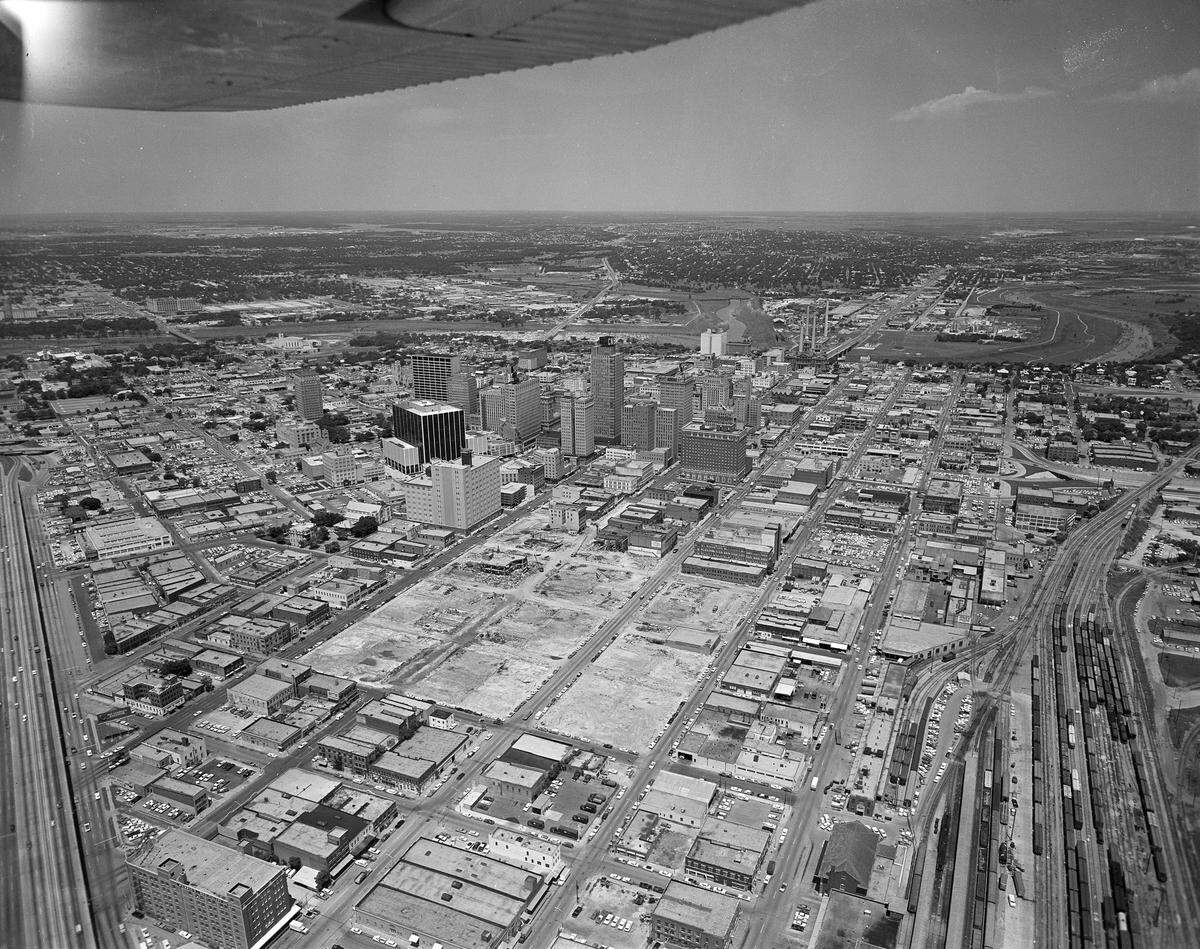
Downtown was stagnant, and a convention center could be an economic reboot.
The $16.5 million measure to fund both a new “civic center” and a stadium in Arlington passed by slightly better than a 2-to-1 margin. Real estate transactions started even though the exact boundaries of the site kept shifting. Tarrant County solicited bids for a demolition contract, but initially there were no bids. Eventually, eight firms made proposals.
West Texas Demolition Co. out of Abilene, headed by Ray H. Hollis, had the best bid. They offered to pay Tarrant County $2,500 to buy both the buildings and demolition rights for 13 blocks of downtown as well as give the county 10% of the salvage sale price. Estimates on the number of salvageable “antique” bricks first ranged from 6 million to 15 million and later topped out at about 8 million. Acme Brick agreed to buy all of the brick. Added to that was the value of the fixtures and hardware.
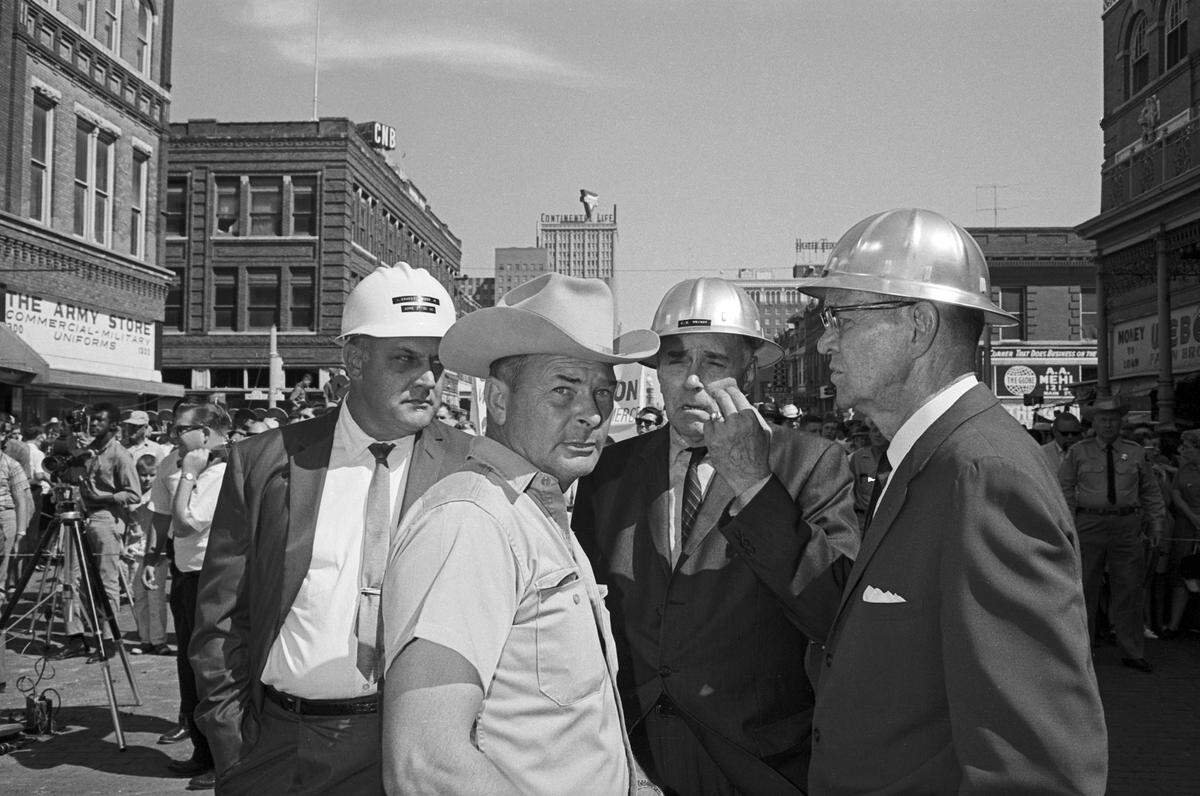
Hollis signed the contract for what was estimated to be the largest single demolition job in the history of Texas on May 27, 1965.
The demolition show
The game was on. As far as county and city officials were concerned, the buildings couldn’t come down fast enough. Tarrant County Engineer Steve Champeaux planned a show. An entire block would be pulled down with one big tug of the cables as cameras documented the scene. The date: June 29, 1965.
Preparations included a lot of work on the Main Street block between 12th and 13th. Ray Hollis and his crew pulled the flat roofs off and knocked out the second floor windows. They then wove a one-inch-thick cable around the buildings and through the windows.
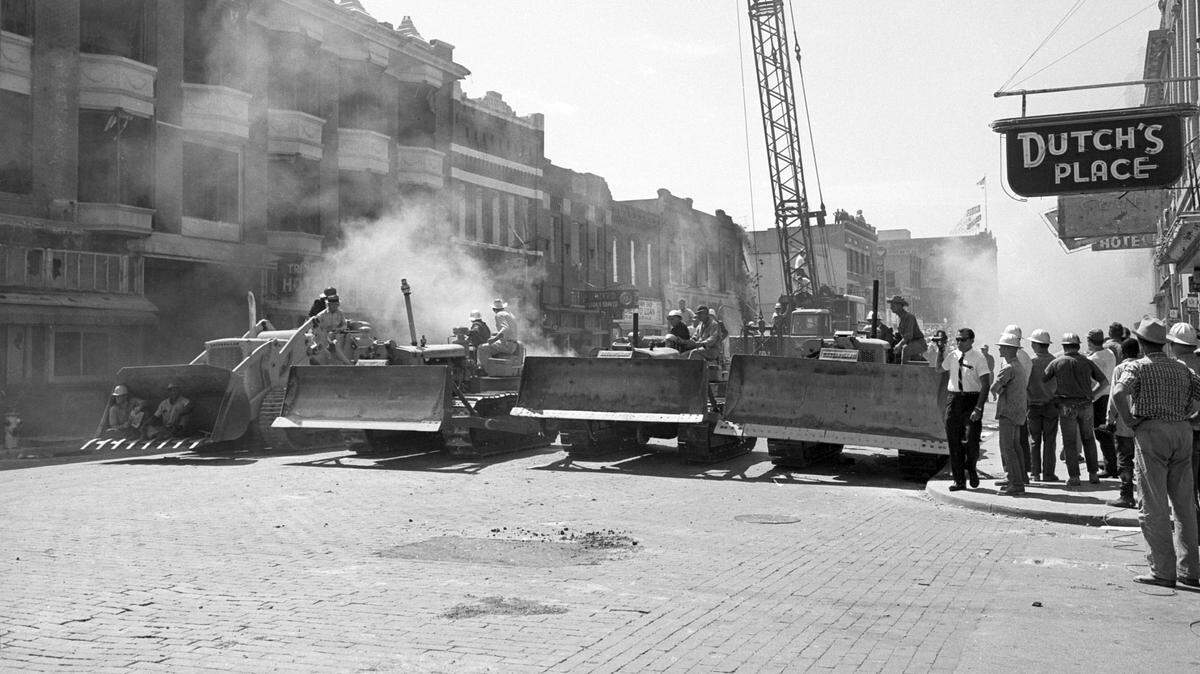
On the morning of the spectacle, bright yellow bulldozers lined up in a press-photo row across Main Street, with a crane poised behind them. County dignitaries had seats of honor on the dozers, along with real drivers who could keep the VIPs out of harm’s way. The crane actually provided most of the demolition power.
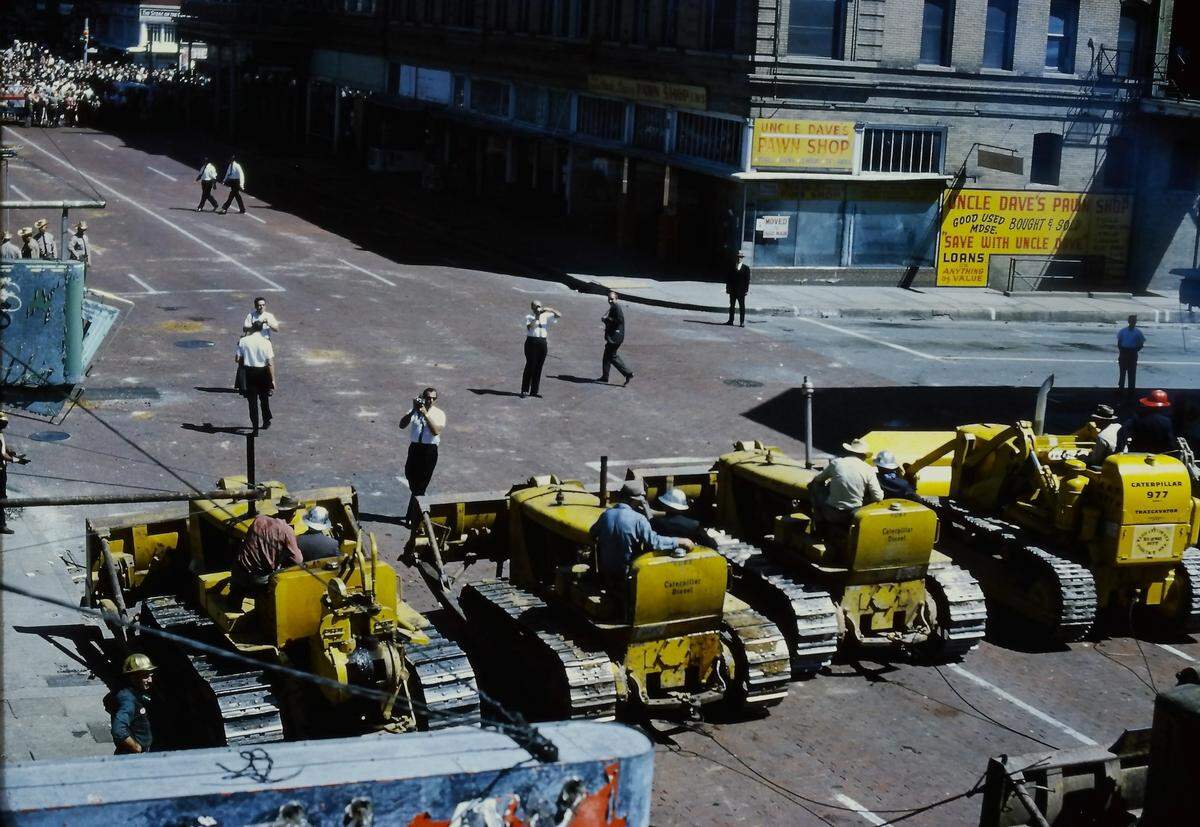
There were about 3,500 spectators, officials, and the media, all dusted with a small sprinkling of sentimentality. It wasn’t enough to stop supposed progress. The first pull toppled all of the buildings except the Trinity Hotel, a sweet three-story structure with bay windows. Hollis adjusted the cables a couple of times, and within a total of about 20 minutes, all of the buildings in the demonstration block were rubble.
Real work is harder than it looks
Then the real work began. Tarrant County had stipulated that West Texas Demolition clear one block at a time to keep the company from selling all of the salvage and leaving the county with the rubble. According to Ray Hollis, who told his version of the story in a book called “Wreckin’ Texas,” that approach increased vandalism because many buildings were sitting empty and delayed demolition, which could have been done more quickly on a larger scale.
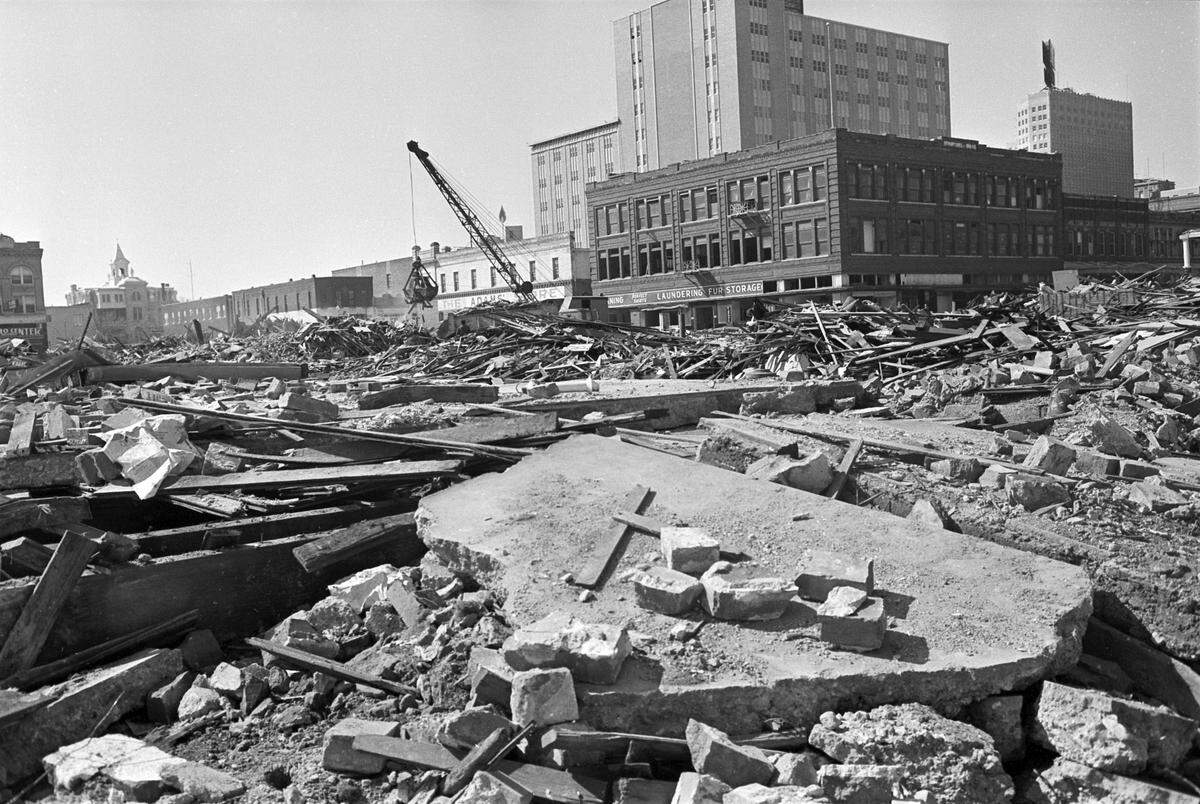
Problems multiplied. Hollis and his dump-truck-owning partner, Willard L. Hopkins, got crosswise because Hopkins wanted to take over the project. Labor unions felt as though they had been passed by, and the City of Fort Worth wanted its payment for permits and fees. There were also accusations of using child labor, which Hollis blamed on the unions.
Hollis started getting threatening phone calls and even had a visit one night from, “a couple of mean-looking thugs” who he believed were “professionals.” Demolition continued through the summer and fall until another shady visitor showed up and told Hollis to get out of the convention center wrecking job. Hollis left with about five of the thirteen blocks cleared, but Hopkins stayed until Tarrant County terminated the firm’s contract at the end of 1965.
Trying to finish tearing things down
Acme Brick first planned to finish the demolition contract, but it was picked up by the Florida Insurance Exchange, which had provided a $50,000 performance bond for West Texas Demolition. It was a game of, “who has the contract now?” New in the wings were the Wininger-Tarco Demolition Co. and Al Thompson, a local engineer and consultant, both hired by the Florida group.
There was also a 14th block to be considered. Majestic Theater owner Herman Goldblatt had fought Tarrant County over the valuation of his building, eventually accepting $190,000.
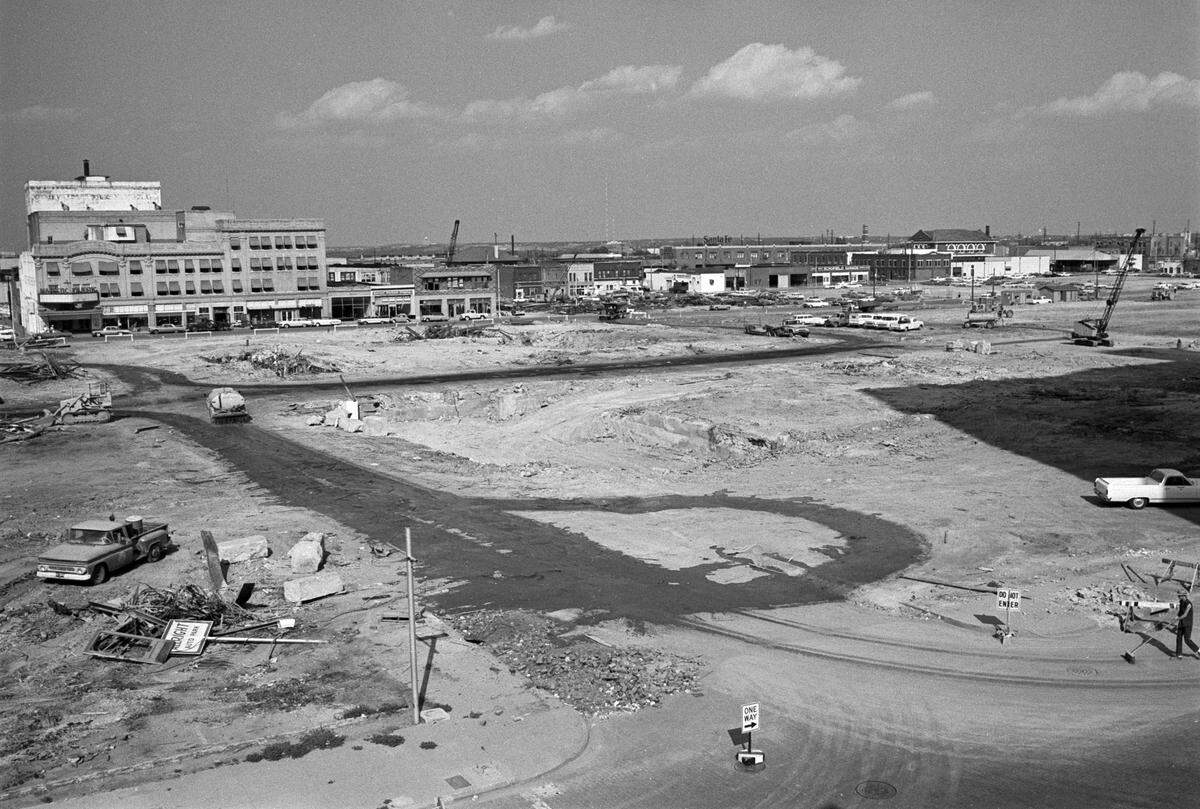
Wininger-Tarco offered to demolish the theater for $47,500 under a separate contract. The Majestic was a longstanding Fort Worth institution that was the site where Martin Luther King spoke in 1959.
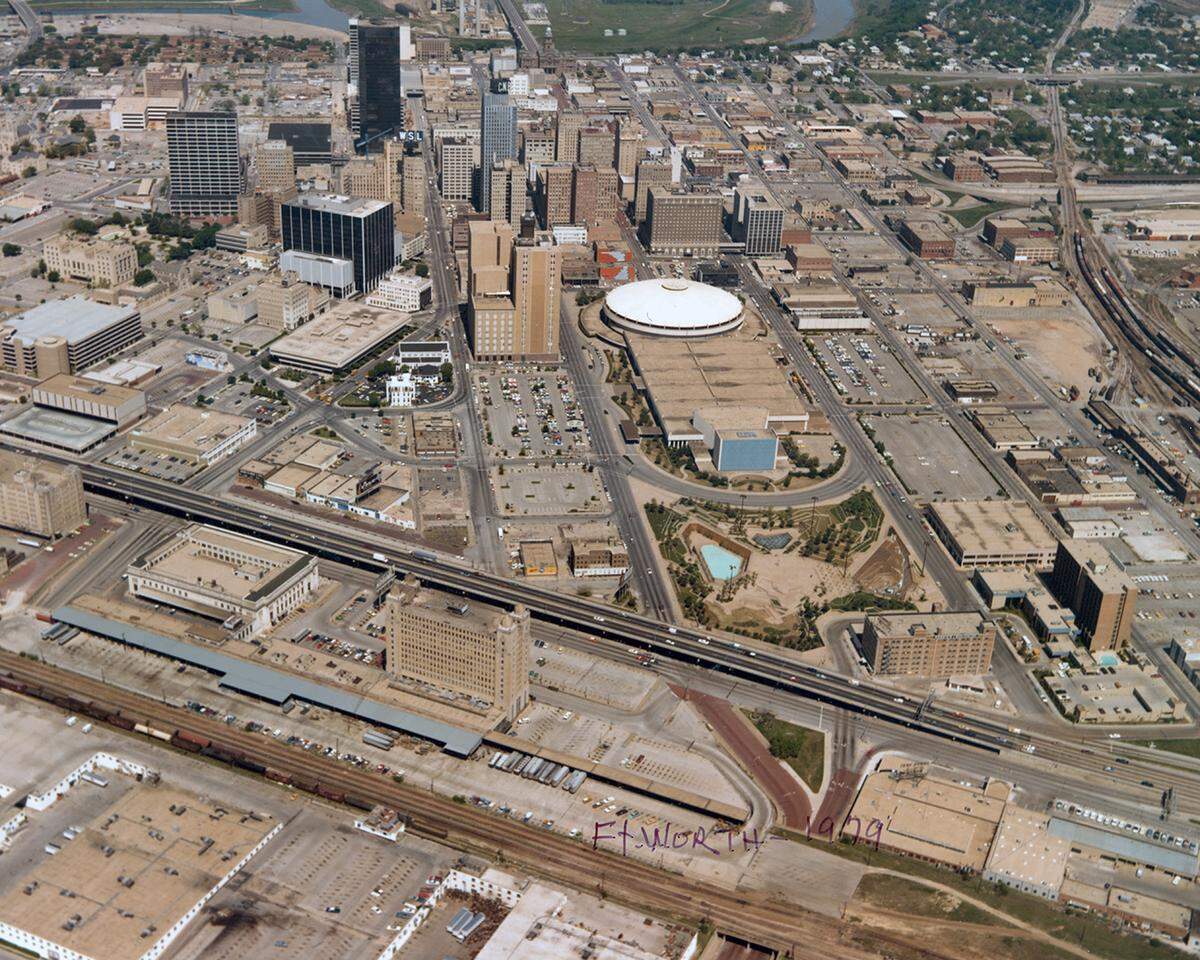
In mid-August 1966, Cadenhead-Childs Construction, the firm slated to build the convention center, picked up the demolition contract and cleared the remaining land in the original 13-block site after Wininger-Tarco conceded that they wouldn’t be able to finish the job by the Sept. 1, 1966, deadline. The Majestic was finally demolished in mid-September 1966. One commissioner suggested a celebration because all of the convention center site had been cleared. His fellow commissioners rejected the idea.
History didn’t matter here. Rehabilitation didn’t matter. It was all a case of hoped-for economic development and urban renewal.
Carol Roark is an archivist, historian, and author with a special interest in architectural and photographic history who has written several books on Fort Worth history.