JPS hospital bond program expected to cost more than $1.5 billion, hospital leaders say
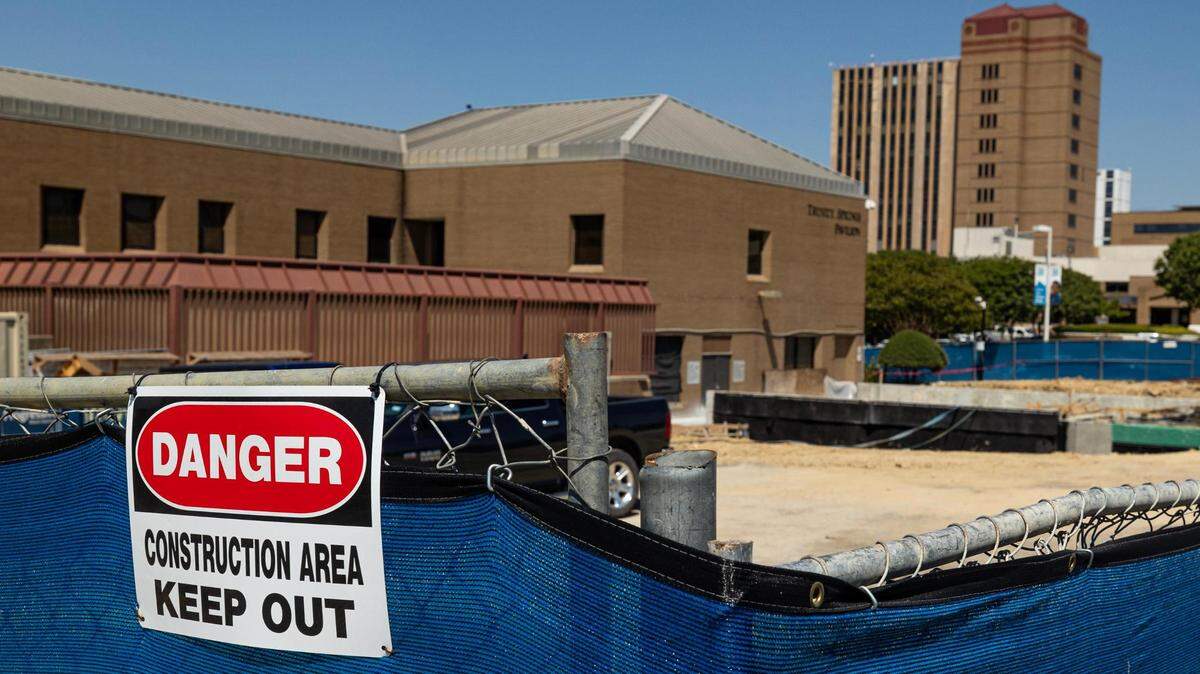
The total price tag of the JPS Health Network’s bond program — which includes a new psychiatric emergency center, standalone clinic, and hospital — will almost certainly increase from the $1.5 billion total that hospital leaders most recently provided as an estimate.
This would be the second increase since voters in 2018 overwhelmingly approved $800 million in bonds to finance much-needed new construction for Tarrant County’s public hospital system. JPS leaders initially expected the project to cost $1.2 billion, and county leaders at the time had indicated they hoped not to borrow the full $800 million.
In October 2022, the health network updated the total cost of the project to “roughly $1.5 billion,” an increase largely driven by inflation.
It appears that the total cost will likely increase again.
Last week, during a debate over whether to maintain the hospital district’s tax rate or to decrease it by several cents, hospital leaders indicated the total cost was unknown, because one of the bond program’s major components — a new main hospital with enough beds for hundreds of patients — has not yet gone out to bid for construction. The current estimate for the new hospital is $875.8 million, according to a recent presentation.
The architecture firm Beck has been hired to design the new hospital.
“It’s going to be about 1.5, 1.6 billion or more,” said board member D.T. Nguyen at the hospital’s board meeting Aug. 10.
“I don’t believe we can build what we are intending to build for 1.5 billion,” board member Trent Petty said during the same meeting.
Sharon Clark, the health network’s chief financial officer, said a major question of the project’s overall price tag would be the new hospital, which is projected to open in 2030.
“We haven’t really priced out any of the tower,” Clark said, referring to the main hospital’s two patient towers, during Thursday’s meeting. “We’re just designing it and I think there is a risk that it might go over the 1.5 billion.”
A large portion of the increase is driven by inflation: The $1.2 billion of purchasing power that JPS planned for in 2018 is equivalent to about $1.7 billion today, according to the Bureau of Labor Statistics’ new health care building construction index.
JPS’ management team did not respond to requests for comment. Members of the hospital district’s board of managers also did not respond to emails asking for comment.
Additional factors that might be driving up the total cost are unclear.
During a presentation to Tarrant County commissioners Tuesday, Darrick Walls, the senior project manager from Broaddus & Associates, one of two firms hired to manage the bond program, outlined a total cost of just over $1.5 billion.
The master facility plan that Walls presented, however, included only one of the four standalone clinics that JPS promised. These clinics, known as medical homes, are part of JPS’ effort to make primary and behavioral health care available in underserved areas.
The first clinic, Medical Home Southwest, is already under construction. JPS officials did not respond to questions about plans or costs for the three additional medical homes that were sent to the network’s spokesperson
Tarrant County commissioners ultimately decided to lower the JPS tax rate, overruling the majority of the hospital’s board.
A ‘critical’ need for Tarrant County
JPS’s bond program has been in the making for almost 15 years, as the public hospital’s aging buildings combined with Tarrant County’s growing population have pushed the hospital to capacity.
The new buildings and services the bond will fund were identified as the county’s most desperate needs by two consultant groups and a committee of Tarrant County residents. The groups pointed to “chronic bottlenecks” in the emergency room and a “critical need” for additional medical and behavioral health beds. The committee of residents noted that the 30 beds the hospital has for psychiatric patients falls “far short of both the current and 20-year predicted need.”
After voters approved the bond package, hospital leaders began to outline the master plan to update the main JPS campus and build new clinics.
In March, the hospital district issued $450 million of bonds to fund the first phase of the bond programs, including a psychiatric emergency center, which will function like a regular emergency room except that it will serve patients experiencing behavioral, psychiatric, or substance use crises.
The first phase will also include one medical home, a surgery center, a new parking garage, and a new office building. The remainder of the voter-approved debt — $350 million — will be sold in late 2026 or early 2027, according to the hospital’s financial statements, and it will help to fund a new hospital.
Hospital leaders had initially outlined a plan that would use the $800 million in debt combined with JPS’s operating cash to pay for the new construction.
Bond ratings won’t be affected by reduced tax revenue, analysts say
During the debate over the JPS tax rate, some taxpayers who supported a flat tax rate worried that less tax revenue could hurt the hospital’s ability to repay its debt.
The analysts who evaluated JPS when it issued its first batch of bonds in March said the hospital remains in a stable position, and that lowering the tax rate alone will not affect the hospital’s bond rating.
“They’ve been building up their cash position and managing their operations very well,” said Karl Propst, primary rating analyst for Fitch Ratings, who evaluated JPS earlier this year. “They’ve doing a good job of preparing for this bond issuance.”
“We had been saving money like crazy around here,” Petty, the JPS board member, said about the hospital’s plans to pay for bond projects. The goal, he said, was to have enough cash in savings to pay for the bond projects so that there would be no need to raise the tax rate.
Although the decreased tax rate won’t affect JPS’s credit rating, it remains to be seen how it will affect the hospital’s operating budget and operating margin.
The hospital’s board of managers has not yet discussed a new budget based of the reduced tax rate. The 2024 budget that was initially passed by the hospital board has not been published online; the Star-Telegram has requested a copy through a public records request.
It’s unclear how the reduced tax rate will affect JPS’s operating budget. The analysts who evaluated the health network’s ability to repay its debt earlier this year said lower tax rate probably won’t have an impact.
Analysts with KBRA, another agency that rated JPS, agreed that the reduced tax rate was not cause for concern over the hospital’s credit
Because property values in Tarrant County have risen rapidly in the last decade, and will likely continue to do so, a lower tax rate won’t necessarily hurt JPS’s future ability to repay the debt, Peter Scherer, lead analyst with KBRA, said.
“For the last three years, they’ve been running sizable surpluses and accumulating cash to help with this plan,” Scherer said. He added that, based on estimates of the new tax rate, the hospital will likely see a $75 million reduction in its tax revenues.
“That looks pretty manageable from a high level,” he said.
This story was originally published August 18, 2023 at 6:00 AM.