How will Tarrant pay for inflation’s havoc on JPS health expansion? County leaders won’t say
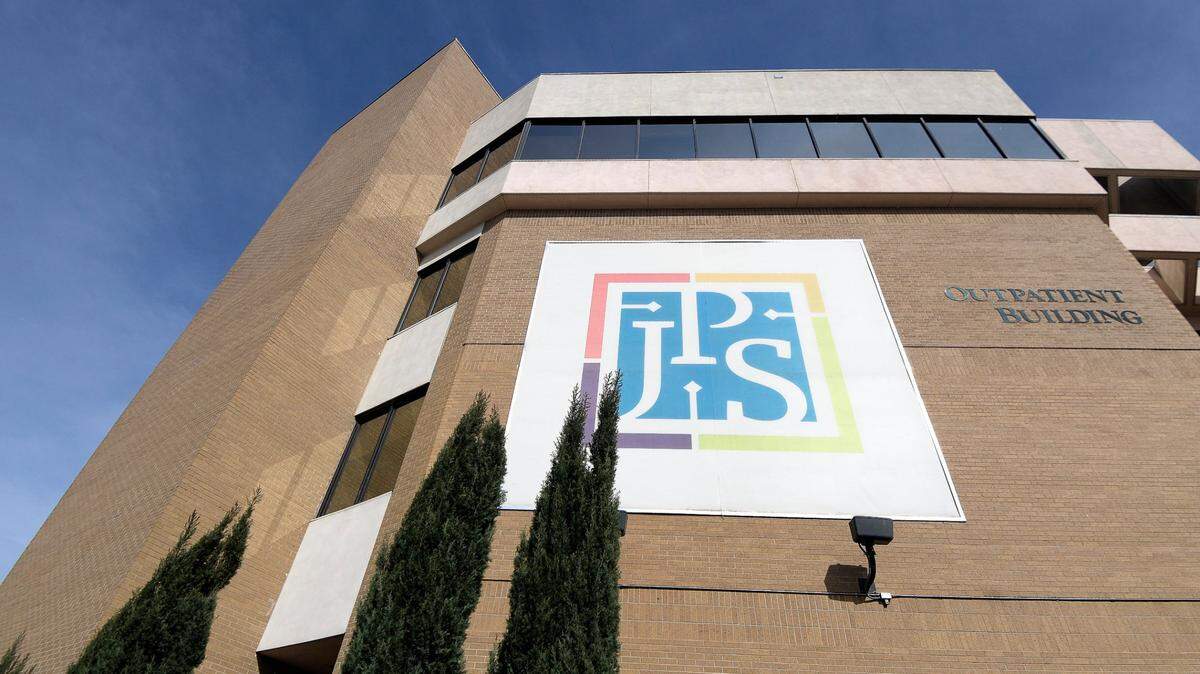
For four years, $800 million approved by voters to expand JPS’ public hospital system has gone toward little.
The 2018 JPS Health Network bond promised a mental health clinic, an improved cancer treatment facility, increased bed space and four medical homes. None of it, so far, has been built.
And while the money sits, inflation — the highest in 40 years — continues to increase the price.
One construction expert said that construction usually hits on the higher end of normal inflation. Another expert estimated the project would cost an additional $500 million to deliver given the current rate of inflation.
Yet county leaders say everything will be built as promised. They offer no specifics for how they will come up with the extra money, beyond going back to a hospital fund, and they said they won’t need to raise taxes to cover the escalating costs.
Inflation’s hold on infrastructure projects has shown its face everywhere. The Texas Department of Transportation is grappling with the possibility of delayed projects due to increased costs of steel and concrete. A $1 trillion infrastructure plan from the Biden administration is all but disappearing, too, as costs increase 25% to 30%.
The cost to build new health care buildings has increased 25% since the bond was passed in November 2018, and the cost of materials and services needed to construct health care structures has gone up nearly 42% since November 2018, according to the U.S. Bureau of Labor Statistics.
With the voter-approved bond and hospital funding, the project was estimated to cost $1.2 billion in 2018. Ken Simonson, chief economist with The Associated General Contractors of America, said in an email that with the rising cost of materials, a project that was estimated at $1.2 billion four years ago would now cost $1.7 billion.
Romano Nickerson, director of integrate at Colorado-based Boulder Associates, which specializes in health care design, said inflation has affected the cost of labor — especially in Texas due to wage increases — as well as certain construction materials like copper and elements of concrete. Add the supply chain issues from COVID and the inflation goes through the roof, he said.
“Where typically you would figure, you know, probably an average 4 to 5% per year, we’re seeing that per quarter, if not even more in some trades,” Nickerson said.
Lead times have also extended projects and a labor shortage compounds issues, Nickerson said.
“When you have a project, there’s the cost to do the work but there’s also the cost to supervise the work,” Nickerson said. “And so if work takes longer and there’s an extension of what’s called general conditions, meaning that the general conditions are what is paid the contractor to basically manage the work and do all the finances of the project, etc.”
Asked if county officials were worried they wouldn’t be able to deliver the project under the original bond amount, Tarrant County administrator G.K. Maenius said the question has shifted to how much will come from other revenue sources.
Asked the same question, county judge Glen Whitley said, “I don’t see that getting anything but worse.”
Maenius said the county has seen a need for the buildings it promised and there was no plan to cut back on anything in the package.
Asked how much money the county would need to put toward the project, Maenius said it was “kind of a moving target.” The Star-Telegram asked for more specificity on how much money was in the “moving target,” and a county spokesperson said Maenius would have no further comment.
The funding possibilities Maenius gave included a fund the hospital district maintains yearly to help with development, as well as other hospital reserves. Part of this reserve, he said, includes the $400 million the hospital system promised it would put toward the project.
Hospital officials were already looking into other ways to fund the project as early as October, and said donations could help offset the cost.
In an email exchange, a spokesperson for JPS said the hospital system anticipated using money already on hand, public-private partnerships and third-party funding to supplement what is included in the bond. The Star-Telegram sought further clarification on what officials meant by third-party funding and public-private partnerships and if any money had come in from partnerships or donations to support the project, but a JPS representative didn’t explain.
“Supplementation of the bond funding was contemplated at the time of the bond election,” the representative wrote in an email statement. “The network would use its standard [request for quote/request for proposal] process to identify and engage with any potential third-parties or public-private partnerships. The JPS Foundation has not yet commenced a capital campaign.”
Little, if any, progress
Officials have blamed construction delays on the pandemic and a property tax law from 2019 that prohibited revenue increases from property taxes by 3.5% or more without voter approval. Commissioners, at the time, feared it would cause them to have to raise taxes.
So far the progress has been on a parking deck at the site of a former behavioral health clinic that is being demolished. Commissioners voted June 21 to direct the JPS board to negotiate a design-build contract with Beck/Potere Construction for the deck.
Commissioners unanimously approved a design-build agreement with both Byrne Construction and Post L Group for JPS’ southwest medical home at their June 7 meeting, and on Tuesday commissioners also approved the purchase of a property at Mesa Springs Drive and Granbury Road in southwest Fort Worth to build a medical home. JPS’ board of managers unanimously approved the purchase of the property for more than $4 million on July 14, according to a press release sent Wednesday by the hospital system.
Whitley said the county has a financial consultant trying to figure out not only additional costs but operational costs once the buildings open. Maenius, too, pointed back to his concern about operational costs.
“We couldn’t staff it regardless of how much money we had,” Whitley said.
Tarrant County has had a tough time hanging on to its employees, as well as filling the holes they leave behind when they go. More than 1,600 employees have left due to resignations, terminations and retirements since March 2020.