
These Fort Worth brothers made headlines in sports; one as a player, one as a reporter
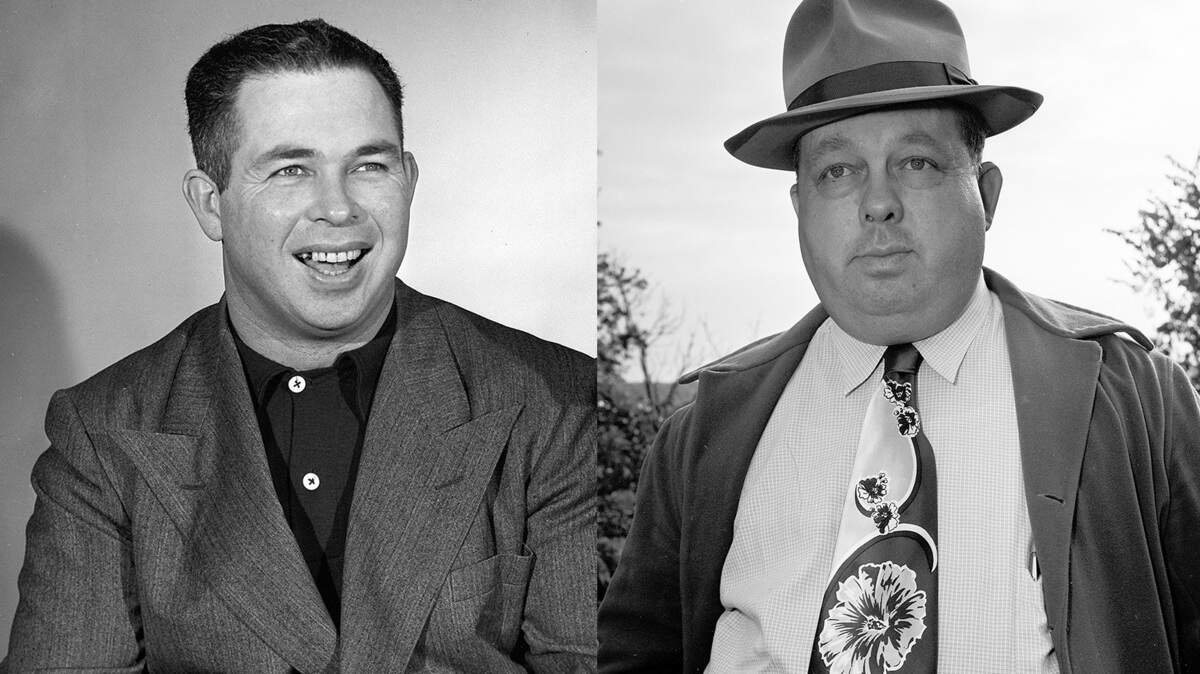
Brothers Zeke and Phil Handler, sons of Lithuanian-Jewish immigrants, each made a mark in Fort Worth sports history.
Zeke, a journalist with a familiar byline, covered the Cats, the Panthers and the Horned Frogs during decades when newsstands sold the Fort Worth Record, Fort Worth Press and Star-Telegram.
His kid brother Phil made headlines as a jock. At Central High, Phil was a football star playing right guard in 1927 and 1928. Recruited to Texas Christian University, he was an All-Southwest Conference offensive guard in 1929 on the Frogs’ first championship team. He was also an Honorable Mention All-American.
In the summer of 1930, Phil went to Chicago to try to make it in the National Football League. The Windy City had two pro teams—the Bears and the Cardinals (now in Arizona). The Cards’ coach told Handler, who weighed 190 pounds, “You’ll never make it kid. You’re too small.”
Although short for a football player at 5 feet 11 inches, Phil was determined to prove him wrong. He bulked up to 215 pounds. And he was fast on his feet.
His older brother Zeke described Phil as a “a bulldozer-like guard who was to attain national fame in pro football.”
The husky All-Pro lineman played 53 games with the Cards from 1930 through 1936.
Ultimately, he had coaching and scouting positions with the Cards and then the Bears, including stints as head coach, co-coach, line coach and recruiter.
The fans and the press adored him.
Whenever Phil passed through Fort Worth on scouting trips and to visit his family, DFW sports columnists cornered him for quotes about NFL trades. If the Longhorns fired a coach, he hurried to Austin, by way of Fort Worth, to lure away players.
In print, Zeke never disclosed that the football hero he often wrote about was his kid brother. In a 1950 feature for the Texas Jewish Post highlighting Jewish athletes who “excelled” at this “peculiarly U.S. sport,” Zeke wrote at length about Phil. He mentioned his parents, Morris and Rosa Handler, who operated a dry-goods store at the corner of North Main and 23rd (today the location of Taco Heads). He wrote that Phil had grown up on the Southside in the 2200 block of Alston Avenue. And he mentioned his brother’s nickname — “Motsy.”
Where did that nickname come from?
“Matzoh,” said Dick Simon, Phil Handler’s nephew. “They were teasing him because of his religion. That’s the source. It wasn’t vicious.”
Phil embraced the nickname. He was accustomed to being the only Jew on local football squads and being accepted for who he was. In Chicago, teammates shortened his moniker to “Motz,” short for matzoh, the unleavened bread Jews eat during Passover.
“He was a pistol,” continued Simon, a retired attorney whose late-wife Bayla Handler Simon was Zeke’s daughter. “Phil knew everybody in Chicago. Everybody wanted to get tickets from him. We went to a Bears game once. It was pre-season, in August ... I’ve always been a sports nut and meeting George Halas (“Papa Bear” who founded the Bears and co-founded the NFL) was one of the best moments of my life ... I met ’em all. George Connor was one of the stars.”
So was Curly Lambeau, founder of the Green Bay Packers, who coached the Bears for a season with Phil as an assistant coach.
Phil settled down in the Chicago suburb of Skokie, where he and his wife Lillian raised two children. He was inducted into the Chicago Sports Hall of Fame, the Chicago Jewish Sports Hall of Fame and the B’nai B’rith Sports Hall of Fame. The out-of-print book “Sports Champions of Fort Worth, Texas” by Flem Hall places him on the city’s athletic Roll of Honor.
A lifelong student of the game, he never stopped coaching. After two heart attacks in the spring of 1968, his physician ordered him never to attend Bears’ games in person. His heart couldn’t take the excitement. On Dec. 8, 1968, he watched on TV as the Bears pulled out a 17-16 upset over the Los Angeles Rams. Moments after the game ended, he died of a heart attack.
He was 60. He had lived and died for football.
His older brother Zeke had died three years earlier from complications of heart disease, diabetes and other maladies. Zeke, who married Rose Fram and raised two daughters, had begun his journalism career on the Fort Worth Record. When the Star-Telegram bought the Record in 1925, he remained a short time before moving to the Fort Worth Press under legendary sports editor Pop Boone. He also reported on sports for KFJZ radio. During the New Deal, Zeke was editorial supervisor of the Federal Writers Project, a massive compilation of Fort Worth history for which he gathered “slave narratives,” oral histories with formerly enslaved people.
In the mid-1950s, he engaged in freelance sports publicity, advertising and public relations. He is well remembered for a 1953 bagel-lox-and-blintzes Sunday brunch at Congregation Ahavath Sholom. It featured the entire roster of the Fort Worth Cats, the city’s popular Texas League team. Ballclub president Spencer Harris spoke. Homerun hitter Jimmy Baxes, “the slugging Golden Greek,” signed autographs.
Except for one embarrassing episode, Zeke kept his own name out of the news columns.
At the start of his journalism career in 1921, late one Sunday night, a hold-up man confronted Zeke, 16, with a pistol at the corner of 7th and Throckmorton. According to a blurb in the Star-Telegram, “He relieved the Fort Worth Record’s police reporter of six cents.”
Hollace Ava Weiner, an author and historian, is director of the Fort Worth Jewish Archives.
This story was originally published August 5, 2023 at 5:00 AM.