
As the country prepared for World War I, Fort Worth had a gun battle right in city hall
In September 1917, the United States was mobilizing for World War I. Fort Worth’s Camp Bowie was up and running, and thousands of Texas boys were pouring into town to begin their military training. The city put on its best face to welcome Uncle Sam. The last thing anyone wanted or expected was a bloody vendetta by one of Fort Worth’s finest. But that is what happened.
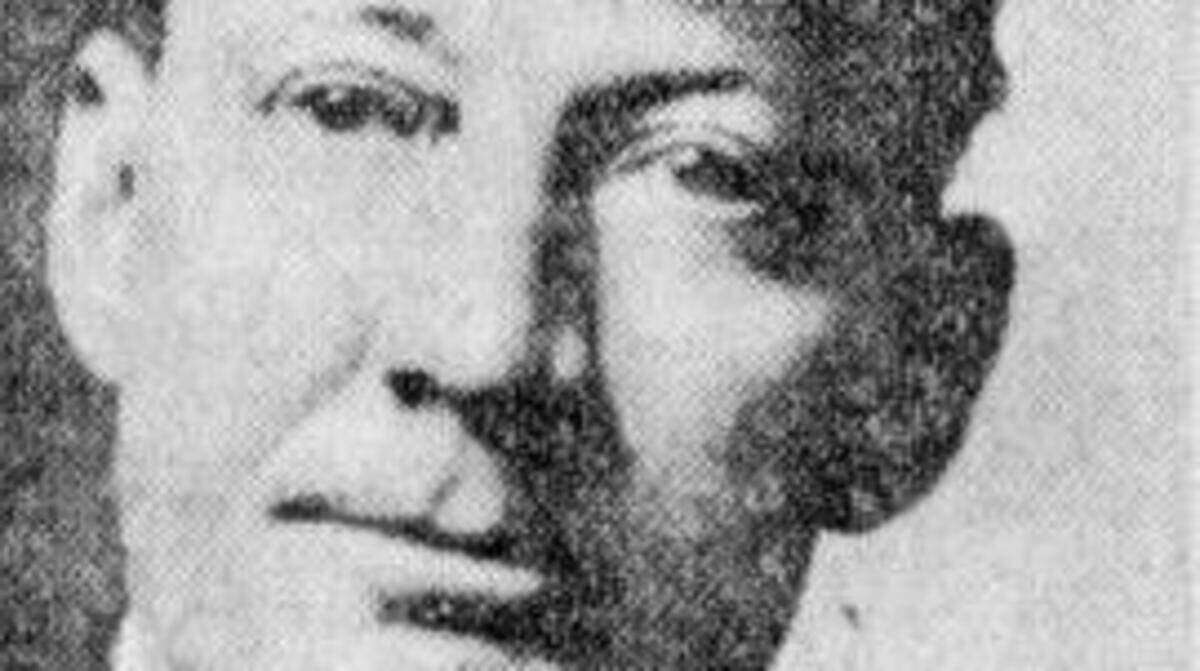
Officer James Kidwell “Kid” Yates was a six-year veteran of the police force with a well-known violent streak. He was said to be “one of the quickest and surest shots in Texas,” although whether the former meant quick on the draw or quick tempered was unclear. He was also a widower with two daughters, one 16, the other 20 and married. Toward the younger daughter, Zelma, he was the most over-protective of fathers.
Until that spring, Yates had been a member of the detective squad, but when new Fire and Police Commissioner Ed Parsley took office in April, he dismissed some men and reassigned others. Yates found himself among the latter, demoted from plain-clothes detective to mounted patrol, assigned to the South Side. He did not take his demotion well, raging to anyone who would listen that he would have his revenge on Parsley, Mayor W.D. Davis, and others. Subsequently, he met with Davis and assured the mayor he did not really mean those threats. Nonetheless, two weeks later he resigned abruptly though he had no other job lined up. Former Police Capt. George Cooper, now running his own private detective agency, gave Yates a job, but Yates continued to brood.
Yates was a dangerous and volatile man. He had already killed four men and assaulted at least two others, all under questionable circumstances. He operated according to his own rules without asking anyone’s approval. Cooper expected Yates to seek revenge sooner rather than later for his demotion, and he was concerned enough to warn Chief Oscar Montgomery, who took no action. Yates had his supporters in the administration, which explains how he had kept his job for so long.
On the afternoon of Sept. 28, Yates came to city hall about 2:45. He stalked up the steps past some former fellow officers and headed straight for the mayor’s office on the first floor. At the time no one realized he was armed with three pistols, a .45 automatic and two .38 revolvers.
He first went to Mayor Davis’ outer office and demanded to see the mayor. The secretary, Billy Coleman, had a bad feeling about this visitor, so he told him the mayor was out. (Davis was actually in his inner office) Yates sat for three or four minutes then left and went next door to Parsley’s office. Parsley was sitting at his desk when Yates barged in and closed the door behind him. It is unknown whether either said anything before Yates pulled his .45 and opened fire. He could not miss at that range. One shot hit Parsley in the head, another struck him in the heart, and he collapsed onto the floor. Other shots went through the wall into the mayor’s office. Yates then locked the door and crouched down behind the desk.
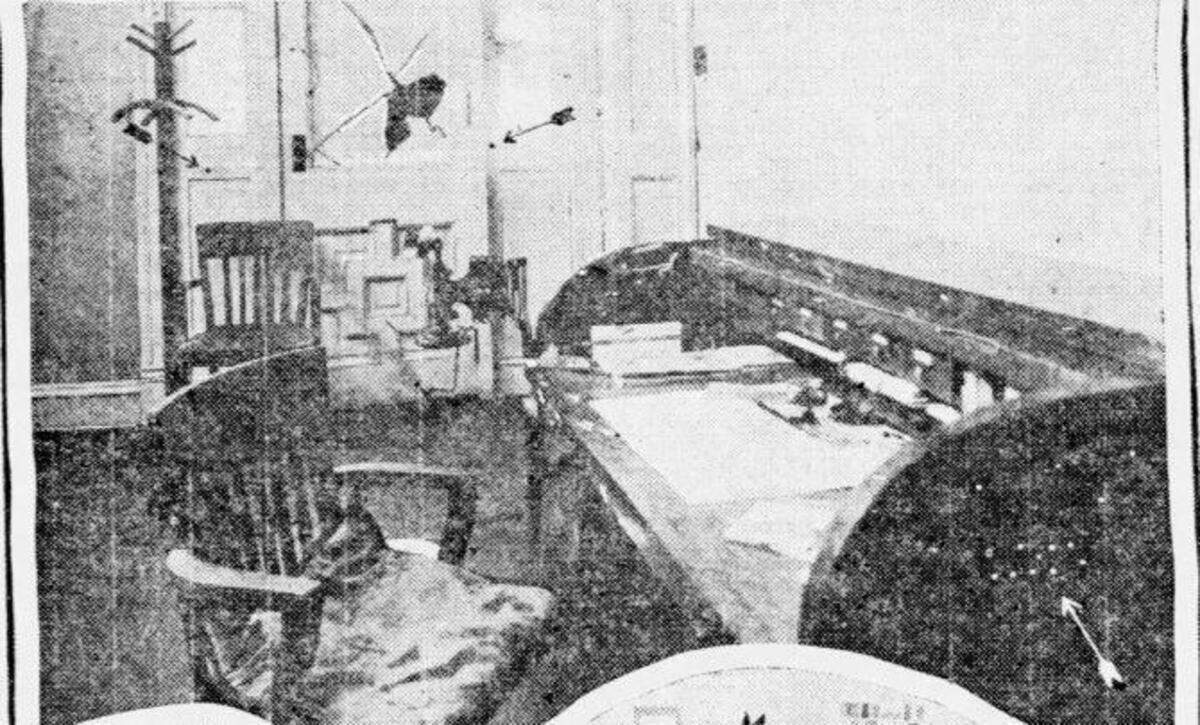
The shots echoed up and down the hall, causing men to rush out of their offices, and, since this was Texas, they were all clutching pistols. The first police officer on the scene was Tom Grisso, a nine-year veteran of the force who could sympathize with Yates. He had lost his job in an earlier shakeup before being rehired by the department in April. The men pinpointed the source of the shots as Parsley’s office and rushed to the door. When they found it locked, Grisso punched a hole in the frosted glass, drawing the fire of Yates.
Grisso ducked back out of sight to await reinforcements. Chief Oscar Montgomery, Assistant Chief Rufus Porter and several others were also at the door by this time but did not attempt to rush in. They waited until they were joined by officers from downstairs armed with the police department’s new riot guns. They made a collective decision to force their way in, first pouring a volley of shots through the door before kicking it open. The first two through the door were police Sgt. L.H. Little and Cpl. H.D. Woods, an Army MP who happened to be in the building. Inside was hell in a very small place. Yates blazed away, grazing Little in the neck and shattering Woods’ cheek. When he stopped shooting to reload, Rufus Porter charged forward firing as he came.
Yates took three bullets, one hitting him right between the eyes, another breaking his right arm, and a third taking off the top of his head. The firing stopped. Silence descended. The room looked like an abattoir with blood everywhere. They dragged Yates’ body out and turned it over to the Fort Worth Undertaking Co. They removed Parsley’s body more tenderly and carried it across the street to Robertson’s Undertaking Co. As soon as they cleared out, city workers and curious citizens squeezed in to gawk at the carnage. Some collected souvenirs.
Both men’s families were notified. Parsley had a wife, a young son and a nearly grown daughter who were escorted to the funeral home. Parsley’s funeral took place two days later with interment in Greenwood Cemetery. Yates’ daughters identified his body for official purposes. His funeral was held on the same day as Parsley’s only at Fort Worth Undertaking Co. Afterward, the body was shipped to Lancaster, Texas, where Yates’ two brothers lived, for burial.
Camp Bowie and the war in Europe were grabbing most of the headlines at this date, so the history-making gun battle in city hall was soon forgotten. It did not change anything in the police department; jobs were still political appointments that could be terminated without cause whenever a new administration came in. Officers had no union to represent them, although that would be tried two years later. And it would be many years before security checks were instituted at city hall. Members of the public could come and go as they wished armed or unarmed, it didn’t matter. The death of Commissioner Ed Parsley was considered a singular tragedy, and so far, that remains true.
Author-historian Richard Selcer is a Fort Worth native and proud graduate of Paschal High and TCU.