
Mentor, second mother, community influencer. Love of people drove this Fort Worth icon
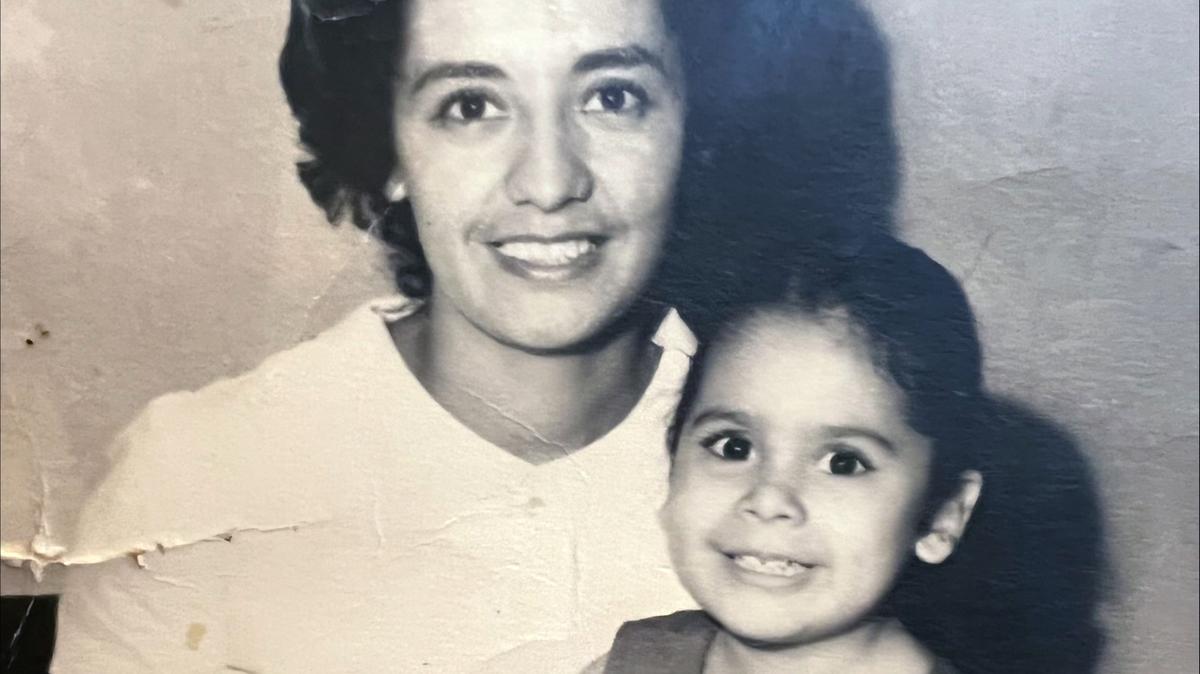
Julia Santana credited Mary Lou Menchaca Lopez, director of the Wesley Community Center, for motivating her to return to work after a nine-month hospitalization for major depression.
As a divorced mother of a young daughter, Santana feared getting back in public. Doctors told her she probably wouldn’t ever hold a job.
Santana and Lopez had known each other since Santana, at 3 years old, attended the Wesley Community Center at 3600 N. Crump St., in the Diamond Hill barrio.
A child of migrant worker parents, Lopez started as a secretary at the center and worked her way up to the director position in her 40-year mission with Wesley. A role model of courage and determination for Latinos/as who doubted themselves, she inspired Santana to relearn how to interact with people and to take a job at the Susan G. Komen Foundation’s Hispanic Outreach program for breast cancer awareness.
Lopez’s grandson, Aaron Lopez, observed firsthand his grandmother’s love for people. Spending weekends with her, he recalled, as a 7 year old, when his grandmother stopped her car on a rainy day in front of Mott’s on East Rosedale Street. A pregnant woman had alighted from a bus, tripped, and fell, suffering stomach pain. Lopez went to her aid without an umbrella and offered to take her to the hospital. Instead, the woman insisted Lopez drive her home.
Lopez networked with politicians and influential politicians like Jim Lane, Louis Zapata, and Kay Granger to direct resources and money to the center and Diamond Hill. Aaron Lopez witnessed his grandfather Ernesto Raul Lopez’s attempts to curb his wife’s outspoken and assertive community actions. “He would tell her to stay in her lane, and she didn’t need to save the world.” She retorted, “I don’t care. I’m going to speak up.” Ernesto eventually accepted his wife’s social work mission and supported her.
After returning from Vietnam, Renny Rosas recalled Latinas like his sister Rita Utt, along with Pauline Valenciano and Lopez, mentoring him on community engagement. He saw Lopez was the lone female to attend the Chicano Luncheon, formed in 1965 by Gilbert Garcia, where Latino leaders discussed Fort Worth social and political issues. “You know that in 1965 Mexicanos were still very macho,” Rosas said. “The only reason she got involved was because she was working at the Wesley Community Center.” He said that Latinas in the ‘60s and ‘70s played a major role in the Latino community’s development. “If it weren’t for Latinas, we would be worse off,” Rosas said.
.jpeg "Image (1).jpeg")
For Teresa Palomino, who worked 20 years as a social worker for “MLL,” as Lopez was affectionately called by her staff, Lopez was her second mother. Lopez allowed her to work part time, evenings, and weekends at the center in 1975 while she pursued her education at Tarrant County College and TCU. As a case manager, Palomino saw many young people at the center didn’t have strong parental support. They wondered, “Why do you even care about us? You know we’re bad kids.” Lopez insisted their lives mattered.
After a police officer detained a teen who had broken into the center to steal money from a soda machine, Lopez persuaded the cop not to arrest him. She counseled the youth, instructing him to act more respectful to authority and to take responsibility for his actions. As an adult and father of three, the once thief returned to thank Lopez and the center for giving him direction.
Aida Garcia interned as a social work student for six weeks in the summer of 1972 at the Wesley while attending Texas Woman’s University. She developed a close bond with Lopez, lasting until Lopez died. She credited her mentor for steering her into a 25-year career providing services to immigrants in the Rio Grande Valley.
Garcia recalled Lopez running a marathon for a fund-raising hunger drive. She wore a T shirt that read “Dale Gas” or “Give it the Gas.” Garcia overheard non-Spanish speakers asking. “Who is Dale Gas?” Lopez completed the run in the top five.
Celia Esparza, current president and CEO of the United Community Centers Inc., a primary sponsor of the Wesley, remembered wanting to make Lopez proud of her when she worked there. In her eyes, Lopez was a strong, vocal Latina at a time when there were few who negotiated with Anglo male agency directors for resources. “They probably weren’t accustomed to seeing a Latina requesting funds.”
Esparza surmised Lopez’s motivation to help Diamond Hill barrio Latinos/as was, “Just the love that she had not only for the church because she was very devoted to the Methodist Church but her love of that community and helping the people and the children.”
Lopez died on July 22, 2005, in Fort Worth at the age of 74.
Author Richard J. Gonzales writes and speaks about Fort Worth, national and international Latino history.