
This Fort Worth golfer never turned pro, but won plenty of cash from other players.
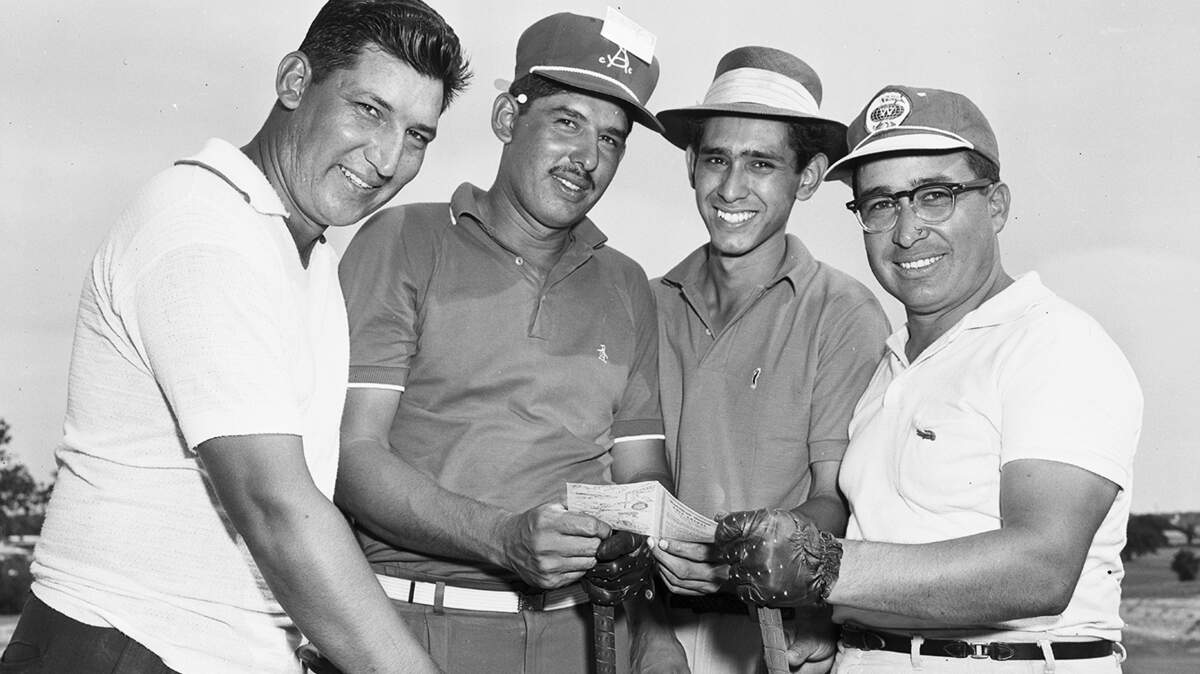
Antonio “Tony” Arredondo parlayed luck and skill to excel in golf, gaining a reputation as a top gun gambler.
It started when his uncle Victor Muñoz and two sons Fred and Rudy, who were constructing Colonial Country Club in 1936, brought home clubs and balls, and introduced his nephews Tony and David to the game. Tony relished playing at 5 years old, swinging the club in two empty lots across from his home at 1515 E. Weatherford.
Tony’s parents landed jobs for the teen brothers as caddies, earning $1 per bag carried, at Glen Garden Golf & Country Club. In 1950, Tony caddied for Byron Nelson, whom he admired for his superb play and gentleman’s demeanor. While Nelson instructed a millionaire’s son, Tony observed, listened, and learned from a master of the game. Eight years later, when Tony played at Ridglea Country Club, Nelson recognized and chatted with him like they were old acquaintances.
The 14-year-old’s impressive swing caught Rockwood Golf Course manager-pro Clarence “Skeet” Fincher’s eye. The pro told Tony he could play as often as he wished at Rockwood without paying, mentored his game, and gave him a wedge club. After unsuspecting men played against Tony, Fincher said, “I told you. You couldn’t beat my boy.”
As Tony’s game improved, so did his confidence. The once shy, humble youth grew into a clever gambler, betting $10 per hole or automatic press. With three local financial backers covering his bets, he took on all challengers. When four Dallas golfers/gamblers traveled to Rockwood to challenge Tony, he called a sponsor who drove to the course in his Cadillac and parked on an overlooking hill. As the patron’s son ran down the hill to hand him the money, the Dallas men stood stunned at the exchange, quickly realizing wagers were about to go up.
After another golfer lost to Tony at Rockwood, he remarked in the club house in the presence of other golfers the Mexican kid couldn’t play at any other Fort Worth course. Tony challenged him to a second game and left that day with $375 of the loser’s cash stuffed in his pocket.
Raised in a family of nine children to Mexican immigrant parents, Tony felt compelled to contribute to their financial security. At Ernest Parker Jr. High School, a coach advised him to enroll in Paschal High School to play on its golf team and probably garner college offers. Like many Fort Worth Latino youth of the 1950s, he planned on securing quickly a full-time job. He attended Trimble Technical High School, learned printer’s skills, and landed well-paying employment in a union shop.
Pursuing his golf passion in his free time, Tony competed in tournaments throughout Fort Worth. He played mostly par golf, but rose to competitive challenges, scoring in the low 60s. When the Pan American Golf Association formed in 1951, Tony joined as the youngest member of the Latino golf club.

Tony won several Fort Worth Pan American tournaments and represented the club in state-wide Pan American games. He felt particularly proud of winning the Fort Worth Press annual tournament at Worth Hills Golf Course in 1962. After the city of Fort Worth sold the course to Texas Christian University for the school’s expansion, he jokingly commented it closed because an Hispanic won.
Despite encouragement to turn pro, Tony, now 85, refused to gamble leaving his wife and children at home alone.
Author Richard J. Gonzales writes and speaks about Fort Worth, national and international Latino history.