
This Fort Worth man grew a successful canvas business and a career in Tejano music.
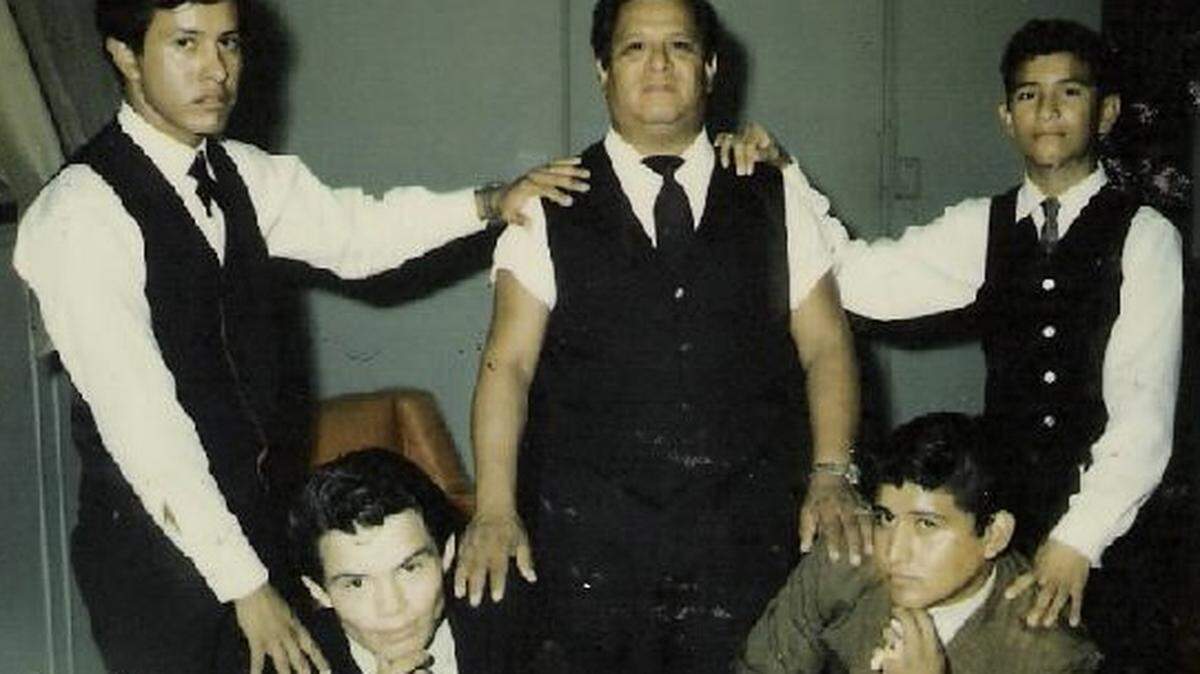
Nine-year-old Lionicio Rodríguez Saenz played the harmonica and accordion alongside his guitar-playing, 10-year-old cousin Romaldo Pérez for farm workers after a day of harvesting beets in Minnesota fields.
Self-taught and musically gifted, Saenz mastered the instruments in a migrant world without daily radio, movies, or telephones. Families agreed to allow Saenz and Pérez to act as their water boys to conserve their voices and energies for their evening Mexican serenades of love, adventure, and beauty.
Born in Escobares, Texas, October 9, 1933, Saenz joined his family in its annual migrant trips, harvesting America’s fruits and vegetables. At 17 in 1949, Saenz convinced his parents to allow him to stay with an aunt in Fort Worth’s Diamond Hill with his accordion.
Working at odd jobs during the day, Saenz noticed a glaring absence of Tejano-music-playing bands in Fort Worth. Aware that urban Tejanos worked as hard as farm workers, he entertained them with his new troupe, Nicho Saenz y Los Alegres de Norte at church jamaicas (fairs) throughout Fort Worth’s barrios.
Late to work one day after playing a night gig, he learned five members of his pipe-laying crew had died in a cave in. At his wife Rosa Maria García’s insistence, he found work at Acme Tent and Awning Co. at Henderson and Lancaster. Fellow employee T.D. Wynn, an African American navy veteran, taught Saenz to control his temper when insulted with racial slurs. Wynn advised: earn a living and survive for your family.
Nicknamed “Shorty” for his 5-feet-1-inch stature by fellow workers, Saenz soon rose to head tent repairer and caught the eye of Rex Palmer, director of the Boy Scouts of America DFW. Palmer, dissatisfied with Acme’s response to his tent repair needs, offered to help Saenz start his own canvas business if he agreed to give top priority to the Boy Scouts. Saenz and Wynn formed a partnership and opened S&W Canvas Products at 212 W. Exchange St. in 1956.
As business prospered, so did Saenz’s band. From Shorty during the day, he transformed to Nicho, Tejano band leader, in the night. He played at Latino beer joints on north Main Street such as the Blue Moon Lounge, Escondido, Connie’s, and dance halls known as the Rocket, the Casino, Guys and Dolls, and Tango.
On Wynn’s death in 1973, Saenz continued the “W” in the business name to honor his trusted partner. He soon landed national clients including Bonanza, Black Eyed Pea, and Peoples Restaurants. Several western dining eateries owned by renowned chef Tim Love displayed Saenz’s curtains and awnings. Many business awnings on Camp Bowie Boulevard reflect S&W’s fine work.
After his wife Rosa died in 2013, Saenz, with a net worth of $3 million, decided to close his canvas operations in 2015, but not his accordion case. He often played along with sons Carlos and Lionicio G. in their band The Latin Express.
In 2007, Nicho was inducted into the Tejano Roots Hall of Fame. He last played publicly with The Latin Express at Casa Mañana in 2016 in a benefit concert for the Fort Worth School District Fine Arts Department. Saenz enjoyed performing on stage, singing, fingers flying, watching jubilant faces like in his youth when he crooned Mexican corridos for farm workers by camp fire lights.
Lionicio Rodríguez Saenz died on July 16, 2016.
Author Richard J. Gonzales writes and speaks about Fort Worth, national and international Latino history.