
You don’t have to look far to see evidence of Fort Worth’s Hispanic heritage, culture
Evidence of the rich influence of Spanish, Mexican, and Tejano cultures in Fort Worth looms in bold display at Sundance Square Plaza. The Chisholm Trail mural of cowboys herding longhorn cattle reflects Moorish and Spanish bovine and vaquero roots.
When Spaniards landed in the New World in the 15th century, they introduced cattle, plants, grains, firearms, steel weapons, Spanish language, Christianity, horses, and smallpox. Historians and Native Americans rightfully condemned the Spaniards’ slaughter and enslavement of the indigenous people, seizure of their lands, and attempts to eradicate their cultures. Nevertheless, over centuries, conquistadores and native allies like Tlaxcalans, explored and established settlements throughout the Southwest, California, and Florida.
During their expeditions from Central Mexico, starting in the 16th century, the Spaniards’ longhorns and mestañas, or mustangs, strayed over ocean plains. Natives learned to capture and tame Big Dog, as they called the horse, riding them in their hunts and raids.
The first Tejano settlements sprang up in the Río Grande, San Antonio, and Nacogdoches regions. A distinct Tejano culture developed in the Mexican state of Coahuila y Tejas where Spaniards intermarried with Mexican and Texas natives, resulting in a hardy breed of mestizo or mixed blood people.
Through genealogy studies, present-day Latinos find ample proof of their blended European and native heritage. The writer has genetic strains of Spanish, Italian, and Sephardic Jewish ancestry mingled with Mexican Indian DNA.
Tejanos adapted to their frontier environment, developing cattle ranching, branding, rodeos, leather clothing, fandangos, missions, presidios, and the predecessors of the Texas Rangers — the compañía volante (flying company).
English speakers adopted Spanish-Mexican-Tejano lingo: chaparral, calaboose, rodeo, dally, lasso, do-si-do (dos y dos), pistola, indio, hacienda, bronco, loco.
Mexican cuisine whetted early and modern Tejanos’ and Texans’ appetites à la tamales, tacos, enchiladas, tortillas, chile, mole sauce, chocolate and turkey.
In the years leading up to the Texas Revolution, Mexicans disputed human bondage by U.S. immigrants from the South. Mexico had outlawed slavery in 1829, 33 years before the Emancipation Proclamation. Their attempts to ban the inhumane practice roused Anglo settlers’ ire. Fugitive slaves not only sought refuge in northern states, but also fled to Mexico via a Tejas “underground railroad” route. Historians estimated 5,000 to 10,000 Blacks escaped to Mexico.
From the early 20th century to today, Fort Worth Latinos supplied a stream of laborers for Swift and Armour meat packing plants, the Texas & Pacific and Santa Fe railroads, and construction projects. Their children and grandchildren earned higher education degrees to work as doctors, engineers, lawyers, teachers, entrepreneurs, writers, social workers, nurses, and elected officials.
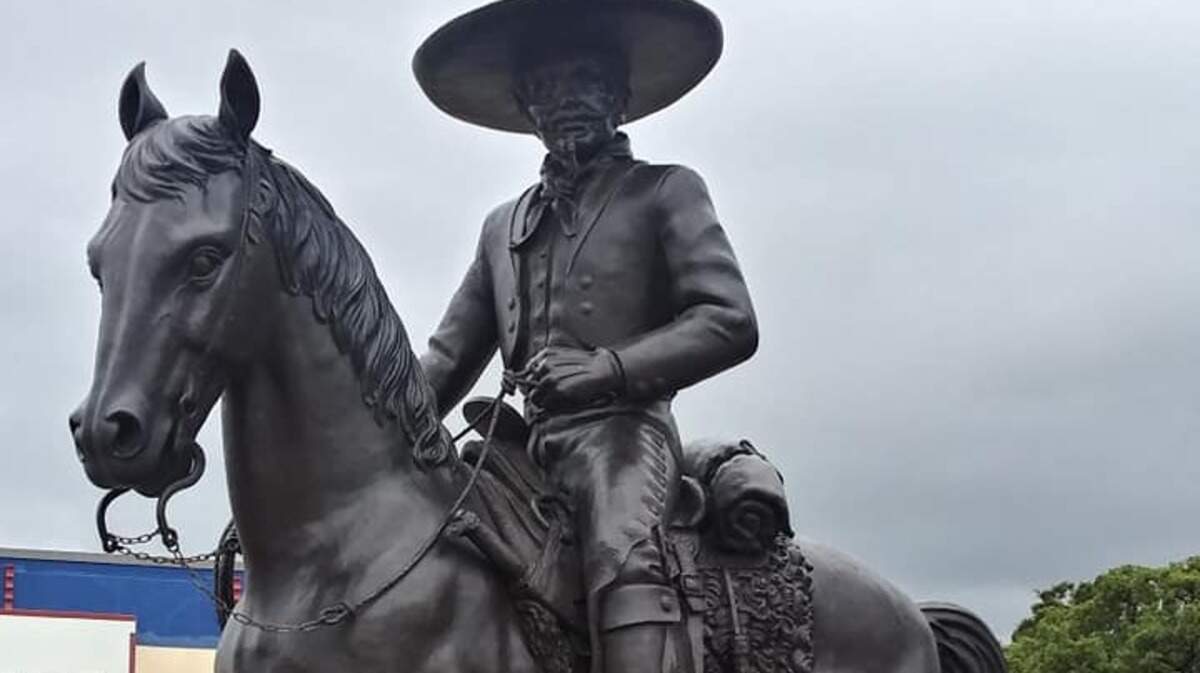
Jim Lane, an attorney, conscious of Tejano contributions, formed a committee, chaired by Manuel Valdez, former justice of the peace, to raise funds for a bronze vaquero statue. On June, 4, 2012, at the installation at North Main and Central, residents admired a true Texas hero.
Like the Sundance Square Plaza mural, the Northside vaquero invites us to celebrate our Hispanic heritage woven tightly in Fort Worth’s cultural zarape. During Hispanic Heritage month, Sept. 15-Oct. 15, we honor Hispanic culture that continues to enrich Texas and Fort Worth.
Author Richard J. Gonzales writes and speaks about Fort Worth, national and international Latino history.