‘I can’t breathe’: Familiar words haunt officer whose uncle died in Fort Worth custody
Update: The lawsuit against the City of Fort Worth that was filed by Christopher Lowe’s family was settled during a court ordered mediation, according to federal court documents.
“Although the case against the officers was dismissed by the court, a settlement was reached in order to limit legal costs associated with the likely appeal by the plaintiff,” Assistant City Manager Jay Chapa said in an email.
The lawsuit was settled for $75,000.
Original story:
Christopher Lowe told the Fort Worth police officers who arrested him that he needed help.
Then, he said the three words that have become synonymous with police brutality and racism in the United States.
“I can’t breathe.”
But his cries were ignored.
Lowe died while handcuffed in the back of a Fort Worth police car nearly two years ago. His pleas to be taken to the hospital were ignored by seven officers as they dragged him to a cruiser, threatened to throw him in the dirt and left him gasping for breath while they devised a plan to lie about his condition on their reports, according to their termination letters. Five of them were fired. Two got their jobs back.
Four years before Lowe uttered the phrase, Eric Gardner said “I can’t breathe” 11 times as he tried to escape from a New York City police officer’s choke hold in 2014. Protesters marched that year shouting those words and holding signs with the phrases “Our democracy can’t breathe.” The three words were written on T-shirts and hoodies worn by famous athletes. They became political and metaphorical.
Then last month, another black man said those words.
George Floyd told the Minneapolis police officer who dug his knee into Floyd’s neck that he couldn’t breathe. His death sparked protests in all 50 states and across the globe. In Fort Worth, police used tear gas on protesters during a night of protest. But the protesters continued to gather, hundreds of them, night after night. They marched peacefully through downtown and the West 7th District shouting, “I can’t breathe.”
Despite having said those three words, Lowe’s death didn’t get much attention in 2018 beyond local news coverage. His family almost preferred it that way. His sister wouldn’t have been able to handle the stress of a media circus. City leaders didn’t come out with statements filled with apologies about how he died. It could be because his death was ruled a cocaine overdose. But he wasn’t helped by those sworn to protect him. Maybe if police called Medstar or took him straight to John Peter Smith Hospital, he could have been saved.
Tiffany Bunton, Lowe’s niece, thought justice would come.
But when it didn’t, and when “I can’t breathe” was once again shouted in the streets, Bunton decided it was time to speak out — not to stir more anger, but to enact change in the department that failed her uncle.
Lowe’s story is like those of a lot of other black men who have died in police custody. It’s laced with anger, heartbreak, questions and failures. But Bunton’s own story intertwines with her uncle’s and with the Black Lives Matter movement in a unique way.
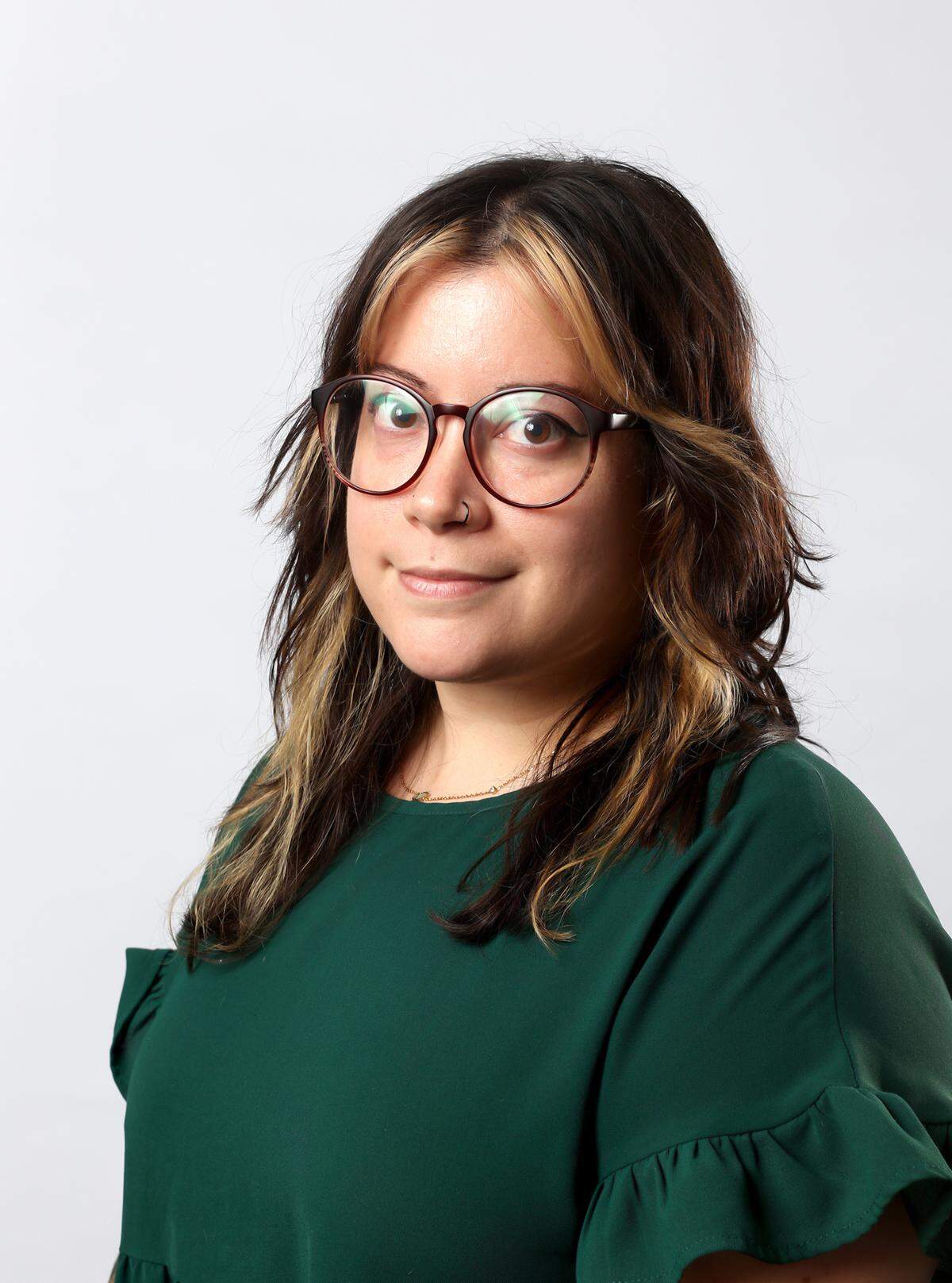
Bunton is a Fort Worth police officer.
For two years she has found her life split in two pieces: A black woman who was shattered by the officers who didn’t help her uncle and as a police officer trying to do good for her community.
She never put her career before her family, but she has no plans to give up on her dreams.
Besides, change and reform comes from within, she said.
“Blue lives matter, of course I feel that way,” she said. “But I don’t think we’d have to say ‘Blue lives matter’ if black lives mattered more.”
An emotional roller coaster
In the days following Lowe’s death, Bunton found herself sitting in front of former Fort Worth Police Chief Joel Fitzgerald.
She held her head in her hands and sobbed until the tears fell down her arms. Fitzgerald told her he was sorry, that the officers involved in Lowe’s death failed him. He was sincere, Bunton said.
She got her emotions out in that office because she needed to get back to work. She puts her grief in the back of her mind when she puts on her uniform.
“I’ve always wanted to be a police officer,” she said Wednesday. “It was my dream. I studied criminal justice in college, and I’m studying for my master’s in criminal justice at TCU. It’s ingrained in me.”
The dream first came to her during a career day at school. A Fort Worth officer showed up on a motorcycle. She couldn’t shake the image from her head, and the older she got, the more she realized she wanted to serve the city she loved.
Despite what happened in July 2018, she’s still doing it. But now, it comes with the added struggle of knowing how her uncle was treated by her colleagues.
She’s worked at the department for more than 15 years. She’s the second vice president of the Fort Worth Police Officers Association. Part of her duties involve fighting for officers’ due process if they’re accused of wrongdoing.
“It’s hard to process how these officers treated my uncle,” she said. “It’s completely opposite of what we’re supposed to be doing for the public. And now some of them are the same guys I share a uniform with.”
At any moment, Bunton could be called on to help two of the officers who allowed her uncle to die in their custody — Daniel Pritzker and Mitchell Miller. When Lowe shouted “I can’t breathe,” they responded, “Yeah, you can.”
‘I can’t breathe’
Lowe, who was 55, served in the military and was from Buffalo, New York — where he used to play the bass guitar, Bunton said.
“I can honestly say that I have six uncles, and I was closer to him than anyone else,” she said. “My dad doesn’t live here so he would basically be my dad.”
He was funny and smart. Bunton said he struggled to sometimes make the right decisions in life “but that didn’t make him less of a man or less of a person.”
He had been in trouble with the law before — mostly for misdemeanor theft and drug possession cases. Lowe was also a small guy — he stood about 5 feet 4 inches tall and weighed 130 pounds “if he was eating good.”
And he wasn’t confrontational. Even on the night he was arrested, Lowe heeded to all officer commands. When he was told to get on his stomach, he responded “yes sir” as two officers bound his hands.
When he was told to walk, he tried, but stumbled and had a hard time getting himself off the ground. It was one of the first signs of trouble. The officers dragged him to his car with one saying they’d just let him fall to the ground the next time he stopped walking. Lowe said again that he was sick and dying and said he couldn’t walk.
The officers were originally called about a prowler. Someone had been banging a pipe on a gate. The resident of the house where Lowe was found stood outside and watched as officers arrested Lowe, according to body camera footage obtained by Bunton and given to the Star-Telegram.
When Officer Scott Smith got to the scene, Lowe threw the pipe to the side, away from the officer, according to multiple police records about the event.
When Lowe kept struggling as they tried to get him into the SUV, Miller told him, “That’s fine, I’ll drag you.” And later said, “You fall again, I’m just going to let you fall,” according to the video.
Smith described Lowe’s eyes as being “bugged out.”
When Lowe told officers he could not breathe (which he said at least three times), Officer Christopher Golden replied, “Don’t pull that (expletive).” And when Lowe spit on the ground, Pritzker told him, according to documents, “If you spit on me bud, I’m going to put your face in the (expletive) dirt.”
After he was placed into the back of a police SUV, the body camera footage goes quiet. The conversation between the officers is redacted.
But documents from the officer’s termination letters say that Pritzker — one of the officers who got his job back — and other officers discussed withholding details from hospital officials about how they believed Lowe was under the influence of drugs. They didn’t want to spend extra time at the hospital. Bunton said that medical intervention could have saved Lowe’s life.
“That was literally the easiest call to have that night and instead they conspired to lie on medical paperwork to get out of having to guard him,” Bunton said. “All they had to do was realize he was not a threat. You call Medstar and they take him to JPS.”
Pritzker and Miller, along with Golden, Taylor Stephens and Hans Fellhauer, were fired in January 2019.
Two other patrol officers were suspended without pay — Scott Smith for 90 days and Andrew Scharf for five days.
All but one of the officers were rookies, having worked less than three years on the force. Smith had the longest tenure with the department at 10 years.
Changing the culture
Bunton doesn’t want her story to create anger against the department, but she’s finally strong enough to talk about her uncle’s death.
And she hopes speaking out will create a culture of change in the department. She said she’s had to be careful about who she talks to in the department about her uncle.
“There are officers in our department that still don’t think those officers did anything wrong,” she said, explaining that people made comments on social media looking for justifications for the way Lowe was treated.
“It doesn’t take training to treat someone with human decency and respect,” she said. “My uncle was never rude to those officers. He never resisted those officers. He was simply asking for help.”
Lowe’s older sister — Bunton’s mother — filed a lawsuit against the city and officers involved.
It says that it wasn’t until August 2018 that the department adopted a policy stating that an officer shall “immediately provide medical attention” when a person requests it or shows signs of distress.
Police did not immediately respond to a request for comment on Friday morning when the Star-Telegram asked if any policy changes, additional training or changes in the hiring and vetting process of officers were implemented after Lowe’s death.
The lawsuit also points to a pattern of encounters with Fort Worth officers and detainees that resulted in death because of a failure to provide medical care. The lawsuit names and gives details of eight instances — not including Lowe’s — when that happened.
“I feel like in my uncle’s situation, their behavior on their body cams is a very telling story of how they policed and maybe how they policed every single day,” Bunton said. “They shouldn’t have gotten their jobs back. When someone is showing you a red flag, they should be gone.”
In January, an independent arbitrator reduced Pritzker’s indefinite suspension to a 10-day suspension. Miller reached a settlement with the city and accepted a 15-day suspension in lieu of termination.
Bunton said change will come only when officers who don’t treat people with dignity are cut from the department.
“They set a bad tone for all of my brothers and sisters in blue who are genuinely doing good,” she said. “We have to hold each other accountable.”
Bunton hasn’t gone to any of the protests in Fort Worth that were sparked by Floyd’s death, either as a citizen or in her capacity as a police officer.
She’s not sure she would be able to handle it.
“If I’m not crying one day, I’m crying the next,” she said. “My mom cries every day. She’s living with me now because she can’t go back to the house that she shared with my uncle. If I can’t be strong for myself, then how am I supposed to be strong for her?”
But she understands the frustration and anger from those who are peacefully marching.
“If reform doesn’t come, it’s just going to make it harder for all of us, but I could be wrong,” she said. “I think some people are still in denial that racism exists. All lives do matter but the problem is is the black man right now seems to be the common target ... Reform is gonna have to come and change will have to happen.”
This story was originally published June 5, 2020 at 1:47 PM.