After federal layoffs, Fort Worth families worry about special education rights
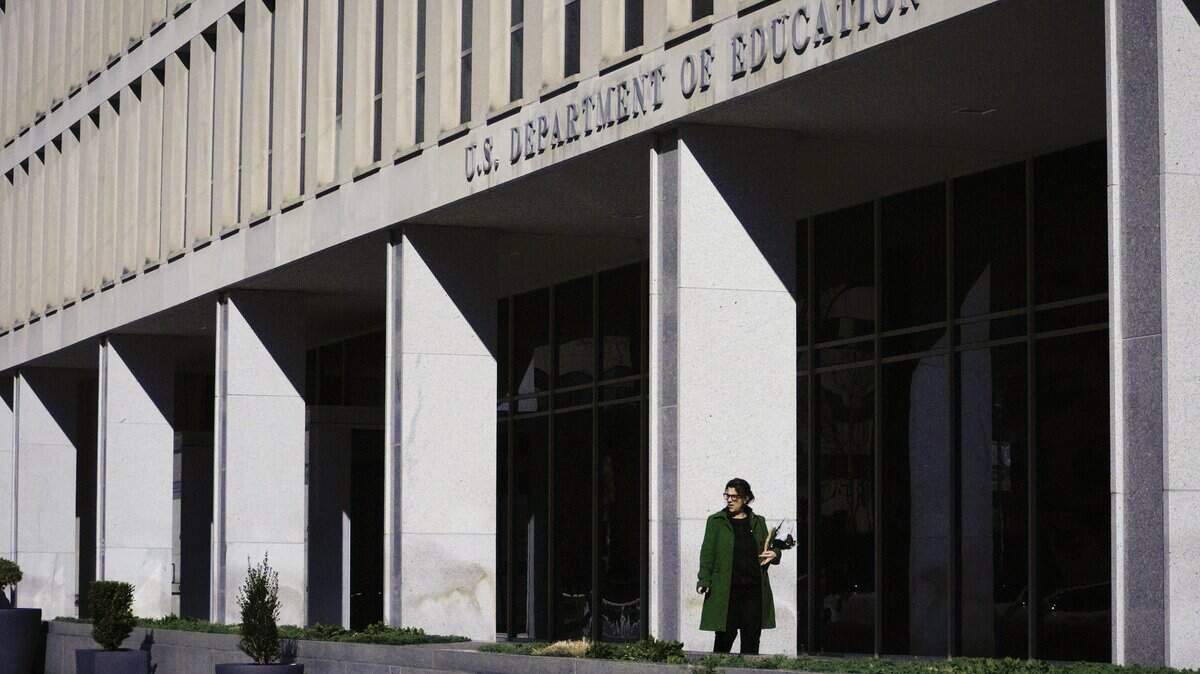
The news of the gutting of the U.S. Department of Education’s special education office is creating concern for families of students with disabilities in Fort Worth and across the country.
Last week, the Trump administration announced massive layoffs at the Education Department, including nearly every staffer in the office that enforces federal special education law. The layoffs come during a government shutdown that’s stretching into its third week.
The cuts represent a massive blow to a department tasked with holding states accountable for how they educate students with disabilities. The gutting of that department could mean the loss of important protections for those students’ families, many of whom are already overwhelmed, said Jill Jorgensen, the mother of a student with disabilities in the Fort Worth Independent School District.
“We’re just trying to keep our head above water. We shouldn’t have to all be lawyers and activists,” said Jorgensen, who is also president of the Fort Worth ISD Special Education PTA. “Somebody else should be helping us out and making sure that people are held accountable.”
Layoffs hit Office of Special Education and Rehabilitative Services
Last week’s layoffs included 466 staff members at the Education Department, including nearly all of those at the department’s Office of Special Education and Rehabilitative Services. The job cuts could leave the department unable to enforce the Individuals with Disabilities Education Act, or IDEA, for the first time in half a century, said Blair Wriston, senior government affairs manager for the national advocacy group Education Trust.
The law, passed by Congress in 1975 and reauthorized in 2004, guarantees a “free and appropriate public education” to students with disabilities. It also requires states and school districts to educate students with disabilities in the least restrictive environment possible.
Texas has run afoul of that law twice over the past decade. In 2018, Education Department officials determined that the Texas Education Agency violated IDEA by requiring school districts to cap special education enrollment at 8.5% of their total enrollment. That finding came after the Houston Chronicle published an investigative series highlighting students with disabilities who had been denied access to special education services.
Also in 2018, the U.S. 5th Circuit Court of Appeals ruled that Texas underfunded its special education programs to the tune of $41.6 million during the 2016-17 school year, a violation of federal special education law. The Education Department withheld $33 million in federal funding as a penalty.
Although the protections outlined in IDEA remain enshrined in law, without federal attorneys and other staffers enforcing the act, students with disabilities and their families have fewer options when those protections are violated, Wriston said. They also lose the technical assistance the department generally provides, he said — in the past, families who were concerned their child’s rights had been violated could call the department to get advice on what to do next. Now, he said, there’s no one to answer those calls.
Wriston said he’s particularly concerned about how the cuts will affect students of color with disabilities. Researchers say those students face disciplinary consequences disproportionately and are more likely to be placed in segregated settings rather than being included in mainstream classrooms. If no one is left to enforce IDEA at the federal level, those students are left without recourse when their rights are violated, he said.
It’s unclear what the job cuts mean for federal funding for special education programs in school districts nationwide. When Congress passed IDEA in 1975, it committed to covering 40% of the cost of special education services nationwide. Federal special education spending has never come close to that threshold — in recent years, the federal share of special education funding has hovered just below 13%. Texas received $953.4 million in federal funding through IDEA this year.
In a statement, Arlington ISD spokesperson Taina Northington noted that districts have already received IDEA funding for the school year, so the job cuts won’t jeopardize special education programs immediately. But the cuts raise concerns about the department’s ability to carry out its responsibilities under IDEA in the future, she said. The district received $12.1 million in federal special education funding this year.
“We will continue to monitor developments so we can serve the students of Arlington ISD going forward,” she said.
Officials in Fort Worth ISD didn’t offer comment before deadline Tuesday.
Fort Worth mom worries about special education protections, funding
Jorgensen, the Fort Worth ISD mother and PTA president, has two kids in the Fort Worth school district, one of whom has multiple mental and physical disabilities. She said it’s been her experience that district officials are trying to do the best they can for students with disabilities. But they’re doing so within major budget constraints. That means the district doesn’t always give students the services and accommodations they need the first time parents ask, she said.
“You get a no first,” she said. “And then you have to be the squeaky wheel, and you have to continue to ask.”
Jorgensen also worries about what the cuts will mean for special education funding. Although federal spending on special education represents a much smaller share than what states and districts cover, Jorgensen said she worries about what would happen if that funding went away. If states and districts lose federal funding, it could be far easier for them to deny students services they need, saying they don’t have the money, she said.
And if that happens, Jorgensen said, there could be no one left at the federal level to hold the state accountable.
In a statement, officials with the Dallas-based nonprofit Disability Rights Texas, said the cuts announced last week, combined with the layoffs at the Education Department earlier this year, leave families with fewer avenues for remedying situations in which their kids’ rights are violated. Aside from finding Texas in violation of federal law related to the underfunding issue and the enrollment cap, officials noted that the department’s Office of Special Education Programs also directed TEA to come up with a plan to address the needs of students affected by those violations.
“With dwindling staff numbers at the (Office of Special Education Programs), Disability Rights Texas continues to be highly concerned for how we will hold our state accountable for providing legally obligated education services to Texas children with disabilities,” officials with the organization said.
This story was originally published October 14, 2025 at 4:57 PM.