Aledo ISD violated special education laws, state investigation finds
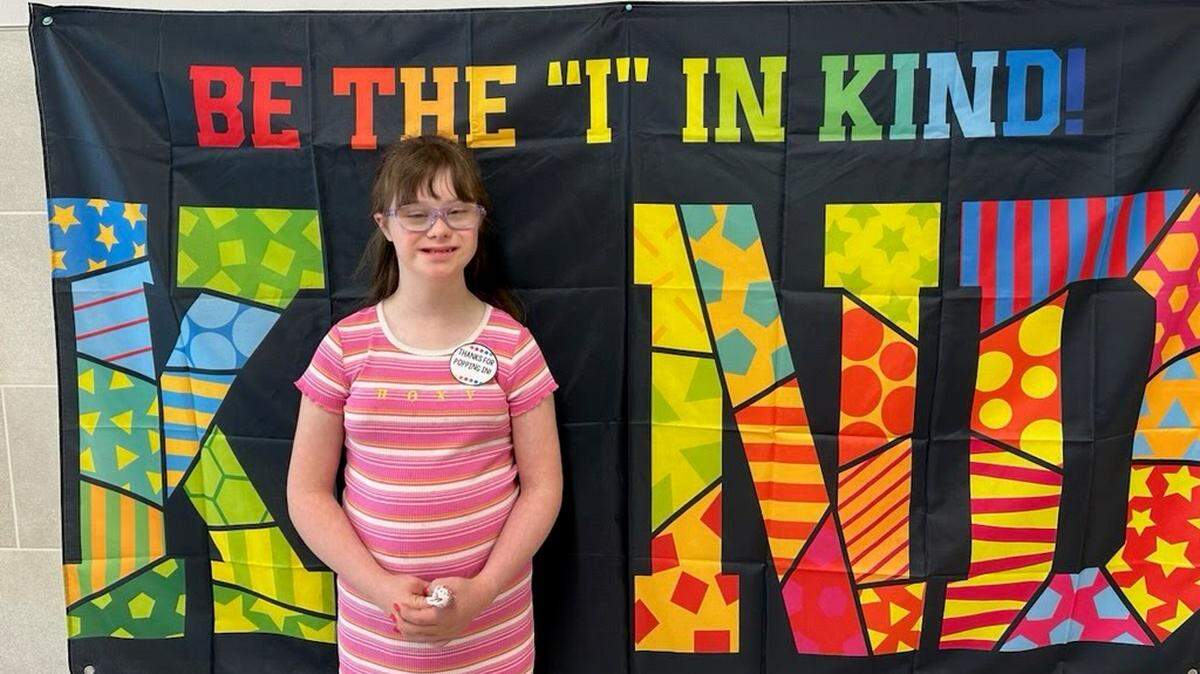
The Aledo Independent School District violated federal laws over special education in its dealing with more than a dozen students with disabilities, according to the Texas Education Agency, which regulates the state’s public schools.
In an investigative report completed in July and obtained by the Star-Telegram, a TEA official wrote that Aledo ISD hadn’t properly implemented 13 students’ individualized education programs, or IEPs. Investigators also wrote that the district hadn’t ensured that students were evaluated or fulfilled its obligations to identify students with disabilities in accordance with federal law.
Those requirements are a part of the federal Individuals with Disabilities Education Act, or IDEA, which requires districts to offer students a free and appropriate public education.
The report comes after a series of complaints from parents saying that the district, which is in Parker County and a small section of Tarrant County, was segregating their children into self-contained special education classrooms for most or all of the school day. Their IEPs required them to be included in general education classrooms.
IDEA requires that students with disabilities be educated in the least restrictive environment possible. That means school districts must include those students in mainstream classrooms with their nondisabled peers as much as they can.
Among other corrective actions, TEA officials wrote that the agency would require the district to review its policies to determine where changes are needed and train all staff whose actions contributed to the noncompliance with federal law.
Aledo ISD responds to investigation over special education
In an emailed statement, Aledo ISD officials said the district takes seriously its obligation to serve the 1,100 students who receive special services, and works to “provide exceptional experiences” for those students.
“We know that our staff is committed to giving their best to our special education students every single day, and we are certain that no staff member did anything knowingly out of compliance in the limited instances brought to our attention by TEA,” the statement said. “With that being said, it is the responsibility of the district to have checks and balances in place to maintain and document evidence of compliance in special services for all special education students.
“The corrective action consists of reviewing AISD special education policies and practices, putting systems into place to make sure that documentation of services is maintained and that certain services are better tracked, providing additional services to some students, and providing training to staff. We know that the corrective action we implement will make us better in our service to our students.”
A TEA spokesperson confirmed that the agency had investigated Aledo ISD but declined to comment otherwise.
Aledo parents & teachers raised red flags to state board
Brandon Hall, who represents Parker County on the State Board of Education, said he became aware of the situation in Aledo ISD after more than a dozen parents and current and former teachers contacted him.
Although the details of each story differed, every family told him their children were being segregated into special education classrooms and not included in general education classes. The teachers described the situation the same way, he said, leaving him with an overall impression that the district’s special education department was in disarray.
After talking with parents and teachers, Hall forwarded their concerns to TEA, which then launched the investigation. Now that the report has been completed, Hall said he hopes to see the district review every IEP to make sure they’re in compliance with federal law.
The district needs to have systems in place to ensure every student with disabilities is included in the general classroom as much as possible, he said.
“They’re our most vulnerable population, so we really need to make sure that they’re getting the education that they deserve and that they’re protected,” he said.
‘I am deeply concerned,’ Texas lawmaker says of Aledo ISD probe
In a statement, Sen. Phil King, R-Weatherford, said students in special education programs and their families “need our full support.”
“I am deeply concerned by the Texas Education Agency’s findings that Aledo ISD violated state and federal special education laws,” King said. “I know that the school district will take swift, comprehensive action to remedy the situation.”
King, who represents Parker County in the Texas Senate, acknowledged that it can be a challenge for school districts to provide individualized support for every student with special needs.
He also noted that Texas lawmakers passed legislation this year to overhaul the state’s special education funding model. Senate Bill 568, which Gov. Greg Abbott signed into law in June, is intended to close gaps between what the state and federal governments spend on special education in Texas.
Aledo special education parents worry about lack of inclusion
When Heather Parmenter, a parent in Aledo ISD, enrolled her son Bo at Stuard Elementary School, she said school officials told her he’d be placed in a hybrid setting. That means he’d spend part of his day in a regular classroom and be pulled out for extra help for a few hours every day.
Parmenter told the Star-Telegram that the solution seemed like “the best of both worlds” — Bo, who has Down syndrome, would get the extra help he needed to succeed, but he’d still be included in a mainstream classroom.
That solution seemed to work for a while, Parmenter said. Bo’s teacher believed in the potential of students with disabilities, and did everything she could to make sure they were included as much as possible.
But that teacher left the district before the beginning of the 2024-25 school year, Parmenter said. At that point, the district placed Bo in a smaller classroom with many more students.
“The results were horrible,” Parmenter said. “I don’t think he learned anything last year.”
To make matters worse, Bo was injured when another student in the classroom threw a toy at his head. When she got a call about the incident, Parmenter rushed to the school to pick Bo up. She scheduled a meeting with school leaders to talk about the incident and what they planned to do to make sure Bo was in a safe environment. During that meeting, Parmenter said district officials insisted she agree to a plan that removed Bo from his regular classroom for almost all of the school day.
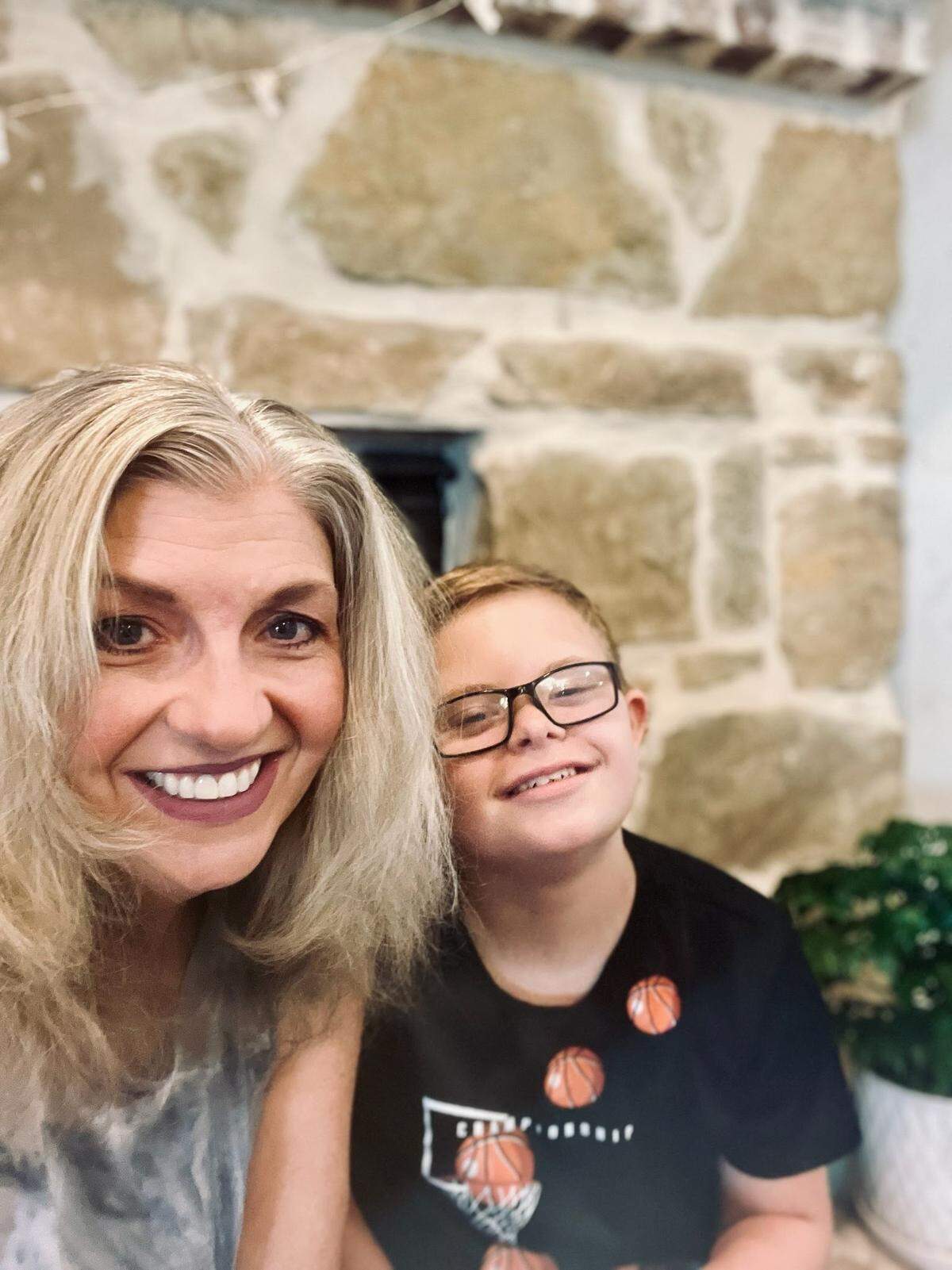
It’s a problem if students with disabilities aren’t included in their regular classrooms, Parmenter said, because they won’t be in school forever. Someday, Bo will graduate, and he’ll need to be able to find a job. That means he needs to be able to interact with non-disabled peers — skills he needs to be able to learn at school. If he spends his entire day in a classroom with other students with disabilities, he has no opportunity to develop those skills, she said.
Carol Caron, another mother of an Aledo ISD student, said that lack of inclusion has been a source of frustration for her, as well.
Caron’s 11-year-old daughter, Ellie, has Down syndrome. Like Parmenter, Caron said when she enrolled Ellie in Aledo ISD’s special education program, school leaders led her to believe that her daughter would spend most of her time in a regular classroom, but she’d be pulled out for part of the day for one-on-one instruction.
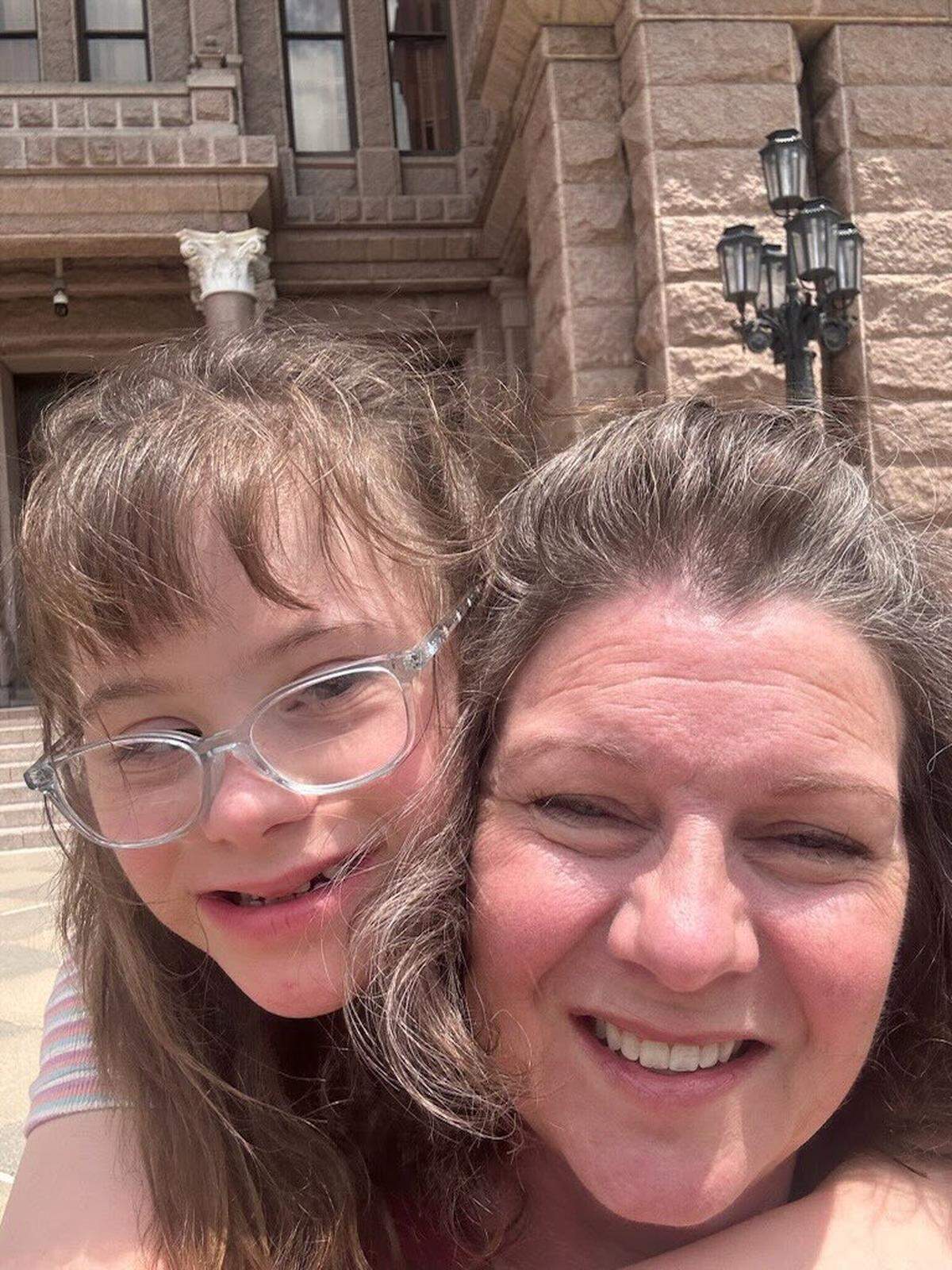
But as time passed, Caron learned that wasn’t happening.
Ellie spent most of her day in a resource room with other students with disabilities, Caron said. Every student was given the same tasks to work on, whether it fit their needs or not. During the limited time she spent in her regular classroom, she was allowed to sit with the other students, but she wasn’t included in any meaningful way, she said.
That arrangement left Caron concerned about how much growth her daughter would be able to make. Kids with Down syndrome tend to mimic what they see around them. So if Ellie spent all day in a special classroom, her only classmates were other students with disabilities. That means she didn’t have a chance to interact with other students who would be good models for speech and behavior, Caron said.
District leaders have also insisted on placing Ellie on an alternate curriculum, meaning she doesn’t have access to the material other students are learning, Caron said. That could leave her with big gaps in her knowledge once she leaves school.
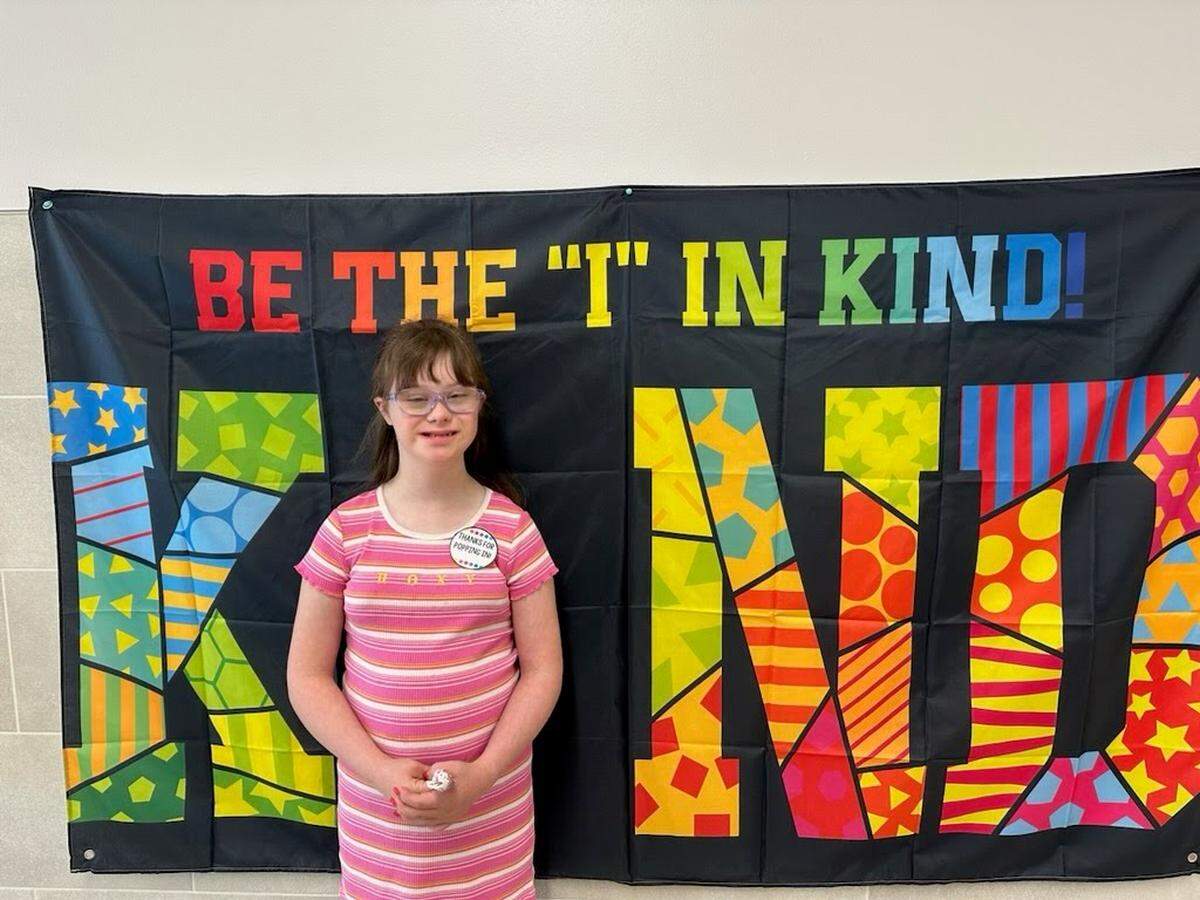
Caron acknowledges that Ellie’s disability means she’ll never be on par with other students academically, but that doesn’t mean she can’t learn any material at all, she said. For example, if the class is learning about the history of the Civil War, Ellie probably won’t be able to grasp intricate details about the war’s causes and effects. But she’ll at least be able to understand that it was a war that was fought in the United States, she said.
Caron also learned that school leaders had exempted Ellie from taking the benchmark exams they give other students to see how they’re progressing academically. They also weren’t giving her the kinds of interventions she needed to learn to read.
Caron has seen how much of a difference the right academic interventions can make for Ellie. After learning that Aledo ISD wasn’t offering the kind of support that would help Ellie learn to read, Caron began taking her to Reading Connection, a private tutoring service that works with kids with learning disabilities. In the span of about six months, Ellie went from reading at a pre-kindergarten level to a first grade reading level, Caron said. As pleased as she is about that progress, Caron said she worries about what might have happened if she hadn’t stepped in.
“I think the gap would have continued to widen, and we would get to a point where she truly would need to be in a functional academics class, because her skill set would be so far behind,” Caron said.
Aledo ISD faces separate lawsuit over special education
Aledo ISD is facing a lawsuit over its handling of special education services. Unrelated to the TEA investigation, parents Courtney and Spencer Morey filed suit against the district last year, arguing that district officials had violated the Americans with Disabilities Act by denying special education services to their 4-year-old daughter, Annie, who has Down syndrome.
The case hinges on the question of whether Annie would be required to undergo an IQ test before being allowed to enroll in the district. District leaders contend that Annie must undergo a full battery of assessments, including an IQ test. But the Moreys say an IQ test would be inappropriate for someone of Annie’s age, and worry the district would use the results to place her in a self-contained special education classroom where she wouldn’t have the same opportunities she’d have in a general education classroom.
In a ruling issued June 5, U.S. District Judge Terry Means sided with Aledo ISD, writing that the district was required to assess Annie “in all areas of suspected disability,” including an IQ test. He also wrote that the Moreys hadn’t provided adequate evidence the district had violated federal disability rights laws. The Moreys appealed the ruling to the U.S. 5th Circuit Court of Appeals. A court date hasn’t been set.
This story was originally published September 2, 2025 at 11:53 AM.