These programs help Fort Worth students get to college. They may be in jeopardy
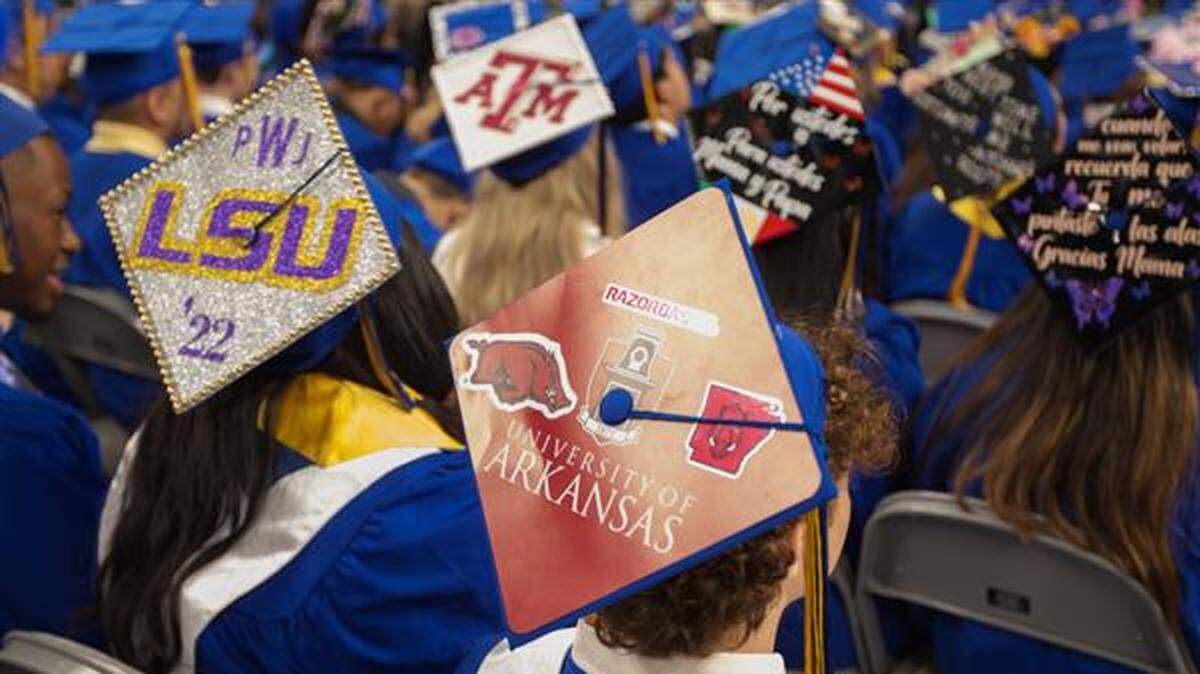
Over the past six decades, the federal TRIO program has helped millions of low-income students earn college degrees.
But with Trump administration officials holding up funding meant to fund college access efforts under TRIO and looking at the idea of eliminating the program entirely, university officials and higher education access advocates in North Texas and across the country are expressing concern.
Federal TRIO programs offer college assistance
TRIO takes its name from three programs the U.S. Department of Education launched in the 1960s as a part of President Lyndon Johnson’s War on Poverty. Today, the program encompasses eight initiatives that work to help underrepresented students make it to college and go on to earn their degrees. For example, Upward Bound, one of the three original programs, focuses on helping high school students from low-income families, those whose parents didn’t attend college and those from rural areas get to college.
TRIO has enjoyed broad bipartisan support over the past half century. Budget proposals passed by the House and the Senate include funding for the programs. But in an earlier budget proposal released last spring, Trump administration officials called for the program to be defunded.
White House officials called the program “a relic of the past,” saying college access isn’t the obstacle it once was for low-income students. Officials said colleges should use their own resources to recruit high school students from underrepresented backgrounds, rather than relying on federal funding to do so.
“A renewed focus on academics and scholastic accomplishment by (Institutions of Higher Education), rather than engaging in woke ideology with Federal taxpayer subsidies, would be a welcome change for students and the future of the Nation,” White House officials wrote.
The budget bill being negotiated in Congress would affect TRIO programs’ funding for the 2026-27 school year. But even as federal lawmakers hash out the budget, the Trump administration could decide to pause or cancel spending on the program. Earlier this summer, the administration abruptly cancelled about 20 TRIO grants that had already been approved.
Many programs that haven’t had their funding discontinued are in a holding pattern. Colleges and nonprofits across the country that use TRIO grant money to fund their programs should have received official notice of their awards at the end of last month. Instead, the White House sent out “no cost extension” notices for about 2,000 grants. That extension gives grant recipients the authority to continue operating those programs, but doesn’t give them the funding to do so.
TCU Upward Bound works with FWISD students
Texas Christian University’s Upward Bound program is among those that are waiting to be notified about how much grant funding it can expect to receive. The program, which is run through TCU’s College of Education, offers services like college planning, career exploration and tutoring to qualifying students at four Fort Worth ISD high schools: Arlington Heights, Carter-Riverside, Paschal and Trimble Tech.
Frank Hernandez, dean of the College of Education, said the program is instrumental in helping students reach college and succeed there. Many students, especially those from underrepresented backgrounds, talk about college in the abstract, Hernandez said. Programs like Upward Bound help move those conversations into reality, he said.
Hernandez was an Upward Bound student himself as a high school junior and senior in Wichita, Kansas. The program allowed him to spend time at Wichita State University, attending classes, eating in a campus dining hall and interacting with college students. It gave him insight into the college experience that his parents, who hadn’t gone to college themselves, couldn’t give him, he said.
Although there are more online resources today for high school students who are trying to navigate the path to college, there’s still a huge need for the mentorship TRIO programs provide, Hernandez said. As an example, he pointed to last year’s rollout of the redesigned FAFSA, which left many families struggling to apply for financial aid.
If funding for TRIO programs is eliminated, students will be the ones affected most deeply, Hernandez said. But the broader Fort Worth community would feel the change, as well, he said. Those grants allow TCU to build partnerships with schools and nonprofits, strengthening ties between the university and its city, he said.
Higher education landscape is complex
Kimberly Jones, president of the Council for Opportunities in Education, argued that the programs are even more necessary today than they were when they were created in 1965 because the higher education landscape is more complicated. There are more colleges and universities today than there were 60 years ago, and the federal financial aid situation is changing constantly.
Jones also noted that more than half of the students in college today are adults who graduated from high school years or even decades ago. Those students are more likely to be balancing college against work and parenting responsibilities, she said. And those who are considering pursuing a degree after being out of school for years don’t have access to a high school counselor to help them navigate the process.
This isn’t the first time TRIO has come under threat. The programs have faced the possibility of elimination about once a decade since they were established, Jones said. But this year marks the biggest challenge her organization, which advocates for the continuation of federal college access programs, has seen in years, she said. Still, she’s optimistic about the program’s future.
“The good news for us is that TRIO has always been a bipartisan program, and we can count Republicans as some of our biggest supporters,” she said. “And so because they work together, hand in hand, that strengthens our ability to weather any storm.”
Study: One in five Fort Worth middle schoolers goes on to earn degree
The TRIO funding uncertainty comes at a time when Fort Worth leaders are concerned about the number of public school students who go on to earn college degrees. A report released Monday by the nonprofit Fort Worth Education Partnership shows that only 19% of students who were enrolled in eighth grade in a public school in Fort Worth between 2011-2013 went on to earn an associate’s degree, a bachelor’s degree or a professional certificate from a Texas college within six years of high school graduation.
A lack of higher education can mean fewer economic prospects. In Tarrant County, a young adult with no credential beyond a high school diploma stands just a 14% chance of earning a living wage, compared to 48% for those with a bachelor’s degree, according to an analysis of U.S. Census data by the nonprofit Commit Partnership.