More Fort Worth parents switch to homeschooling 5 years after start of pandemic
A little over a year ago, Angela TePaa’s family was in the middle of a few transitions at once.
TePaa, her husband and her two kids were moving in with TePaa’s mother to help care for her. At the same time, TePaa’s daughter, Kyoni, was going into sixth grade. That meant she’d be leaving J.T. Stevens Elementary School and moving on to middle school.
TePaa didn’t like the idea of throwing Kyoni into the chaos of middle school at a time when her life at home was disrupted. Besides, she wasn’t happy with any of the middle school options that were available for Kyoni. So the family decided to try another option: Homeschooling.
At first, the idea was daunting, TePaa said. She doesn’t consider herself “the teacher type,” she said, and she worried she might do something wrong. But as she did more research, she realized that there were a host of resources available to help. It was just a matter of figuring out what Kyoni’s learning style was and finding a program that fit.
“You kind of figure it out as you go,” she said.
TePaa and her family aren’t alone. Both in Fort Worth and nationwide, homeschooling has seen rapid growth since the pandemic. But experts and homeschool advocates say the pandemic and the school shutdowns that came with it are among many factors they suspect are driving that growth.
Homeschool withdrawals grow in Fort Worth ISD
In Fort Worth ISD, 369 students withdrew from schools in the district to switch to homeschooling in the 2019-20 school year, the year the COVID-19 pandemic began. The following year, when schools started the year in remote learning, 576 students switched to homeschooling, according to district records. That number has continued to grow since then — last year, 701 students left Fort Worth ISD to move to homeschooling.
To be sure, students who switch to homeschooling make up a small percentage of the number of students leaving the district overall — nearly 13,000 students withdrew from Fort Worth ISD last year, about half of them to go to other Texas public school districts or charter schools. But the changing picture in Fort Worth reflects a broader national trend: Years after the end of the pandemic, the number of families leaving traditional schools in favor of homeschooling hasn’t returned to pre-COVID norms.
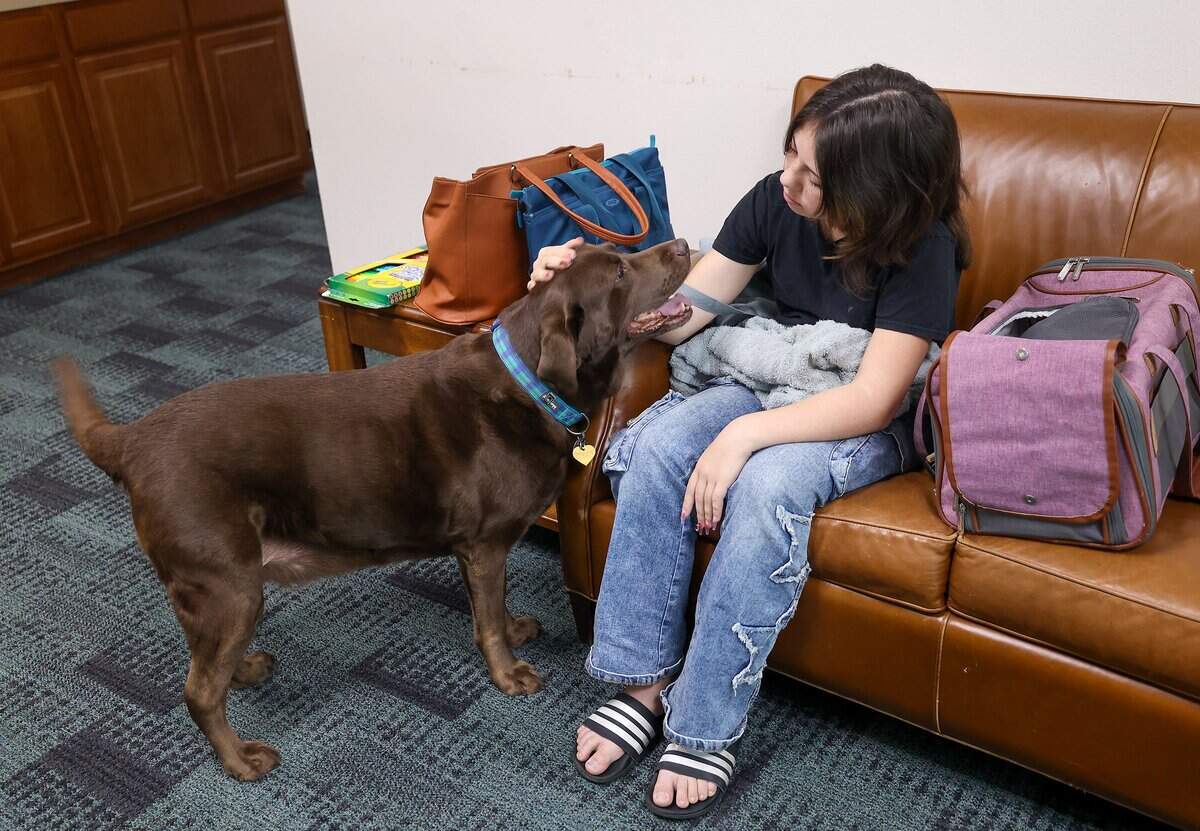
Kyoni said she wasn’t sure what to think last year when her mom broached the subject of homeschooling. But as the school year went on, she found the experience a lot simpler than what she was used to in public schools. Most days, she could get through all her school work in about two hours, leaving her the rest of the day to play games or help out around the house.
But while the experience was less stressful than a normal day in school, Kyoni said it was also lonely. Her brother was still in school in Fort Worth ISD, so she didn’t have many chances to interact with other kids.
So once again, Kyoni and her mom are trying something new this year. On Tuesday morning, they were in downtown Fort Worth for a tour of Science, Etc., an educational center for homeschool students. TePaa said she hoped the center’s classes would give her daughter a chance to learn alongside other students her age.
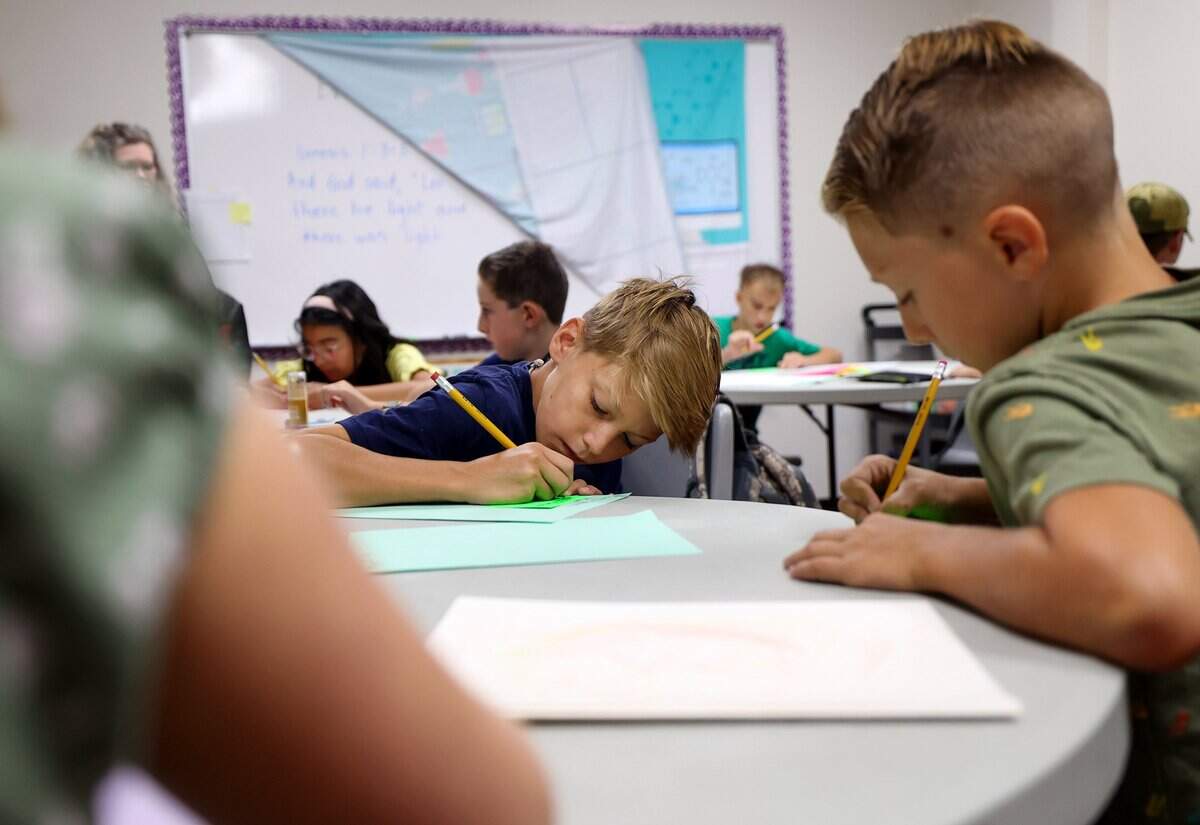
It isn’t easy to pin down a term to describe Science, Etc. It isn’t a homeschool co-op, because classes are taught by paid teachers, not by volunteer parents. Strictly speaking, it also isn’t a microschool, said Susan Kitchens, the center’s administrator. Kitchens describes Science, Etc. as a forum — she hires teachers to work with students on subjects they know well. Some of the center’s educators are licensed teachers with years of experience working in public or private schools. Others are career changers or retirees who came to teach subjects in which they have expertise.
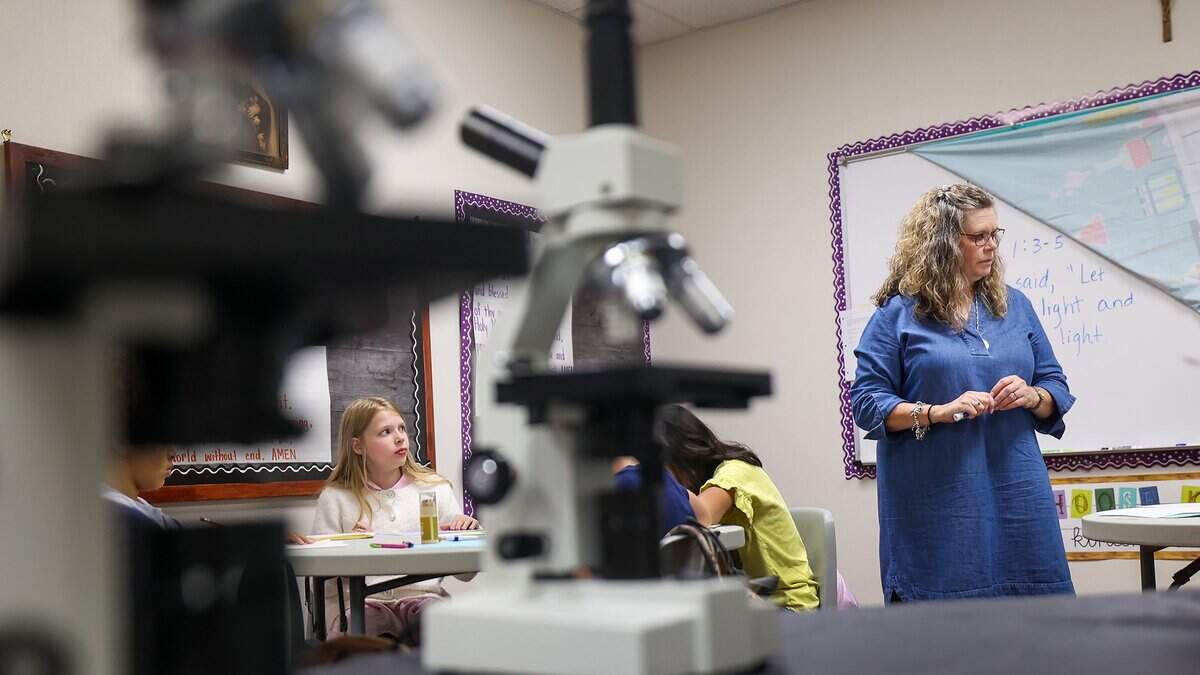
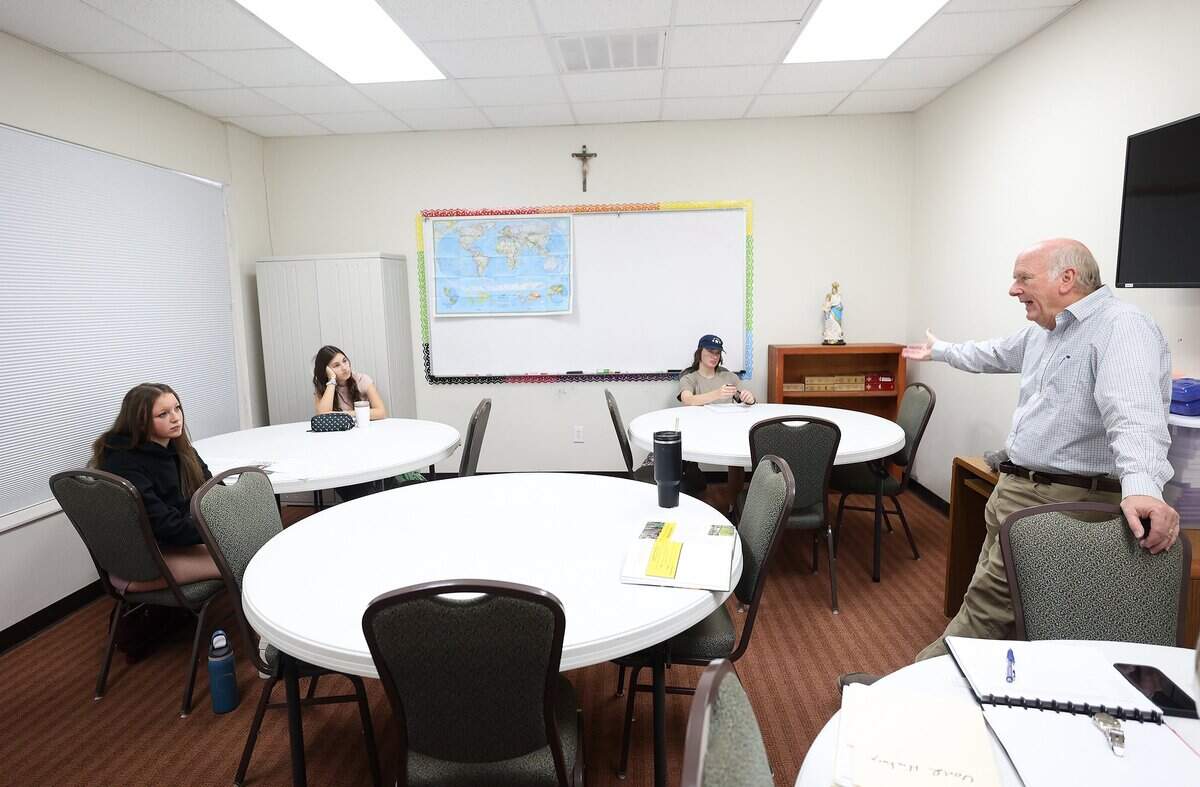
The center offers Christian-based instruction, Kitchens said. That means science classes present the theory of evolution alongside creationism, which holds that humans, the natural world and the universe were created by God. On Tuesday morning, science teacher Kim Peck walked elementary students through the creation story from the Book of Genesis. Down the hall, history teacher Kyle Scarbrough talked with high schoolers about the dangers of forgetting history, drawing on examples from the Book of Judges.
Kitchens said she’s noticed rapid growth in interest in Science, Etc. over the past five years. Some families come looking for a Bible-based learning experience for their kids, she said, but there are many other reasons students enroll there. Some students have health issues that make it unsafe for them to be around large groups of people or difficult for them to attend public school five days a week. Others are dissatisfied with how their school districts are doing academically.
A small handful of students homeschool because they’re involved in equestrian activities, and they need to be out of town more often than a public school schedule allows, Kitchens said. Homeschooling offers greater flexibility that those students need — most students only come to Science, Etc. one or two days a week, and those who are traveling can take their homework with them.
Homeschool growth is nationwide trend
The Texas Education Agency doesn’t track the number of homeschooled students in the state, so it’s difficult to compare the number of students leaving Fort Worth ISD to Texas as a whole. But Angela Watson, director of Johns Hopkins University’s Homeschool Research Lab, said the picture in Fort Worth reflects broader nationwide trends.
Before the pandemic, homeschooling made up a small, slow-growing piece of the nation’s education picture, Watson said. For years, the number of students in homeschooling grew about 2% each year, until about a decade ago, when that growth stopped, she said. But at the beginning of the pandemic, when schools shut down and switched to online learning, large numbers of families began looking at homeschooling as an option.
Education leaders and researchers expected that growth to slow somewhat in the years after schools reopened, Watson said. But in most places, that never happened.
Instead, the number of students in homeschooling has continued to grow at a rapid pace. In an analysis published last year, researchers at the Homeschool Research Lab found that, among the 21 states that had released homeschool enrollment data, only two — Vermont and New Hampshire — had seen the number of homeschooled students decline. In all 19 other states, growth either continued steadily after the pandemic or slowed and then rebounded.
Watson said she suspects that the continued growth is a self-perpetuating trend: As homeschooling becomes more common, more and more people know someone who’s involved with it, she said. As the idea of homeschooling becomes more mainstream, she thinks more families who are looking for an alternative to public schools are willing to consider it.
More people are also aware of the options available to homeschool families, Watson said. During the pandemic, millions of people learned how to work remotely, and parents with kids in school got a close-up look at how online learning works. After that experience, the idea of using online learning tools to supplement what students are learning at home seems less daunting for many families, she said.
“Everyone’s used to Zooming,” she said. “It’s not a big deal to hop on a call with your tutor or to take online courses.”
COVID moved homeschool ideas from theory into practice
Jube Dankworth, president of the nonprofit Texas Home Educators, said she’s seen big growth in interest in homeschooling in the state over the past five years. Most people who leave public schools for homeschooling do so because something is happening in their kids’ school that they aren’t happy with, like bullying. Often, it’s because their child isn’t making as much progress as they should be, she said.
The pandemic offered a good testing ground for ideas around homeschooling that had been around for decades, Dankworth said. In the 1990s, homeschool families and advocates had organized discussions about what would happen to education in the United States if the public school system went away. People talked about learning pods, micro-schools and myriad other variations on homeschooling, she said.
But those discussions were mostly theoretical until March of 2020, when school districts across the country closed their buildings and shifted to online learning to try to help contain the spread of COVID-19. In the months that followed, Dankworth got more than a dozen requests per day from people looking for information about how to set up learning pods or micro-schools.
Homeschooling is likely to continue to grow in coming years as Texas homeschoolers become eligible for state funding. Lawmakers passed an education savings account plan earlier this year. The voucher-like plan offers public money to families to help cover private school tuition and other expenses. Homeschool students are eligible to receive up to $2,000 a year. The voucher program is set to launch in September 2026.
Bullying prompted Richland Hills mom’s homeschool decision
Jacquelyn Johnson, a homeschool mom in Richland Hills, said bullying was the biggest factor behind her decision to pull her sons out of public schools and switch to homeschooling two years ago.
At the time, her oldest son was a fifth-grader in Birdville ISD. The family had just moved to the district, and during the first week of school, her son told her that another boy at his school would walk up behind other kids, grab them and pull them to the ground. The boy did this to Johnson’s son several times in a single day, and to other students as well, she said, but teachers didn’t do anything to stop it.
As the bullying escalated, Johnson contacted the district about trying to have her kids moved to another school. A district leader told her that her options were limited because space was tight and her family had only been in the district for a few weeks. Feeling as though she had few other options, Johnson sent a letter to the district saying she was withdrawing her sons and switching to homeschooling.
At first, Johnson didn’t have much of a plan for how to approach homeschooling, she said. She enrolled her boys in an online program for the first few weeks. She wasn’t completely happy with the program, she said, but it was mainly a way to make sure they didn’t fall behind while she looked for other options.
But it didn’t take Johnson long to come up with a better plan, she said. Although they do most of their school work at home, the family is plugged into a wide range of groups for homeschool students. They’re members of a co-op that meets once a week for STEM classes. They’re also involved in several homeschool groups that meet once a month for nature hikes, play dates and other social activities.
The experience has been good for Johnson’s boys, she said. She’s been able to find curricula that work well for her family. And the fact that they’re engaged with homeschool groups gives her sons a chance to learn and play with other kids.
Still, Johnson said she isn’t certain her family will never go back to public schools. When her sons get to high school, she isn’t confident she can give them all the help they need with college applications and financial aid paperwork. But she also knows that other homeschool families have managed to navigate that process.
But for now, Johnson said homeschooling is the best fit for her sons. She’s talked with them about other possibilities, like going back to Birdville ISD or applying for a charter school. None of the three were interested in doing anything other than homeschooling, she said.
Homeschooling offers flexibility, Fort Worth microschool teacher says
Sarah Milks, a former teacher in Northwest ISD, said she started thinking during the pandemic about options outside the public school system — both as educational choices for her kids and as a career path for herself. Milks is the founder of Olive Tree Academy, a micro-school in north Fort Worth.
The academy is geared toward families who want to homeschool their children but either don’t want to do the teaching themselves or don’t feel equipped to handle it, Milks said. Like at other programs geared towards homeschoolers, students come to the academy a few days a week and do the largest share of their schoolwork at home.
Milks said she moved to homeschooling after becoming frustrated with what she described as poor academic performance and behavior challenges in the districts where she taught. Over an 18-year career in public schools, she taught in Alvarado, Hurst-Euless-Bedford, Lake Worth and Northwest ISDs.
One of the most attractive things about homeschooling is that it offers greater flexibility than a public school setting, Milks said. In public schools, district leaders make curriculum decisions for every campus, leaving teachers little leeway to decide what concepts to cover. In homeschooling, instruction can be tailored to students’ interests, she said. That’s true both when she’s working with her own kids and when she teaches other students at the academy.
“If they want to study rockets, I can incorporate rockets into all four content areas,” she said. “I have that flexibility.”
Homeschooling could be a permanent move — or not
Kyoni, the middle schooler, said she liked what she saw at Science, Etc. During her first visit, she and other students there played an icebreaker game in which they had to guess facts about each other. Kyoni’s fact was that she likes anime. None of the other kids guessed correctly, she said.
As good an experience as homeschooling has been, TePaa said she doesn’t know if the family will stick with it all the way through high school. She knows there are certain experiences, like high school football games, that she can’t replicate at home. And she isn’t sure she’s up for the challenge of teaching her daughter calculus when the time comes.
Still, TePaa said she’s happy with how Kyoni is doing, both with her schoolwork and in general. And if the day comes when Kyoni decides she wants to go back to school, TePaa knows she’ll be able to jump right back in.
This story was originally published September 10, 2025 at 11:55 AM.