Nation’s Report Card shows Fort Worth ISD struggles in reading
More than half of all fourth- and eighth-graders in the Fort Worth Independent School District are below basic proficiency in reading, according to nationwide test scores released Wednesday morning, Jan. 29.
The district isn’t alone: Record numbers of students scored below basic in reading on the National Assessment of Educational Progress, meaning they haven’t even partially mastered the skills they need to be proficient readers.
Nationwide, most states and districts still lag behind where they stood before the pandemic, said Peggy Carr, commissioner of the National Center for Education Statistics. But school shutdowns and the academic losses that came with them aren’t the only factor, she said.
“This is not just a pandemic story,” Carr said. “Our nation is facing complex challenges in reading.”
Nation’s Report Card shows lack of progress in FWISD
The assessment, which is commonly known as the Nation’s Report Card, is based on tests given every other year to students in fourth and eighth grades across the country. It primarily shows how student achievement compares from state to state. But 26 school districts across the country, including Fort Worth, Dallas, Austin and Houston ISDs, participate in a more granular version of the test, allowing for district-level comparisons.
In Fort Worth ISD, 42% of fourth-graders and 47% of eighth-graders scored at or above basic in reading on last year’s test, meaning the district’s results were essentially flat compared to 2022.
The district’s fourth-graders fared better in math: 65% scored at or above basic in math last year, the same percentage as 2022. But just 37% of the district’s eighth-graders scored basic or better in math, a seven-point decline from two years before.
The district’s scores are based on the level of skill students demonstrate on the assessment. Students who score basic are able to demonstrate some rudimentary skills, but aren’t advanced enough to be considered proficient. For example, a fourth-grader who scores basic would be able to explain the sequence of events in a story, while a student who scores proficient might be able to explain the impact of a character’s actions within that sequence of events. Students who are unable to demonstrate any of those skills score below basic.
Mohammed Choudhury, Fort Worth ISD’s deputy superintendent for learning and leading, said he wasn’t surprised by the district’s lack of progress in reading or math. He noted that the results mirror decades of stagnation in the district’s state test scores.
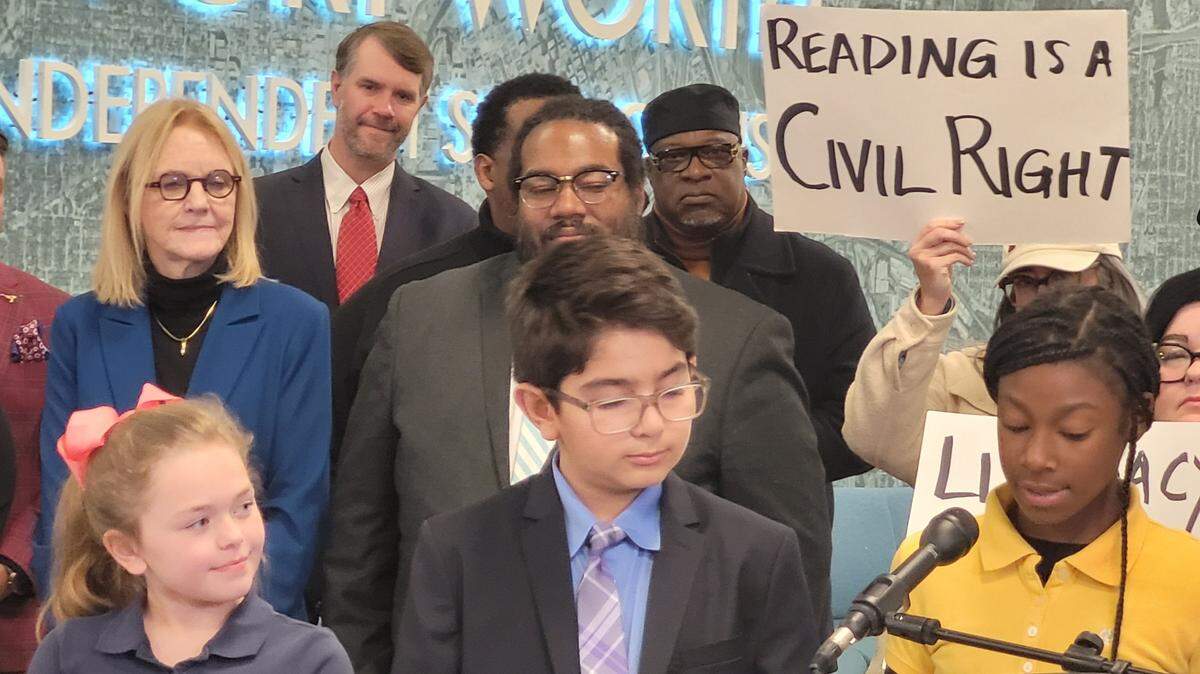
But Choudhury, who has been with Fort Worth ISD for less than a year, said the district is poised to make improvements. At a school board meeting last month, district officials and board members announced a renewed focus on improving literacy. Board members passed a resolution identifying reading as the district’s highest priority, and interim superintendent Karen Molinar outlined early details of a district-wide literacy plan, including developing a framework for how schools handle literacy instruction, aligning budgets and school resources behind literacy priorities and monitoring students’ progress.
Choudhury acknowledged that getting a district as big as Fort Worth ISD moving in the right direction is a tall order. But he pointed to two bigger districts — Dallas and Houston ISDs — that have seen steady gains over the past decade. Those examples show that progress is possible, he said. Fort Worth ISD likely won’t be able to get 100% of its students on grade level overnight, he said, but if the district implements its reading plan well, it should see better results in two years, when the next round of assessment scores is released.
Assessment scores paint a dismal picture nationwide
Nationwide, 40% of fourth-graders scored below basic in reading, the highest percentage in 20 years. A third of eighth-graders scored below basic in math, the most who have done so in the half-century the test has been given.
But the results weren’t equal across all student groups. Both in Texas and nationwide, students at the higher end of the achievement scale in both grade levels either held steady or improved compared to two years ago in both reading and math, while those at the lower end performed at historically low levels, creating a widening achievement gap. It’s a trend that had already existed for a decade before the pandemic began.
Kate Greer, managing director for policy and state coalition at the nonprofit Commit Partnership, said the report is a clear indication that the lack of progress in Texas and nationwide is no longer just a product of the pandemic. More than four years after the end of school closures, the state still hasn’t rebounded.
Further compounding problems is the fact that achievement gaps that existed before the pandemic began have only widened, Greer said. As in the rest of the country, Texas’ highest achievers largely held steady or made gains, while those at the bottom lost ground. Greer said that’s an indication that high-performing kids continue to be do well, but the state isn’t finding success helping struggling students catch up to their peers.
There are bright spots for Texas in the report, Greer said. The state ranks fourth in the nation in fourth-grade math among low-income students, and Texas’ eighth-grade English language learners were atop the rankings in both English and math. But Greer noted that results among both groups were lackluster nationwide, so the fact that Texas’ outcomes are less weak than most isn’t necessarily an indication of strength.
Carr, the National Center for Education Statistics commissioner, said one factor that seems to be driving the achievement declines among the lowest performers is chronic absenteeism. After the pandemic, districts in Fort Worth and nationwide reported a sharp uptick in the number of students who missed too many days of school.
But Carr said there are signs of hope in the data. She pointed to Louisiana, where fourth-grade reading and math scores are at or above where they stood before the pandemic, including among the lowest performers. There are no causes for celebration in this year’s scores, she said, but there are a few signs of progress that could be modeled in other states.
“Hope is what I see in these data. Promise is what I see in these data,” she said. “But I think we need to stay focused in order to right this ship.”
This story was originally published January 28, 2025 at 11:01 PM.