Fort Worth ISD’s board approves new strategic plan. Here’s what it includes
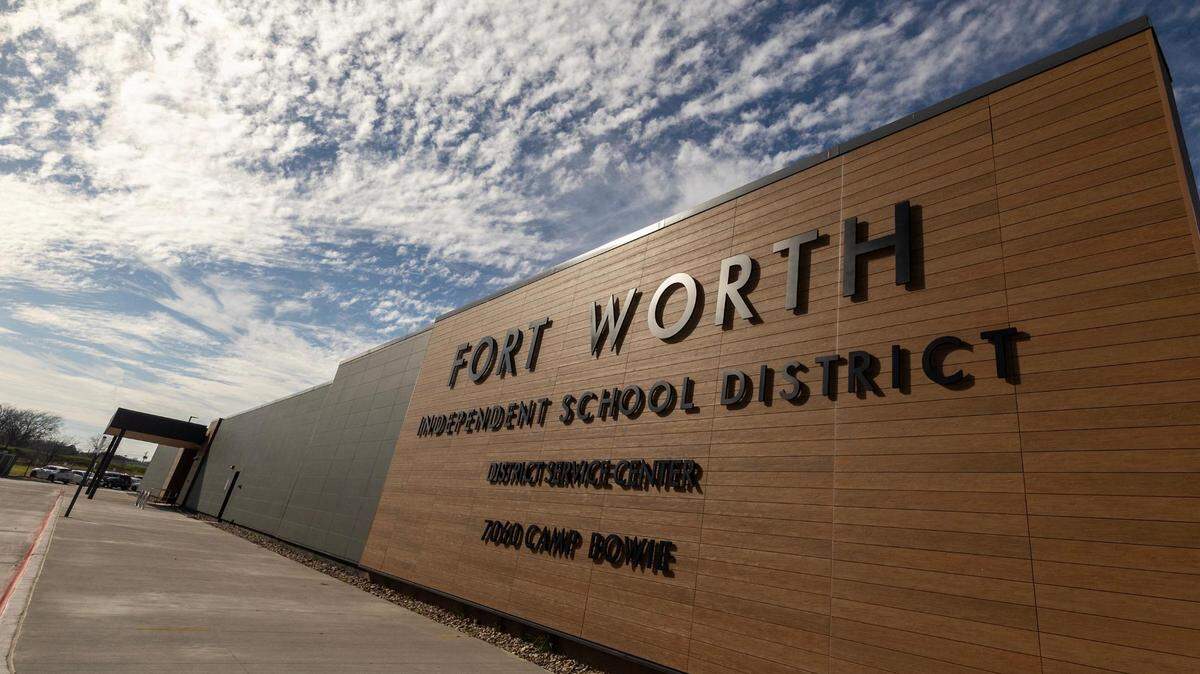
Months after voting down a previous proposal, the Fort Worth Independent School District’s board voted Tuesday to approve a plan that lays out the district’s strategy for the next five years.
The five-year strategy includes plans for bringing more students up to grade level, retaining more teachers and engaging with students and their families.
Ken Kuhl, Tarrant County regional director for the education advocacy group Leadership ISD, expressed optimism about the strategic plan, especially its focus on third-grade literacy. But Kuhl said he’d like to see Fort Worth ISD take more steps to monitor the progress of students in early grades.
“If we don’t have eyes on kids pre-K through second grade, then it’s too late by third grade,” he said.
Strategic plan includes academic goals, steps for reaching them
The strategic plan is a reworked version of a previous proposal that the board rejected in July, with some members saying they wanted to allow more time for public input. Among other changes, the revised version of the strategy offers more detailed actions for reaching the goals outlined in the plan.
Like the previous proposal, the plan the board adopted Tuesday evening calls for state test scores to steadily improve over the next four years. Among other goals, the plan calls for half the district’s third-graders to score on grade level in reading and math by 2029. About a third of all Fort Worth ISD third-graders met grade level in each subject last year.
The revised plan also outlines steps the district should take to boost student achievement. It calls for district leaders to implement a literacy plan across all grade levels, and look at school reform models that have seen success in similar districts. It also calls for Fort Worth ISD to redirect money from other priorities to support a “literacy-focused organizational model.”
Kuhl, the Leadership ISD official, said he was optimistic about the revisions the board and district leaders made to the plan, and the conversations that led to those revisions. Kuhl and the organization he represents were critical of the proposal the school board voted down in July, saying the plan wasn’t sufficient.
In particular, Kuhl said he was happy to see the plan’s focus on early literacy. Education researchers and leaders — including those in Fort Worth schools — have long said third grade is a critical year for students, because those who can’t read proficiently by then generally struggle to catch up.
But Kuhl said he’s concerned that the plan doesn’t include measurable goals for students younger than third grade. When students are struggling to read well in earlier grades, teachers have a greater chance of heading off the problem and helping students catch up, he said. The plan’s goals are based on State of Texas Assessments of Academic Readiness scores, and students don’t take the STAAR test until they reach third grade. But Kuhl noted that the district has other internal metrics, like NWEA MAP test scores, that it could use to keep an eye on how students in younger grades are doing.
During public comment, literacy advocate Robert Rogers said the district identifying literacy as a priority is vital. He recalled the 100x25 initiative, which aimed to have 100% of third graders reading on grade level by 2025, being announced in 2016 at an event at Oakhurst Elementary.
“Every number that was described in that event could apply today, in terms of the percent of children that are reading at grade level,” he said. “I’m excited that we’re reenergized. We have to be relentless in approaching this. It is a huge task. If it were easy, it would have been done already.”
Rogers presented a prop during his comments with dots representing populations of two different campuses that he declined to name, so as to not embarrass their students or faculty. One of the campuses was a school with 45 students, made up of three green dots and 42 red dots — the green dots representing 6% of children reading at grade level.
“Now this is extraordinary. So I urge you, as you are in every session, public or executive, when you’re making decisions about budget, about facilities — every decision you make — I want you to think about, ‘Is this going to make another green dot or are we going to keep having red dots?’” Rogers said.
Trenace Dorsey-Hollins, executive director of education advocacy group Parent Shield Fort Worth, applauded interim superintendent Karen Molinar for bringing forward a concrete plan around student literacy within the strategic plan, which specifically calls for the “accelerated academic growth for African American students.” Dorsey-Hollins noted how she was thankful for this to be included in the plan after her consistent calls on the district to prioritize all students, as “everything seems like it’s for emergent bilingual students.”
“I’m eager to say that this plan, in more than a few ways, does mimic the work of Parent Shield and the consistent efforts that we presented before you on countless times: providing assessments to students and putting the reports in the hands of the parents; specifically focusing on your most impacted student population; actually allotting money behind the intervention that our students need most to catch up. We know that these things work,” Dorsey-Hollins said.
“To see you guys put in, again, money and priority behind that is a sign for success. But like it’s been said before, this is not our first time here. So really happy and eager to see the results of this plan,” she said.
A district in turmoil
The district had been without a long-term strategic plan since the board voted down the previous proposal last summer. That left Fort Worth ISD without a codified set of academic goals for months, at a time when academic progress in the district had remained stagnant for years.
In the months that followed, Fort Worth ISD was a district in turmoil. At the end of August, Fort Worth Mayor Mattie Parker sent a letter to board members, co-signed by dozens of other Fort Worth civic and business leaders, calling for a collaborative effort to turn the district around. Parker then spoke at a school board meeting, calling Fort Worth ISD’s academic progress “unacceptable” and saying the district had lacked leadership for years.
A month later, Superintendent Angélica Ramsey resigned, leaving the district to search for a new permanent leader for the second time in less than three years. The district was left without a single person in charge until about a week later, when the board tapped Deputy Superintendent Molinar to serve as interim superintendent. More than three months later, the board moved Tuesday night to post the superintendent job opening, one of the first concrete steps the district has taken toward filling the position.
This story was originally published January 21, 2025 at 12:06 PM.