In North Texas school board races, candidates campaign on Christianity and conservatism
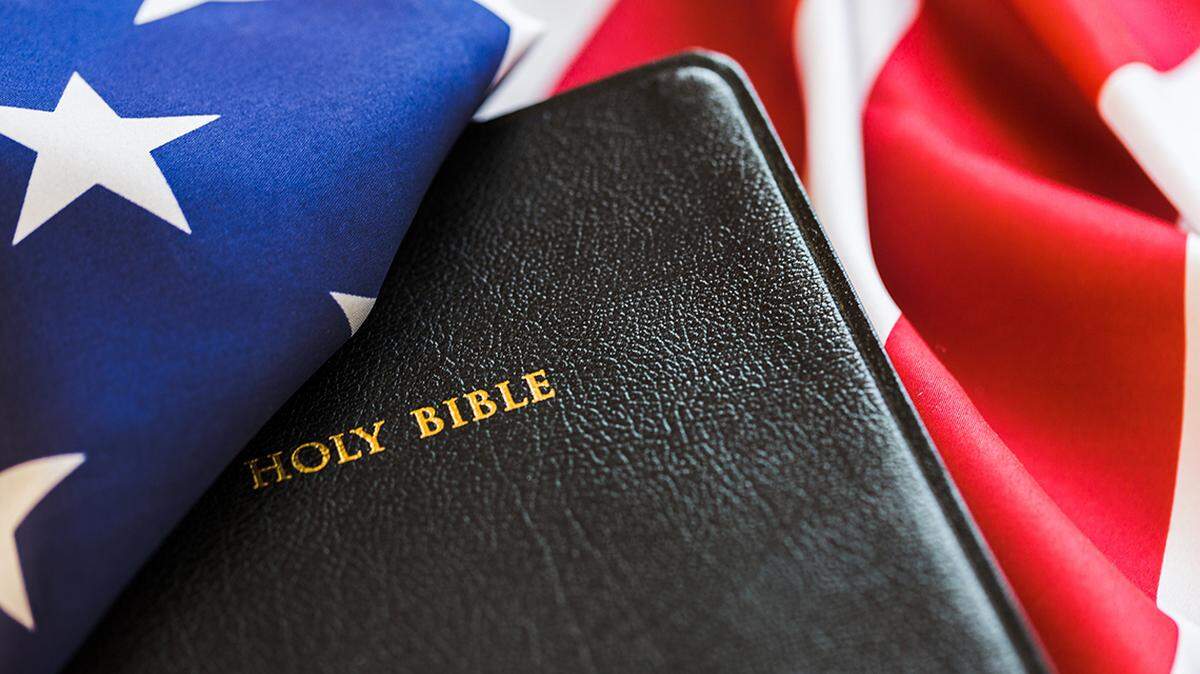
A school board candidate in Keller writes on her Facebook page that, “Foremost, I answer to the Lord.” A candidate for the Carroll school board says in a Q&A that “my faith teaches me to live a virtuous life.” A Grapevine-Colleyville school board candidate touts that she’s “Very involved at her church.”
Across North Texas, candidates in contentious school board races are pointing to their Christian faith as they campaign.
While that isn’t uncommon in state and national races, including presidential campaigns, people running for local school boards have historically stepped back from politics and other labels in these nonpartisan elections. But that is changing, experts say.
The religious references can serve as a shorthand for a whole set of beliefs, such as stances on fiscal responsibility, LGBTQ rights and individualism, according to UTA sociology professor Jason Shelton. And in the last decade, he said, value signaling through religious affiliation has become more common in local politics.
“This used to be a Washington thing or a state capitol thing. Now this is filtering more into our school boards and into our local elections,” Shelton said.
For more than a year, school board meetings and races have been dominated by ferocious debates over masking, critical race theory, library books and social-emotional learning. That means that May’s upcoming school board races are even more visible — and the campaign rhetoric even more pointed.
But at the same time, national polling has consistently shown that fewer and fewer Americans are affiliating with organized religion. So why is religious language popping up in politics more and more often?
Some experts think the two trends, which on the surface appear paradoxical, are directly linked.
“We are in the Bible Belt where those values are alive and well,” Shelton said. “And people want to make sure that as the outside world changes, and maybe as grandchildren might move away, or challenge organized faith, that somebody’s still here to hold that line.”
Value signaling
The religious signaling in some North Texas school board races is intertwined with the months of contentious education debates across the country.
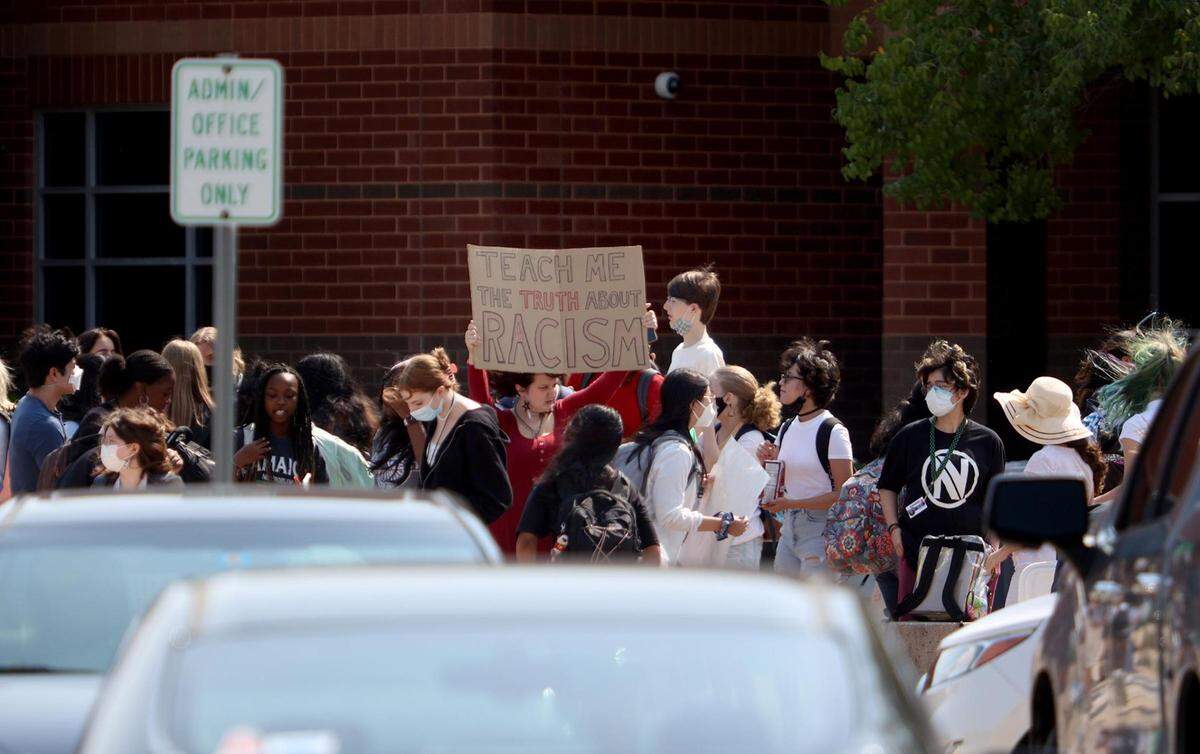
The Dallas-Fort Worth area has seen flare-ups and dust-ups at school board meetings over mask policies, allegations that teachers are pushing critical race theory in the classroom and that librarians are stocking obscene books. More recently, parents and politicians have been raising the specter that social-emotional learning is being used to groom children.
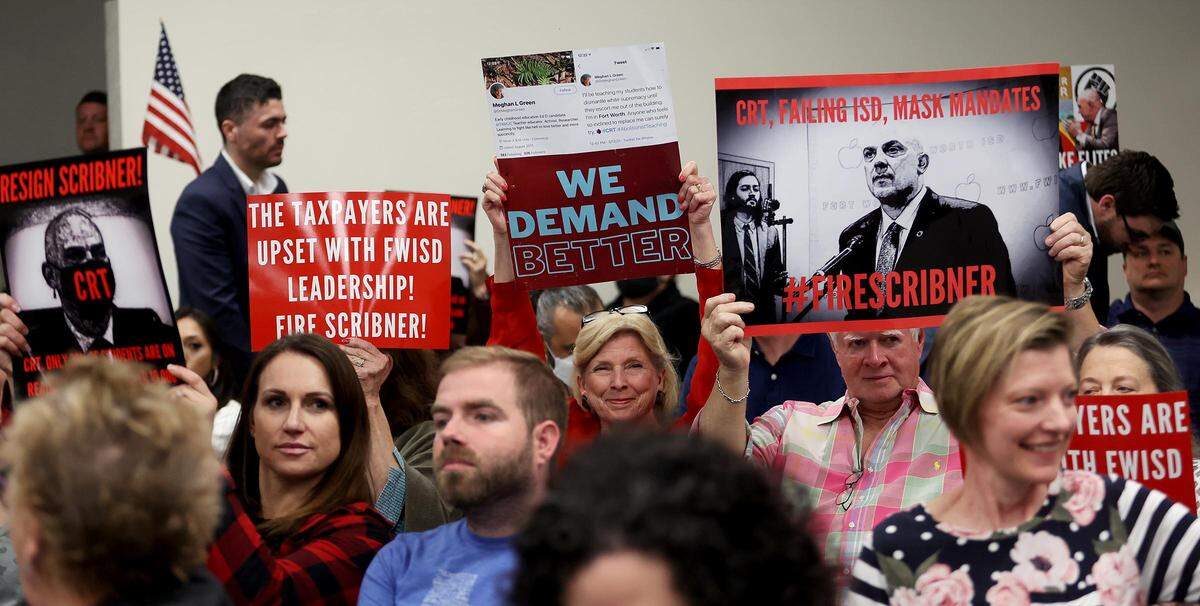
The fear in these meetings has often obscured the facts and led to the demonization of teachers or administrators. And while the topics have shifted over time, Shelton said, the debates all point to questions about what constitutes American culture, what role government should play in people’s lives and what determines morality.
“Now what we’re seeing is some of that being negotiated and up for grabs in ways that we haven’t for a long time in our nation, if ever in our nation,” Shelton said.
When political candidates talk about their faith, it’s a way to signal to voters where they fall on those up-for-grabs issues.
In three North Texas school board races — Carroll, Keller and Grapevine-Colleyville — many of the candidates who mentioned their own faith are also conservative and tend to hold similar beliefs on hot-button topics such as CRT and book stocking. (Some candidates in these races referenced their faith but do not appear to hold the same beliefs on other topics; however, Shelton said the trend of referencing religion is much more common among conservative candidates than among liberal or progressive candidates.)
Kathy Florence-Spradley, who’s running for a seat on the Grapevine-Colleyville board, notes on her campaign website that she’s “Very involved at her church” and that her children are “6th generation young leaders” at a church.
Florence-Spradley also posted on her campaign Facebook page in opposition to the alleged use of critical race theory in classrooms.
“CRT has no place in our schools,” she wrote.
Sandi Walker, who’s running for Place 3 in the Keller school board race, wrote on Facebook in response to apparent allegations that she’s backed by political interest groups, “Foremost, I answer to the Lord.” In response to a comment on that post, she further clarified that she “will be accountable to God” if elected to the school board.
Elsewhere on her Facebook page, Walker talks about removing “sexually explicit” books from schools, in a quest “to protect the minds of our children.” This language echoes a statewide push to ban specific books from school. While proponents say they’re targeting pornographic or sexually explicit content, an NBC News investigation found that the majority of books targeted dealt with race or featured LGBTQ characters.
Other candidates were less overt about their faith, with some mentioning their church membership but not articulating any other specifically religious stances. One candidate, Micah Young in Keller, reposted an endorsement that labeled him “a godly man” and also asked generally for prayers, but his website and Facebook page don’t mention religion at other times.
Faith doesn’t actually have to be mentioned at all for voters to get the point.
David Brockman, who lives in the Fort Worth area and is a non-resident scholar at Rice University’s Baker Institute for Public Policy, said that so-called “family values” can also act as a stand-in phrase for “Christian values.”
“It’s a code word for conservative Christian values really,” Brockman said.
And it’s a style of language that’s cropping up more and more often.
‘The latest resurgence’
Political rhetoric invoking religion — specifically Christianity — has been growing in popularity on the national and statewide stages for a number of years. That growth tracks alongside another trend: mainstream conservatives’ increasing embrace of Christian nationalism.
Brockman studies religion as well as Christian nationalism, which is the belief that the U.S. is a Christian nation and that the nation’s laws and policies should be based on and imbued with Christian doctrine.
Texas has seen Christian nationalism in action in the past, Brockman said, including in 2010 when the state school board worked to revise school textbooks to emphasize Biblical influences on the founding fathers and push Christianity to the historical forefront.
But former President Donald Trump brought many of those ideas into the mainstream, Brockman said, alongside Texas politicians such as Sen. Ted Cruz.
“Conservatism has become bound up with Christian nationalism,” Brockman said. “It’s really kind of part and parcel of Republican politics these days, it’s become harder to distinguish Christian nationalists from conservatives generally.”
Brockman noted that not every Christian politician is a Christian nationalist; other academics also note that not every Christian nationalist is personally Christian. The label “Christian nationalist,” which is largely an academic descriptor, applies to people who specifically believe that government law and policy should be modified to reflect Christian beliefs and values.
The larger trend in that direction appears to bear out in local school board races as well.
A number of conservative candidates in school districts in Carroll, Grapevine-Colleyville and Keller were also endorsed by political action groups that embrace Christian nationalist talking points.
Candidates don’t necessarily have direct control over who endorses them, but their endorsements can serve as a signal of how they’re perceived.
True Texas Project — an organization that grew out of the NE Tarrant Tea Party and was recently labeled an anti-government group — talks about Christianity and Christian values on its website and in its videos. Brockman said the group falls under the umbrella of Christian nationalism.
That organization has recommended candidates in the Carroll, Grapevine-Colleyville and Keller school board races. While not all of those candidates talk about Christianity on their own, a number of them do.
In Keller, True Texas Project has recommended Walker and Young, as well as a third candidate named Joni Shaw Smith. Those three candidates have also been endorsed by the Keller ISD Family Alliance PAC, which does not reference Christianity on its website but does talk about “our culture” and “our shared history,” which is a common theme within Christian nationalist rhetoric.
In Carroll, True Texas Project recommended Sexton as well as Andrew Yeager. Those two candidates were also endorsed by the Southlake Families PAC, which says on its website that it’s “unapologetically rooted in Judeo-Christian values.”
And in Grapevine-Colleyville, True Texas Project recommended Florence-Spradley as well as Colleyville city councilor Tammy Nakamura, who’s running for the board as her term on the council ends.
In addition to True Texas Project recommendations, all seven of these candidates have been endorsed by Patriot Mobile Action, a political action committee that aims to “put Christian conservative values into action” by “supporting organizations and candidates that exemplify these values.”
To Brockman, the language used by school board candidates and their endorsers is an echo of national and statewide rhetoric.
“It looks very familiar to me,” Brockman said. “This is just kind of the latest resurgence.”
Local voters
While some voters appear to be embracing the Christian values of their local school board candidates, others are voicing concern.
In response to the Facebook post in which Walker, one of the Keller candidates, talks about being accountable to God, one commenter says, “I’m confused. This is a public school. Shouldn’t you be answering to the students, parents, & community?”
Another poster asks “which Lord” Walker is referencing. “There are several who should be represented in our district. Not just yours. You don’t get to push your religion on everyone else.”
Although Christian values might speak to fewer voters now than in decades past, Brockman said, the block is still quite strong — and Christians still make up a large portion of Americans.
Further, he noted that local elections such as school board races typically are not decided by a majority of eligible voters. Local races have notoriously low turnout rates, at times not even breaking into the double digits.
In any election with low turnout, including mayoral and city council elections, a well-organized group of several hundred people can sway the outcome and potentially elect a candidate their neighbors might not have voted for.
But at the same time, contentious or widely publicized local races can spike turnout. In November, Southlake saw more than 40% turnout for a Carroll school board election. That race’s turnout was more than four times that of other Tarrant County elections, according to WFAA, and it followed nationwide media attention specifically around the conservative candidates.
Early voting has already started for this round of local school board races. In-person voting is on May 7, and details about voting locations can be found on school district websites. The Star-Telegram has also compiled a voter guide for the cities and school boards in Arlington and Fort Worth.