Fort Worth students, parents get to help design a new playground. Here’s what they chose.
Students at W. J. Turner Elementary School in Fort Worth really want swings on their new playground.
That was the number one thing drawn, discussed and voted on in surveys as the school began the design process for a brand new playground designed by students, the first in a renewed district effort to provide equity in access to play spaces across the district.
Lucia Gasca, a parent who stopped by to give input on the new designs, said that it meant a lot to be included in the process.
“I am also a volunteer here at the school and I like to be involved with everything that is going on,” she told the Star-Telegram. “It means a lot to (my daughters) too.”
Her two daughters also took part in the design process — along with students from across the entire campus.
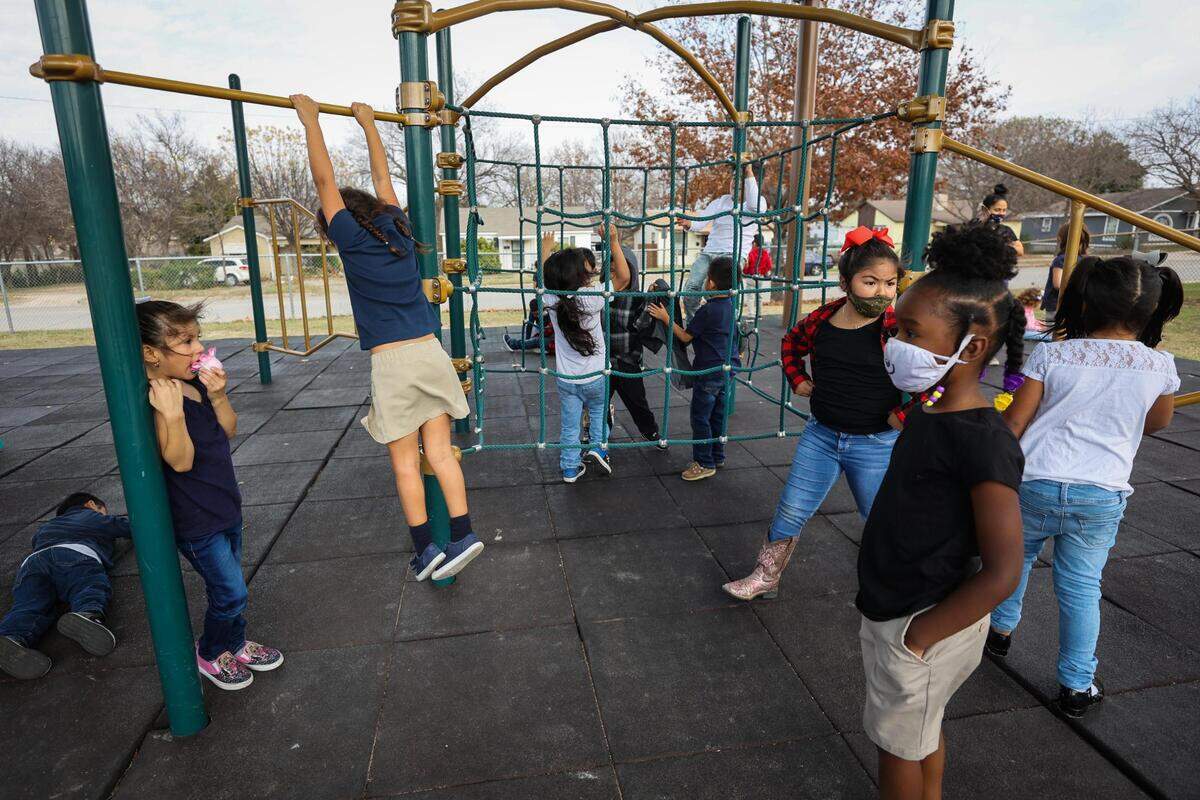
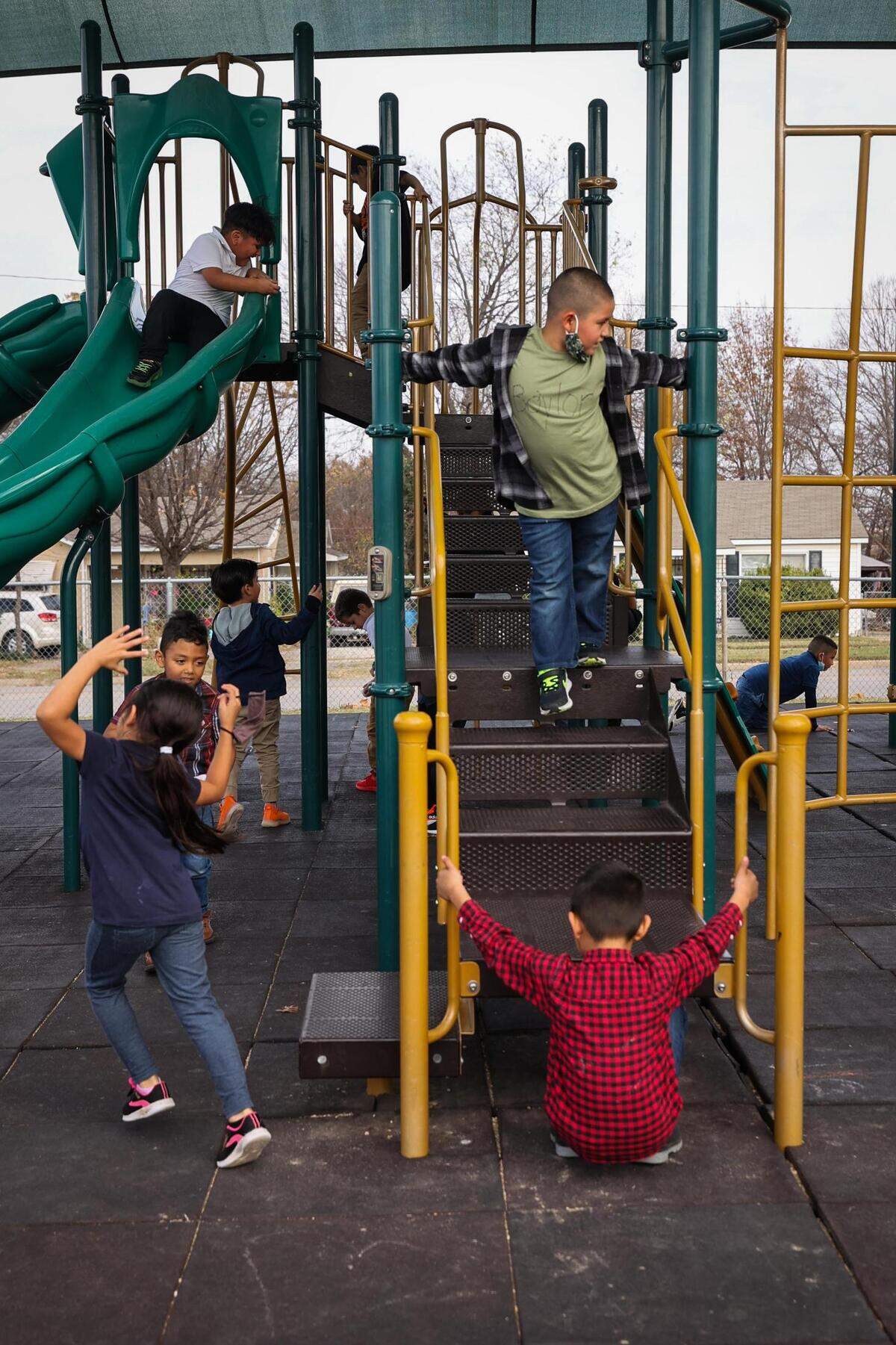
Teachers and administrators identified Turner as a candidate for a new playground because of its oversized and outdated equipment, which teachers and parents found was too tall for younger kids.
Eloy Chavez, a pre-K teacher at the school, told the Star-Telegram last year that he worries about his students on the sole play structure kids have access to.
“Definitely for pre-K it is way too big,” he said. “We had one kiddo that got up so high they couldn’t get back down, because they just aren’t used to the heights.”
Isabella, who will be going to pre-K next year, agreed — pointing to smaller structures to climb in, on and around.
“I like this one,” she said, pointing to a picture of a pink climbing structure with holes to climb into.
The new playground is being designed with pre-k through second grade in mind, although all students were able to give their input into the new structure.
Students surprised with new playground for reading motivation
When Deborah Baez, the principal at the school, told students to start tracking their reading minutes in February, she left the reward a mystery.
“That was the hardest part for me,” she said. “I wanted to tell the kids, as soon as we got the funding that was the first thing, but first we had to wait for a contract to be signed and all of that, all the formalities.”
When she gathered the students in an assembly to reveal the surprise — a new playground, designed by the students themselves —the entire school erupted in cheers.
“Normally when people are cheering it kind of dies down,” she said. “But it just kept going and going and going.”
Students are still a ways off from their reading goals, but have read 120,000 minutes so far with a goal of reaching 300,000 before the summer.
Kathryn Lusk, the senior director of programs for Kaboom, a national nonprofit working with the school on their playspace equity goals, told the Star-Telegram that the academic aspect is unique to the Fort Worth partnership.
“The school district has been able to say, at the same time that we’re thinking about the physical environment for kids to play outside, we’re thinking about how can this be linked to really achieving stronger reading outcomes for students knowing that that’s such a critical part of their success in school and in their future after they graduate,” she said.
After the designs were finished up Tuesday night, Kaboom staff will take the designs drawn up by students at Turner Elementary back to their team to create renderings for two possibilities to be voted on by students.
“It will take a few days but we will take everything we learned here, assign priorities and we are going to take all that back to our partner landscape structures, and they will send us back two designs that incorporate our wishlist of what we want,” Lusk said.
Once the final design is approved and students finish reading their minutes, parents and community members will be invited to build the playground between June 6-9.
Playground will include unique features
Mary Jo Greene, a school garden educator who works with dozens of schools across the region, is working with students and staff to incorporate gardening into the revamped play space at the school. The feature will be used to teach students as well.
“I think I found for me personally it really is about food honesty, where food comes from, what’s seasonal, how long it takes to grow,” Greene said. “Not only children but some of the staff have no clue where a potato comes from or when in the year a potato grows.”
Other playground projects across the district are also exploring the possibility of revamping, or incorporating gardens into playgrounds.
Greene said she sees the potential for more class elements to be conducted outside, with gardens and plants acting as tools to teach about topics like foraging and pollination.
“It is taking the playground and outside to another level,” she said. “There is a play area outside, how do you expand on that, and how do you make it tie in with nature?”
Other unique features parents and administrators are discussing include inclusive play elements that can be used by any and all students. Baez and parents agreed at a meeting about the design that the new playground should be inclusive, with wheel-chair accessible play elements and a wide range of activities that everyone can use.
Those considerations for accessibility range from accessible sidewalks, to sensory experiences for students that are deaf.
“We have special needs students from first grade to fifth grade, with autism and intellectual disabilities and we also have students that are deaf or hard of hearing as well,” Baez said. “So one of the things we asked for, is there something that would help our students who are deaf, like something with vibrations that can be incorporated that will stimulate them and that they can enjoy.”
Design process comes as city reviews park access
The design comes as city officials under the direction of Mayor Mattie Parker continue to look into how school playgrounds could double as parks in order to improve park access across the city.
Bethany Warner, a spokesperson for the mayor, said that staff has made contact with 14 school districts to gauge how much public access already exists for playgrounds, with the goal of publicizing that information as plans for possible collaboration continue.
“City staff has already contacted all 14 ISDs … to start conversations and compile information to utilize moving forward on what public access levels look like for recreation spaces on each of their campuses,” Warner said. “So far, the consensus is that all ISDs allow public access to some level, based on athletic schedules or whether or not the recreation space is a closed/fenced facility.”
The city has its eyes on improving its ParkScore, a scoring system by the nonprofit Trust for Public Land that ranks cities based on the number, investment and accessibility of their parks.
“Staff in the Mayor’s Office and Park & Recreation Department have had multiple meetings with the team at Trust For Public Land to create action items for improving City of Fort Worth’s scoring within the Trust For Public Land criteria,” Warner said.
The current ranking of the city is 89 out of 100.
Cities across the state of Texas, including Dallas, have worked to convert existing schools into city parks during their off-hours, adding hundreds of parks to their ParkScore, and increasing walkability for their residents, according to Robert Kent, the Texas state director for the Trust for Public Land.
Kaboom projects in Fort Worth, as well as other community-supported builds have galvanized community support — essentially making the school playground into a neighborhood park.
Playground funded by federal COVID relief dollars
Jennifer Gilley, the executive director of Challenge of Tarrant County, looked on as children drew their dream playgrounds under the direction of Kaboom staff after school in the cafeteria this week.
“It is just so exciting,” she said.
Challenge, a nonprofit that works on various health and wellness campaigns and interventions with the goal of reducing substance abuse, is working with Kaboom and Fort Worth ISD to provide funding for the new playground.
“We were so fortunate that through some of our projects we received federal COVID funding and it was centered around reducing stress and increasing health and wellness and addressing all those trauma issues that resulted from COVID,” Gilley said. “And we thought what better way than to go into communities. We know that educators have been so significantly impacted and children and families, and I just want this to be a great asset in the community to address some of these issues.”
The goals of the district to expand learning spaces to be equitable across the district are aligned with Challenge, Gilley said, adding that she hopes the benefits extend beyond the school day.
“This needs to be a place of health and wellness where parents come with their children,” she said, reflecting on the impact her school playground had on her growing up.
“It was a hub of the community. Everybody came together, you never knew who was going to show up,” she said. “And it was a place where you build relationships. It wasn’t just about the kid’s developing relationships but the parents, too.”
This story was originally published March 31, 2022 at 5:00 AM.