Many Fort Worth families can’t walk to a park. Here is how schools could be the answer
When Erica Narvaez, a mother of five in Historic South Side Fort Worth, wants to take her kids to the park, she loads them up in the car and drives for about 10 minutes to the other side of town.
“They do go to parks, but if I can’t drive them … then we just don’t go,” she told the Star-Telegram. “They enjoy their time out there when they do go.”
High crime and drug use in certain parks and the lack of sidewalks to safely get to them, along with the lack of playground equipment at nearby parks contributed to her decision. But for many parents in Fort Worth, there are no parks at all within walking distance of their house.
Forty percent of Fort Worth residents live farther than a 10-minute walk from the nearest park, according to an analysis by the Trust for Public Land, which ranks the city 89 out of the top 100 cities due to lack of park space, accessibility and equity.
Advocates have dubbed the areas where children have restricted, or no access to outdoor play “play deserts,” with organizations like the national nonprofit Kaboom working to close those gaps through partnerships with school districts and parks departments.
The organization is working with Fort Worth ISD to ensure playspace equity across the district’s 83 elementary campuses — an effort that could help the city achieve greater walkability.
School playgrounds could act as city parks
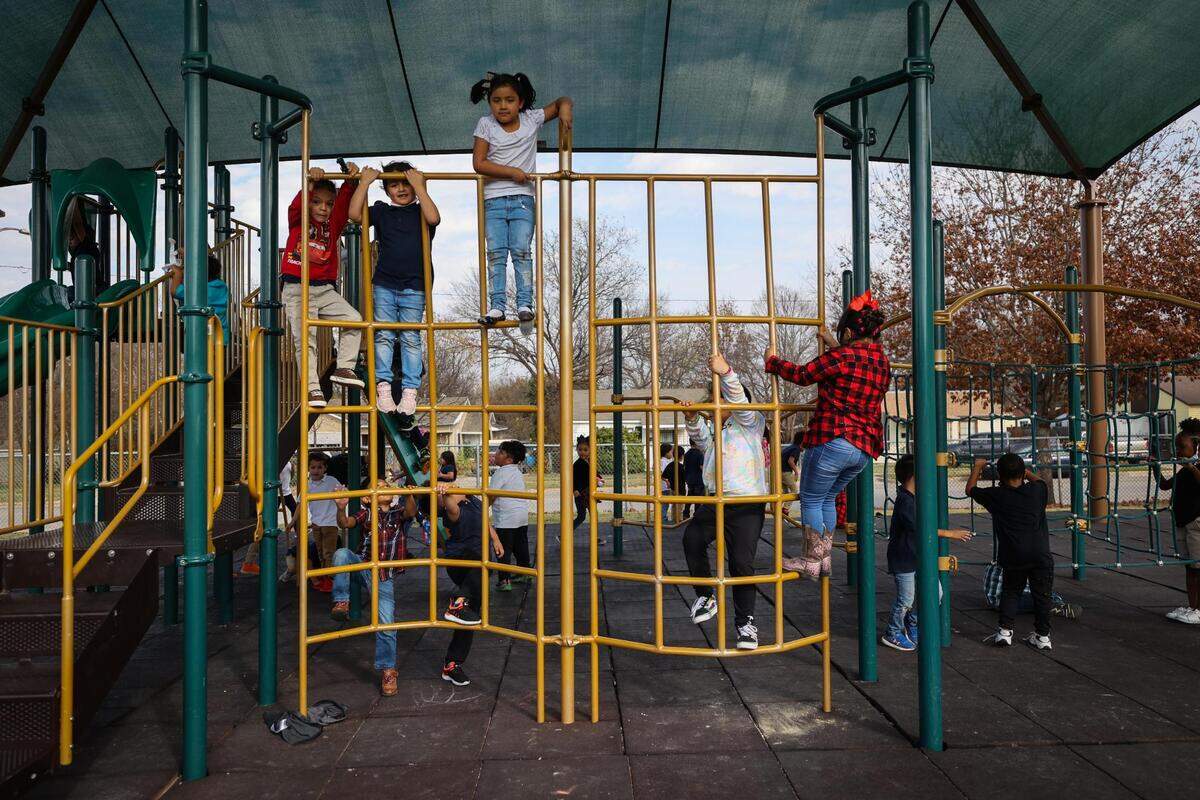
In recent years a growing number of neighborhood communities have focused on revitalizing and centering neighborhood schools as both a park and a gathering place for the community when school is not in session.
Those groups, along with principals and the office of Fort Worth Mayor Mattie Parker are looking at how investing in elementary school playgrounds across the city could increase the number of walkable parks for children.
This potential solution, which is being discussed by the mayor’s staff, could leverage the district’s equity project to also help achieve the city’s broader goal of increasing access to parks for all Fort Worth residents, without major costs.
“Our struggle in Fort Worth is we’re a really spread-out community,” Parker told the Star-Telegram. “But I know a few things that we’re working on right now are opportunities to partner specifically with our school districts that have playground access and open space adjacent to their campuses.”
Richard Zavala, the Park & Recreation Department director for Fort Worth, noted in a statement that there are open space options in addition to City of Fort Worth parks that are not recognized by the Trust for Public Land scoring criteria.
“For example, the public enjoys miles of Tarrant Regional Water District trails along the Trinity River, acres of U.S. Army Corps of Engineers public lands, and many open spaces which include recreational amenities at locations such as homeowner associations, churches, apartments, etc.,” he said.
Parker recently met with the Texas leadership of the Public Land Trust and signed on to the 10-minute walk campaign to increase the percentage of parks within 10 minutes of more Fort Worth residents. Fort Worth is one of several major Texas cities that are working to increase that percentage.
The parks department has not reached out to school districts specifically about this agreement yet, but officials said the department has ongoing conversations with multiple districts on shared-use agreements from co-located facility opportunities, to summer camps and after-school programs.
“We have a long tradition of working with ISDs throughout the City of Fort Worth regarding site-specific agreements, and welcome the opportunity to recognize additional open space for the community,” Zavala said.
Robert Kent, the Texas state director for The Trust for Public Land, said that the eventual goal would be for communities to be involved in the design and upkeep of neighborhood parks on school grounds, very similar to the goal of Kaboom — the nonprofit that is working with Fort Worth ISD to ensure playspace equity across the district.
“The school gets a greatly improved play space with their students, the neighborhood gets a park and the way that the Trust for Public Land does it, we spend a year or more working with the neighborhood, working with students, working with the community to get their input on that playground on that new park so that they were involved in the design of it,” he said. “And hopefully ... they will be involved in the care, stewardship and protection over the long term.”
Both the city and the school district see the potential for greater community engagement and involvement through these park initiatives.
How a school can become a neighborhood park
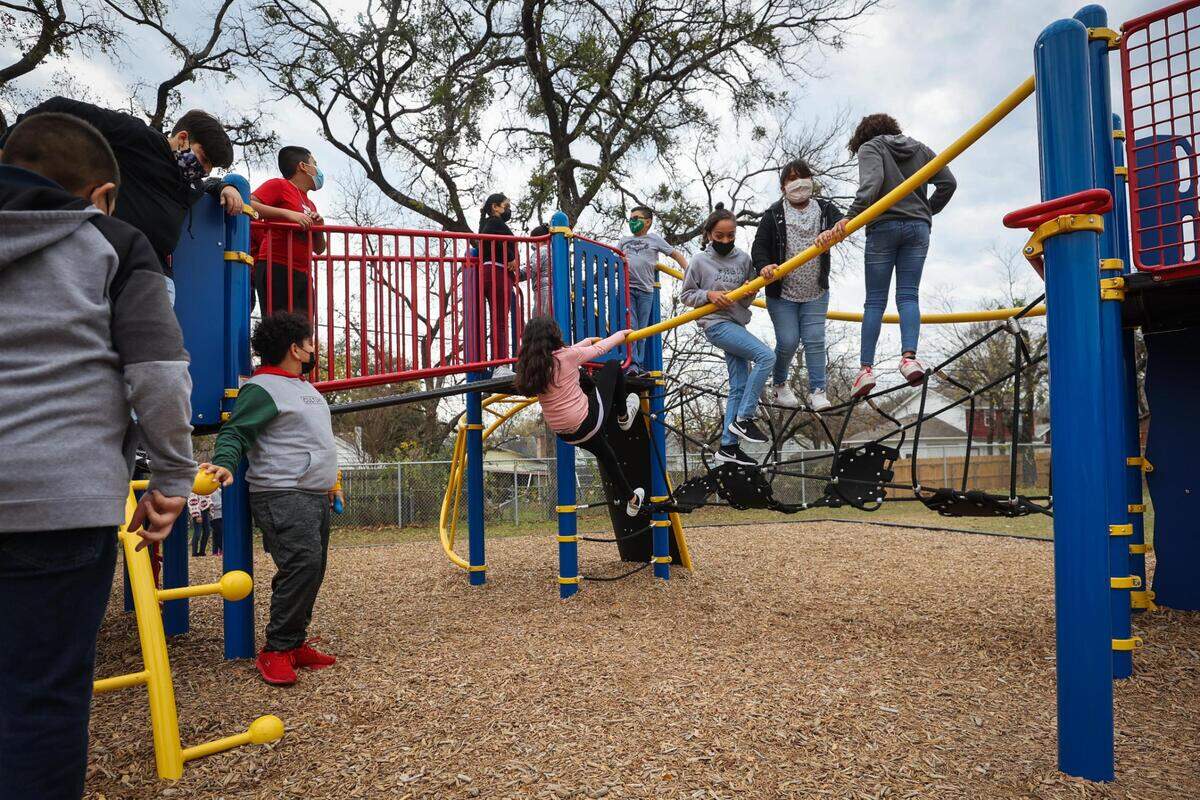
Cities across the state of Texas, including Dallas, have worked to convert existing schools into city parks during their off-hours, adding hundreds of parks to their ParkScore, and increasing walkability for their residents.
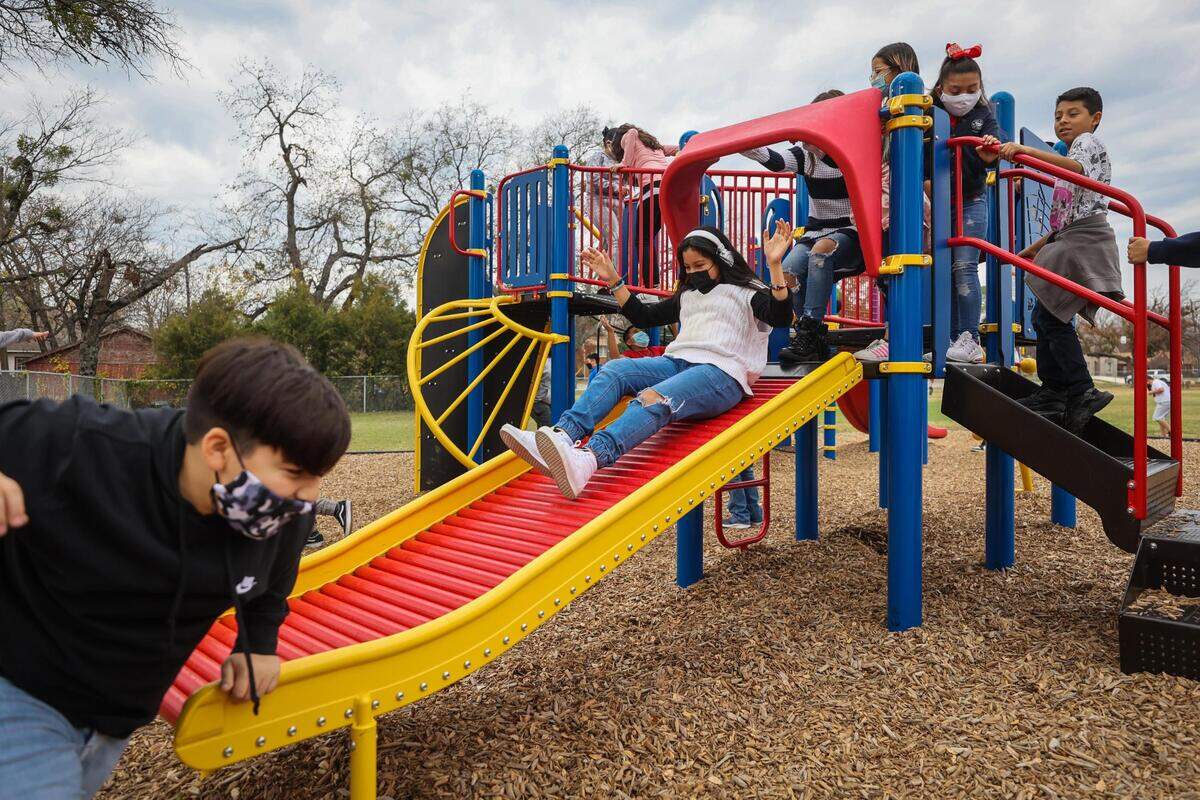
Projects aimed at revitalization of aging school playgrounds in Fort Worth have already brought communities together, and given residents a new place to gather, and for kids to play.
Without official agreements, Kent said that schools can easily close depending on the circumstance, revoking access to the de-facto park.
In a statement, Fort Worth ISD said the district “does not have a policy governing public access to playgrounds and fields outside of regular hours.”
“Several school communities use district facilities at the discretion of campus principals,” officials added in the statement.
An agreement between the city and the school district would ensure that selected schools would remain open and secure during normal park hours.
The neighborhood surrounding Oakhurst Elementary School used to fall silent when school let out, except for the occasional group of kids out to cause some trouble, parents in the neighborhood told the Star-Telegram.
While the school had a playground, it was only for the younger students — leaving barren fields and some exercise equipment as the only attraction for kids.
Tina Aguilar, a parent in the neighborhood, said the fields would mostly sit empty after school, except for kids playing soccer.
“That particular area where the mural and the playground are at (now,) I believe that was not used,” she said. “At least not for anything good.”
Playground equity is needed during school hours
During school hours, the older students at Oakhurst were also upset by the lack of equipment, especially knowing that other campuses in the district had three or more play structures for all ages of students.
“For the upper grades we had nothing,” Tracy Valenzuela, a fifth-grade teacher, said while watching her class at recess in December. “We had the soccer nets but we had nothing for them to play on, except the little green things which I think are more for physical fitness. So we would have balls or jump ropes and that was about it.”
Kids would ask to go to the little playground at the time, but given the size of the school and the need for smaller kids to use it, they were told no.
In 2020, the district was selected after applying for a grant from Kaboom to design and build a new playground.
The experience is a window into what happens next for communities surrounding Turner, Dillow and Western Hills elementary schools in the coming months.
A beige wall was a backdrop for the barren fields, which became a canvas for Aguilar, the parent and a local artist who partnered with other area artists and volunteers to design a colorful mural that represents the Oakhurst student body.
“I think it brought so much revitalization to the school and into that space,” Aguilar said. “There are a lot of rundown areas around Riverside, so just bringing that beauty and life to not just the school, but the surrounding neighborhood, I think just really meant a lot to the community.”
Victor Beltran, who was the president of the Parent Teacher Organization at the time, helped spearhead fundraisers, and participated in the community design day along with his child.
“The kids got a big old sheet of paper, they all got to design what they wanted. They wanted something like the Dream Park,” Beltran said, referring to a Fort Worth city park designed for children. “They ended up putting all the ideas together, and this is what they came up with within our budget.”
Aguilar said that since the new upgrades, the school yard has been full from the end of school until sundown.
“It is being played with and it is really enjoyed by the community,” she said. “It makes us all really happy.”
Samantha Korn, a second-grade teacher, said that the whole project has brought up spirits at the school.
“I think it has just beautified our school by having a mural there that our volunteers painted,” she said. “Kids need to have a space where they can play and destress.”
Guadalupe Cortez, the executive director of educational leadership for the Fort Worth district, was the principal at the school when the project began, and has a kid who attends Oakhurst.
She said parents, gathered at the side of the playground, have started discussing future expansions and possibilities with their kids.
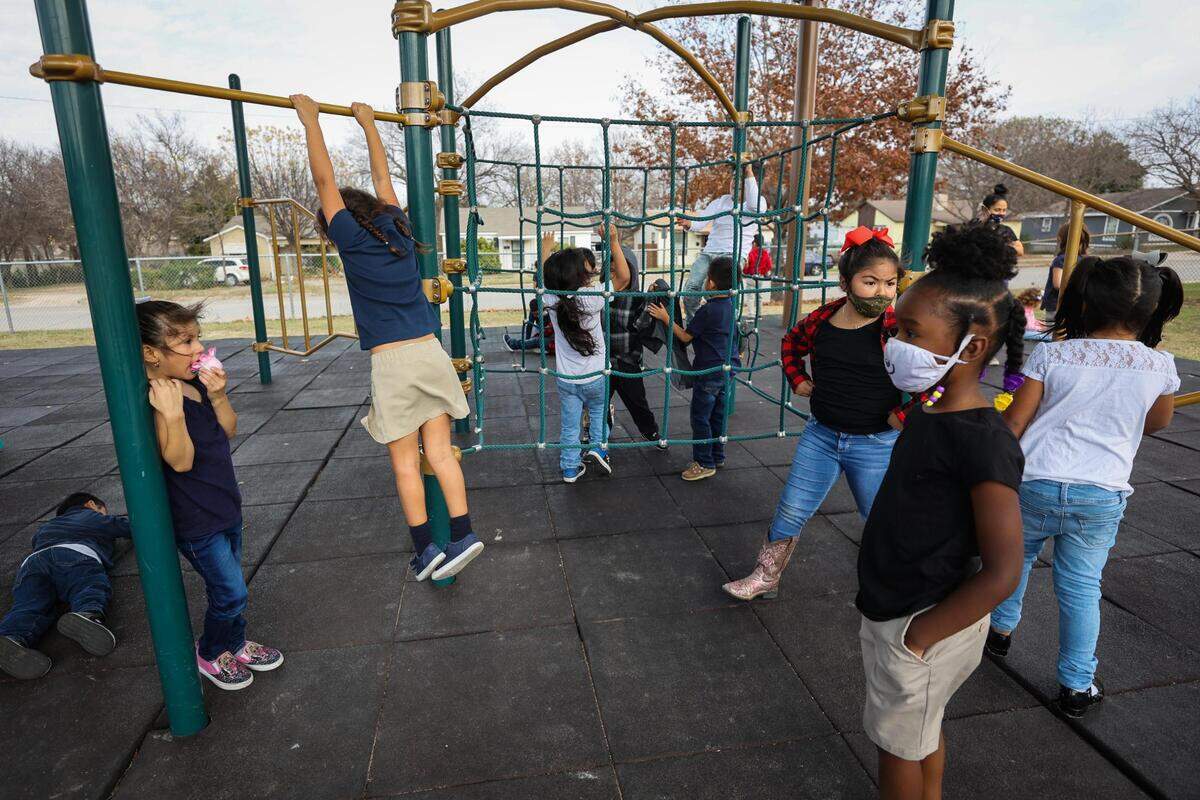
“What I’ve seen is that now instead of … kids walking all over the street, you’re seeing them walk to the school to play,” Cortez said. “So knowing that one of my campuses in the Northside area is going to receive the playground, it’s really important because I look at the community where it’s located, and you don’t have recreation centers anywhere nearby. So there’s not many opportunities for kids to sit and engage together.”
The potential of the program to give more students a safe space to play is central to the district’s goal of equity, Cortez said.
“To me, I think it’s very important that we look at equity, and to know that there are certain areas of town where you don’t have very much when it comes to play spaces,” she said. “And now we can make it available to kids.”
After school board members voted to approve a memorandum of understanding between the district and Kaboom on Dec. 14, the district began reaching out to community members to organize discussions.
In an added benefit for the chosen schools, students will have the chance to “earn” their playground, by completing reading challenges set out in early 2022.
Kathryn Lusk, the director of programs for Kaboom, said this aspect is unique to the partnership.
“The school district has been able to say, at the same time that we’re thinking about the physical environment for kids to play outside, we’re thinking about how can this be linked to really achieving stronger reading outcomes for students knowing that that’s such a critical part of their success in school and in their future after they graduate,” she said.
There are plans for parents to be involved in helping to build the final product, while students will have the chance to draw and vote on what equipment, theme and colors they want to have on their playground.
Amplifying voices in underserved communities
Mirgitt Crespo, the senior officer for grants and development at Fort Worth ISD, said this element has heightened importance for the selected communities, who have traditionally not been involved in advocating for better equipment.
“The squeaky wheel is the one they pay attention to first,” she said. “And when you have certain power, you squeak louder.”
In underserved communities, where playspaces have gone largely unchanged for years, parents tend not to vote, or engage in meetings, Crespo said.
“Other communities understand their reach, and execute it, which is great,” she said. “I just need the whole city to do that.”
That is where Crespo said the district hopes to aid in the process, by determining which schools have the greatest need, and targeting them first, with a focus on engagement.
With many neighborhood schools struggling with academic achievement, the playspace equity project also gives schools the chance to engage parents in the learning process in a new way.
Chris Reeves, a project development specialist at Fort Worth ISD who has been deeply involved in the equity project, said there are plans, encouraged by Kaboom, to have reading areas built into the new playgrounds, with community play and learning days.
“We’re hoping that these community play days will get adults to the campus with their kids and learn some soccer drills or learn a new jump rope trick or whatever it is that will give them a breather too, because everybody’s surrounded by stress during the pandemic,” she said. “We’re just hoping this project will get everybody outside, playing and breathing.”
Crespo echoed that sentiment while at Dillow Elementary with the Star-Telegram, another campus that will be receiving a new playground following community input and reading minutes.
A slide at the current campus is cracked, and boarded up.
“The integration is to make the community feel closer together,” she said. “And to have a space where kids go to be challenged, where they work, where they learn … reading concepts and where parents can see and exchange and be aware of what is going on in the school.”
The new builds will also give campuses the chance to rethink ways to be inclusive with their designs, to ensure accessibility, comfort and access for all students.
Deborah Baez-Carrasquillo, the principal at Turner Elementary, said considerations for accessibility range from new sidewalks for students in wheelchairs, to sensory experiences for students who are deaf.
“We have special-needs students from first grade to fifth grade, with autism and intellectual disabilities, and we also have students that are deaf or hard of hearing as well,” Baez-Carrasquillo said. “So one of the things we asked for, is there something that would help our students who are deaf, like something with vibrations that can be incorporated that will stimulate them and that they can enjoy.”
Reeves said that similar efforts are being made at all three campuses receiving builds in the coming year.
“We are working with the principals at the three schools for 2021-2022 to make sure that we address the needs of, for example, students who are on the spectrum and students who are hearing impaired,” she said. “We have had conversations about students who have experienced trauma, and how we can make them feel safe and protected on the playground by selecting equipment in calming colors.”
Crespo said that at the end of the day, addressing inequity is a complicated and layered process that will take more than new playgrounds to solve. But the initiative is a first step.
“There are layers and layers of things, some are historical, some situational and some are financial,” she said. “So in order to dismantle that … you only can do what you can do. We are education, so we are working the best we can on what we can do to give access to communities to ... have accessibility to good playgrounds.”
This story was originally published January 31, 2022 at 5:00 AM.