But some neighborhoods have no parks within walking distance, and residents of other neighborhoods shared that they are inaccessible or unsafe.
That doesn’t sit right with a lot of parents, companies and elected officials.
“It seems like the outdoors should be … a basic human right,” said Audrey Rowland, CEO of Green Space Learning, a company that builds natural playgrounds. “There shouldn’t be people that don’t have access to the outdoors; it shouldn’t be something that some of us can access because of our privilege.”
Stacy Martin, the executive director of Fortress Youth Development Center, a nonprofit that runs an after-school program and preschool in the Historic South Side, said that students in the surrounding neighborhood stick to playing inside for the most part, unless they are coming to school — where they spend a lot of time playing outside.
“The thing about this neighborhood that makes it difficult to walk to a safe place to play is the lack of sidewalks, and the presence of unleashed and kind of feral dogs,” Martin said. “So we don’t even walk our kids here from school anymore, because the dogs have gotten so bad. Outdoor play is just difficult, difficult to obtain and get to here.”
After mapping out the parks and recreation centers across the city, Rowland and Bethany Fort, who also works for Green Space Learning, had an idea.
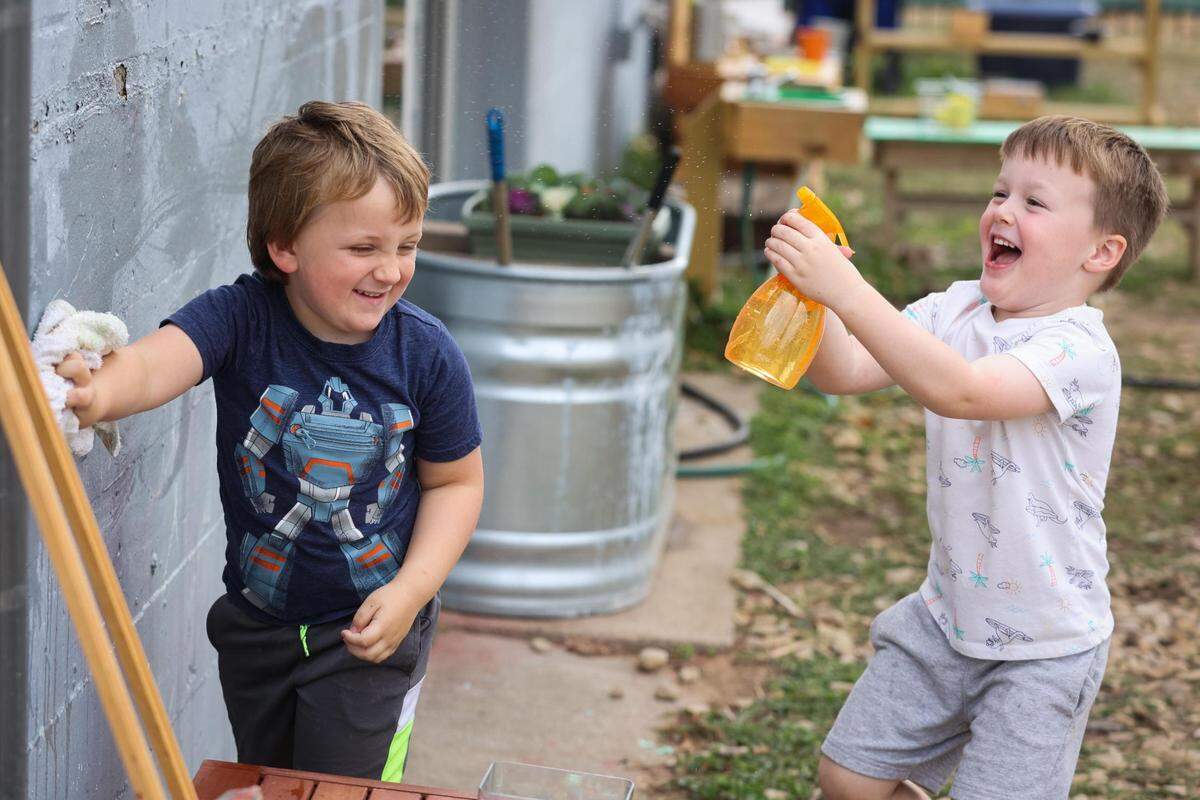
Elliot Hohmann, 4, squirts water at Davis Cooley, 4, as they play Friday, Dec. 10, 2021, at Green Space Learning. The center focuses on creating natural play spaces that promote mental health and learning. Yffy Yossifor yyossifor@star-telegram.com
“We’re starting a nonprofit that will be able to bring free opportunities for play and temporary child care to under-resourced communities in Fort Worth and in Tarrant County,” Fort told the Star-Telegram.
The first thing Fort did was map out the existing parks to find gaps, something that was also done by The Trust for Public Land, which ranks Fort Worth 89 out of the largest 100 cities in the U.S.
Areas of Fort Worth lack walkable access to parks
According to an analysis by the Trust for Public Land, visualized here in shades of red, 40% of residents live more than a 10-minute walk from a park. Mayor Mattie Parker has joined other mayors in pledging to make parks more accessible to more people, and she could partner with local schools to meet that goal. Tap on the map for more information on priority levels, park names and walking distance.
In the near future, Rowland said, the nonprofit hopes to bring nature-based play into areas like the Historic South Side, and other locations where parents are waiting, to give children and parents more options.
“We are thinking when you are at the food bank distribution day, when families are there and waiting and doing all that, we can be there for their children to have an hour to play or have the space,” she said. “Or even being able to take our mobile unit into the same neighborhood on a regular rotation, so the children are getting a preschool experience that is right outside their front door, or in their apartment complex.”
“We want to be there as part of their development, and not just an activity or a one-off kind of thing,” Rowland said of the nonprofit. “That is why we created the play desert map to see what areas are really going to be the most in need.”
The multi-faceted effort to increase play spaces has the added potential to increase outcomes for children in the underserved communities — a goal that is front and center for Rowland.
Children could perform better in school when they have the chance to play outside, experts and advocates say. A new nonprofit hopes to help more Fort Worth children do that. Yffy Yossifor yyossifor@star-telegram.com
Giving children a place to play could increase their grades later in life
For Rowland, the approach is a way to give at-risk youth a chance to learn and develop in a way that they might not otherwise have.
“We know that children from lower socio-economic backgrounds, Black and brown children, are less likely to have safe, open-ended play, and they are also more likely to be targeted by academic intensive interventions,” said Rowland, who has a master’s of science in childhood development.
The connection between outdoor play, recess and academic success has been widely linked in studies.
“If you think about the body of research in general and what happens to the human stress response system … when we are super stressed, it cuts off some of those pathways to the higher order learning parts of our brain,” he said. “And we know that play, and positive social interaction and physical activity and quality relationships with adults are things that essentially can prime the brain for learning.”
Trying to replace that natural process with only academic intervention when students enter school could end up doing more harm than good, Rowland said.
“That might get them reading faster, but that’s not solving the underlying issues — which is the fact that they didn’t have a childhood,” she said. “In fact when we had an opportunity to give them something, what we gave them was more instruction instead of more trust.”
Outdoor play, at recess and before kids enter school are “solutions hiding in plain sight” for addressing student outcomes, Massey said.
Rowland said that those principles are what Green Space Learning uses to operate a nature-based preschool and will be featured in the mobile play concept.
“Researchers told us over and over again that play is how children learn and how our brains make connections,” she said. “It’s how they balance their dopamine versus adrenaline versus all those things that make us able to regulate our emotions and to learn it. We know that it’s how we reduce stress, and it’s how we build resiliency, and really play is what creates the foundation for all those academic skills to layer on.”
But without access to those parks or playgrounds growing up, children are kept from those key experiences, Rowland said.
The effort to launch the nonprofit, which is being led by Fort, is just one approach.
More is needed, both Fort and Rowland said.
“It is everyone’s responsibility,” Rowland said. “When we have communities where children don’t have opportunities for childhood, I think everyone is responsible for that. We can’t put that on a parent when there is a whole system at work.”
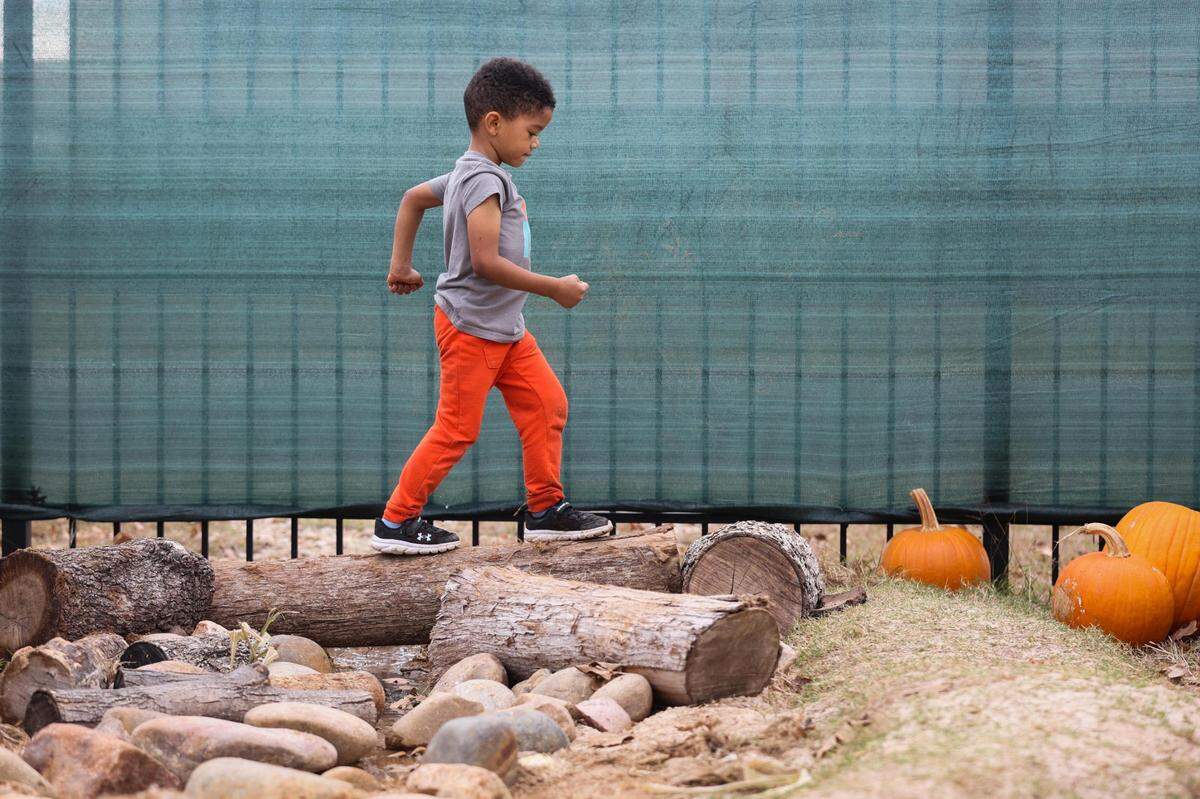
Natural playspaces include sticks, logs and hills and encourage children to explore and learn on their own. Yffy Yossifor yyossifor@star-telegram.com
Natural play spaces encourage open-ended play
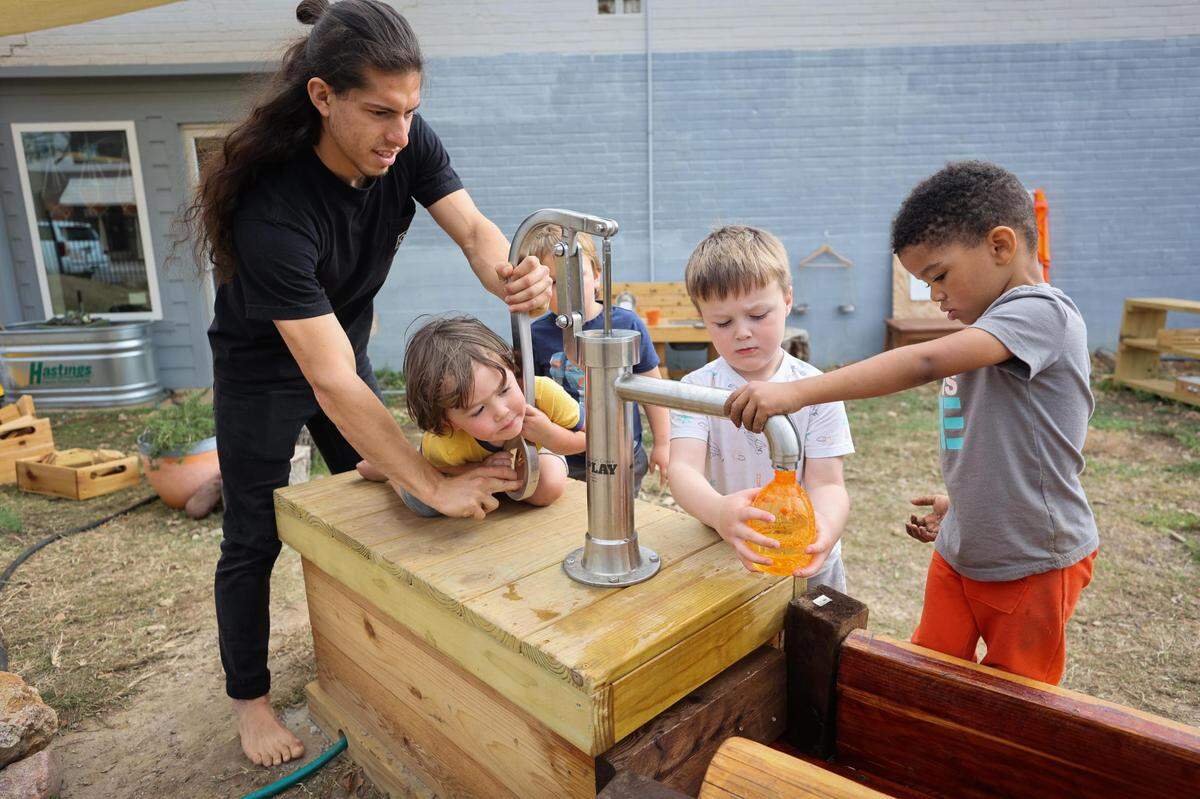
The concept of natural play includes open-ended and naturally occurring play equipment featuring things like hills, logs, sticks and water pumps for kids to manipulate, discover and decide how to play with on their own.
“Our definition of play as a child is doing what a child wants to do as long as the child wants to do it,” Rowland said. “It’s as simple as that. It doesn’t have to look a certain way or involve certain materials, it really just needs to involve a child’s choice and a child’s ideas and continuation of those ideas.”
Another feature of natural play is the emphasis on being outdoors, and interacting with the natural environment.
Mayor Parker said that she would like to see more efforts across the city to encourage both natural play spaces and open-ended play.
“National research, especially in the early education space tells that story for you of how important open green space and outdoor time is for children,” she said. “As we further think about investments in early child education, whether it’s city funds (or) privately funded dollars or this latest ISD bond for early education, there needs to be a real emphasis on the way outdoor space is utilized both during the school day and outside of school time.”
“Sometimes just natural play is the best way for a child to develop naturally,” she said.
Travis Davis, the director of early education for CCA, said that play-based learning has been a key philosophy in early childhood education for most of his career.
“It is very child focused and driven through, and by play for learning,” he said. “These natural playscapes, these outdoor learning environments that are nature based, just really lend themselves very easily to that child-centered type of philosophy. And so it’s really just kind of a natural fit to what we’re doing inside to accompany the outdoors.”
Features like hills that kids can roll down, and open-ended art pieces that students can manipulate and decide what to do with, separate the experience on a natural playground from the plastic, traditional playground which has more prescriptive and set-out uses, Davis said.
Julieanne Cooley, whose son attends the Nature Preschool at Green Space Learning, where she also works, said time outdoors has been essential in the development of her children as well as her own sanity — especially during the pandemic. The open-ended concept at the nature preschool is also something her son enjoys.
“It supports what the person, the child is doing naturally,” she said. “I like that it’s child-led, that you can kind of follow their interests. It’s just them exploring their interests with someone there to oversee, and to guide where they need guidance or to help if they have a question.”
Cooley said that being outdoors and having places to go, like the parks near her Arlington home, have been integral to the growth of her three children — especially when they have been inside all day.
“When my kids are inside all day, we struggle,” she said. “When we are confined to what we have inside, sometimes it’s good, sometimes we’re all fine, but a lot of times we struggle.”
Cooley said even when her children were young, she would use the fresh air and scenery of the outdoors to help calm them
“Even from infancy, if my kids were having a hard time, we just literally stepped outside,” she said. “The change in the air, the change in the scenery, the change in the sounds would calm them.”
Even without access to parks however, Cooley said that letting kids play and discover things for themselves is important.
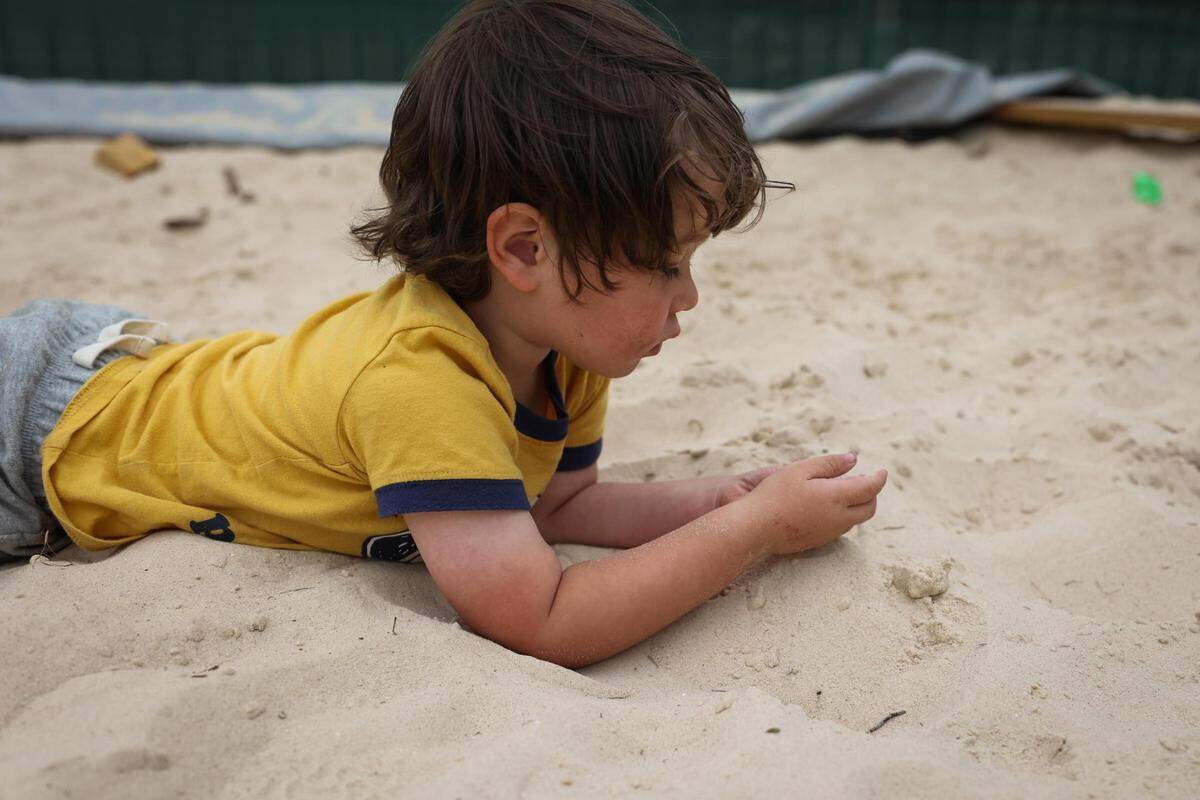
A nonprofit that aims to bring play spaces to children is in the fundraising stage, and has set up a proof of concept in a booth at a local street fair. So far, children are fans of the concept, according to the founders. Yffy Yossifor yyossifor@star-telegram.com
“Walking out on the balcony with my brand-new baby, she would calm down, she would look around, we would play in a little tub of water,” she said. “Having access is absolutely important; the access, it can be very nice, or it can just be here’s a space, and here’s some sticks and here’s some rocks.”
The most important thing, Cooley said, was asking her children what they would do with what they had in their hands.
“I wonder what you’ll do with that. I wonder what you’ll do next?,” she asks her kids. “And not here’s what you do, here are the steps. But just I wonder what you’ll do. Like that phrase is so powerful for kids, it just lets them have agency to make the next decision.”
Rowland said the nonprofit is still in the fundraising stage, but they have already begun working on a proof of concept at a local street fair, where kids have all stopped by to play.
Cooley, who recently left her job at an Arlington Library to join Green Space Learning, said she is excited about the possibility of more kids getting to play outside.
“I think outdoor play is very important,” she said. “I would love for it to be absolutely accessible to whoever wanted it, and I feel like we all need it.”
This story was originally published February 14, 2022 at 5:00 AM.
Isaac Windes covered early childhood education for the Fort Worth Star-Telegram until 2023. Windes is a graduate of the Walter Cronkite School of Journalism and Mass Communication at Arizona State University. Before coming to the Star-Telegram he wrote about schools and colleges in Southeast Texas for the Beaumont Enterprise. He was born and raised in Tucson, Arizona.