Can Fort Worth’s summer school help students rebound after COVID-19?
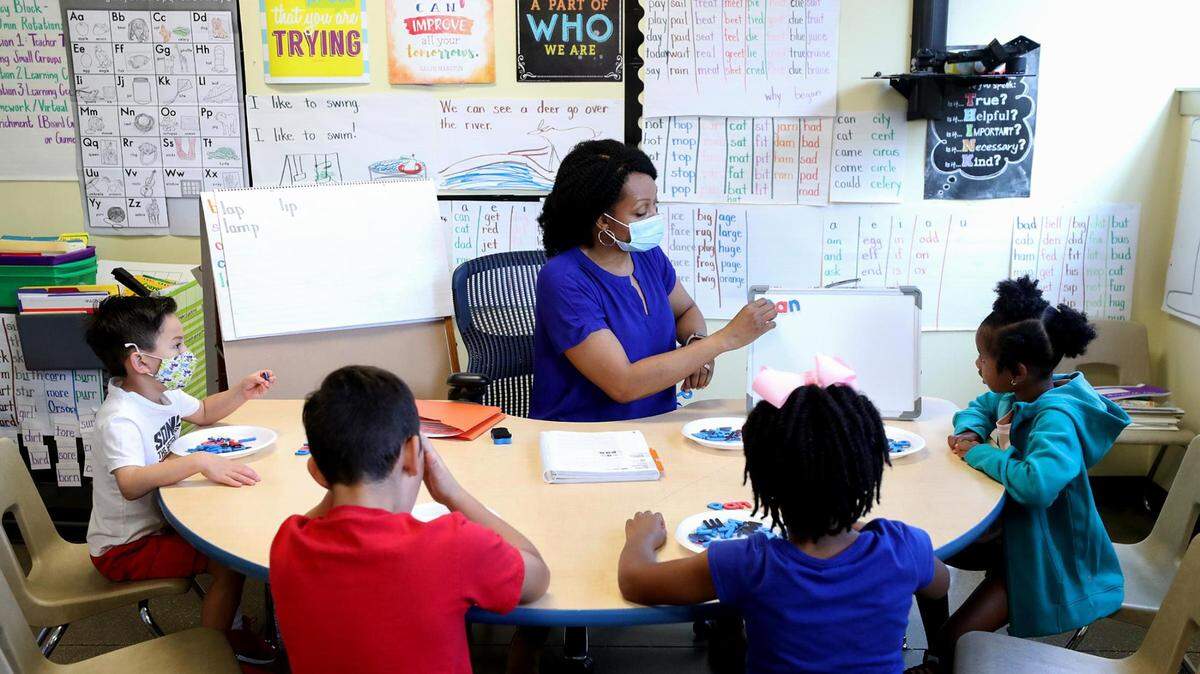
For a second year, Fort Worth school officials are pinning high hopes on the district summer learning program as a way of reaching students who fell behind during the pandemic.
The district’s summer learning program began Monday. Like last year’s summer school, district officials say this year’s program will combine academic help for students who need it with enrichment activities that will keep students engaged and excited about coming to school.
The director of a national summer learning advocacy organization says that combination of academics and fun activities is the foundation of any effective summer learning program.
“We want this to be so engaging that you can make it voluntary, and people still want to come,” said Aaron Dworkin, CEO of the National Summer Learning Association, a nonprofit based in Washington, D.C.
Texas students lost ground in reading, math
Students in the Fort Worth school district and across Texas lost substantial ground in math and reading during the COVID-19 pandemic. In Fort Worth, only about one in four third-graders scored on grade level in reading on last year’s state tests. Only 17% of third-graders scored on grade level in math. At the time, local and state education officials blamed the effects of school shutdowns and remote learning. State testing data bore that explanation out: declines were greatest in districts where a large percentage of students attended class school remotely.
Results of this year’s STAAR tests haven’t been released yet. But during a February meeting of the Fort Worth district’s Board of Trustees, Sara Arispe, the district’s associate superintendent for accountability and data quality, projected no growth in reading and only modest improvement in math.
During a briefing to the Board of Trustees in April, Jerry Moore, the district’s chief of schools, said the district hopes to use summer school as a part of its strategy for reversing that downward trend. Summer presents a key opportunity for school districts and their community partners to accelerate students who have fallen behind due to the educational disruptions brought about by the pandemic, and also offer fun enrichment activities, Moore said.
When district leaders set about planning this year’s summer learning program, they got in touch with the U.S. Department of Education, Texas Education Agency and the Wallace Foundation, a New York-based education advocacy group, to learn about successful summer learning programs across the country, Moore said. The district wanted to move beyond the summer school programming it has offered in the past, which focused chiefly on credit recovery, he said.
Fort Worth summer learning plan includes 25 programs
The district summer learning initiative won’t be a single program, Moore said, but rather 25 separate programs tailored to the needs of particular student groups. Besides its regular summer program, the district will offer programs for bilingual students and English-language learners, as well as students in special education programs, Moore said. Nationwide, all of those groups were hit especially hard by the academic effects of the pandemic.
District officials will know the program has been successful if they see the results in the test scores of students who participated, Moore said.
The program will be funded with a combination of $1.6 million in state funding and $3.6 million in federal COVID-19 relief money the district received as a part of the American Rescue Plan, which was signed into law in March 2021. School districts are required to use at least 20% of the federal funding they receive from the plan to help students recover from pandemic-related learning loss. In guidance to school districts, U.S. Department of Education officials specifically mentioned summer learning programs as one possible use for that funding.
Last year, the district added a strong enrichment emphasis to its summer school programming, Moore said. That change was successful last year, he said, so district officials decided to continue it during this year’s summer program. District leaders wanted the program to go beyond sitting in a classroom and learning, he said.
The district plans to partner with the Fort Worth Museum of Science and History to offer enrichment activities, Moore said. The district’s Career and Technical Education Department and Bookmobile will offer enrichment programming as well, he said.
Summer school partnerships pay dividends
Dworkin, the National Summer Learning Association CEO, said partnerships between school districts and community organizations can be fruitful. Districts and their partner organizations each have their own resources and areas of strength, he said, and summer programs tend to be stronger when they pool those resources. Summer is a good time for districts to build relationships with those organizations because there’s more time, Dworkin said.
“Everybody wants to work together,” he said. “But once the school year starts, everyone’s so busy that it’s really hard to do it.”
Many nonprofits like the Boys & Girls Club and youth-serving government agencies like libraries and parks departments have summer programs that could make good partnerships for school districts, Dworkin said. But other potential partners aren’t as obvious. Some corporations that don’t typically serve young people get involved in youth activities during the summer, he said. And some hospitals run summer programs to teach kids from under-represented backgrounds what it’s like to be a doctor.
Finding those programs and figuring out what a partnership might look like takes a certain amount of what Dworkin calls “creative communal matchmaking.” It’s a process that can only be handled at the local level, he said.
“It’s not done in Austin, and it’s not done in Washington, D.C.,” he said. “It is done community by community.”
Summer school isn’t just classroom work
Dworkin’s organization has advocated for summer learning programs that place greater emphasis on enrichment activities for decades. Historically, summer school programs have been mandatory, remedial and only focused on academics, he said. A good summer learning program is none of those things, Dworkin said. It should include an academic component, he said, but it should also focus on enrichment activities that students are interested in. Although some students may be required to be there, the most effective programs are engaging and exciting enough that students want to be there, whether they have to be or not, he said.
School officials should also ensure that their summer programs focus on relationship building, Dworkin said. The relationship between students and adults should be an even higher priority than academics, he said. If students don’t feel a strong positive connection with the teacher who’s asking them to spend part of their summer break coming to school to learn reading and math, the instruction they get there won’t make any difference.
Before the pandemic, summer was the least equitable time in education, Dworkin said. Affluent families would spend thousands of dollars to send their children to summer programs that allowed them to explore a broad array of interests, he said. But poorer families generally didn’t have access to those programs, or didn’t even know they existed. But now, as more school leaders recognize the importance of summer school in helping their students catch up, many districts are beginning to make those kinds of programs available to all students, he said.
Last year, in the face of steep academic declines, school officials across the country recognized the importance of effective summer learning programs, Dworkin said. But federal money to fund those programs didn’t come through until March, leaving district leaders scrambling to expand their summer offerings at the last minute, he said. As a result, the quality of those programs across the country was mixed.
This year, school leaders have had longer to prepare and have also had a chance to learn what worked and what didn’t work last year, Dworkin said. There’s still a great deal of need for those programs, not only in terms of academics but also in terms of mental health, he said.
The kinds of extracurricular activities that made students feel connected in school, like recess, field trips and school plays were some of the first things that were disrupted at the beginning of the pandemic. That left many students feeling isolated, Dworkin said. Some students are still dealing with the social and emotional ramifications of that isolation, he said. Summer can be a good time to help those students work through those feelings and form the connections they were missing, he said.