All 4-year-olds in Arlington can now go to free pre-K. Here are the details.
The Arlington school district is expanding pre-K to all 4-year-olds, with plans to roll out a new curriculum that implements Science, Technology, Engineering and Math alongside a more traditional, play-based model.
The expansion builds on a move from half day to full day pre-K for eligible students two years ago, and comes as the district aims to increase kindergarten readiness scores that have fluctuated in recent years.
“We know that early childhood education is critical in a student’s future success, and studies tell us all the time that if you start off early in your education and have a strong experience, that you’ll be set up for success,” Arlington schools Superintendent Marcelo Cavazos told the Star-Telegram. “So today, we’re announcing that all 4-year-olds … will have access to the free, pre Kinder classes starting in the fall. And that’s exciting for us, because it also helps us help our students and our community.”
By state law school districts only have to provide free pre-K for certain students, like those who are experiencing homelessness or qualify for free-and-reduced lunch and children of armed service members.
But expansion to universal pre-K has been implemented at a growing number of school districts across the state, including Fort Worth ISD as federal expansions continue to be discussed in Congress.
Analysis of studies have found varying outcomes after students attend pre-K, with generally positive short- and long-term effects across academic skills in reading and math for all students and language development, specifically for dual-language learners.
Researchers found other impacts of high-quality pre-K programs including reductions in the number of students being held back and increases in on-time high school graduation.
Many districts are looking for ways to get their students off on the right foot early on.
Number of students ready for kindergarten has fallen in recent years
Over 74% of Arlington students assessed in the 2016-17 school year were considered kindergarten-ready, with that number falling to just under 49% in 2018-19, according to Texas Education Agency data.
In the 2019-20 school year, the last year before the coronavirus pandemic disrupted education and torpedoed enrollment, the number of students assessed who were kindergarten ready rose to 53.4%.
In each year, eligible students who attended pre-K were far more likely to be kindergarten ready than eligible students who did not attend pre-K programs.
Teachers and administrators in Arlington are hoping that the expansion of the program can lead to a continued increase in pre-K readiness overall, which will then lead to higher scores in upper grades.
The district currently serves around 3,000 pre-K students, and expects to enroll at least 1,000 more through the expansion.
Jennifer Pettiford, a preschool teacher at McNutt Elemetnary School in Arlington, who has also taught Kindergarten and second grade, said that students attending pre-K in school learn classroom etiquette, curriculum and other skills that make them successful when they enter Kindergarten.
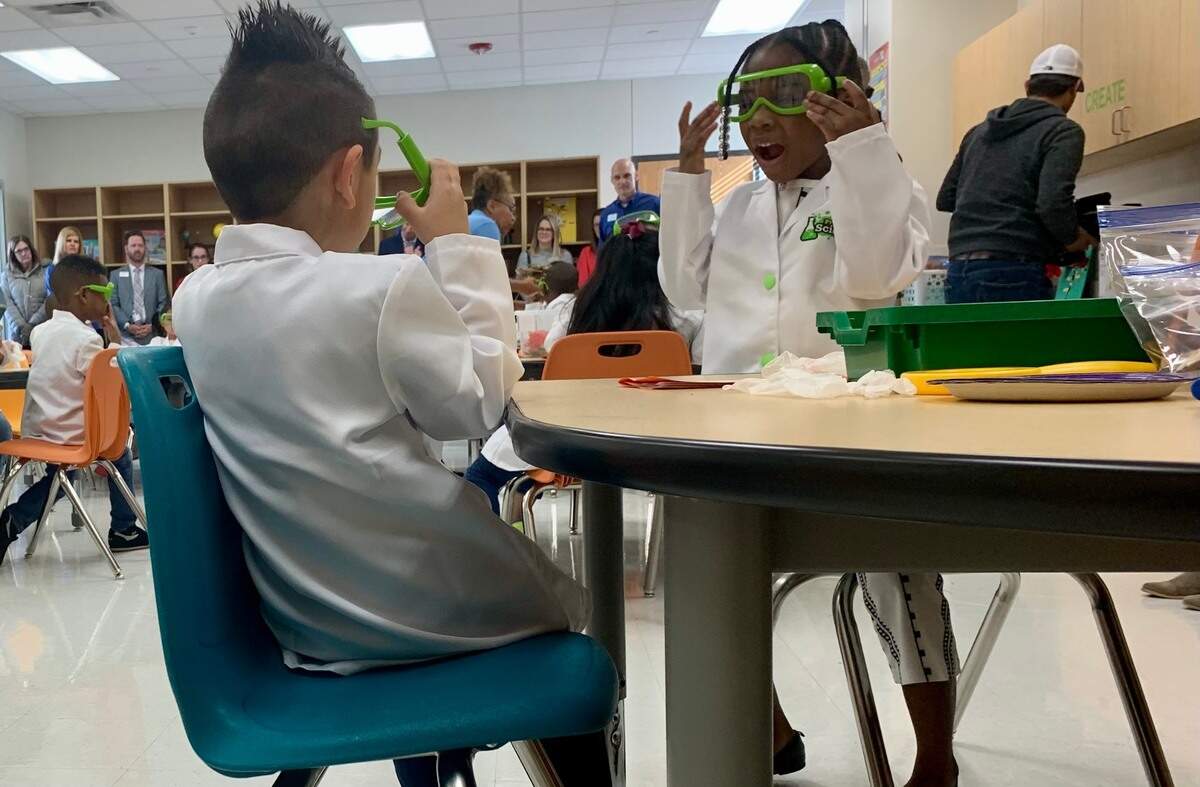
“It’s a little different than when you go to a 4-year-(old) program at a day care than when you go to a program in a school district,” Pettiford said. “There is the structure, they’ll learn how school works, because this could be their first experience.”
That structure includes things like how to stand in lines, raise their hands and sit when listening to stories, Pettiford said.
But the value of high-quality early childhood education can go far beyond following the rules.
“We provide the foundation of those skills, through geometry and math skills that they are learning in later grades,” Pettiford said. “When we have meetings and look at how third-graders are performing on the STAAR exam, my thought is what is the basis in pre-K that we’re teaching them that’s going to get those kids that maybe are missing some of those foundational skills?”
“Our job in pre-K is to give them that foundation,” she said.
Allison Debusk, a Kindergarten teacher in the district, said in a district press release about pre-K that the foundation can help students build confidence.
“Pre-K students have an opportunity to practice the foundation of colors, shapes, letters, sounds, numbers and counting,” Debusk said. “Having these foundational skills when they come to kindergarten definitely helps them with their confidence from the beginning and lets them feel successful. Both of those are so important in children and in building their foundation for learning.”
Along with the traditional benefits of pre-K. administrators are also planning on implementing even more concepts through a pre-K specific STEM curriculum.
STEM curriculum will involve play-based exploration
Jackeline Orsini, the early childhood learning director for the district, said that teachers are looking to the future with a curriculum designed for jobs of the future.
“We already know that a lot of careers in the future are going to be online with science, technology, math, science, and why not start offering that experience and opportunity for our students in pre-K?” she said.
Cavazos, the superintendent, said the district is basing the program off successes in STEM Academies that have engaged students in other elementary grades.
“We already have success with STEM Academy Elementary, and we want to continue to spread that across the district,” he said. “This is wide scale STEM implementation for pre-K, and this is also a good fit with how students learn.”
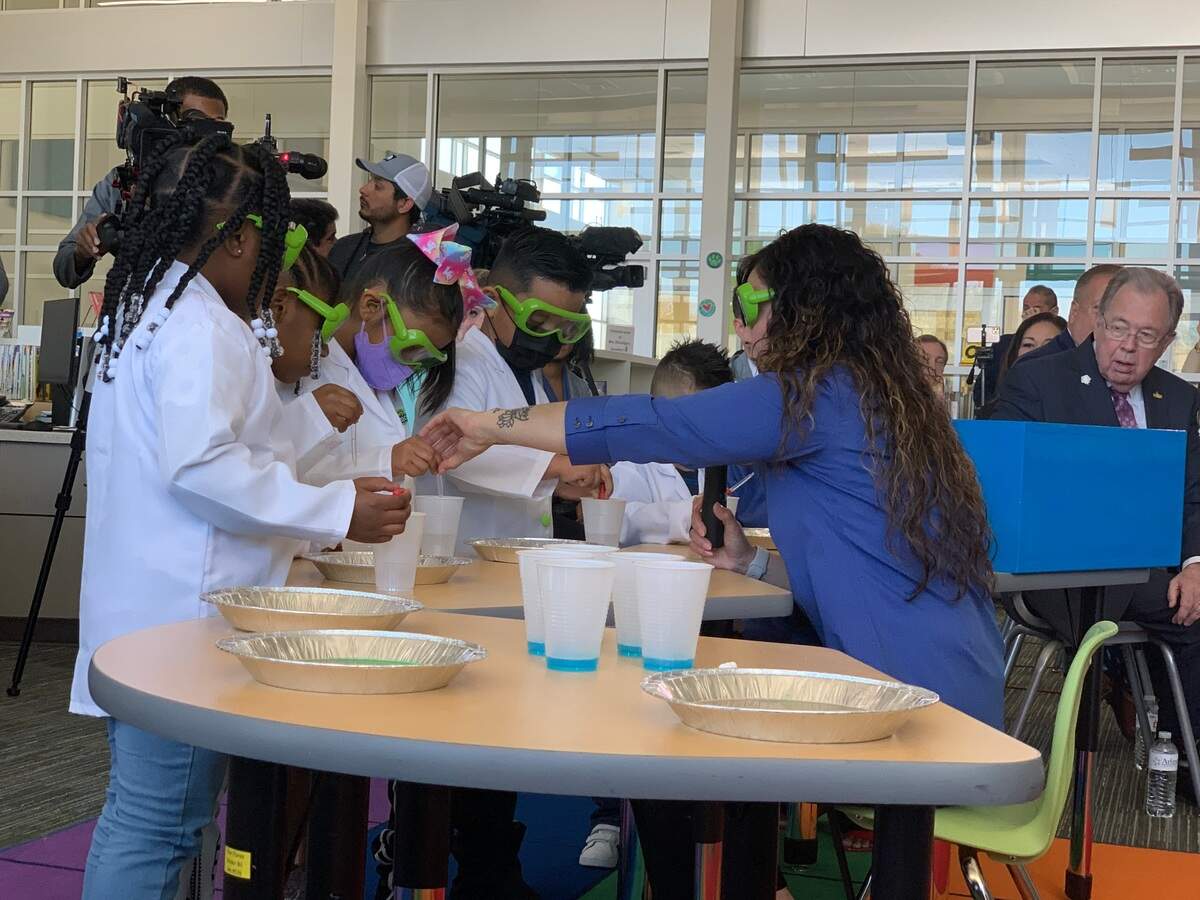
Science exploration is similar to how students naturally play and learn, making the curriculum intuitive, teachers say.
Pettiford, the pre-K teacher at McNutt Elementary School, said that she has already seen the potential for STEM components in her pre-K classroom.
“Parents don’t realize that when (kids) are building wood blocks and doing these other things that this is some foundational engineering skills that they do to balance and to figure out what works well,” she said. “Work is play in pre-K and they are learning those skills and math skills.”
Arlington officials including Mayor Jim Ross, and Tarrant County Judge Glen Whitley observed as students learned about bird nests in a STEM classroom.
“We have kids in my class this year that are showing higher-level math, they’re doing addition and subtraction problems already, I mean, actual numbers, not just telling a story,” Pettiford said. “Then they are applying that, like when they were measuring to see what a diameter is on a nest, how many eggs will fit in? It’s definitely going to bump them up a level where their science and technology and math skills are a concern.”
This story was originally published April 11, 2022 at 5:00 AM.