
Pro-Palestinian activist gets 180 days in jail for North Texas church graffiti
A Tarrant County jury has sentenced a pro-Palestinian activist to five years of probation for vandalizing a North Texas church.
Judge Brian Bolton in Tarrant County Criminal Court No. 9 added 180 days of jail time as a condition of probation after the jury’s verdict of a two-year suspended sentence.
The punishment verdict on Friday came one day after jurors found Raunaq Alam guilty of criminal mischief but not a hate crime for spray-painting anti-Israel graffiti on a wall at the Uncommon Church in Euless.
Alam will also be required to do 180 hours of community service, get tested for drugs and alcohol, wear an ankle monitor, and pay $1,700 in restitution to Uncommon Church as well as a hand-written letter apologizing for the vandalism.
Alam’s family and supporters in the courtroom let out an initial gasp at relief when the jury returned a verdict without immediate jail time.
However, that relief turned to anger after Bolton’s addition of the 180 days of jail time — the maximum a judge can add for felony cases.
This is why the defense moved to recuse Judge Bolton at the beginning of the trial, defense attorney Adwoa Asante said in a press conference following the verdict.
She accused Bolton of having a bias and not allowing the jury to consider a lesser misdemeanor charge for the vandalism.
Despite the odds, the jury stood with Alam, Asante said, giving him community supervision instead of jail time.
Asante argued in her closing statement that community supervision would give Alam a chance at reform.
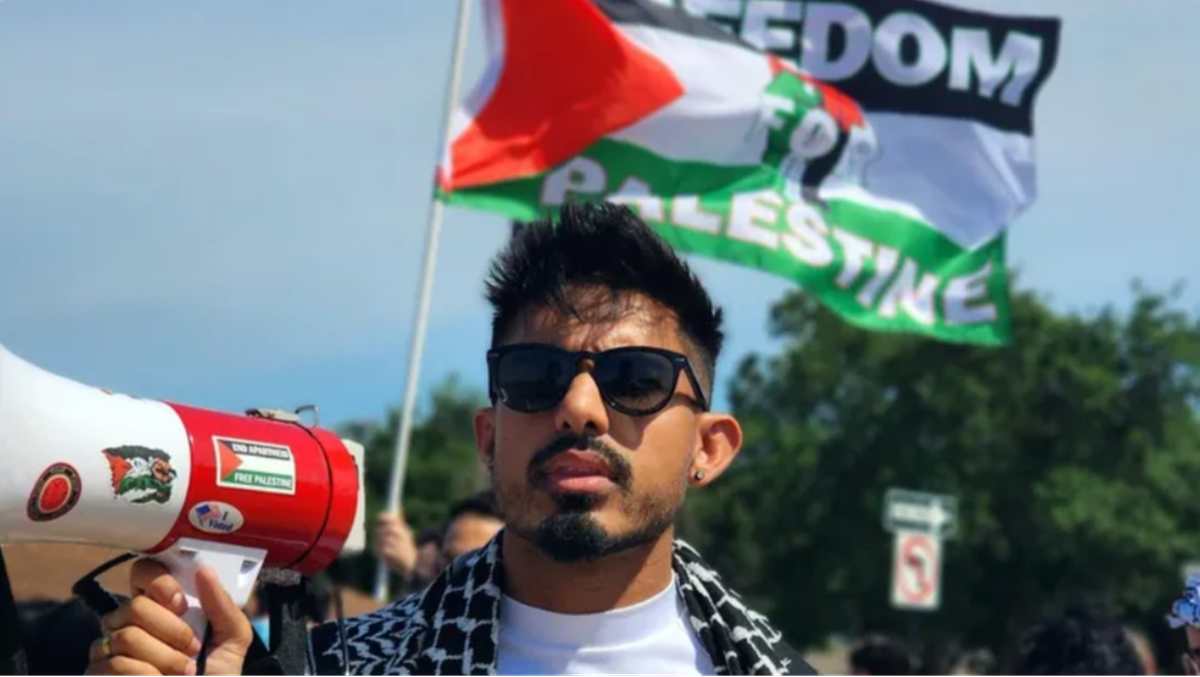
He had a bright future, but he messed it up, Asante said in her closing argument.
She acknowledged spray-painting and some of his other activities could be construed as nuisances, but argued Alam should be treated like any other young person who makes a mistake.
“Do we send them further into darkness or give them a chance at redemption?” Asante asked.
Assistant District Attorney Lloyd Whelchel took issue with framing Alam as a kid who made a mistake.
“He’s not young. He’s 32,” Whelchel said.
Whelchel described Alam as a punk who justified his actions by, “clothing them in righteousness.”
Whelchel pointed to a series of text exchanges between Alam and his friends that appeared to paint Alam as a frequent user of illicit drugs like mushrooms and ecstasy.
Whelchel argued these exchanges undercut Alam’s assertion he had followed all pre-trial requirements to stay away from drugs.
Whelchel asked the jury for the full two-year prison sentence, saying it would send a message that Alam’s form of protest was not acceptable in Tarrant County.
The text messages about drug use were an unrelated distraction tactic used by the prosecution to assassinate Alam’s character, said Alam’s sister Najwa Alam Armstrong at the post-trial press conference.
“The state harassed my brother over and over adding additional charges and financial damages to elevate a misdemeanor charge to a felony,” Alam Armstrong said, arguing it was done to punish her brother for his pro-Palestinian activism.
She noted her brother’s prosecution has taken a mental and emotional toll on her parents, which she said was a goal of the prosecution all along.
“Luckily the jury chose mercy at every opportunity, and for that we are extremely grateful,” she said, pointing to the rejection of the hate-crime charge and the jury’s probation sentence.
She accused Judge Bolton of putting his finger on the scales of justice by sentencing Alam to jail time.
Alam will spend at least the weekend in the Tarrant County Jail while his attorneys try to get him out on bond for an appeal.
Alam was one of three people charged in the case. Defendant Julia Venzor plans to plead guilty and testified against Alam during his trial. The third defendant, Afsheen Khan, is scheduled to stand trial later this month.
This story was originally published September 12, 2025 at 2:06 PM.
.jpg)