Jury weighs whether North Texas church vandal was motivated by religious hatred
The cost of repainting a section of exterior wall at a nondenominational Christian church in Euless in order to fully erase a crude political critique in red spray paint is at the heart of a trial underway this week in a state district court in Tarrant County.
As jurors consider professional painting estimates and other evidence to determine whether the cost is greater than $750, the amount required under the criminal mischief statute that the graffiti writer, Raunaq Alam, is accused of violating, his motivation is also in dispute. The Tarrant County District Criminal Attorney’s Office alleges Alam and two friends chose Uncommon Church because it began to fly an Israeli flag after the Hamas attack of October 2023.
The state alleges Alam intentionally selected the church primarily because of his bias or prejudice against the state of Israel or the Jewish faith.
If the jury finds the hate-crime enhancement true, the length of the prison term that it could assess as Alam’s punishment expands to two to 10 years in prison.
Beyond spray-painting “(Expletive) Israel,” Alam and two friends are accused of affixing stickers to an Uncommon Church sign, flag pole and a glass wall of the church.
“The government has manufactured a felony on a graffiti case because they hate his opinions,” defense attorney Adwoa Asante told the jury in her opening statement.
Judge Brian Bolton is presiding at the trial by assignment in the 485th District Court.
Brad Carignan, the church’s pastor, testified that he learned of the vandalism by phone and directed a maintenance employee to paint over it.
Three down-facing triangles were on a wall.
Assistant District Attorney Lloyd Whelchel asked Carignan to read the words aloud.
“You want the preacher to say the F-word in court?” Carignan asked.
“Not really,” said Whelchel, a seasoned homicide prosecutor who has handled two capital murder death penalty cases in the last 18 months.
“It says, ‘(Expletive) Israel,’” Carignan said, using the full profanity in his testimony.
Defense argues case is about First Amendment, political dissent
Community organizations including the Council on American-Islamic Relations and other supporters of the defendants say the case is about the pro-Palestinian activists’ First Amendment rights to protest genocide in Gaza.
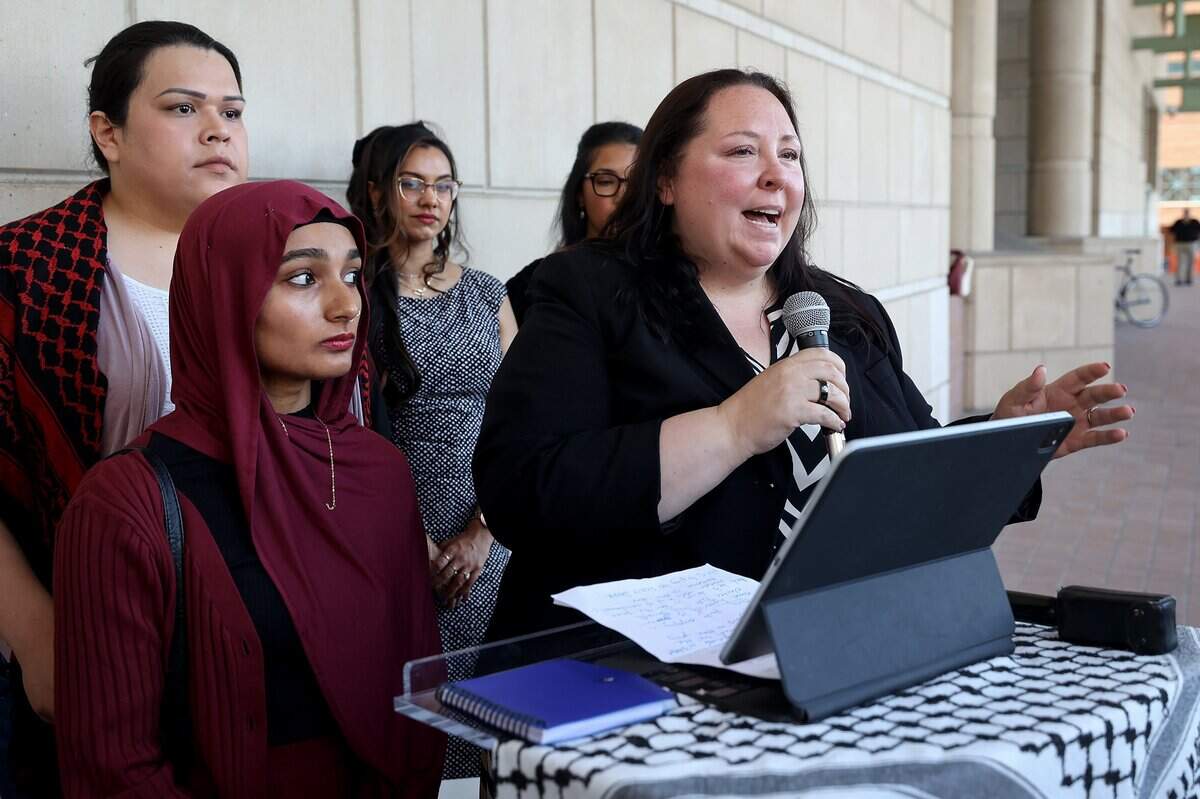
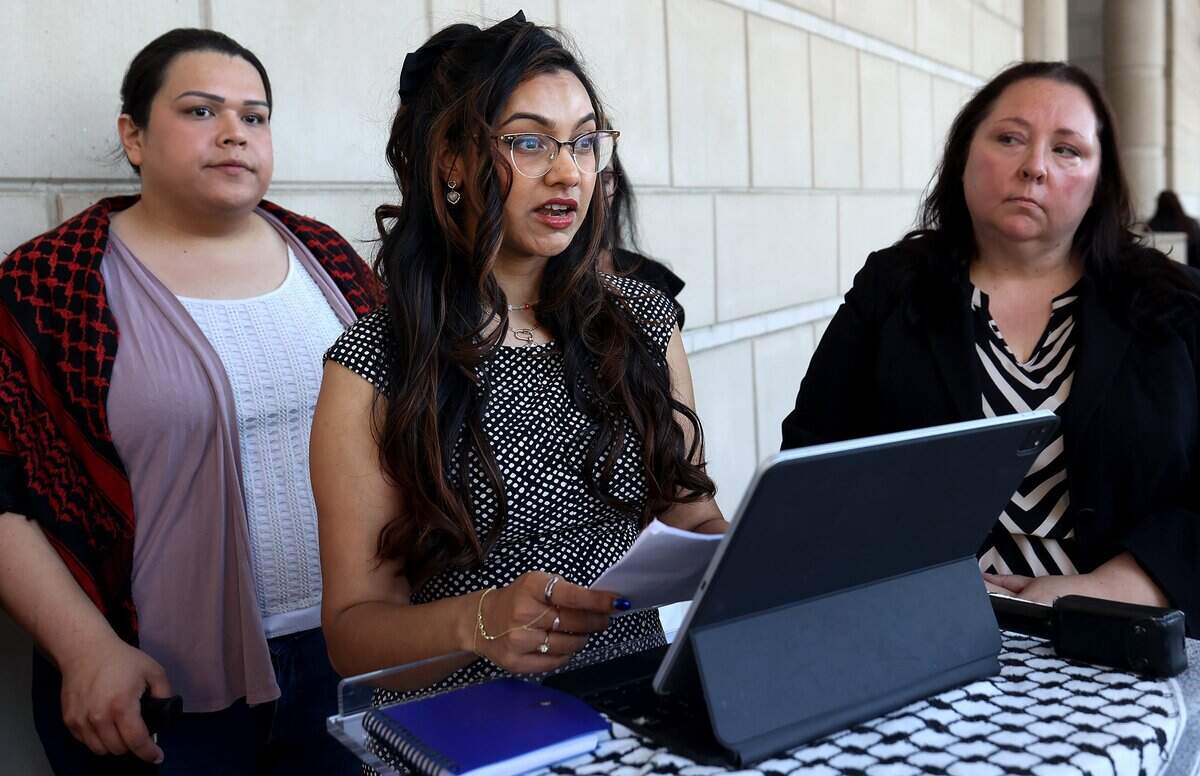
“This is not about property rights or vandalism,” Alison Grinter, defense attorney for Alam’s co-defendant Afsheen Khan, said in a statement. “It’s about the opinions that Tarrant County wants to police. These charges are a dangerous and legally flawed attempt to criminalize dissent in our community.”
The defendants’ supporters and legal team held a press conference at the Tim Curry Criminal Justice Center in Fort Worth before Alam’s trial began there on Monday afternoon. “The defense maintains this case is an unprecedented legal challenge, as the prosecution attempts to name a foreign government, Israel, as the victim in a local criminal case, despite governments not being a protected class under Texas’s hate crime statutes,” they said in a statement.
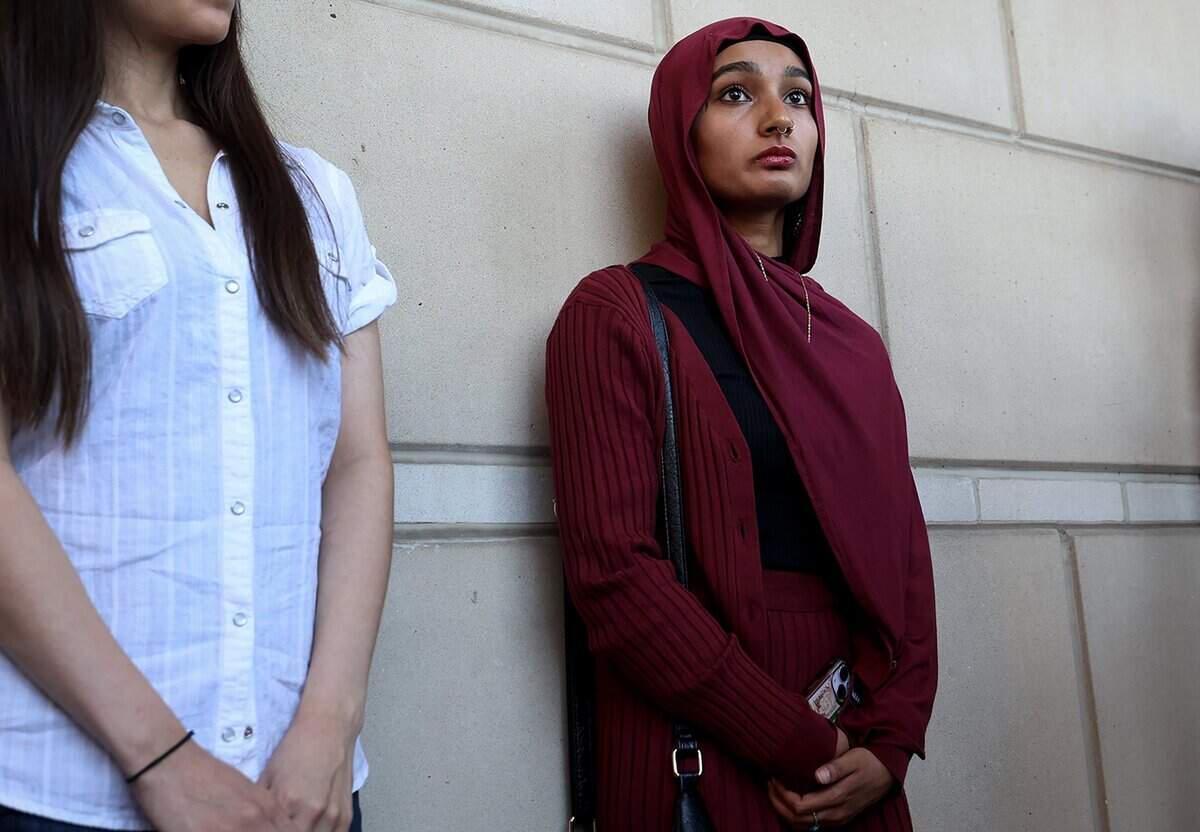
“We are being punished for speaking up against what we believe are atrocities,” Alam said in the statement. “I hope the legal system will reaffirm that the First Amendment protects political dissent.”
Khan is scheduled to stand trial later this month. “I am an American citizen with every right to protest against endless bloodshed,” she said. “Questioning a government’s murderous policies does not make me a criminal. It is for those who are suffering in Gaza that I will continue to speak up, so that one day they may return to their homeland with clear skies.”
This story was originally published September 9, 2025 at 5:02 PM.