No longer fantasy: How a Dallas company brought back the long-extinct dire wolf
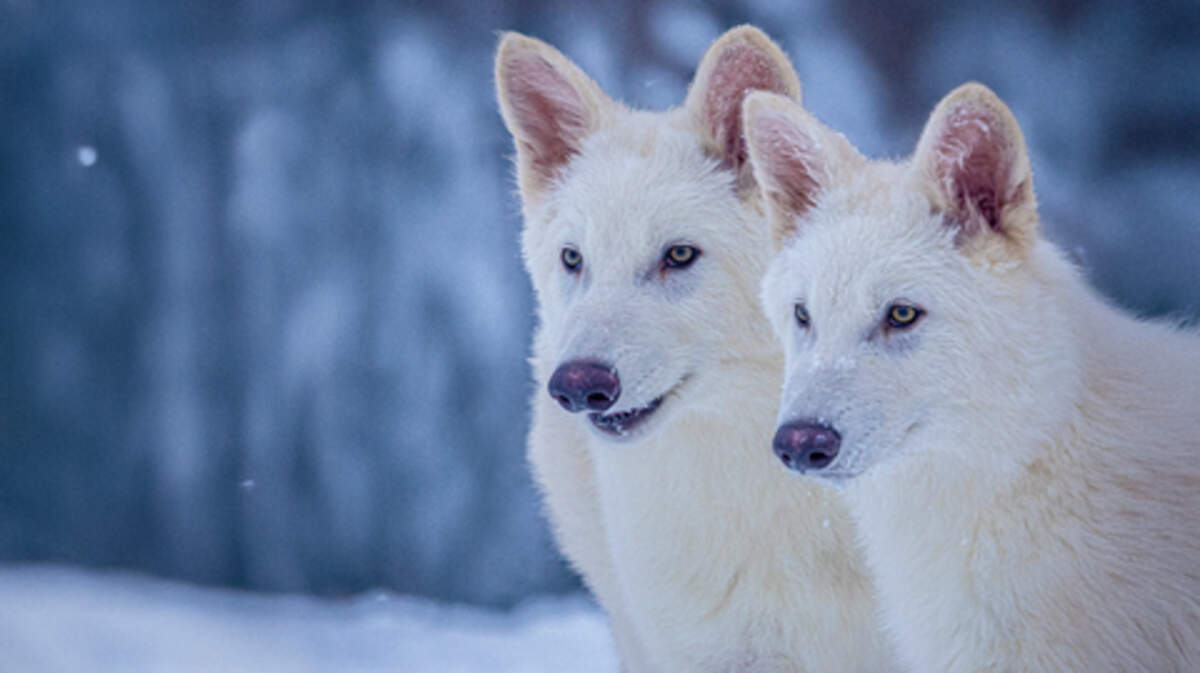
A Dallas company has brought back the once-extinct dire wolf.
Colossal Biosciences announced the news in a Time Magazine story, and news release, on April 7. Billed as a “de-extinction” company, Colossal said it has successfully birthed three dire wolves, which were previously extinct for more than 12,500 years.
“I could not be more proud of the team. This massive milestone is the first of many coming examples demonstrating that our end-to-end de-extinction technology stack works,” Colossal CEO Ben Lamm said in a news release. “Our team took DNA from a 13,000 year old tooth and a 72,000 year old skull and made healthy dire wolf puppies. It was once said, ‘any sufficiently advanced technology is indistinguishable from magic.’ Today, our team gets to unveil some of the magic they are working on and its broader impact on conservation.”
If the term “dire wolf” sounds familiar, that’s because the animals were featured on the popular HBO fantasy series “Game of Thrones.” Nevertheless, dire wolfs are real creatures, and Colossal said the rebirth of these animals is a “critical step on the pathway to the de-extinction of other target species.”
Speaking of “Game of Thrones,” book author George R.R. Martin was among the first people outside of Colossal to learn about the dire wolves. He shared this in a Facebook post (see below) that included a photo of him holding a dire wolf.
What does Colossal Biosciences do?
Established in 2021 and based in Dallas, Colossal Biosciences describes itself as the world’s only de-extinction company.
The company was founded by Harvard University professor George Church and serial entrepreneur (and one-time Wise County resident) Ben Lamm, who is worth an estimated $3.7 billion. According to Forbes, Colossal has raised around $435 million since inception and has a $10.2 billion valuation.
Colossal’s mission to “eradicate extinction” came from a statistic that 50% of all animal specifies could be extinct by 2050. If that happened, humans would suffer from widespread food/water insecurities and it would cause “irreversible changes to humanity’s way of life,” according to the company.
In addition to bringing back the dire wolf, other Colossal projects focus on bringing back the woolly mammoth, thylacine and dodo, all of which have been extinct for hundreds to thousands of years.
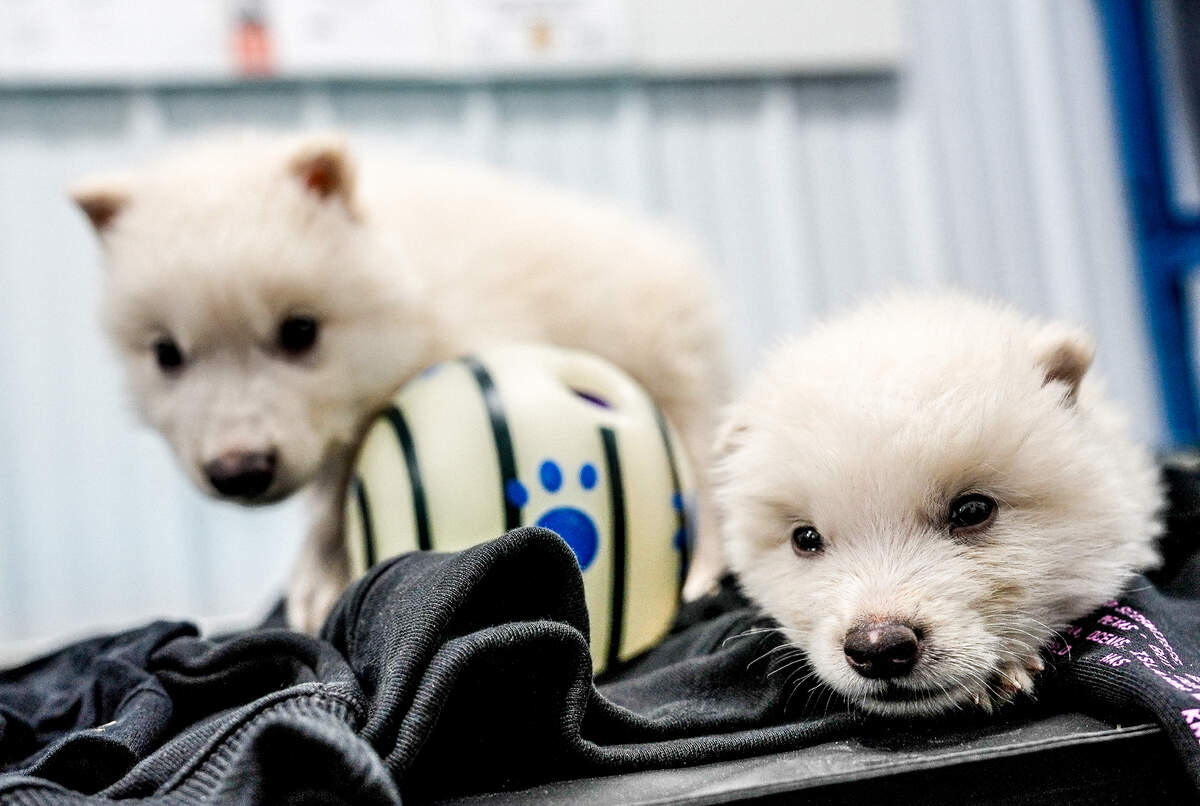
How did Colossal Biosciences bring back dire wolves?
It was a lengthy process to birth the three litters of dire wolves, named Romulus (an adolescent male), Remus (an adolescent male) and Khaleesi (a female puppy).
Colossal performed 20 genome edits, with 15 of those coming from exact extinct variants, according to the company. Together these edits are said to have made a larger and stronger body, and longer and fuller coat.
Furthermore, Colossal detailed its process step-by-step:
- Extracted and sequenced ancient DNA from two dire wolf fossils.
- Assembled ancient genomes from both fossils and compared those to genomes of living animals, such as wolves, jackals and foxes.
- Identified gene variants specific to dire wolves.
- Determined that dire wolves had long thick fur and white coat color.
- Performed gene editing to the dire wolf’s closet living relative, the gray wolf.
- Used whole genome sequencing and karyotyping to screen edit cell lines.
- Cloned cell lines into donor egg cells.
- Performed embryo transfer and managed interspecies surrogacy.
- Birthed the dire wolves.
Colossal began the process with extracting ancient DNA from two dire wolf fossils found in Ohio and Idaho.
A 13,000-year-old dire wolf tooth was found in Sheriden Cave in Ohio, and a 72,000-year-old inner ear bone was found in American Falls, Idaho.
Where are the dire wolves now?
The three dire wolves are on an ecological preserve with more than 2,000 acres that is certified by the American Humane Society and registered with the U.S. Department of Agriculture.
A team of 10 full-time animal care staff are on hand to watch and support the dire wolves, according to Colossal. The entire preserve is enclosed by 10-foot, zoo-grade fencing, with perimeter security.
The dire wolves are continuously monitored through live cameras, drone tracking and security personnel. There’s also a six-acre secure site within the preserve, that has an on-site veterinary clinic, wolf management facility and natural built dens for the animals.
Colossal plans to provide lifetime care for the wolves, as the long-term goal is to restore the species.