
How much snow will Dallas-Fort Worth see this month? Enough to justify February snow moon?
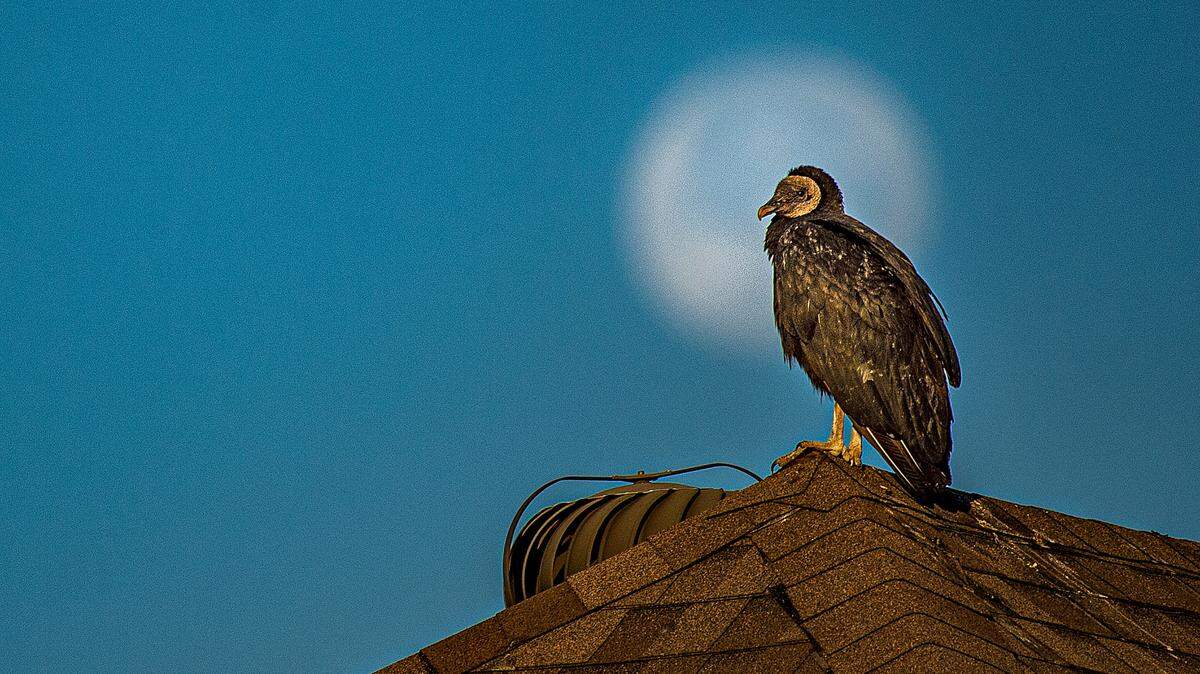
Dallas-Fort Worth in February has seen at least more than a trace of snow in 19 of the past 50 years, averaging 1.23 inches in that time period of accumulated snow, according to the National Weather Service monthly and seasonal snowfall data.
The month recorded a total of 61.7 inches of snow in half a century. In 1978, North Texas logged the most snow at 13.5 inches, while 2010 came next at 12.6 inches.
By comparison, January recorded more than a trace of snowfall in 16 of the past half a century. The total snowfall recorded in January in that time period is 22.9, roughly a third of the February total. January’s high mark came in 1977 with 5.4 inches recorded.
So, will it snow in Dallas-Fort Worth in February?
Does this mean the month’s full moon, dubbed the snow moon, will rise to a region dusted in snow? Well, that still remains to be seen. But what we know for a fact is that North Texas has been dusted with snow more in the month of February than any other winter month in the past half a century — historical data show Dallas-Fort Worth saw snow in more than a third of that time period.
Other factors may come into play to determine whether we see more snow this month.
The region did enjoy a slight dusting of snow last month, enough to be fun but not cause widespread chaos. Of course, more problematic were the consecutive days of frigid temperatures as a series of Arctic blasts hit Dallas-Fort Worth in January.
The specter of an unstable polar vortex still hang over us, dredging up miserable memories of winters past. Will it hit us or will it not? That is a good question.
“A disrupted polar vortex increases the odds that the tropospheric jet stream will stay shifted farther south, which increases the risk for cold air outbreaks,” according to the Polar Vortex Blog by Laura Ciasto and Amy Butler on the website Climate.gov.
Then there were the prognostications of what a change in weather patterns from a La Nina to El Nino may mean for North Texas.
The Star-Telegram previously reported that while near-normal seasonal mean temperatures are most likely for North Texas this winter, South Texas has equal chances for below-, near- or above-average seasonal mean temperatures, according to NOAA’s U.S. Winter Outlook by the Climate Prediction Center — a division of the National Weather Service.
As for winter precipitation under El Niño conditions, the outlook shows wetter-than-average conditions are most likely in Texas this season.
So, why exactly is the February full moon called the snow moon?
In most regions of the U.S., including North Texas, February happens to be the snowiest month of the year. This made the choice of name for the snowiest month of the year simple enough.
“Furthermore, at this mid-winter point without many other strongly distinguishing characteristics — no plants to harvest, no new plants blooming — snow can be the most prominent trait of the month,” according to the Farmers’ Almanac.
The Farmers’ Almanac website expounds on how the full moon in February gets its name:
Similar chilly names are also common. The Mahican tribe of the northeastern US and into Wisconsin, for example, clarify that this is the “Deep Snow Moon” while the Oneida tribe of upstate New York and the Great Lakes region call this the “Midwinter Moon.”
In some Celtic histories, February’s full Moon is referred to as the “Ice Moon.” In Maine, the Abenaki tribe calls this Moon “Makes Branches Fall In Pieces Moon,” which is exactly what can happen when ice builds up on tree limbs. The Lakota of the northern plains have a similar name for February’s full Moon, “When Trees Crack Because of Cold Moon.”
In different areas where climates vary, so too do the full Moon’s names vary to reflect the local seasons. For example, the Comanche tribe of the southern plains, where temperatures may begin warming in late February, call this the “Sleet Moon” to indicate the possibility of hints of spring. Similarly, “Frost Sparkling in the Sun Moon” is from the Arapaho tribe of the Great Plains, where snowfall is less but the cold still appears as thick frost.
When is the next full moon or the snow moon?
The next full moon will rise in North Texas on Saturday, Feb. 24 at 6:30 a.m. Central Time.
The full moon, according to space.com, shows its full face about once a month.
“Most of the time, the full moon isn’t perfectly full. We always see the same side of the moon, but part of it is in shadow, due to the moon’s rotation. Only when the moon, Earth and the sun are perfectly aligned is the moon 100% full, and that alignment produces a lunar eclipse,” according to the space.com website.
This story was originally published February 1, 2024 at 8:11 AM.