‘Miserable Wells’ no longer: Meet the people who transformed this one-time resort town
READ MORE
One-time resort town Mineral Wells is making a comeback
With the restoration of the Baker Hotel, a future master-planned housing development and new restaurants downtown, Mineral Wells is shedding its downtrodden identity.
Expand All
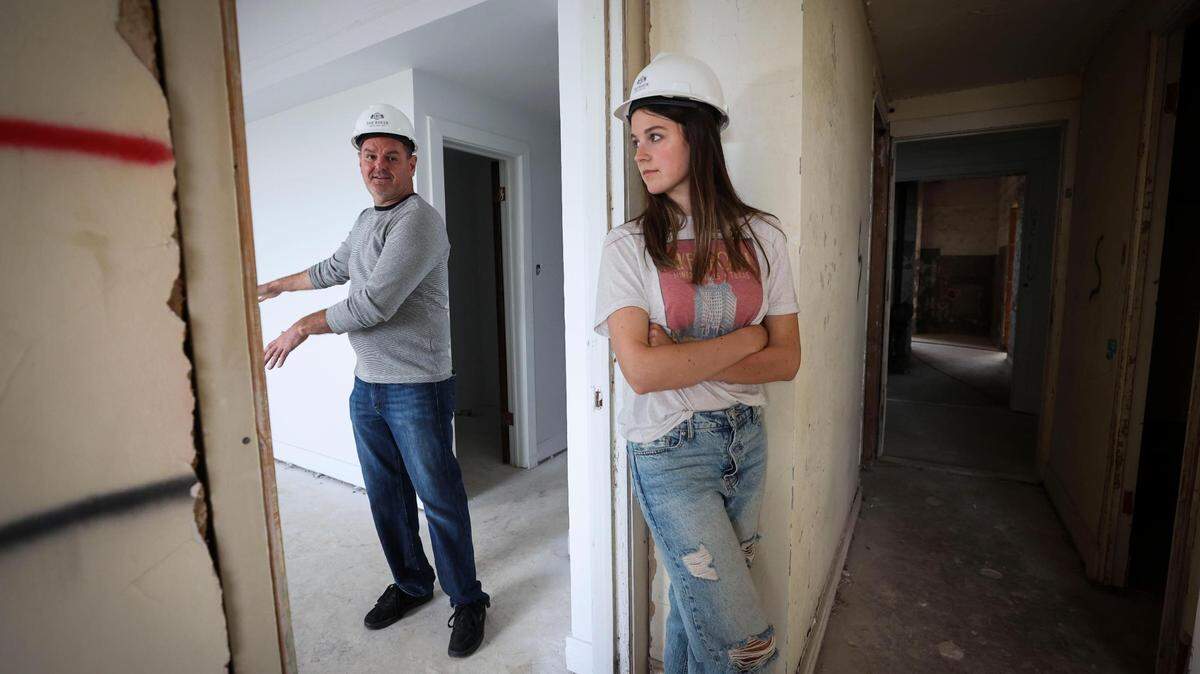
In its previous life, Market 76067 was a boarding house.
When visitors alight the stairs into the market’s second story, they see old advertisements papering the walls. Upstairs, about a dozen bedrooms flank the wide hallway. Each room has a bathroom: Dusty pink, with perfectly preserved mid-century clawfoot tubs and fixtures.
The bedrooms are now home to the wares of local artisans, from novelty baby bibs to throws depicting the landmarks of Mineral Wells.
Until Randy and Misty Nix opened the artisan emporium in 2018, many in Mineral Wells didn’t know the boarded-up building in the center of town had ever been a boarding house.
“The way they’ve done that is beautiful, because they’ve preserved the history,” said Brazos Market and Bistro co-owner Perri Leavelle. “Growing up here, we never saw any of that, because it was all boarded up and ugly. Now people can go see that and there’s a visual appreciation of the old that kind of just snowballed into ‘We all love history, and we’re now we’re all excited!’”
Until about 2018, Leavelle, 42, had only seen her hometown exemplify its unflattering nickname, Miserable Wells, acquired after a period of decay caused by the closure of town’s primary employer, military base Fort Wolters, in 1973.
But these days, the town has begun to reclaim its former glory as Dallas-Fort Worth’s spa escape. Ahead of the anticipated reopening of the Baker Hotel in 2024, new restaurants and shops have injected life into the sleepy downtown, and the city’s first master-planned residential development broke ground last year.
It’s tempting to frame the story as a quick sprint to flashy victory, but Mineral Wells’ comeback has been decades in the making.
Miserable Wells
The story of Mineral Wells mirrors the downfall of a Rust Belt town. It burned brightly in the early and mid-1900s until a cataclysmic economic event snuffed out its flame.
Fort Wolters’ closure in 1973 had the same effect on Mineral Wells as the shuttering of steel mills and auto plants did to cities in the upper Midwest.
While Dallas-Fort Worth surged to become the nation’s fourth-largest metro area, Mineral Wells’ population has fallen 20% since 1970, to 14,820.
Although it is only an hour west of Fort Worth, Mineral Wells has missed the Metroplex’s sprawling prosperity and growth. One in four live in poverty, and the city’s median household income of $42,000 is $21,000 less than neighboring Weatherford.
“Most of this town was built on the base and supporting base traffic. And you just pull it away all in one night,” said Randy Nix, who grew up in Mineral Wells and now owns Market 76067 and the Crazy Water Hotel with his wife, Misty.
The year before the base closed, the world-renowned Baker Hotel shut its doors after 43 years. It had been a destination for celebrities, from Judy Garland to The Three Stooges.
In tandem, the town and the hotel fell apart.
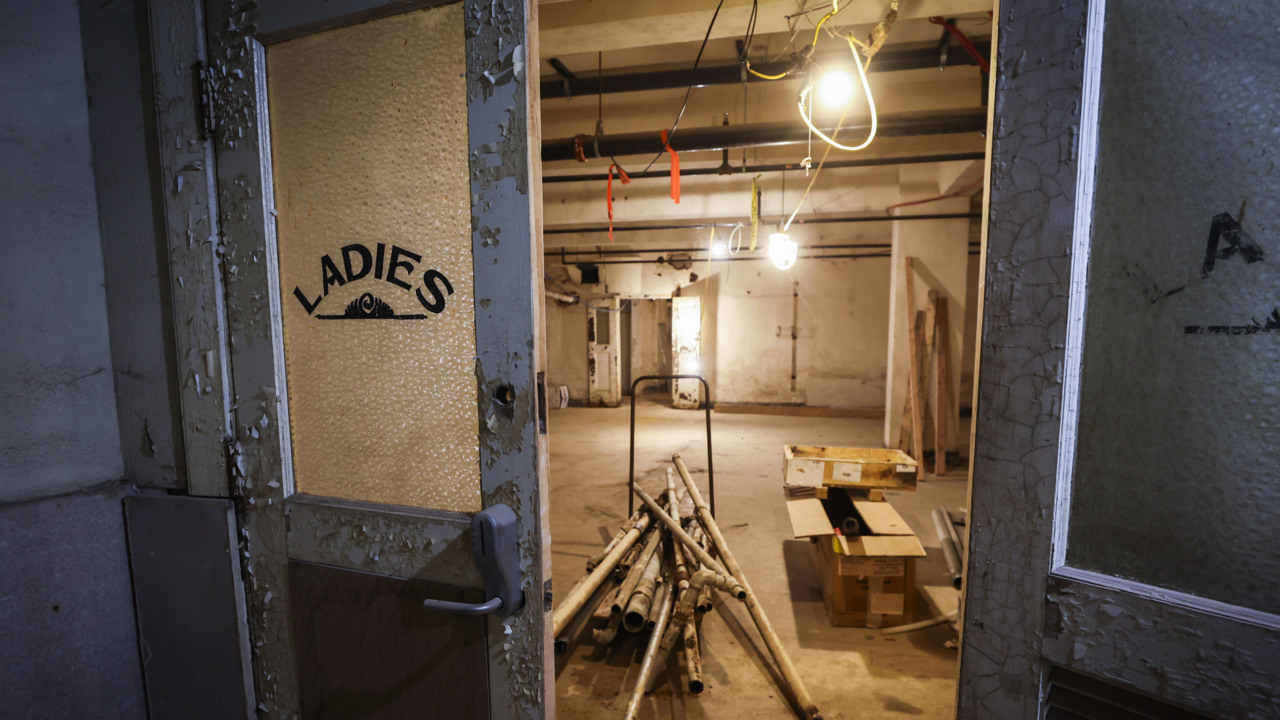
Plywood covered downtown Mineral Wells’ historic red brick storefronts. Rotting plaster and trash caked onto the Baker’s famous terrazzo tile.
“There were a lot of people that called it Miserable Wells. There were a lot of people that had other wonderful names for it,” said Mayor Regan Johnson, the 38-year-old co-owner of Brazos Market and Bistro.
Multiple people flirted with the idea of restoring the Baker. As optimistic outsiders came and went, so did residents’ dreams that their town could once again become a wellness destination flanked by Palo Pinto County’s natural beauty.
“When you look at Mineral Wells history, it was boom and bust, boom and bust,” Johnson said. “Everything that happened in Mineral Wells happened to Mineral Wells so we felt like Mineral Wells didn’t really have an identity that it owned.
“It was my position that if we don’t invest in our own town, who is going to come invest in us and why would they want to?”
The Crazy and the Famous
When Carol and Scott Elder moved from Houston to Mineral Wells in 1999 to raise their family in Carol’s hometown, they wanted to purchase a downtown building so they could open a studio for Carol’s floral arrangement business and live in the apartment above.
Instead, along with Carol’s parents, they became the proud owners of a 95-year-old mineral water company.
Historic Mineral Wells wanted to unload the Famous Mineral Water Company after acquiring it in the 1980s. The Elders submitted the winning business proposal.
“It wasn’t really a bidding war,” Carol Elder said. Instead the application asked, “What do you want to see this do and what is your vision?”
Although there were once dozens of active mineral wells in aptly-named Mineral Wells, the popularity of mineral water began to wane in the early 1900s, with the advent of antibiotics and the Food and Drug Administration restricting claims about the water’s health benefits.
When the Elders purchased the company, it was taking in about $30 a day.
“You had your few die-hards who still have been drinking it the whole time,” Carol Elder said.
At the time of the sale, the water was sold only in the Famous Water Pavilion, a brick building on Sixth Street where customers could sample different types of mineral water. Through dinners and events, the Elders created a tourist destination out of the historic pavilion and increased the distribution of Crazy Water to more than 700 grocery stores throughout Texas, Oklahoma, Arkansas, Louisiana and New Mexico.
“It’s funny, when we were remodeling our house last spring, I was cleaning the file cabinet and actually came across the application, and I was like, ‘Oh my God, we’re doing every bit of this!” Carol Elder said.
The Elders raised their family in a house next to the Famous Water Pavilion. They recently transformed their home into a bathhouse where Crazy Water fans can take mineral baths and get massages.
“Really if it hadn’t been for Scott and Carol bringing back and rebranding Crazy Water, I’m really not sure any of this happens,” said Randy Nix.
The scouts
In any major undertaking, first, there are the scouts, Johnson said.
They’re the people who chart a path into the unknown and risk failure to make something new.
Carol and Scott Elder were scouts. Johnson is a scout, too.
Johnson grew up in Mineral Wells and moved back after she graduated from Tartleton State University in 2007 with her master’s in management and leadership. That’s when she started to ask questions about a vacant and unloved red brick building at 216 N. Oak Ave. in the middle of town.
She was drawn to the architecture and its awnings, and, at 23 years old, she acquired a loan and convinced the long-time owner to sell her the property.
“I thought, ‘Oh my gosh, this place has so much potential, and if I can renovate that building, well then everybody else will want to do that same thing!’ I was so naive!” she said, with a laugh.
She learned through word of mouth — no one wrote this tidbit down — that it had been a brothel.
“This was the Vegas before Vegas was Vegas,” she said.
Initially, Johnson’s mom ran a restaurant in the building. She and Leavelle took it over in 2011.
They introduced unfamiliar food concepts, like a salad bar, which Johnson admits may have been premature at the time.
Customers walked in asking, “Where are the French fries?” Johnson said. “We laugh. We still say we taught Mineral Wells to eat their vegetables.”
Today, the most popular item on the menu is a stuffed avocado salad.
Johnson and Leavelle also taught Mineral Wells to rethink its shabby reputation.
“Sometimes it surprised us how our own citizens didn’t know what all there was to do in Mineral Wells ... so we just flapped our jaws a lot, starting with the people who live here,” Johnson said.
They reminded residents of Palo Pinto County’s nearby natural treasures, like Mineral Wells State Park and Possum Kingdom Lake.
Today, the Bistro is one of about a dozen restaurants in downtown Mineral Wells.
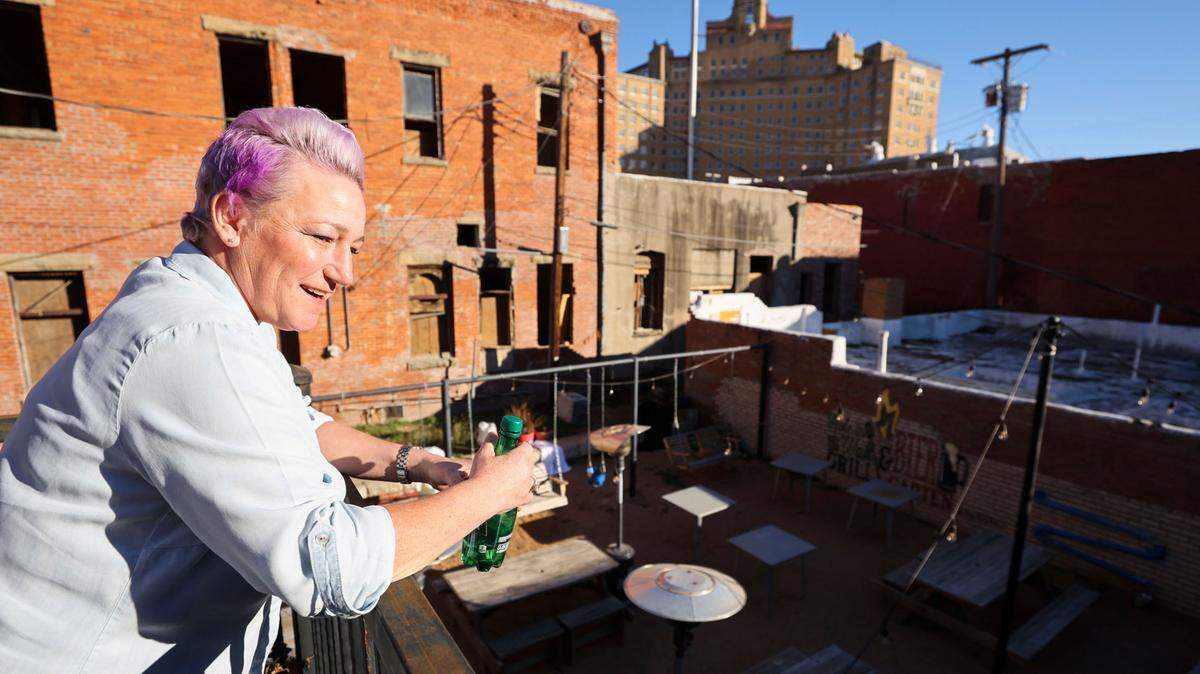
Weather permitting, visitors and those who call the town home can unwind with a beverage on one of the swings at the Bier Garten in back of the Bistro.
It’s named “The Hole in the Wall” — a reference to the hole ripped in the building next door during a torrential rainfall in 2016.
From the outdoor patio, patrons have an unobstructed view of the Baker Hotel, rising 14 stories high just a few blocks away.
With their different projects, scouts like Leavelle, Johnson and the Elders helped each other carry the weight of their vision for the town. Then the Nixes came along.
“It just kind of took that little space that started a little flame and then this brightly burning fire that people wanted to get involved with,” Carol Elder said.
The pioneers
Randy Nix feels a little guilty he didn’t join the revitalization efforts sooner.
By 2018, he and his wife Misty realized they were spending nearly half the year out of town in Kansas or at their lake house.
Randy had grown up in Mineral Wells. He and Misty raised their children and built their landscaping business in Mineral Wells. But, to them, the town felt stagnant.
“Our kids both said they would never move back to Mineral Wells,” Nix said. “They didn’t see opportunity here. There was no opportunity for our children to move back.”
Rather than abandoning the town, Nix’s frustration compelled him to do something.
“So basically, here they are,” Nix said, referring to folks like Johnson and the Elders. “They’ve been working on this for years. And I’ve been off gallivanting around. I come back banging on the table going, ‘We need to do this, we need to do that.’
“And I really was frustrated and saying, you know, why aren’t we doing something about it? And then I realized we were. There were a lot of people making that effort.”
So, he joined them.
The Nixes’ first project was Market 76067, at the corner of Hubbard Street and Oak Avenue.
By giving local makers the opportunity to sell their wares without paying rent in a space, the Market serves as a business incubator.
The next project was a higher profile one. In 2018, the Nixes purchased the Crazy Hotel, which Randy called “the ugliest building in town.” The Crazy had most recently been open as a retirement community, but when the Nixes purchased the vacant hotel, it was uninhabitable, ravaged by weather and neglect.
After an $11 million restoration, the Crazy Hotel reopened last year, with apartments and suites available for short-term rents.
From his initial hesitancy to invest in Mineral Wells’ comeback, Nix developed a knack for giving residents the chance to share in his vision.
When they purchased the Crazy Hotel, the Nixes offered residents the chance to invest. Within a week, Misty had rounded up 67 local investors who pledged $20,000 each to the project.
The Baker
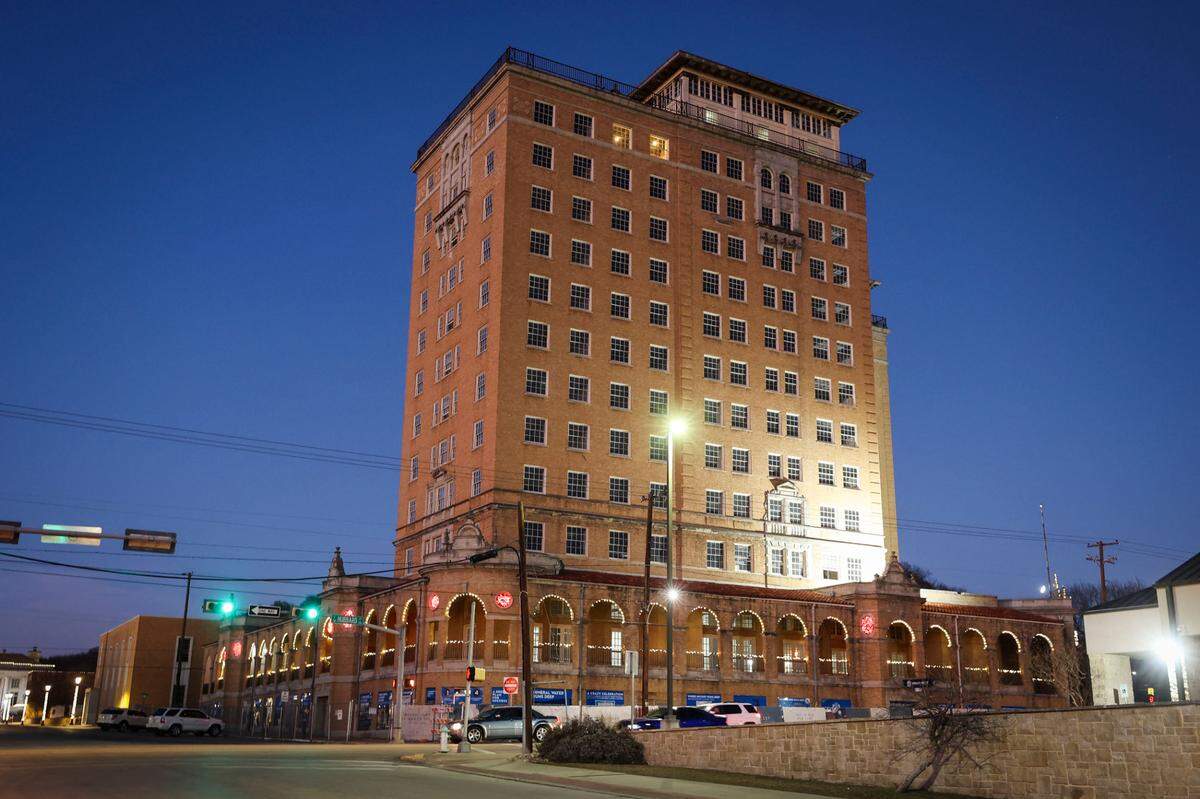
Driving into Mineral Wells, the first thing visitors see is the Baker Hotel.
The massive 14-story feat of Spanish Colonial Revival architecture can be seen 10 miles from town when traveling west on U.S. Route 180.
The fate of the landmark is intricately woven into the tapestry of the town.
The Baker looms large in nostalgia for Mineral Wells’ mid-century heyday, and residents dreamed someone would come to revive the structure. The revitalization of downtown Mineral Wells can’t wait on the restoration of the hotel, but at the same time, if it ever reopened, the hotel would never survive if Mineral Wells could not sustain a robust tourist economy.
About 12 years ago, Laird Fairchild and his financial adviser Chad Patton became the most recent and most successful investors to take on the behemoth task of restoring the 200,000-square-foot structure.
Fairchild co-founded Southlake-based Hunter Chase Development Partners, which specializes in new construction and rehabilitation of commercial properties. The Baker caught his eye during his trips to visit his father in Palo Pinto County.
“I kept hearing that: ‘You’re the best chance of this thing ever happening,’” Fairchild said. “Well that puts a lot of pressure. And then you get those naysayers who said, ‘You’re crazy.’ Well, that puts a lot of motivation. OK, you think I’m crazy?”
Residents may have thought Fairchild crazy, but that didn’t keep them from supporting his vision.
In 2014, voters overwhelmingly approved an eighth of a cent of sales tax for the restoration.
“I don’t think Mineral Wells has ever agreed on anything 97%,” joked Leavelle, who designed the “Vote for the Baker” campaign flyers.
“When the town got together on the vote for the Baker, I think that kind of solidified that there was a group of people really committed to making this,” she said. “I believe in my heart that made it more attractive to the investors, because they came and they saw that weren’t just hoping some rich person would come save our butts.”
The hotel will have 165 rooms, three ballrooms and an Olympic-size swimming pool.
“I think it’s a great American story to see a town like this reborn. That’s what’s happening, and it’s great to be a part of it,” Fairchild said.
And, for those who wonder if Mineral Wells is big enough for two famous hotels, rest assured that Nix and Fairchild have a mutually self-described “synergystic” vision when it comes to their projects.
In fact, the two hotels will share a hotelier, Jeffrey Trigger, founder and president of La Corsha Hospitality.
“Randy was a game-changer,” Fairchild said. “He helped get the community buy-in on the bigger vision. Not just the restoration of a 90-year-old building in the center of town, but it was his vision of a greater possibility for the entire area.”
Moving back
After graduating from Villanova University last year, Remy Fairchild joined her dad’s team at the Baker, where she manages the hotel’s thriving social media accounts.
This fall, she convinced the team that the Baker needs a Tik Tok account.
On the account with nearly 50,000 followers, Fairchild documents the restoration and answers questions from those following the project.
Against the tide of young people who’ve fled Mineral Wells, she recently purchased a fixer-upper in town.
“Every day it seems to be different,” she said. “I’ll come down and there’d be an old abandoned building with gift-wrapped presents on the windows, just people are starting to take those little steps and taking more pride … Every single day, there’s just a little something different. And just to be there every day and see it evolve is really special.”
Late last year, Diane Nix Kessler, president of DMK Properties, announced Mineral Wells’ first planned housing development, “The Wells,” which will bring 486 homes to the area.
Sustaining community excitement for things like housing and infrastructure seems banal in comparison to a project like the Baker restoration, but “housing has been such a need that it is sexy,” Johnson said.
In a down-on-its-luck town, getting community buy-in can be challenging when it has operated from a position of scarcity for decades.
The mayor reminds constituents, “We’re making the pie bigger, not fighting over slices of pie.” In this way, changing Mineral Wells is like “turning a cargo ship.”
This story was originally published January 16, 2022 at 5:30 AM.