Fort Worth real estate market is booming. How do we balance housing, land preservation?
READ MORE
Price of progress
With a bustling economy and ample land, Fort Worth’s population is booming. But the growth hasn’t come without complications, especially when it comes to preserving open spaces.
Expand All
Back in 1994, the year Chuck Snakard bought land southwest of Fort Worth, those 340 acres weren’t much more than bare dirt and cedars.
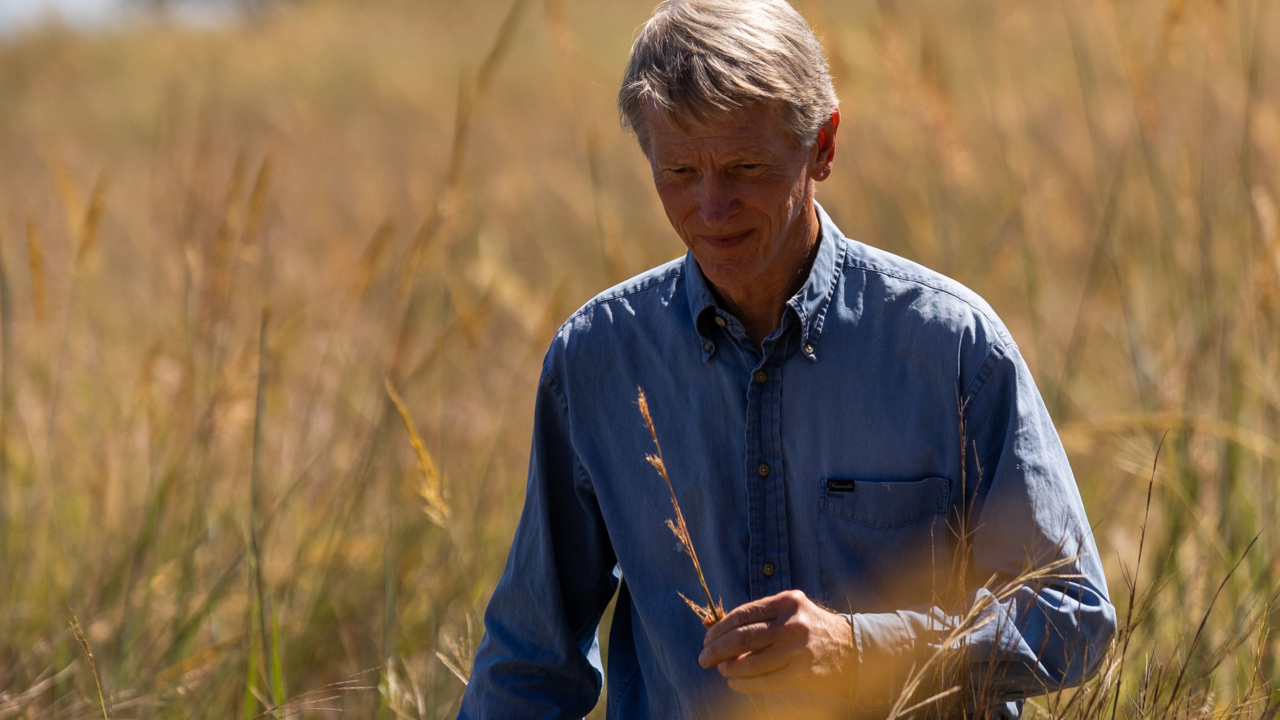
But Snakard, an attorney based in Dallas, saw the possibilities — not to develop the property into housing or a commercial center but to restore the “overgrazed” prairie back to what it once was, before settlers arrived to establish ranching operations across North Texas.
“What we didn’t understand when we destroyed this prairie is that it’s a very complex ecosystem,” Snakard said, gesturing toward the landscape surrounding his house near Glen Rose. “We’ve got to give this time to re-create what was here before, and who knows how long that will take, if it ever will.”
The Fort Worth native has spent more than 25 years working the land, planting native grasses, conducting controlled burns, watching some experiments succeed and others flame out. During those same decades, developers have moved into Dallas-Fort Worth at a breakneck pace, taking enormous swaths of land and turning them into neighborhoods and retail space to sustain the region’s rapid growth.
“Part of our heritage as Texans is having vast, open spaces and having that vista where you can’t see anything else on the horizon,” Snakard said. “Having natural areas is critically important to our health as human beings, from a physical, mental and spiritual standpoint. We need this open space, and we’re losing it so, so fast.”
North Texas added more than 1.2 million residents in the past decade. Tarrant County grew by 16.7% between 2010 and 2020, now housing more than 2.11 million residents and serving as the third most populous county in Texas.
The undeniable growth has elected officials, conservation advocates and landowners like Snakard confronting a complicated set of questions: How do we balance relentless demand for housing with the desire to protect nature and open prairie across DFW? How might cities and private landowners collaborate to preserve what’s left?
“Our population in Texas has grown by leaps and bounds, but our parks and open spaces have not kept up with that growth,” said Lori Olson, executive director of the conservation-focused Texas Land Trust Council. “I feel like one of our challenges is convincing the powers that be that we really do need to make additional investments in conservation of our land and water resources.”
One look at the long list of upcoming commercial and housing projects in North Texas confirms what longtime residents and newcomers alike already know: The real estate market is on fire in the Fort Worth area and is taking thousands of acres of open land with it.
Each month brings a new announcement: 3,800 acres of ranchland sold here, a luxury housing development planned there. Don’t forget the 50,000 residents expected to arrive at the Walsh development near Aledo over the next several decades, or the nearly 10,000 homes going in at Sendera Ranch on the Tarrant-Wise county line.
Still, the number of subdivisions under construction pales in comparison to the actual demand for homes in Fort Worth and its surrounding suburbs, according to Kristy Wright, a real estate agent who focuses on Tarrant County properties. For Wright, new housing developments mean more options for her clients and less pressure on the booming market, where sellers can expect 30 or more offers on their properties.
“It’s all about supply and demand, and there’s just not enough supply,” Wright said. “Back in 2015, it was still a seller’s market, but not to the extremes it is now, where houses are being sold before they’re even listed. We’re one day on the market and people are paying up to $100,000 over the list price for a house, or bringing cash to the table.”
Ballooning development is attracting potential home buyers and driving some longtime residents to purchase land elsewhere. After leaving far north Fort Worth to support her husband’s job in Illinois, Sabrina Morrison’s family returned to Texas in July, this time in the Aledo area. Her home isn’t far from the Veale Ranch development, which could support up to 30,000 residents in the years to come.
Morrison doesn’t fear the growth coming to west Fort Worth and its surrounding towns, but she does share the concerns of fellow homeowners worried about how thousands of new residents will affect impact infrastructure, traffic and transportation.
“What frustrates me more than anything when we see growth, especially having dealt with it out there in north Fort Worth, is when they’re building houses left and right but only have a two-lane road to support it,” Morrison said. “It does make you wonder, with more families moving in, how much worse is it going to get?”
Cities often expand in bite-size chunks, with many developers focusing on 50 or 100 acres at a time, said Taylor Baird, who led the August acquisition of the Veale Ranch property between Fort Worth and Weatherford for PMB Capital Investments. But this time period presents an opportunity for developers to design neighborhoods on a larger scale and avoid some of those pitfalls, he said.
“We recognize the opportunity to help plan ahead for that growth and be thoughtful about master planning large projects that have the scale in order to invest heavily in transportation, in open space, in quality that will last a long time,” Baird said.
Some homeowners aren’t sticking around to find out what expansion will look like. After 17 years in east Fort Worth, Lorie Dodd-Vargas and her husband sold their 2-acre property in June and moved their horses to Bellevue, a town a half-hour’s drive southeast of Wichita Falls.
A major factor in their decision was the arrival of housing developments in their neighborhood. Dodd-Vargas was horrified when she saw construction workers tear down acres of trees to make room for Mockingbird Estates, a subdivision of 465 homes being built by Huffines Communities.
“I’m not against people getting a home. I’m not one of those people who says, ‘Oh, these California people can’t move here,’” Dodd-Vargas said. “But I believe in science, and I believe in climate change, and we have to have trees to survive. And where do you really think all those animals that lived on those acres went? It just breaks my heart to see that.”
Challenges to conservation in Texas
There are a number of benefits associated with preserving open, natural spaces in close proximity to where people live, according to Robert Kent, who serves as the Trust for Public Land’s Texas state director and works directly with Fort Worth officials on their open space program.
Residents are healthier when they have access to outdoor spaces for exercise and recreation, and nature preserves can bring together community members from across the city who might not interact otherwise. Conserved land also plays a critical role in helping to mitigate, or diminish, the negative impact of floods and other extreme weather events, Kent said.
“During the next big rainstorm, open spaces can be a sponge and soak up all that rainwater and help prevent flooding downstream,” Kent said. “They can help combat the urban heat island effect because when you have green spaces, nearby developments are actually cooler compared to development that’s in the middle of the concrete jungle.”
But the obstacles to preserving land in Texas loom large in the minds of people like Mark Steinbach, the executive director of the Texas Land Conservancy. The organization owns some land parcels set aside for preservation but mostly works with landowners seeking a long-term way to prevent their acreage from being used for housing or commercial development.
Of the 172 million acres of land in Texas, more than 93% is privately owned. Texas ranks among the bottom of U.S. states in land owned by federal or state agencies. That means Steinbach and other conservation groups must find ways to encourage private landowners to donate their land or sign conservation easements, which permanently ban land from being sold to a housing or commercial developer.
An easement must be signed between a landowner and a government entity or qualified conservation organization, according to the Texas Land Trust Council. Under its terms, the landowner retains the title and determines what can be built on the property and what kinds of business can be conducted there, including agricultural use.
Most important, the agreement is permanent and will outlive the landowner’s lifespan. Family members or future buyers who take over the property won’t be able to use the land for development. , either.
The arrangement comes with a tax write-off, but that can’t match the offers from developers in growing metropolitan areas in North Texas, Austin, San Antonio and Houston, Steinbach said.
“The values that are being paid for those properties far exceed anything that can usually be derived on a piece of property from agriculture purposes or for recreational purposes,” Steinbach said. “They really have to be motivated pretty altruistically to want to conserve that piece of property.”
About 80% of Texas landowners surveyed for a 2019 Texas A&M report said they were generally open to the possibility of participating in a permanent land protection program, although only 15% said they were likely to sign an easement agreement.
There’s more demand from landowners interested in signing easements than there is funding to complete them, according to Olson, the Texas Land Trust Council director. The Texas Farm and Ranch Lands Conservation Program — the state’s only funding source for conservation easements — receives $2 million for each two-year budget cycle.
That’s a relatively modest amount, especially in comparison to the West Coast and southern states like Florida and Alabama, which are pouring tens of millions into conservation efforts, Olson said.
“I would obviously love to see Texas seize on this as a priority,” Olson added. “The preservation of our natural resources, our water resources and our wildlife is essential to growing our economies in the future. People working for those companies like those amenities as well, so it’s a win-win.”
Snakard, who owns property near Glen Rose, is among the select group of landowners who have signed an easement, but it hasn’t reduced his concerns about Texas losing natural areas faster than it can conserve them. He understands the hesitance to sign a permanent agreement but views easements as the only path for landowners to protect land from future development.
“The state of Texas doesn’t have the money to preserve vast tracts of land, nor do they have the political will,” he said. “There’s not any interest in doing that, and so it’s up to us individual landowners to make the decision that we want to keep this land.”
Fort Worth sets ‘road map’ for conservation
In response to growing concerns over loss of open space in the region, Fort Worth and other cities across the state are dedicating funds and city resources to acquiring properties with environmental benefits for residents.
Since its launch in late 2019, the Open Space Conservation Program has surveyed residents about their priorities for natural areas, held public meetings and made one major purchase: the acquisition of Broadcast Hill in east Fort Worth, using funds from the city’s oil and gas trust fund and donations raised by the Friends of Tandy Hills Natural Area. Dallas County has run a similar program since the 1970s.
In late October, city staff and their partner, the Trust for Public Land, debuted an online tool aimed at helping residents and elected officials determine where to prioritize the acquisition of natural space. Fort Worth sets aside 5.8% of its land for parks and open spaces, which is behind the national average of 9%, according to Kent, the Trust for Public Land’s Texas state director.
“That is why it’s so great that the city of Fort Worth is taking steps now to do this open space conservation program and get it moving,” Kent said. “The work we’ve been doing in the city is going to put that foundation and road map in place to set the next several decades of conservation strategy for Fort Worth.”
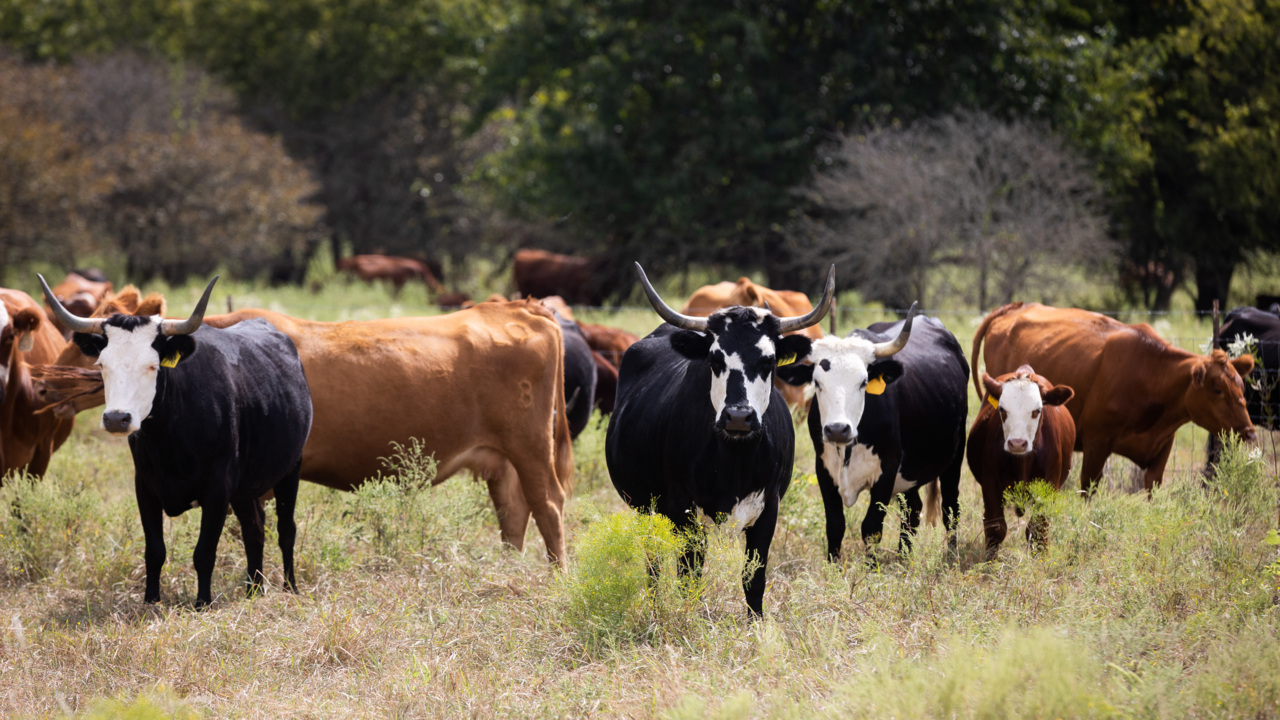
Part of what draws homeowners to the outskirts of Fort Worth is driving along the backroads and seeing the cattle across the horizon, said Morrison, a native Texan who recently moved back to the Aledo area.
“Nobody wants to see nothing but asphalt and homes,” Morrison said. “You don’t want that to be your landscape. That’s one reason we moved out this way, because we don’t want to be on top of our neighbors. It would be sad if we start losing this.”
Fort Worth — known as the place where the West begins — has its own charm that sets it apart from the rest of Texas, and it makes sense that natives and newcomers alike fear that growth will affect its identity, said Wright, the real estate agent, who has lived in the region for more than 20 years.
“People are worried: Is this going to change the look and feel of Fort Worth?” Wright said. “But our population is increasing, the economy is good, and it’s a great city because people want to move here. As far as the landscape, that’s just going to have to be a very prioritized, conscious decision of the landowners and the city putting restrictions on how much green space they are required to have within their development.”
There’s good news for cities across Texas pursuing nature conservation: More federal and state funding is becoming available for cities hoping to invest in parks and open spaces, Kent said.
Thanks to a Texas constitutional amendment approved in 2019, 100% of sales tax from sporting goods is being sent to Texas Parks and Wildlife and the Texas Historical Commission, which has doubled the grant funding available to cities, according to Kent. The passage of the federal Great American Outdoors Act has also increased the amount of money sent to cities.
Kent recognizes a sense of urgency behind his work in Fort Worth: Property values are increasing by the day, making it more crucial to buy land now rather than later.
“There’s this saying that the best time to plant a tree was 30 years ago, and the second best time is today,” Kent said. “The same applies for open space preservation. The best time to do it was 30 years ago; the second best time is today. You don’t want to wait another 30 years, or it will be gone.”
This story was originally published November 14, 2021 at 5:30 AM.