Is downtown Fort Worth still a top destination for a night out? Bar tabs reveal a shift
For much of Fort Worth’s history, going back to the notorious saloons of Hell’s Half Acre, downtown has been the place to go to have a good time.
But for those who like to raise a glass — especially one filled with an expensive cocktail — that’s not necessarily the case anymore.
Data for bar-service alcohol sales in Fort Worth reveals a post-pandemic shift in what are arguably the city’s top destinations for entertainment, dining, lodging or just happy hours with friends. Before COVID, downtown establishments raked in the most revenue from alcohol sales. Today, the highest sales are in the Cultural District/West Seventh Street area and the Fort Worth Stockyards, according to a Star-Telegram analysis.
The shift appears to reflect where Fort Worth has seen some of the biggest private investment by developers and entrepreneurs in the past four years. The Cultural District and Stockyards have attracted hundreds of millions of dollars in new projects, trendy restaurants and swanky hotels. While downtown is also seeing growth, including the addition of Le Meridien hotel, which opened in August, the pace hasn’t kept up.
The Star-Telegram looked at alcohol sales in February 2020, the last month of normalcy before COVID, and compared the data to February of this year. We examined the revenue by ZIP codes, which mostly follow the boundaries for our entertainment districts.
While downtown saw a 6% growth in drink revenue between 2020 and 2024, the Cultural District/West Seventh corridor grew by 37%, and the Stockyards by a whopping 109% — largely because of high-end establishments that weren’t around four years ago.
Other parts of the city also saw alcohol revenue growth that outpaced downtown and the Cultural District. In Near Southside, which includes West Magnolia Avenue and the South Main district, more than a dozen new establishments have opened since 2020. Overall revenue from alcohol there has soared 90%.
Alcohol revenue has grown by 45% in the 76109 ZIP code, which includes The Shops at Clearfork and the area around TCU. To the north, the fast-developing Alliance corridor has boomed with 51% more alcohol sales.
Here are the top areas for drink sales in February 2024 across Fort Worth:
- Cultural District/West Seventh: $6,738,647
- Stockyards: $6,116,139
- Downtown: $5,523,235
- Clearfork/TCU: $2,418,032
- Near Southside: $2,193,104
- Alliance (U.S. 287 to Texas Motor Speedway): $1,883,783
How does that compare to February 2020? Sales that month were:
- Downtown: $5,206,157
- Cultural District/West Seventh: $4,918,186
- Stockyards: $2,923,091
- Clearfork/TCU: $1,664,200
- Hulen area (South of I-20): $1,502,466
- I-35N at Loop 820: $1,353,324
A booming Cultural District
The West Seventh corridor, west of the Trinity River, has long been home to a high concentration of bars, but hundreds of millions of dollars in new development has made the Cultural District some of the hottest commercial real estate in the city.
Bowie House, a Michelin key-awarded hotel with an in-house bar and restaurant, opened in December at 3700 Camp Bowie Blvd. The Crescent mixed-use development, which includes offices, apartments, a luxury hotel, restaurants and a bar, opened at 3300 Camp Bowie Blvd. last fall.
Country singer Koe Wetzel’s bar on Foch Street opened in spring 2023, and many a celebrity has been spotted in the crowd.
The analysis of the Cultural District area included the nearby Foundry District, where new owners have plans to redevelop industrial buildings into more entertainment hotspots by spring 2025. The district’s 76107 ZIP code spans south and west to the I-30 corridor, but we excluded establishments in that area to more accurately measure growth in what’s traditionally considered the Cultural/West Seventh districts.
The top establishments for alcohol sales in the Cultural District in February 2024 were:
- Dickies Arena: $1,031,448
- Koe Wetzel’s Riot Room: $454,884
- El Chingon: $393,692
- Bowie House: $367,714
- Bottled Blonde: $243,241
- Crescent Hotel Fort Worth: $228,990
More high-end establishments are in the pipeline.
Goldenrod Companies is planning $400 million in large mixed-use developments in the Cultural District. One of the projects, One University, will have an upscale 176-room hotel with a bar and restaurant. The managing partner for the firm recently predicted the Cultural District could be the next Uptown Dallas in 10 years.
Stockyards: ‘We’re anticipating an even bigger boost’
Over in the Stockyards, at least 10 more alcohol-serving establishments were open in February 2024 than four years prior, including the luxury Hotel Drover in Mule Alley.
The ownership group for the Stockyards opened Mule Alley in summer 2020, converting old barns into restaurants, boutiques and bars. The redevelopment has dramatically risen visitor numbers; about 9 million people a year come through the Stockyards, Majestic Realty Co. estimates.
The Stockyards’ 76164 ZIP code spans North Main Street from Trinity River to Northwest 28th Street.
Here are the top establishments for drink sales in February 2024:
- Billy Bob’s Texas: $869,615
- Hotel Drover: $665,248
- Second Rodeo Brewing Co.: $597,277
- Joe T. Garcia’s Mexican Dishes: $567,968
- White Elephant Saloon: $270,879
- Tannahill Tavern: $259,494
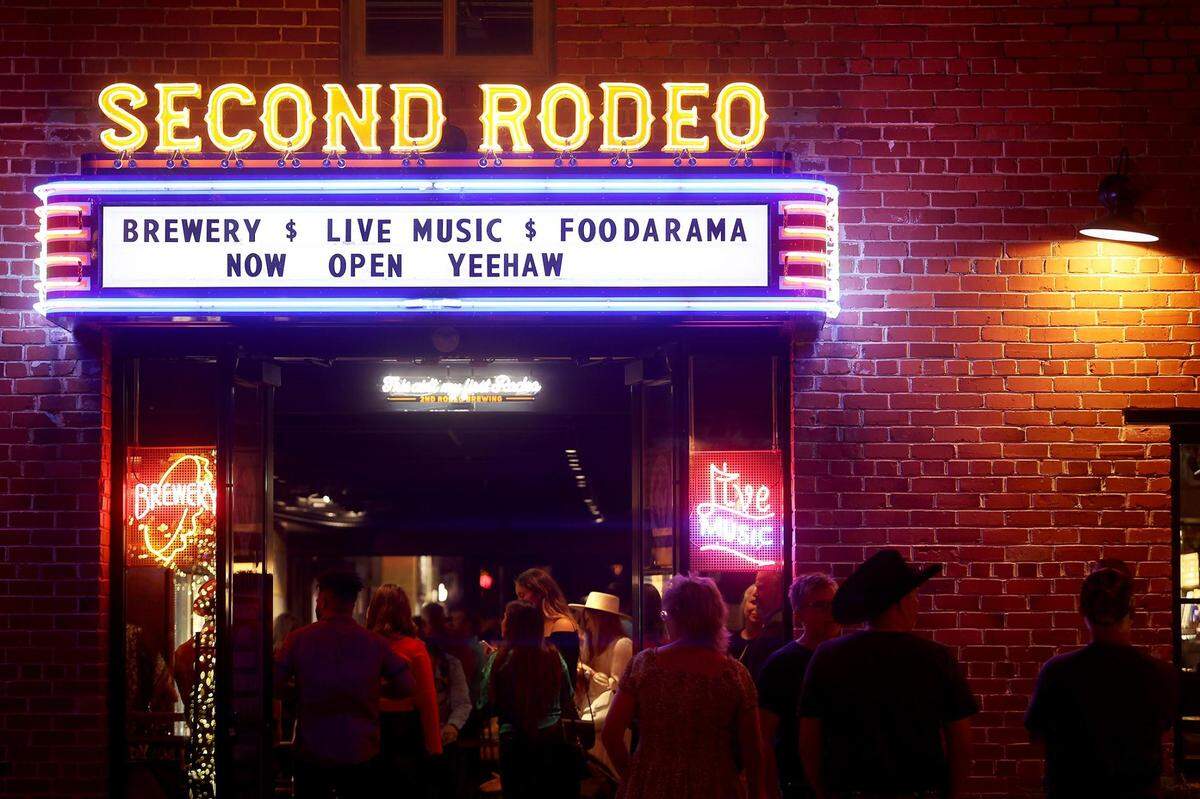
Billy Bob’s, the “world’s largest honkey-tonk” that has been an iconic destination since 1981, consistently does some of the most bar business in Fort Worth, sometimes selling over $1 million in alcohol per month. Billy Bob’s declined to comment for this story.
Like in the Cultural District, more growth is coming. The Stockyards owners are planning an almost $1 billion expansion, which includes incentives from the city. Expected to begin next year, the project will add new hotels, apartments, commercial space and underground parking on mostly vacant land behind Cowtown Coliseum.
“We could not be more proud of the success Hotel Drover and Mule Alley have brought to the entire Stockyards Historic District and the city of Fort Worth in terms of retail and food and beverage sales,” said Craig Cavileer, managing partner of Stockyards Heritage Development Co. “The revitalization of the district has truly resonated with both locals and out-of-town visitors, and with the completion of Phase 2 (expansion), we’re anticipating an even bigger boost to both visitor numbers and revenue for the district.”
Redevelopment has also encouraged new development surrounding the Stockyards; a 418-unit apartment complex is under construction at the end of East Exchange Avenue. It is expected to open in late 2025 or early 2026.
Alcohol sales in downtown Fort Worth
The new Texas A&M-Fort Worth campus and a nearly $700 million overhaul of the Convention Center promise to be major catalysts for downtown growth — though both projects are years away from completion.
Just this week, a Dallas-based Dart Interests announced it has bought nearly 5 acres to develop near the former city library, which will also be a boon for downtown.
The heart of downtown is Sundance Square, the 37-block, privately owned tourism and entertainment hub. The pandemic dealt a particularly brutal blow to many of those businesses, which may be reflected in the alcohol sales data.
Restaurants and other establishments dependent on foot traffic saw declines when fewer people returned to offices. Roughly a quarter of street-facing commercial spaces in downtown were empty or vacant in July, according to a Star-Telegram survey.
Several business owners have questioned Sundance Square’s vision for downtown. A spokesman for Sundance Square did not respond to a request to comment for this story.
Still, downtown is hopping on most weekends, especially when conferences are in town.
These were the top establishments for alcohol sales in February 2024:
- Omni Fort Worth: $463,538
- Worthington Renaissance: $380,761
- Del Frisco’s Double Eagle Steak House: $274,453
- Reata Restaurant: $267,666
- Topgolf: $228,057
- Pete’s Dueling Piano Bar: $203,093
For this analysis, we excluded Pappadeaux and Pappasito’s restaurants, which are in the 76102 ZIP code, but well outside the central business district.
Reata, one of the city’s most popular restaurants, moved out of Sundance Square this summer, reopening nearby in The Tower. Owner Mike Micallef said business has been great at the new spot.
He said alcohol sales may have shifted away from downtown because growing suburban communities, like Grapevine and Southlake, offer residents more options in their own neighborhoods than in decades past.
“You know, we’ve had a lot of growth in Fort Worth and that’s been fantastic, right? We’re lucky that we’re having that, but that pie is getting split a little bit, and it’s not just everything’s growing,” Micallef said.
Conventions are an important part of Reata’s business, and one of the reasons the restaurant chose to stay downtown. Micallef said he’s looking forward to the completion of the Convention Center and more hotels.
Micallef said a lack of mobility between Fort Worth’s entertainment districts is a key issue. Visitors staying in one part of town can’t easily walk from one spot to another. New public transportation options, like Trinity Metro’s orange line bus route connecting the Stockyards and downtown, are aiming to make Fort Worth more navigable for tourists.
“We’ve got these great districts,” Micallef said. “When somebody comes to Fort Worth, you know, we’ve got to figure out how to connect people to all these districts.”
Still, the alcohol sales numbers show investments in the Stockyards, Clearfork and Near Southside have clearly paid off, he said.
Andy Taft, president of Downtown Fort Worth, Inc., pointed to overall sales growth across the city. Different districts are a fit for certain audiences; downtown caters to business travelers, while the Stockyards has more high-capacity venues for large groups, he said.
“Downtown is a very mixed-use district, you can’t pigeonhole it into an entertainment district,” Taft said.
Taft said it’s notable that all three of Fort Worth’s top entertainment districts are within Loop 820, in close proximity to the heart of the city. As those areas thrive, the city becomes more attractive for corporate relocations.
“There are more people here, so as our population grows, and where our population grows, there will be more opportunity for more hospitality. It’s not just liquor sales, it’s hotel sales, it’s gas sales, food sales, clothing sales,” Taft said. “The future of entertainment and hospitality is going to be a function of the diversity of our economy.”
Near Southside: ‘There’s something for everyone’
Nowhere reflects that diversity like Near Southside, where alcohol sales grew 90% over the past four years. One of 54 state-designated cultural districts, Near Southside is a popular spot for artists, musicians and other creatives.
Mike Brennan, president of Near Southside Inc., doesn’t anticipate the neighborhood overtaking the city’s top entertainment districts.
“I think the Near Southside is always going to be complementary to those districts. I don’t think it will ever have the sort of single identity type of recognition that a place like the Stockyards has,” Brennan said.
Brennan described Near Southside as a livable, walkable, neighborhood-oriented district.
“I think that our district is not so well known as a place for outside visitors to come for that sole purpose of entertainment, although it’s growing in popularity for regional visitors and local folks to come here and find a great thing, great place to eat or a place to meet friends,” Brennan said.
The neighborhood’s top establishments for alcohol sales in February 2024 were:
- Nickel City: $151,257
- Atlas Fort Worth: $106,894
- Walloon’s Restaurant: $92,475
- Maggie’s R&R: $92,144
- Bowlounge: $82,755
- Wishbone & Flynt: $71,807
Amy McNutt moved her first restaurant, Spiral Diner and Bakery, from downtown to West Magnolia Avenue in 2002. The first few years were slow, she said. But after surviving the recession, business began to grow exponentially.
Today, Magnolia is a bustling, trendy corridor lined with bars, restaurants and shops.
McNutt opened two new dining concepts in Near Southside in 2023 — Maiden, a fine-dining vegan restaurant, and Dreamboat Donuts and Scoops, a vegan dessert shop.
Both located in PS1200, a park-like development with buildings that resemble Quonset huts. McNutt said she always planned on opening Maiden in Near Southside, and the irresistible building was the perfect home for the restaurant.
“The building itself was the real draw for us. It’s just so beautiful and unique, and that’s what got us, ” McNutt said.
McNutt isn’t sure how much room the area has left to grow, but more apartments will certainly increase foot traffic, a key driver of business in the neighborhood. The variety of bars and restaurants appeals to a wide audience.
“There’s something for everyone in the Near Southside,” she said.
This story was originally published November 15, 2024 at 10:28 AM.