
A few suggestions to make sure your flowering plants work
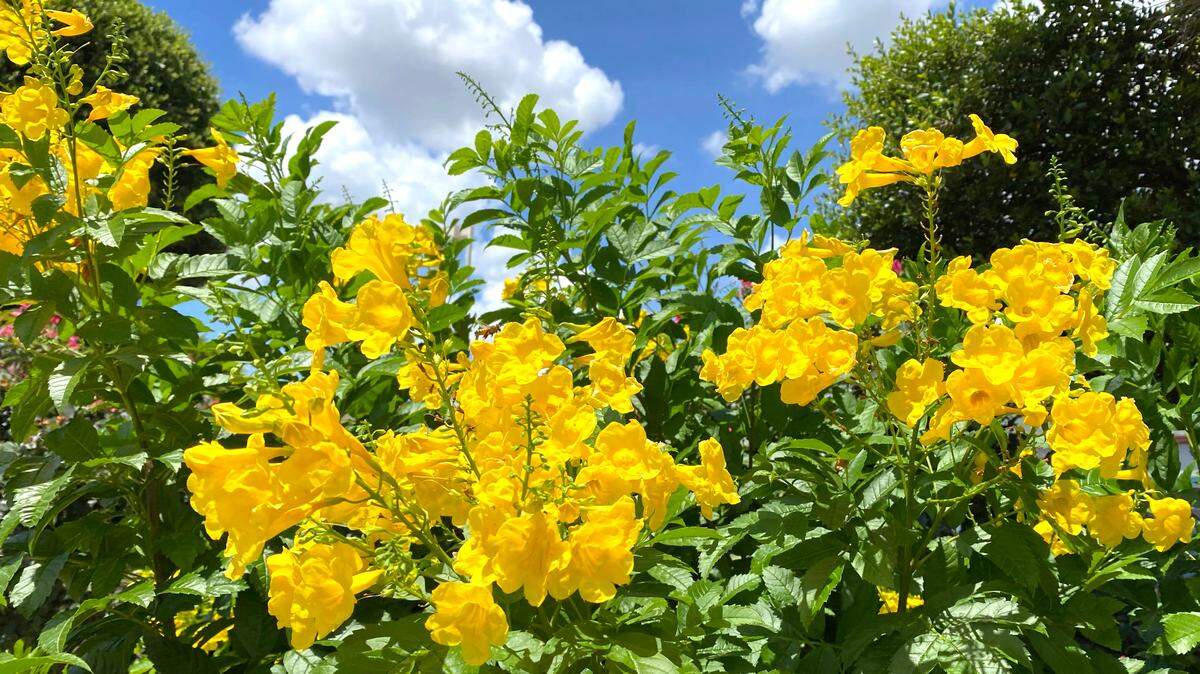
Sometimes our flowering plants just don’t cooperate. I thought I’d share a few of my recent experiences with you.
Gold Star Esperanza
A fellow called my radio program from Colleyville last weekend. He was curious why one of his three Gold Star Esperanzas hasn’t bloomed since last spring. It was a replacement plant for one that had died last summer. Two old plants beside it have bloomed their hearts out all summer. They have survived, he said, for 12 winters. I told him it was unusual for them to survive our winters here in the Metroplex, but that wasn’t the reason for his call.
I gave him the best answer I had. Gold Star Esperanzas were selected out of random plants of Tecoma stans by premier Texas plantman Greg Grant, now the Smith County Extension horticulturist. Greg isolated the plant probably 25 years ago, and he and Drs. Jerry Parsons and Steve George, both of the Texas AgriLife Extension Service, started to propagate and market the plant with nursery assistance in San Antonio. Subsequently it was identified as a Texas Super Star performer, and it has gone on to become one of Texans’ favorite summertime bloomers.
There was a time 10 or 15 years ago, however, when Greg and Jerry sent out a news release saying that a batch of “Gold Stars” had been shipped out of a wholesale nursery, and the report was that they weren’t blooming normally. The guys were surmising that the propagator had somehow propagated from an inferior mother plant – a plant that would only bloom at the normal time for the species (fall). So, my answer to my caller was that his lone non-bloomer might be that kind of plain species form of Tecoma stans, or the other two consistent bloomers in his landscape might simply be better established. Perhaps, given a year or two to catch up, his new plant might bloom better for him.
Wisterias
And then the focus shifted to wisterias. Another caller reported that the wisteria in his landscape was in bloom when he bought it years ago in the nursery, but that it hasn’t flowered again since. Obviously, he was wondering what he could do to cause it to flower.
I told him that that’s the question that comes up most often when the subject is vines, yet I’ve never found one specific answer that will cover it completely. Wisterias need full or nearly full sunlight to bloom to their best potential, so that might be one possibility. If it is growing in an area with turfgrass or groundcover, it might be getting too much nitrogen while those plants are being fed. Nitrogen promotes leaf and stem growth at the expense of flowers.
But the biggest cause of wisterias’ failing to bloom is in our time of pruning them. Wisterias set their flower buds in the fall, and any pruning we do from September on through the spring flowering time will remove their buds. Always wait until after wisterias bloom (or should have bloomed) to prune them. That would generally be April.
Hydrangeas
People expect big things out of hydrangeas, but they very commonly fall short. In this case I’m talking about “mophead” hydrangeas – the florist types. The reason for failure is similar to that for wisterias.
These plants set their flower buds in the fall and over the winter, and any pruning we do during those seasons will remove the potential for blooms the following spring. If they get hit by bitterly cold winter weather, the damage will be the same: frozen foliage and subsequent loss of flowers.
Bougainvilleas
Bougainvilleas frustrate many of us. They’re in bloom when we buy them in spring. Then they may not bloom again until September. What gives with that?
My read on it has always been that bougainvilleas bloom best when we allow them to stay just a little bit potbound. If we repot them too often we’ll allow the plants to grow rampantly and at the expense of flowers. Keep them slightly rootbound and you’ll be rewarded with lovely floral bracts much more of the time.
Crape Myrtles
Crape myrtles come up every once in a while. As free flowering as they always are, I’m amazed when someone reports that their plant had buds, but that the buds never opened. Invariably, when I press them just a little bit harder they usually admit that they were out of town for a week, and that’s when I remind them that crape myrtle fruit and flower buds look very much alike. Almost always what has happened is that the buds have opened and the plants have bloomed during that interval, but that they weren’t there to see them. By the time they got home the plants were through blooming.
And then there are times when the crape myrtles haven’t even set flower buds. The plants have grown and grown, but no buds were produced at all. In those cases the plants were either in excessive shade or they had been topped and the plants had expended all of their energy growing vegetatively. Generally, if they do get full sunlight, even topped crape myrtles will eventually flower, even if it’s in late August or early September – all the more reason never to top a crape myrtle.
You can hear Neil Sperry on KLIF 570AM on Saturday afternoons 1-3 pm and on WBAP 820AM Sunday mornings 8-10 am. Join him at www.neilsperry.com and follow him on Facebook.