
Some of the most critical tasks you need to get done in August
This is a bit of a crazy month in gardening.
We shift from the chores of mid-summer toward moving into the first vestiges of fall. As I jotted down my outline for this column, the tasks just kept rolling off my fingertips. See what I’ve brought you.
Plant fall vegetable crops. Tomatoes and pumpkins should have been planted a month ago and peppers by mid-July. Now you can plant bush beans, squash, corn (square areas at least 20 feet on a side), cucumbers and Irish potatoes. By mid-August set out transplants of cabbage, broccoli, Brussels sprouts and cauliflower. Leafy and root crops late in month.
Finish planting any new lawngrasses. St. Augustine is the most cold-sensitive, so the sooner you plant it, the better, but certainly by the end of August. The same goes for bermuda from seed. Bermuda and zoysia from sod can be planted anytime into mid-September. If you intend to plant fescue or over-seed with rye, those cool-season grasses are planted in September.
Control nutsedge. Also known as “nutgrass,” this tenacious weed has triangular stems and 6 to 8 glossy, dark green leaves. The original Image product controls it (slowly) with two applications made 30 days apart, but the label says that both must be made between May 15 and September 15, so your first treatment must be made by August 15. Sedgehammer has its own set of slightly different instructions, but time is running out for it, too.
Prevent annual bluegrass, rescuegrass, ryegrass and other winter weeds. This is a big one, because it’s your only chance to get real with these weeds. They’re all cool-season grassy weeds that are invisible right now, but they’ll soon sprout and start growing into unsightly blemishes in your turf. Prevent their germination with an application of Dimension, Halts or Balan granules made between August 25 and September 5. There is no second chance. Miss it and you’ll pay the price by having to look at them all winter and spring. (Look for another warning on this one in a couple of weeks!)
Water newly planted trees and shrubs deeply every two or three days. Most of the Metroplex has been blessed with rains over the summer so far, but August is typically dry. Keep the water hose handy, and soak these new plants deeply and frequently. Sprinkler and drip irrigation alone simply won’t do it.
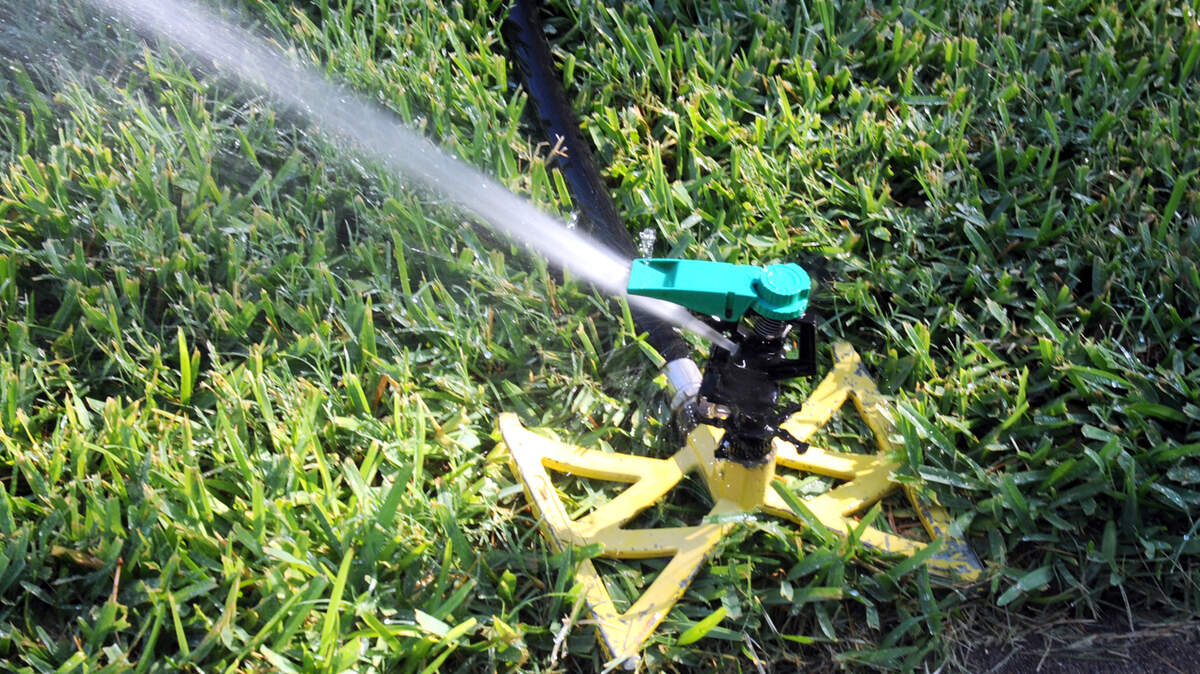
Keep an eye on your sprinkler system. Watch all parts of your lawn and landscape for “dry zones” if you have a sprinkler system. Sprinkler heads are in fixed positions, so they always water the same patterns. As summer progresses, water pressures drop and the heads may not cover areas completely. Plus, new growth may block their spray patterns. Be prepared to make adjustments or to haul out hose-end sprinklers to supplement occasionally.
Dig and divide spring-flowering bulbs immediately. Do so before they start producing new root growth. That list includes daffodils, jonquils and narcissus, also species tulips. If you have any of these that need to be moved or shared, this is the time.
Plant wildflower seeds. Do this in late August or early September. It’s best to plant them into lightly tilled soil where they can grow free of competition from turfgrasses. If bluebonnets are on your planting list, buy acid-scarified seeds for the most uniform germination. Water your new seedings right after you plant them and every three or four days for a few weeks to help them get started. Do not plant them where you’ll be spreading pre-emergent weedkiller granules.
Watch for damage of these late-season insect pests:
Lacebugs. You’ll see their damage most commonly on pyracanthas, azaleas, sycamores, Boston ivy, chinquapin and bur oaks, elms and lantanas. Affected leaves will be mottled tan, and if you look at the backs of the leaves you’ll see tiny black globs of waxy excrement. Occasionally you’ll see the adult lacebugs with their clear Cellophane®-like leaves. Most insecticides will eliminate them, but the browned leaves won’t green up again. Specifically with lantanas, trim them back by 2 or 3 inches. Apply an all-nitrogen fertilizer and water them deeply and the new growth should bounce back just fine.
Leafrollers. These pests roll leaves of redbuds, sweetgums, groundcover vinca and others together. It’s late in the season to get any control. The systemic insecticide Imidacloprid applied in June next year will prevent the damage next time around.
Spider mites. Like lacebugs, these turn the leaves a mottled tan color, but you won’t see the black specks on the backs of the leaves. They attack tomatoes, beans, marigolds and many other plants. Thump afflicted leaves over white paper and you’ll see the nearly microscopic pests moving around. General-purpose insecticides will do an adequate job of reducing their numbers.
Chinch bugs. If you have St. Augustine that’s turning brown as if it’s dry, but if irrigation doesn’t help, and if it’s in the hottest, sunniest part of your lawn, that’s probably chinch bugs. Look closely in the areas that are just starting to show the damage. Chinch bugs are BB-sized, black with irregular white diamonds on their backs. Merit insecticide will stop them. Do not leave them uncontrolled or they will kill big parts of your lawn.
Sawflies. If leaves of your bur oaks have taken on the appearance of parchment, these small insects are responsible. They are of no major concern, and it’s too late to treat for them anyway.
Webworms. They showed up a bit late and they’ll probably stick around through all fall. They build webs in pecans, persimmons, walnuts and many other shade trees. I prune them out where I can reach them and ignore them where I cannot. Spraying is difficult and impractical.
You can hear Neil Sperry on KLIF 570AM on Saturday afternoons 1-3 pm and on WBAP 820AM Sunday mornings 8-10 am. Join him at www.neilsperry.com and follow him on Facebook.