
An oak tree that proves its worth
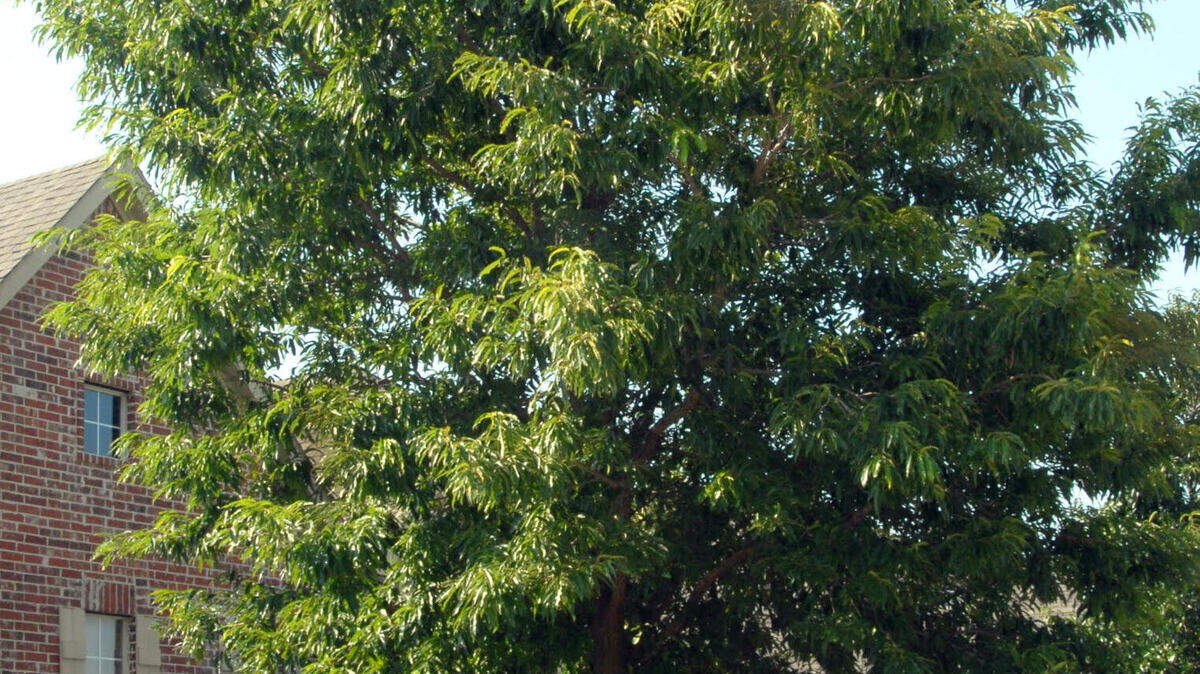
I’ve called this meeting to introduce a friend to a lot of you who may not yet know it (a plant, not a human).
It’s been a good friend of mine for 45 years, and I’m going to tell you how I came to know it.
It was the mid-1970s, and I was working at the Texas A&M Research and Extension Center in Dallas. My buddy, the late Benny Simpson, had planted a lovely tree near one of the buildings. I knew it was an oak, but I wasn’t completely sure of the species.
Benny was always my “go-to” guy when it came to identifying oaks, so I walked down the hall and asked for his help.
That’s when I discovered that of all the native oaks that Benny was growing in trials, this one was probably his most common. Not only is it native throughout the Metroplex, but it’s also found across Oklahoma, north to Nebraska and east to the Atlantic and north clear into Ontario.
This tree gets around, but somehow I just hadn’t met it. (There are a lot of oaks!)
I was interested in growing maybe 100 from acorns, so I asked Benny where he had found a good source. He told me of a few trees along streams in Collin County, but he said the Mother Lode was up along the Red River north of St. Jo.
So, as acorns started to fall, that’s where I headed, and sure enough, I gathered to my heart’s content. I got great germination, and I was growing my own little trees.
But before my trees were really big enough to set out into the landscape, I came across some that Mike Shoup with the Antique Rose Emporium down in Independence had grown.
He actually had a side part of his business where he was producing other plants for the wholesale nursery trade, and I was able to get a couple of beautiful trees, one for my home and one for my office in town.
Those trees are 30 years old now, and each is 35 feet tall and 12 or 14 inches in diameter. They have performed magnificently, and I’ve become an outspoken advocate for this great native North Texas tree for our landscapes.
Here are the facts:
- Chinquapin oak (Quercus muehlenbergii)
- Mature size in DFW area: 50-60 ft. tall and 40-50 ft. wide.
- Deciduous. Has attractive branch form in winter.
- Foliage color, summer: Dark green top surfaces, silvery-green reverses.
- Foliage color, fall: Yellow, sometimes attractive.
- Foliage size: Leaves usually 4-6 inches long and 3-4 inches wide. (May be larger in moist, highly organic soils or shaded conditions.)
- Leaf margins: Dentate, rounded and undulating.
- Soil preferences: Tolerant of alkaline soils (a decided plus in the Metroplex). Does best with ample moisture. Often found growing natively on local stream banks.
- Bark: Gray, fissured and attractive. Thin when trees are young, making protecting young tree trunks from sunscald by use of paper tree wrap highly advisable for first couple of years.
- Best landscape use: Featured shade tree where it is given ample room to grow.
- Best time to plant: Fall is ideal, but can be planted 12 months a year if you will commit to watering deeply twice weekly for first two years that you have it in your landscape.
Trying to pay Benny Simpson’s fine work forward, I’ve carried the message of Chinquapin oak as a fine tree for North Texas landscapes ever since. This tree has become popular in our area, called for by many landscape architects and garden designers.
At this point in 2020, I’m sure there are some who find it amusing that I wouldn’t have recognized the tree when it was right there before me back in the mid-70s, but that was 45 years ago – a very different time.
And even to this day, I quote from the website of the outstanding North Carolina State University Extension website call their “Extension Gardener Plant Toolbox.” About Chinquapin oak, they say, “This tree is not often used in cultivation and may be difficult to find, but would make a good shade or street tree.”
So there’s still some of Benny’s work to be done.
You can hear Neil Sperry on KLIF 570AM on Saturday afternoons 1-3 pm and on WBAP 820AM Sunday mornings 8-10 am. Join him at www.neilsperry.com and follow him on Facebook.