
Curtain goes up for new lawns
May marks the official beginning of lawn-planting season across our part of Texas.
Soils have warmed up enough that the new roots will establish quickly. Our permanent grasses do their best growing now. This is the time. Let’s look through the process in a step-by-step manner.
First, though, are you planting brand new turfgrass, or are you trying to repair some kind of issue within an existing lawn? That second one gets a bit complicated. Let me get it out of the way first.
If you have bare patches within your otherwise acceptably healthy lawn, what caused them? You have to figure that out before you try to fix them. The tire shop looks for the nail before they start putting in patches.
Be sure your bare soil isn’t in the shadiest part of your yard. I’ve been doing this gardening thing here in the Metroplex for 50 years, and this shade thing is the most common problem I encounter. A huge percent of the time it’s because those parts of the yard don’t get enough sunlight for any kind of turfgrass to grow and thrive. There is no reason to waste your money trying to get grass to grow there if that space doesn’t get 6 hours or more of hot, direct sunlight every day during the summer.
Those “grass patch” seed kits you see being advertised on television are pretty much a joke. Look at the label. Do you really want a tuft of those types of grasses growing up in the middle of your bermuda, St. Augustine or zoysia lawn? I didn’t think so. Plus, the seeds are probably going wash out into your lawngrass and come up like weeds – and you won’t have any kind of weedkiller to eliminate them.
If you want to put a patch in the bare spots, dig plugs from your own lawn and checkerboard them into the voids. You can also buy trays of started plugs in nurseries, or you can cut pieces of sod from the sod yard. Space the plugs 12 to 15 inches apart and water them by hand for the first couple of weeks.
Ideas to start a new turf
Let’s jump to the bigger stage. Let’s say that you’re starting an entire lawn. Again, I’m going to ask you one quick question before we take the long route. Are you just starting over because the lawn that is there looks bad? If that’s the case, and if the grade of the ground is smooth, you might find it a lot easier just to nurture the grass that you have and encourage it to cover and fill. That would be easiest if you have full sunlight and if you want to end up with a bermudagrass lawn.
You can get existing bermuda to fill in voids with a one-time application of ammonium sulfate (21-0-0) for a quick surge of growth. The granules are small, so be careful not to over-apply it, and water immediately after you finish.
Mow low (1-1/4 to 1-1/2 inches) and mow frequently to encourage the vigorous growth. Repeat the ammonium sulfate 4 to 6 weeks later if necessary, but do not ever use it again. It is not a good lawn food. Once you get the grass to cover solidly you’ll want to switch to an all-nitrogen food with upwards of half of the nitrogen in slow-release form.
Now, back to reality. Let’s assume that you’re preparing a brand new lawn for a new house. The soil has just been graded, but it’s still rather rough. How do you get it ready for sod or seeds?
Begin by spraying to kill all existing vegetation. A herbicide containing only glyphosate will do that without leaving any long-term residue in the soil. Spray it onto the area where you intend to plant the new grass, then give it 10 or 12 days to do its work before you start turning the soil.
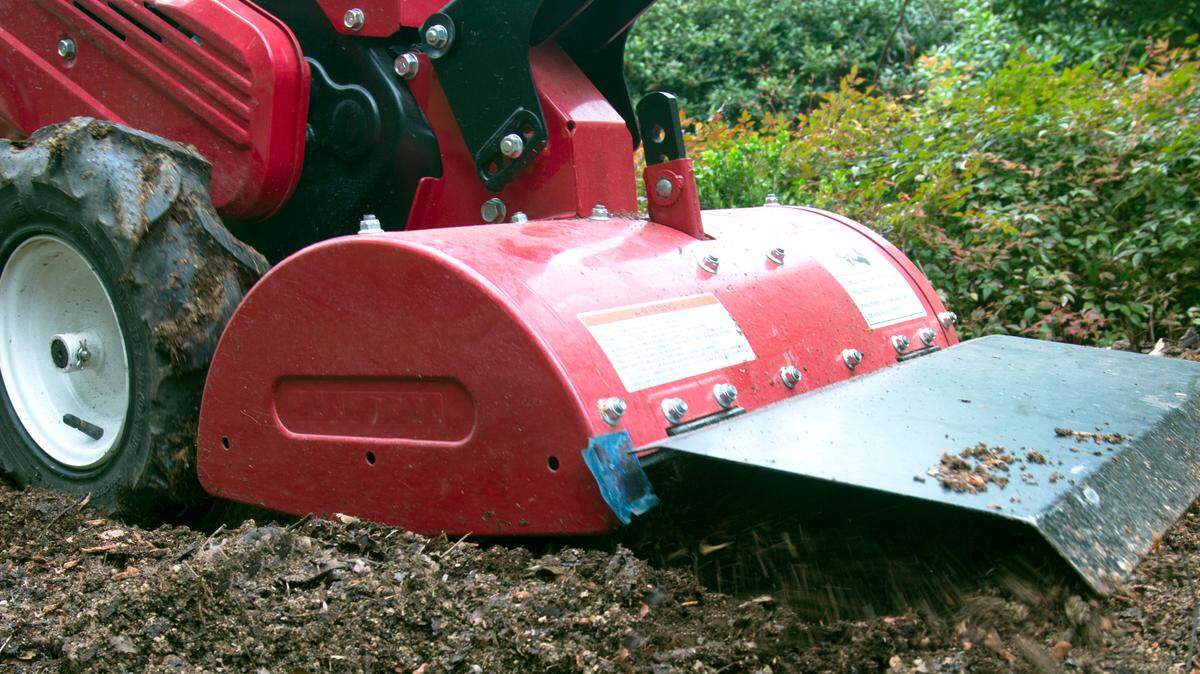
I recommend a rear tine rototiller. The wheels on such a tiller deliver the power and move the tiller through the soil smoothly as the tines pulverize our clay soils into a fine texture. Till only 3 or 4 inches deep unless you have very uneven ground and need to move great amounts of soil to smooth things out.
Rake to establish a smooth planting bed. Establish a grade that drains away from the house so you won’t have water draining toward the front door or garage or pooling around the foundation. Rake so that runoff will be taken toward storm sewers or ditches.
I won’t take time here for long discussions of types of grasses and which would be best, but you do need to make that decision long before you start up this process. St. Augustine is more tolerant of shade, but it still has to have 5 or 6 hours of sunlight. Bermuda tolerates traffic better, and zoysia is somewhat intermediate in many respects.
If you are sodding, buy from a reputable dealer. Have the sod delivered, and specify that you will not accept it if it is contaminated with nutsedge (“nutgrass”). Have adequate workers on hand to lay the sod in half a day, and get it placed carefully so there are no gaps and voids. Be sure it lays flat, and water it as soon as you finish each area. Mow it as soon as it has grown enough to justify it (usually after 7 or 8 days). Always mow at the recommended height.
If you are planting bermuda from seed, sow it at the rate of 2 to 4 pounds per 1,000 square feet. Mix it with an equal weight of corn meal and stir them together completely. Bermuda seed is very tiny, and blending it will ensure better distribution. Use a hand-held broadcast seeder, and sow half the seed walking east/west and the other half walking north/south. By covering the area twice you will minimize the chances of gaps and missed spaces.
Keep your new grass moist at all times for the first several weeks, and fertilize it at half the recommended rate after the second mowing.
You can hear Neil Sperry on KLIF 570AM on Saturday afternoons 1-3 pm and on WBAP 820AM Sunday mornings 8-10 am. Join him at www.neilsperry.com and follow him on Facebook.