
Here are 3 ornamental grasses to consider for your North Texas landscape
It was back around 1980. I, the Native Texan, found myself in the Chadwick Arboretum at my old school, Ohio State. One section featured some lovely ornamental grasses. They really hadn’t caught on just yet and I was wondering why.
My favorite out of the bunch was a fine-texture type called “maidengrass.” It was blooming with billowy, dusty-white plumes leaning away from the summer breezes. The leaves were long and graceful, green with a silver midrib. The plants stood about 4 feet tall in flower, and I was smitten. I bought a plant at a garden center, and I brought it home to Texas to see how it would do. (Spoiler alert: It did fine.)
Jump ahead 10 or 12 years and our family was taking a trip across southern Utah. We’d stayed in St. George, and we were headed toward Zion National Park. Somewhere near the entrance to the park there was a huge planting of pampasgrass in full and glorious bloom. Now, I grew up in College Station and I was used to seeing it flower that way in late summer/early fall. Huge clumps 8 feet tall and wide with plumes extending out like giant flags. But in North Central Texas this evergreen grass has been hurt by freezes several times over the years. I couldn’t believe it was so beautiful out there where I expected a much colder climate. So, there’s another noteworthy grass.
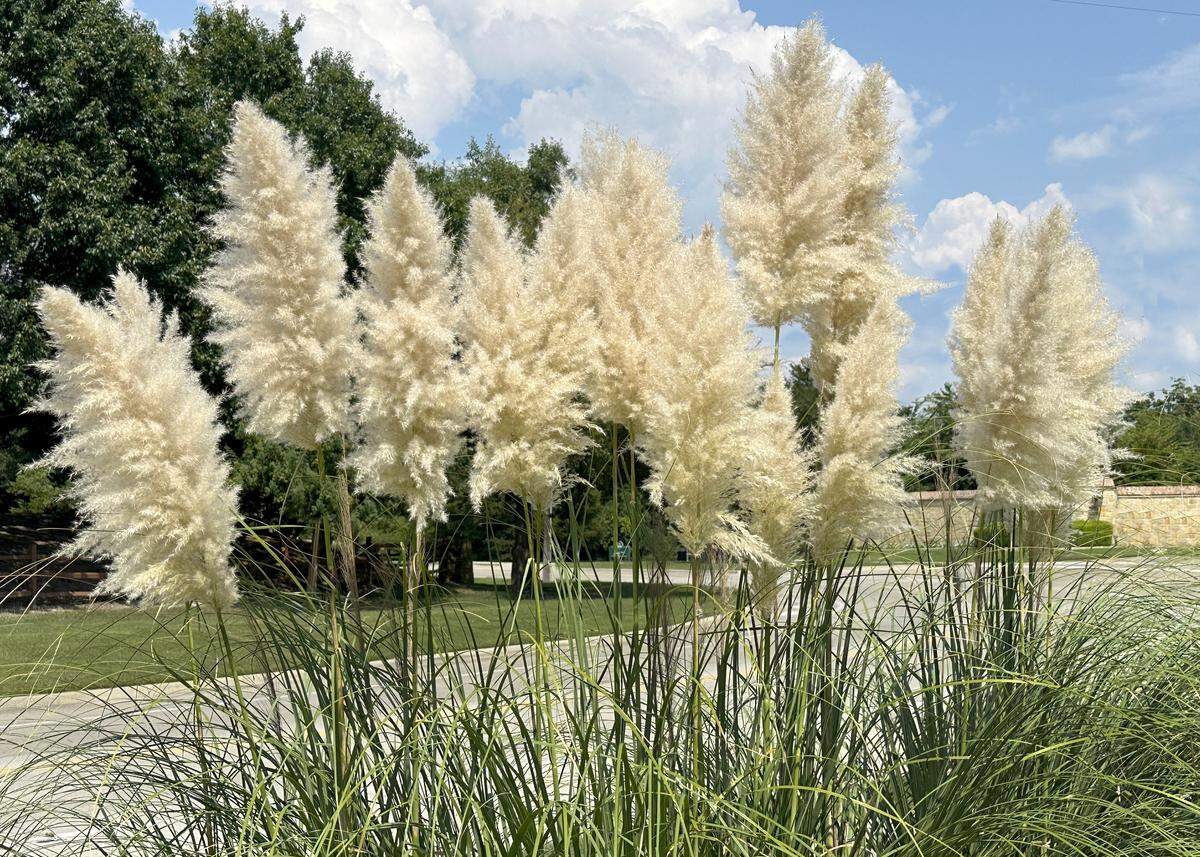
My third grass is one I learned about from my dad when I was a kid. Lindheimer’s muhly. This is Texas grass that’s native to South and Central Texas, notably the Texas Hill Country. It makes stately clumps of wiry blue-green leaves that end up being topped by tight plumes of seeds by the end of the summer.
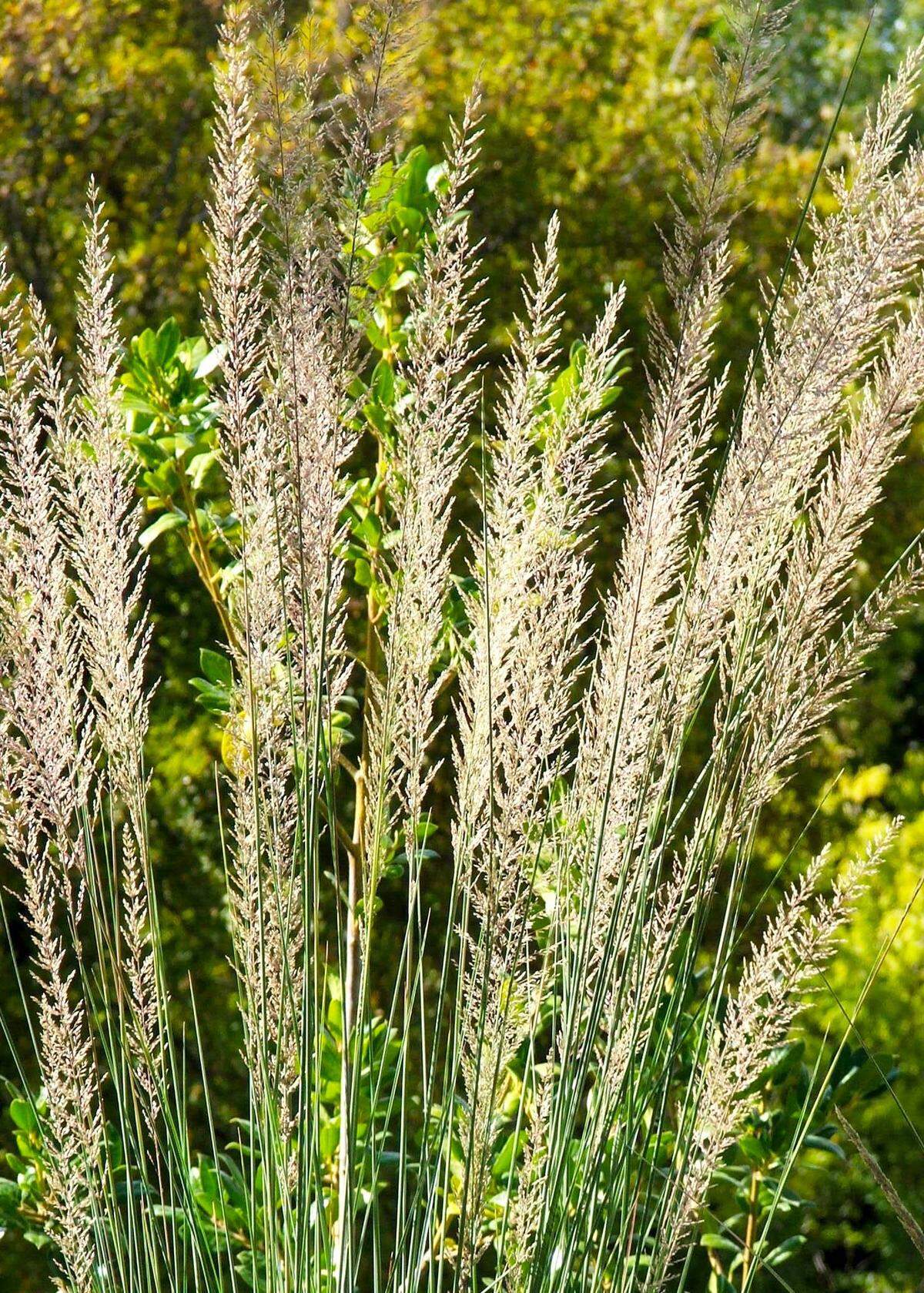
If I had to rate these by the beauty of their flowering plumes, pampasgrass from Argentina would have to come first. It was found in Argentina, then brought to Europe and on to the United States somewhere around 1850. Commercial production of its plumes began in California by 1875. Use in landscaping followed shortly thereafter.
There are many cultivars of pampasgrass in commerce today. Some have plumes of pale pink or silver. Others have variegated leaves, and dwarf forms have been introduced as well.
Second in the “plume beauty” rankings would go to maidengrass. I loved them 45 years ago in the gardens at OSU, and I still do. You see them everywhere in North Texas today. They’ve become one of the most popular of all ornamental grasses. That’s because they’re always dependable. Again, there are many variations in the marketplace, some with striped leaves, others with compact habits.
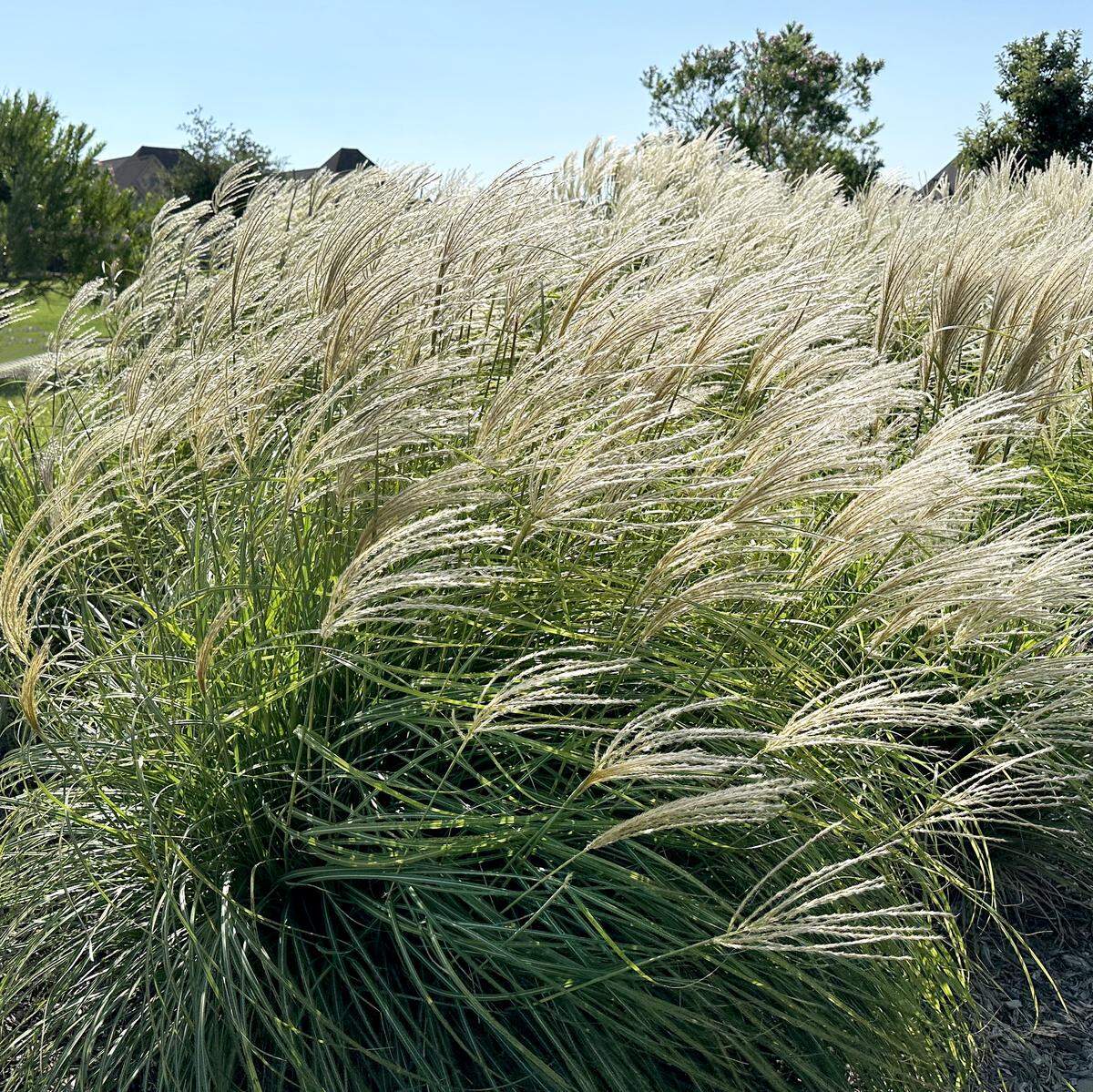
Maidengrasses start blooming in the summer, and the flower/seed stalks hold up well into the fall. The plants themselves are very perennial in Texas, but the tops freeze to the ground over the winters. That’s a drawback in my eyes for anyone who plans to use maidengrass as a replacement for shrubs in their landscape — you’ll have five months a year without anything green in that space.
And one other problem is that maidengrass seeds itself freely. You’ll have volunteer plants coming up everywhere. They’re easy enough to remove, but that’s if you see them. They look like nutsedge, so that can complicate things just a bit. But, if you can live with those two challenges, this grass is a great one.
Which brings me to my third grass of significance. This is actually the one I would choose if I could only have one. Lindheimer’s muhly. Its clumps are rigid and permanent. They’re stout and full to 3 or 4 feet tall and wide. The leaves are stiff and unbothered by almost anything. You can plant a grouping of several knowing that they’re going to look like partners in your gardens, working as members of the team.
Being native to a rocky, hot, and sunny part of Central Texas where I spent many summers working alongside my dad, this plant caught my eye early. I knew that if it could survive those harsh conditions then it deserved a spot in Texas landscaping.
Sure enough, it eventually got it, but it wasn’t until the native plant craze hit, and even to this day, Lindheimer’s muhly isn’t the big star it ought to be. The Texas Highway Department recognizes its durability, because their Tollroad planners call on it frequently for embankments and medians. We home landscapers should be using it in our gardens as well.
So, those are my three grasses of note. I would limit my plantings of pampasgrass unless you have a protected location in DFW. Maidengrass is great if you have an isolated spot where you (a) don’t need an evergreen plant and (b) won’t have a problem with its seedlings. And Lindheimer’s muhly is lovely wherever you use it. The rest of the grasses? No thanks. My gardens are filled already.