
These plants will cool your landscape during North Texas’ hot summers
You wake up and turn on the radio. You hear that the overnight low was 82 degrees. Yeah. It’s almost enough to make you hate Texas. But not quite. I grew up in this state, and I learned a long time ago that with (a) air conditioning, (b) good timing on when I garden, and (c) the right plants in my garden, it still can be a pleasant experience. I promise — I’ve not been out in the sun too long. I think I can prove it. Give me two minutes.
Start with the shade trees. That one’s obvious. No need to spend more time on it here. Just be sure you plant the best species and that you care for them properly.
Keep your turf healthy and vigorous. I do understand the importance of water conservation, and I’m all about using turfgrasses wisely. But lawngrasses cool their surroundings. They also give you recreational space. It’s hard to play football on a bed of decorative rock. Fertilize your lawn at the recommended times and with quality products (or hire someone who knows how to do so). Half of the cooling effect is psychological. If your lawn looks stressed, that’s how you’ll feel.
Keep air circulating through your landscape. It’s a given that you want privacy, but don’t wall things off so that you stop the flow of the summer breezes. There are ways to build fences and plant shrubs so that they’ll funnel the south winds across your patio or pool. An electrician might even be able to hang a weatherproof ceiling fan in your patio. How cool would that be? Literally.
Create the look and sound of motion to remind you and your guests that there really is air out there in your landscape. Birds splashing around in a little bath or water bubbling up from a fountain — those are sure winners.
For some of us, a musically tuned wind chime is a delight. (Others say they’re can be annoying, especially if they play all night right outside your bedroom window and if they are not harmonious.)
One company that has been producing the highest quality chimes for several decades is Music of the Spheres from Austin. I have no business association with them, but I have been a very happy customer for 25 years. We have six of their chimes in various positions high in our pecan trees. As the seasons and winds change each begins to sing.
Cooling colors for hot summers
Think critically about each new plant you bring into your garden design. Gray leaves may work in some settings, but since most plants in hot deserts have gray stems and leaves, I’m conditioned to think of gray as “hot” and “dry.” Give me “glossy” and “dark green” any day. Those looks make me feel like I’ve stepped into a forested glade. I’m all for that.
Those desert plants also grow slowly, and their leaves and stems are precious to their survival. As a result, they’ve developed protective devices known as thorns, hooks, spines, and stickers to ward off attackers. I have a few of those plants in my landscape, but I prefer to feature them in decorative pots for added emphasis, not hide them in as a part of my calming surroundings. If I had to defend that concept in court, I’d want a little more time to prepare my case, but as I sit here typing, it makes all the sense. It’s how I’ve landscaped for 40 years, and I don’t plan on changing.
And, as for summer colors in my surroundings, give me cooling purples and blues. Maybe not always in the same line of sight together, but certainly all in play in my garden.
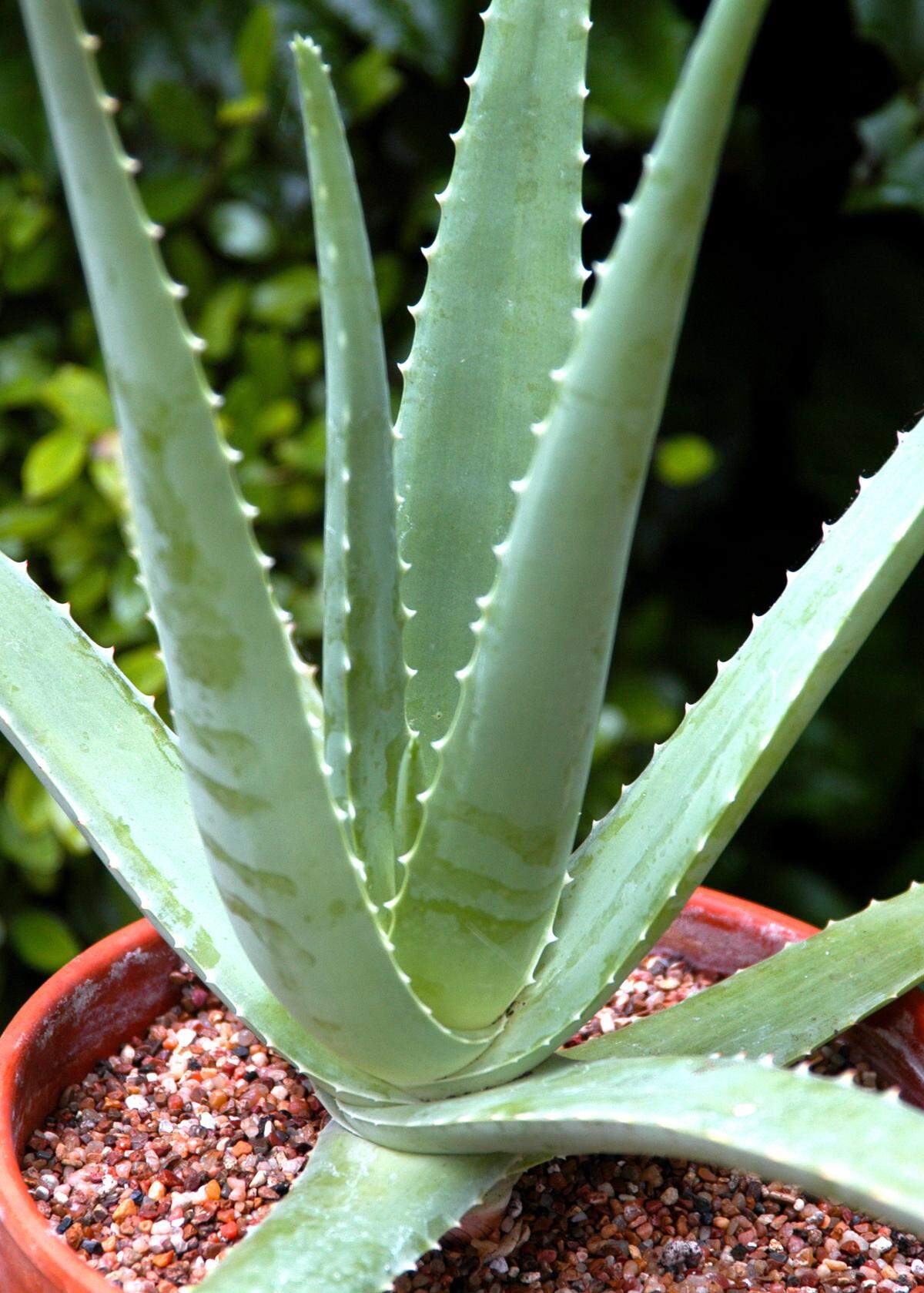
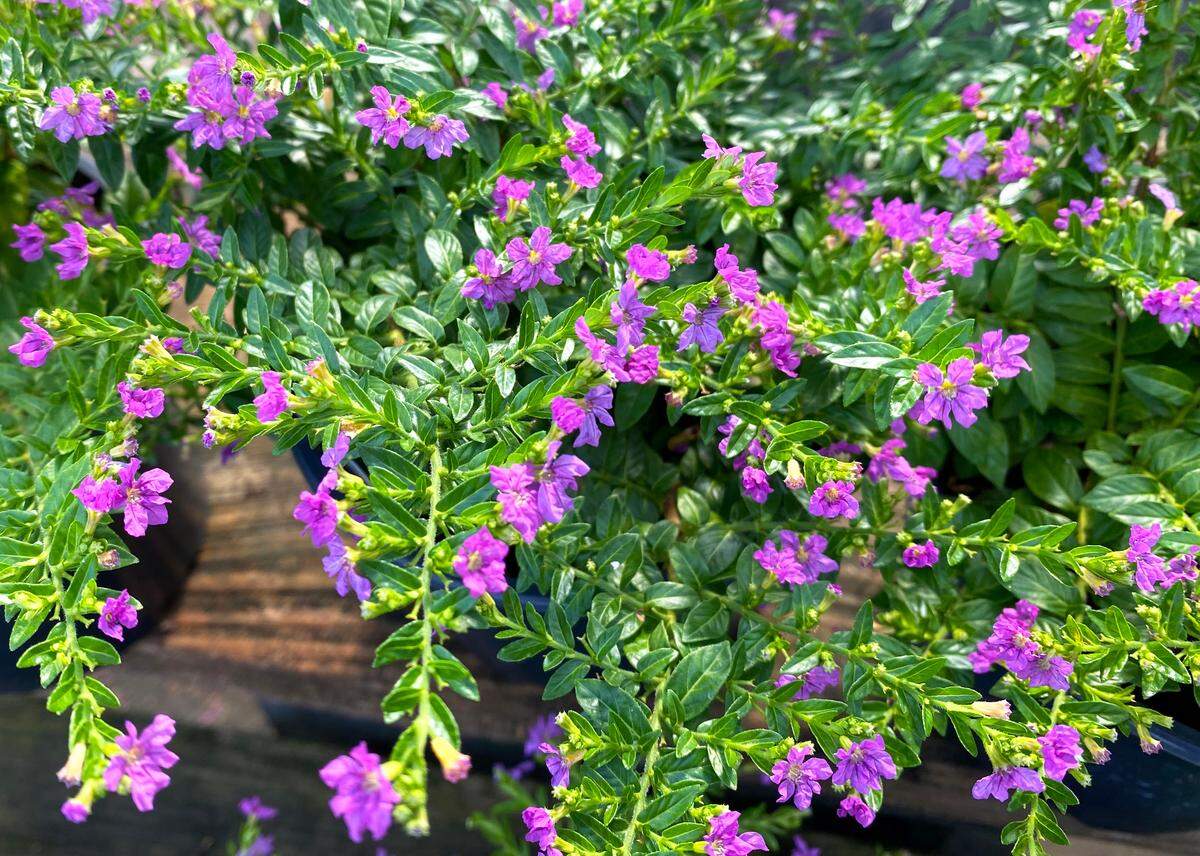
Mexican heather. As I give this imaginary lecture, think of me holding up a Mexican heather hanging basket. I’m going to point out its great summer selling points. Dark green, shiny leaves? Check mark on that one. Softly arching habit of growth that melds into its surroundings? Yep. Just perfect there. Cooling blue-purple flowers? None any better, and they’re small and soft-spoken with their message to boot. When I think of the perfect plant to cool down a summer patio, this is the one that goes into my cart first.
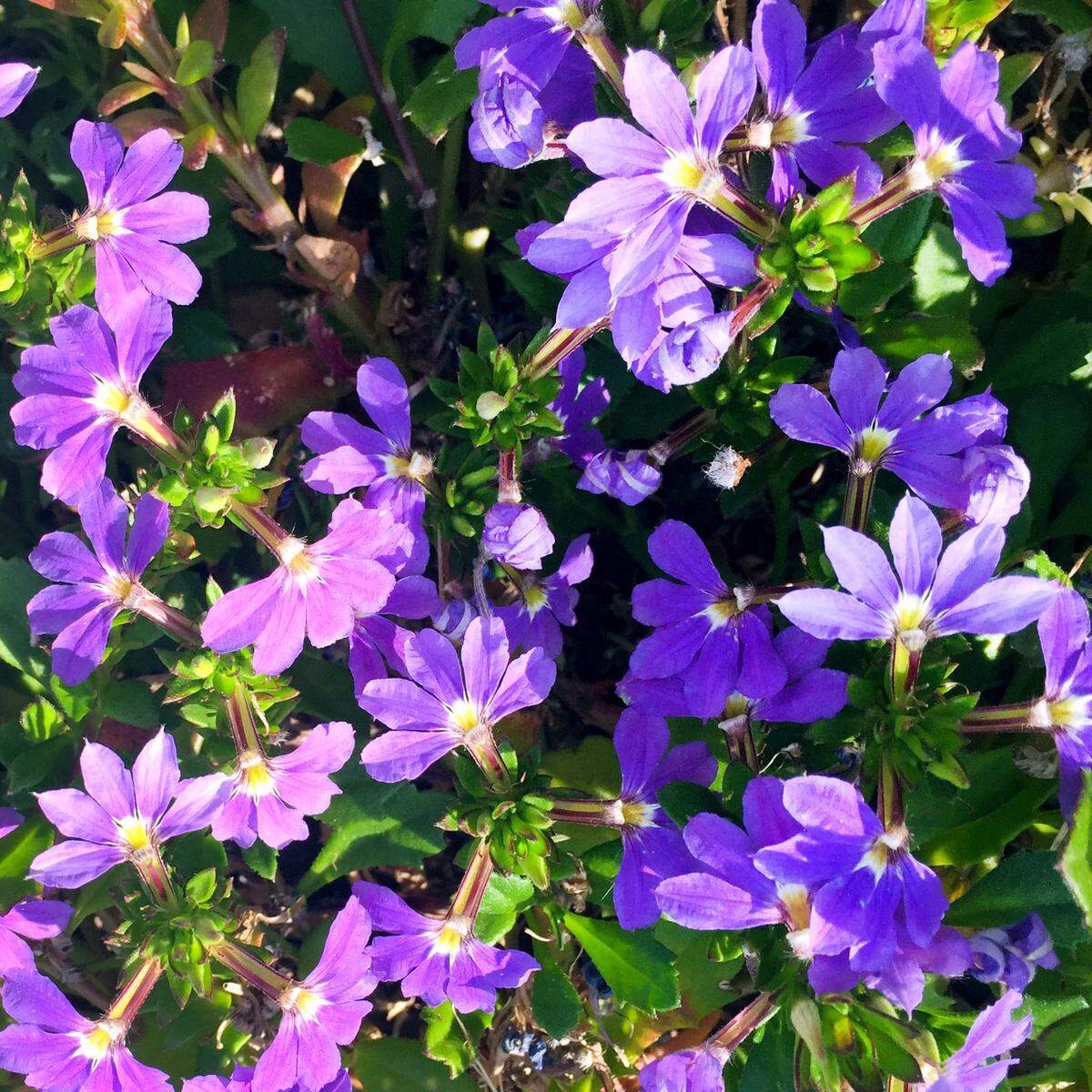
New Blue Wonder fanflower. I’d always have this one, too. Again, it’s a great hanging basket or patio pot performer, but it’s also wonderful as a flower bed edging. Bloom? Does it bloom? From the first minute you plant it until the last day of fall. How come we’re not complaining about people using too much of this one?
Plumbagos. These are the ultimate cooling-blue flowers for Texas. You’ll see them planted in beds in South Texas where they’re used as perennials. We here in FWD must plant them as annuals, and most of us prefer to plant them in large patio pots. They do well when given sun all morning and into the afternoon. Keep them moist and fed regularly with a high-nitrogen, water-soluble plant food. They’re real eye catchers.
Salvias. Everybody goes ga-ga over red salvias. Autumn sage (which blooms from February through November) is most commonly seen in shades of red, but a purple type is also sold. You’ll find your hand moving magnetically toward the red, but use your other hand to push over to the purples and give them a try one year.
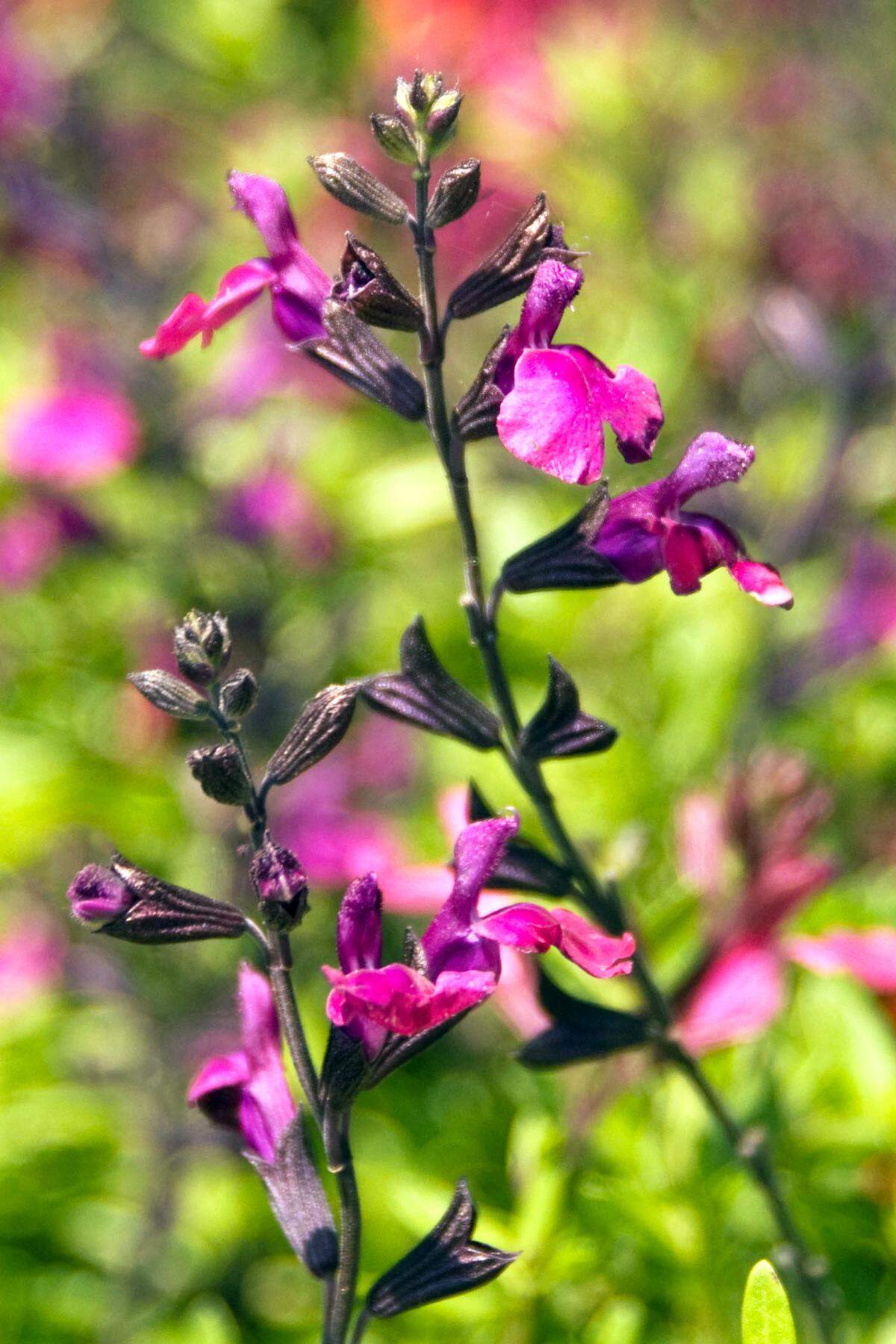
While you’re there in the salvia aisle, try the several other superior purple and blue perennial salvias that growers have developed. They are sensational?
Crape myrtles. You knew I’d mention them. My all-time favorite crape myrtle is Catawba. It’s been 58 years since it was released from the National Arboretum, and it’s finally becoming really popular. It grows 15 ft. tall (not too tall. It’s just the right size), cheerful purple, and it blends with every other color you’ll have in your landscape. Lipan is one shade lighter and much harder to find. Twilight is two shades darker, taller, older, but somewhat available. Petite Plum is a dwarf purple that’s outstanding.
This story was originally published July 25, 2025 at 12:00 AM.