
How to use colorful crape myrtles in your North Texas landscape
So far, 2025 has been the best year I’ve seen for crape myrtles in the past 15 or 20. Many of us feel they’re the best flowering shrubs and small trees for the South, and this year is certainly proving that to be the case. Many of the early blooming varieties are already in their second round of flowers, and one or two more are yet to follow. These plants have been best sellers since our great grandmothers’ grandmothers, and they’re getting better with each passing year.
This year in particular has seen a convergence of good things. Ample rainfall scattered uniformly from spring up until mid-summer provided all the moisture they needed for vigorous growth. We didn’t have any serious winter damage to the several common varieties (Natchez, Tuscarora, and Muskogee) that have been damaged in the past several winters. And cool weather favorable for good growth. It’s fun to be a crape myrtle this year.
Hopefully you’ve noticed the rainbow of colors breeders have brought us in this popular plant. No longer do you go into a nursery and simply ask for a “red,” “pink,” “lavender,” “purple,” or “white” crape myrtle. Now, if you’re a savvy gardener, you do your homework ahead of time. You study the varieties by name, color, and height so that you can find one that matches all your needs. You ask for a specific variety, and you hunt until you find it (or ask that it be ordered in for you).
You’ll find crape myrtles grouped by size as “miniatures,” “dwarfs,” “intermediates,” “mediums,” and “talls,” or some similar breakdowns.
Miniatures are types that stay less than 3 feet tall, often with arching branches. Many of these were introduced 40 years ago with Cajun- and Louisiana-sounding names because the breeders were from that part of America. However, they generally are not reliably winter hardy in regular outdoor conditions here in North Central Texas.
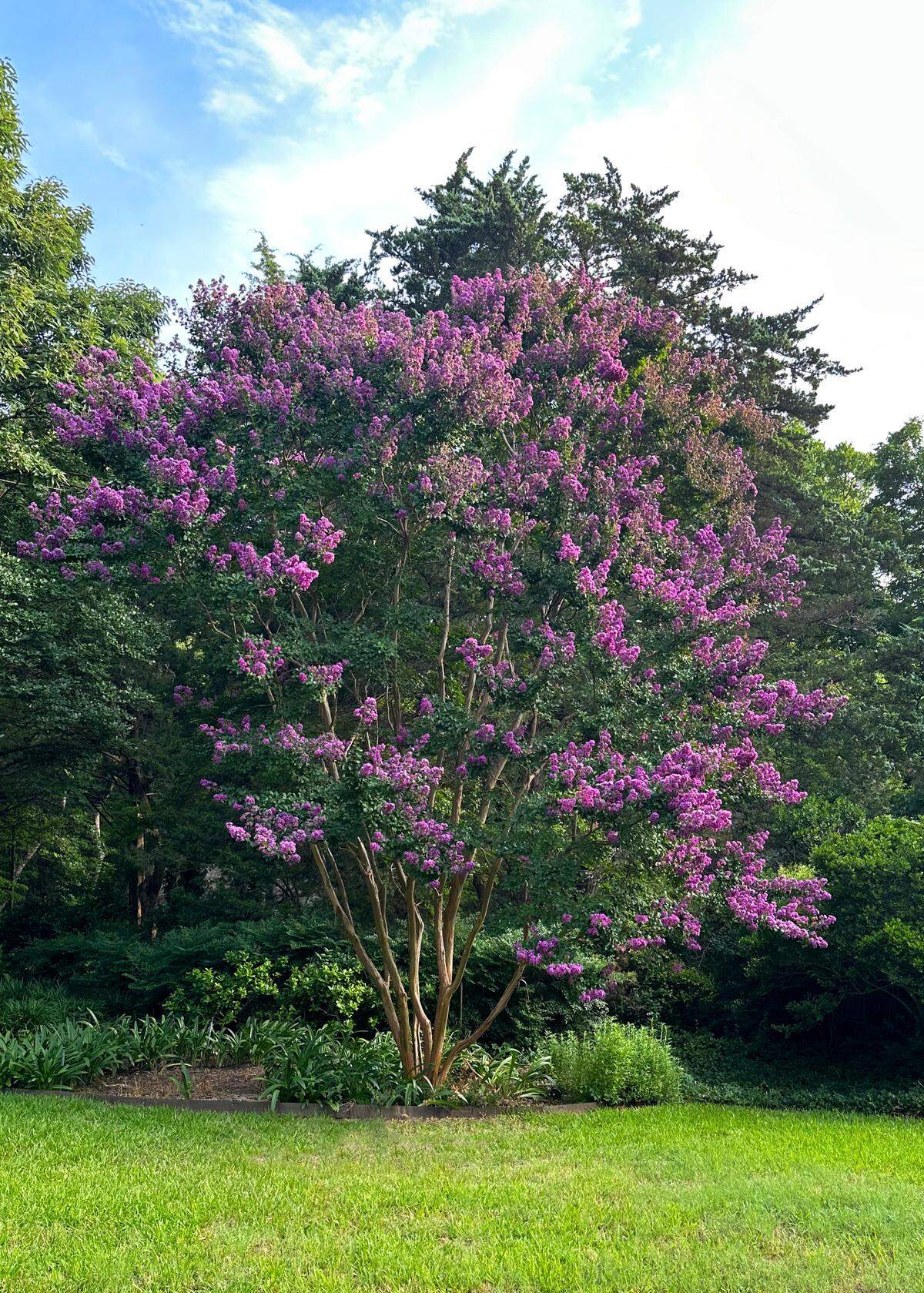
Dwarf crape myrtles grow to be 4 to 5 feet tall and are definitely shrubby. These are very useful in massed plantings where you might otherwise consider Knockout roses or azaleas. Remember that they are deciduous, however, so the bed will be bare of foliage several months each winter. These can be trimmed back almost like perennials each winter to keep them a uniform height. Hats off to the city of Southlake for using them this way on Southlake Boulevard. Just lovely, but too much traffic for me to get a photo.
Intermediates grow 5 to 10 feet tall. They’re too large to be used as massed plantings beneath windows and in most highway plantings, and they’re too short to be trained tree-form. But, in smaller landscapes they may be perfect for a small accent plant in a corner.
Medium-sized crape myrtles grow to 10 to 20 feet and are extremely useful in today’s smaller urban landscapes, whether for as an accent for an entryway or as the focal point near a backyard patio.
Tall types exceed 20 feet in height. If you think that’s not possible, look at Muskogee or Red Rocket. If those don’t convince you, go to Houston and look at the 50-foot-tall Basham’s Party Pinks. These types can double as shade trees where needed.
What to know about crape myrtles before buying
Here are some random thoughts on using crape myrtles in your landscape in case you’re heading out to buy some this weekend.
Each plant you buy should be a named variety. Read its mature size before you make your selection. The worst thing you can do is to buy a tall type when your space is limited. There’s a crape myrtle to fit any need. Know ahead of time.
Think about the colors that will surround it. Every element of your landscape contributes its own color to the overall look of the garden. If you have limestone or light-colored brick, white crape myrtles would not show up well. If you have red brick, or if you have other red-flowering plants, red crape myrtles are very likely to clash. Don’t be afraid to use purples. They are multi-functional. My own personal favorite — the variety I would have if I could only have one — is Catawba. It’s a bright purple wine-colored type that was the first of almost 30 introduced by Dr. Don Egolf of the U.S. National Arboretum in Washington. It’s an intermediate size and its color seems to go with everything.
I’ll give you some other personal favorites that I’ve been promoting for years. However, I’ll warn you that some of them will be difficult to find. Growers prefer types that come on quickly and that they can bring to market more rapidly. Sometimes, however, as with Natchez and Tuscarora, those types aren’t as winter-hardy as we need here in the Metroplex.
I’ve already said that the miniature types have never held up for me in my landscape (too cold). My favorite dwarfs were introduced in the 1960s, and they’re the Petite series (Petite Pinkie, Petite Plum, Petite Snow, and several others). And the beauty of all beauties when it blooms, Velma’s Royal Delight (vivid purple/magenta). What an accurate name. It’s taller than the Petites.
Out of the intermediates, Acoma has a growth habit (arching, almost weeping) unlike any other. It’s a lovely white. And Zuni is a beautiful purple.
The medium group, where Catawba holds court (purple), you’ll also find the stunning lighter purple of Lipan, Centennial Spirit (red), Dynamite (bright red), and Sioux (the prettiest pink, although a bit winter-tender).
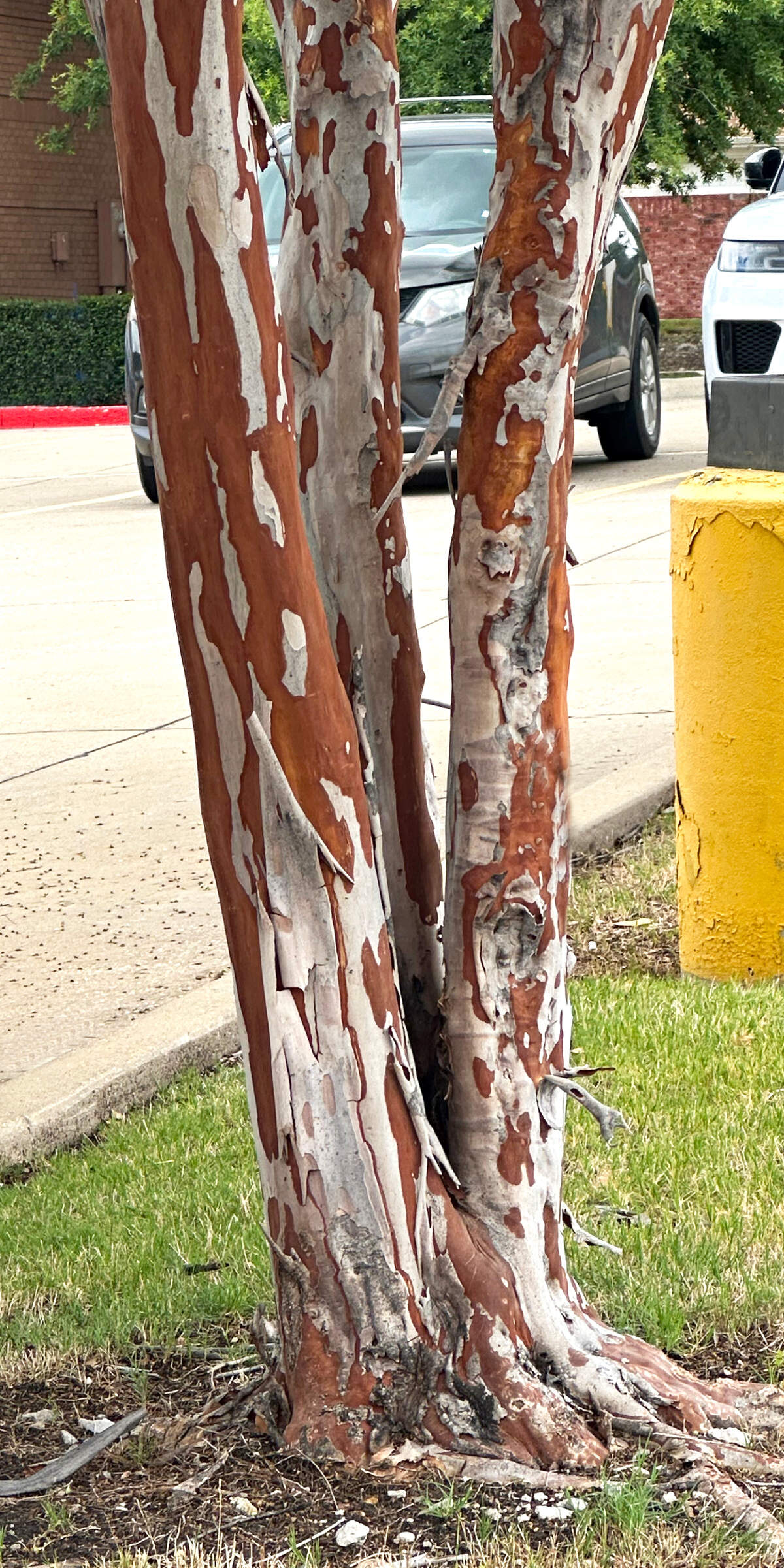
In the tallest group we find Arapaho (bright red), Choctaw (pink with gorgeous trunks), Dallas Red (old favorite), Glendora White (my personal favorite, but harder to find), Kiowa (another USDA white, but hard to find), Red Rocket (tall bright red), Sarah’s Favorite White (sister to Natchez, but far better), and Twilight (dark purple).
There are some stunning purple-leafed varieties in the market today. However, in watching them alongside the varieties I’ve listed above, I’ve noticed that they are “shy bloomers” and comparatively slow growers.
I would suggest you discuss your next crape myrtle purchases with a Texas Certified Nursery Professional. They will know the varieties and what they can provide for your landscape. Shop now while selections are still good. People are feeling the fever. This plant will win your heart!